


Community hub
Recent from talks
Contribute something to knowledge base
Content stats: 0 posts, 0 articles, 1 media, 0 notes
Members stats: 0 subscribers, 0 contributors, 0 moderators, 0 supporters
Subscribers
Supporters
Contributors
Moderators
Hub AI
United States Army Airborne School AI simulator
(@United States Army Airborne School_simulator)
Hub AI
United States Army Airborne School AI simulator
(@United States Army Airborne School_simulator)
United States Army Airborne School
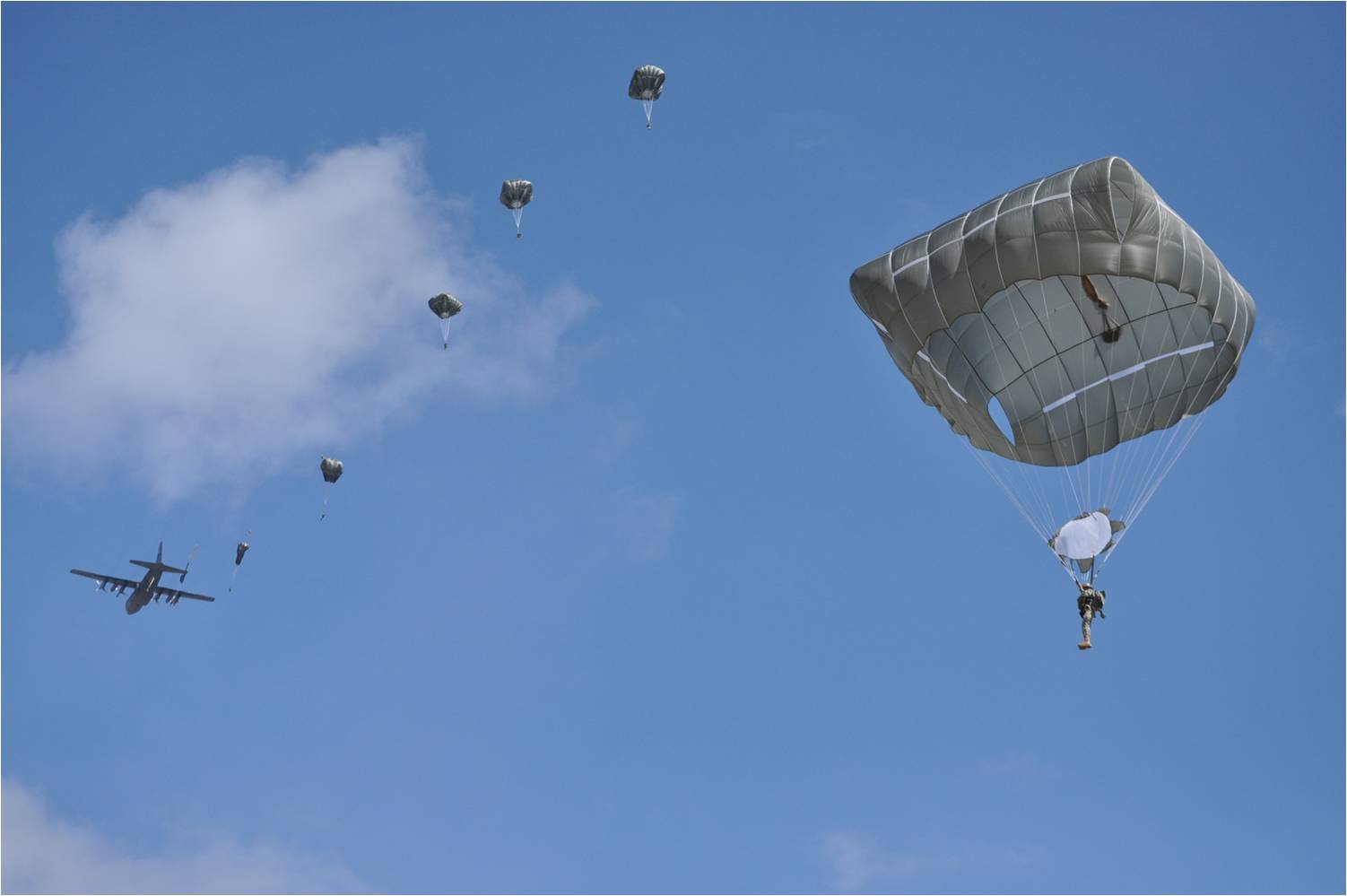
The United States Army Airborne School—widely known as Jump School—conducts the basic paratrooper (military parachutist) training for the United States Armed Forces. It is operated by the 1st Battalion (Airborne), 507th Infantry, United States Army Infantry School, Fort Benning, Georgia. The Airborne School conducts the Basic Airborne Course, which is open to troops from all branches of the United States Department of Defense, Reserve Officer Training Corps, and allied military personnel.
In 1940, the War Department approved the formation of a test platoon of Airborne Infantry under the direction and control of the Army's Infantry Board. A test platoon of volunteers was organized from Fort Benning's 29th Infantry Regiment, and the 2nd Infantry Division was directed to conduct tests to develop reference data and operational procedures for air-transported troops.
First Lieutenant William T. Ryder volunteered and was made the test platoon's platoon leader, Lieutenant James A. Bassett was designated assistant platoon leader, and forty-eight enlisted men were selected from a pool of 200 volunteers. The platoon moved into tents near Lawson Army Airfield, and an abandoned hangar was obtained for training and parachute packing.
Lieutenant Colonel William C. Lee, a staff officer for the Chief of Infantry, recommended that the test platoon be moved to the Safe Parachute Company at Hightstown, NJ and train using parachute drop towers from the 1939 New York World's Fair. Eighteen days after forming, the platoon was moved to New Jersey and trained for one week on the 250-foot free towers, which proved to be particularly effective – drops from the tower added realism otherwise impossible to duplicate outside of an airplane drop, and proved to the troopers that their parachutes would function safely.
Impressed, the Army purchased two and erected them on what is now Eubanks Field at Fort Benning. Two more were later added, and today three of the original four towers are still in use. Parachute landing training was often conducted by the volunteers jumping from PT platforms and from the back of moving trucks to allow the trainees to experience the shock of landing.
Less than forty-five days after it was formed, members of the test platoon made their first jump from a Douglas B-18 Bolo bomber over Lawson Field on 16 August 1940. Lieutenant Ryder and Private William N. (Red) King became the first officer and enlisted man to make an official jump as paratroopers in the United States Army. On 29 August, the platoon made the first platoon mass jump held in the United States.
Members of the original test platoon formed the battalion cadre of the 501st Parachute Battalion, the first parachute combat unit. The second, the 502nd Parachute Infantry Battalion, was activated on 1 July 1941. As more airborne units were activated, a centralized training facility was organized at Fort Benning on 15 May 1942. Over time, the U.S. Army Parachute School has been known by a variety of names:
The former 4th Student Battalion (Airborne), The School Brigade provided command and control of Airborne School students from the 1960s until October 1985. During its existence, it was organized with a battalion headquarters and up to nine numbered companies, designated the 41st to 49th Student Companies. In the 1960s and 1970s, each Airborne Class normally included students from two different companies. By January 1982, the battalion was organized with an HHC (which took over the mission of the former Airborne Department), and the 41st to 45th Student Companies, with each Student Company providing command and control for one complete Airborne Class.
United States Army Airborne School
The United States Army Airborne School—widely known as Jump School—conducts the basic paratrooper (military parachutist) training for the United States Armed Forces. It is operated by the 1st Battalion (Airborne), 507th Infantry, United States Army Infantry School, Fort Benning, Georgia. The Airborne School conducts the Basic Airborne Course, which is open to troops from all branches of the United States Department of Defense, Reserve Officer Training Corps, and allied military personnel.
In 1940, the War Department approved the formation of a test platoon of Airborne Infantry under the direction and control of the Army's Infantry Board. A test platoon of volunteers was organized from Fort Benning's 29th Infantry Regiment, and the 2nd Infantry Division was directed to conduct tests to develop reference data and operational procedures for air-transported troops.
First Lieutenant William T. Ryder volunteered and was made the test platoon's platoon leader, Lieutenant James A. Bassett was designated assistant platoon leader, and forty-eight enlisted men were selected from a pool of 200 volunteers. The platoon moved into tents near Lawson Army Airfield, and an abandoned hangar was obtained for training and parachute packing.
Lieutenant Colonel William C. Lee, a staff officer for the Chief of Infantry, recommended that the test platoon be moved to the Safe Parachute Company at Hightstown, NJ and train using parachute drop towers from the 1939 New York World's Fair. Eighteen days after forming, the platoon was moved to New Jersey and trained for one week on the 250-foot free towers, which proved to be particularly effective – drops from the tower added realism otherwise impossible to duplicate outside of an airplane drop, and proved to the troopers that their parachutes would function safely.
Impressed, the Army purchased two and erected them on what is now Eubanks Field at Fort Benning. Two more were later added, and today three of the original four towers are still in use. Parachute landing training was often conducted by the volunteers jumping from PT platforms and from the back of moving trucks to allow the trainees to experience the shock of landing.
Less than forty-five days after it was formed, members of the test platoon made their first jump from a Douglas B-18 Bolo bomber over Lawson Field on 16 August 1940. Lieutenant Ryder and Private William N. (Red) King became the first officer and enlisted man to make an official jump as paratroopers in the United States Army. On 29 August, the platoon made the first platoon mass jump held in the United States.
Members of the original test platoon formed the battalion cadre of the 501st Parachute Battalion, the first parachute combat unit. The second, the 502nd Parachute Infantry Battalion, was activated on 1 July 1941. As more airborne units were activated, a centralized training facility was organized at Fort Benning on 15 May 1942. Over time, the U.S. Army Parachute School has been known by a variety of names:
The former 4th Student Battalion (Airborne), The School Brigade provided command and control of Airborne School students from the 1960s until October 1985. During its existence, it was organized with a battalion headquarters and up to nine numbered companies, designated the 41st to 49th Student Companies. In the 1960s and 1970s, each Airborne Class normally included students from two different companies. By January 1982, the battalion was organized with an HHC (which took over the mission of the former Airborne Department), and the 41st to 45th Student Companies, with each Student Company providing command and control for one complete Airborne Class.
Recent media
Recent media