


Community hub
Recent from talks
Contribute something to knowledge base
Content stats: 0 posts, 0 articles, 1 media, 0 notes
Members stats: 0 subscribers, 0 contributors, 0 moderators, 0 supporters
Subscribers
Supporters
Contributors
Moderators
Hub AI
Alarm device AI simulator
(@Alarm device_simulator)
Hub AI
Alarm device AI simulator
(@Alarm device_simulator)
Alarm device
An alarm device is a mechanism that gives an audible, visual, combination, or other kind of alarm signal to alert someone to a problem or condition that requires urgent attention.
The word alarm comes from the Old French a l'arme meaning "to the arms", or "to the weapons", telling armed men to pick up their weapons and get ready for action because an enemy may have suddenly appeared.
The word alarum is an archaic form of alarm. It was sometimes used as a call to arms in the stage directions of Elizabethan dramas. The term comes from the Italian all'armi and appears 89 times in Shakespeare's First Folio. Often explained as the off-stage sounds of conflict or disturbance, recent research suggests a bell or drum may have been used to rouse soldiers from sleep.
Early alarm devices were often bells, drums, other musical instruments, or any items which made unusual loud noises that attracted the attention of the surrounding population.
Whistles were used by police in the 19th century. Steam whistles have been used on locomotives, ships, and in factories as alarm devices.
With the advent of electricity, a variety of other alerting devices have been invented, such as buzzers, klaxons, sirens, horns, flashing and coloured lights, and other all-purpose alarms.
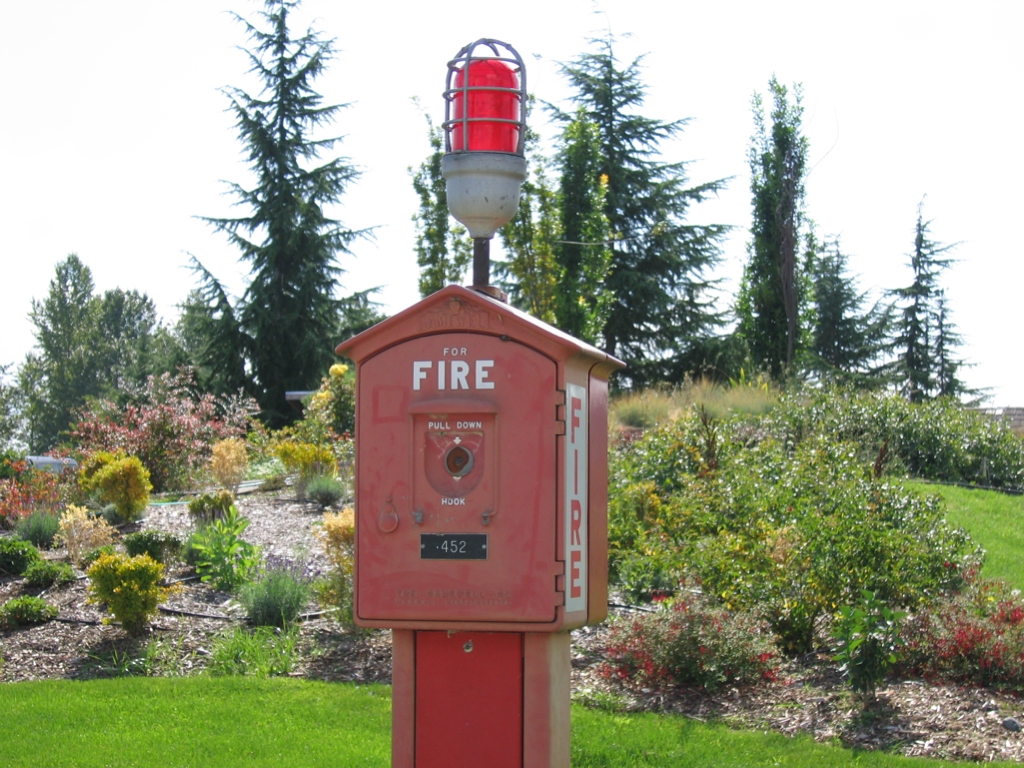
Alarm devices can be fitted to buildings as well as vehicles. Many buildings are fitted with fire alarms, ranging from a self-contained domestic smoke detector to a sophisticated alarm system that can operate building fire fighting systems automatically to extinguish fires with water or inert gases.
Many industries have developed standards for alarm devices, and the colours red, blue and amber are generally recognized as alarm device-related colours, with flashing lights often indicating urgent conditions.[citation needed]
Alarm device
An alarm device is a mechanism that gives an audible, visual, combination, or other kind of alarm signal to alert someone to a problem or condition that requires urgent attention.
The word alarm comes from the Old French a l'arme meaning "to the arms", or "to the weapons", telling armed men to pick up their weapons and get ready for action because an enemy may have suddenly appeared.
The word alarum is an archaic form of alarm. It was sometimes used as a call to arms in the stage directions of Elizabethan dramas. The term comes from the Italian all'armi and appears 89 times in Shakespeare's First Folio. Often explained as the off-stage sounds of conflict or disturbance, recent research suggests a bell or drum may have been used to rouse soldiers from sleep.
Early alarm devices were often bells, drums, other musical instruments, or any items which made unusual loud noises that attracted the attention of the surrounding population.
Whistles were used by police in the 19th century. Steam whistles have been used on locomotives, ships, and in factories as alarm devices.
With the advent of electricity, a variety of other alerting devices have been invented, such as buzzers, klaxons, sirens, horns, flashing and coloured lights, and other all-purpose alarms.
Alarm devices can be fitted to buildings as well as vehicles. Many buildings are fitted with fire alarms, ranging from a self-contained domestic smoke detector to a sophisticated alarm system that can operate building fire fighting systems automatically to extinguish fires with water or inert gases.
Many industries have developed standards for alarm devices, and the colours red, blue and amber are generally recognized as alarm device-related colours, with flashing lights often indicating urgent conditions.[citation needed]
Recent media
Recent media