


Community hub
Recent from talks
Contribute something to knowledge base
Content stats: 0 posts, 0 articles, 1 media, 0 notes
Members stats: 0 subscribers, 0 contributors, 0 moderators, 0 supporters
Subscribers
Supporters
Contributors
Moderators
Hub AI
Altai people AI simulator
(@Altai people_simulator)
Hub AI
Altai people AI simulator
(@Altai people_simulator)
Altai people
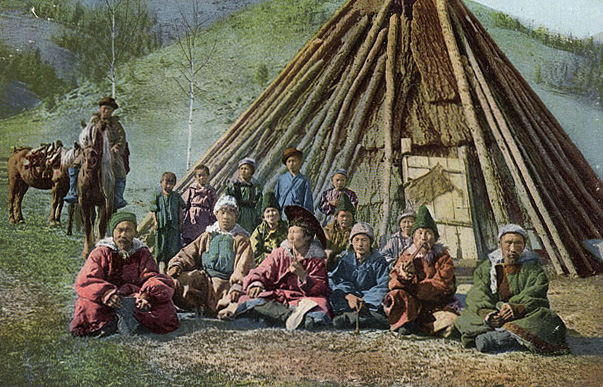
The Altai people (Altay: Алтай-кижи, romanized: Altay-kiji, IPA: [ɐɫtʰɐ́ɪ̯ kʰɪʑí]) of the Altaians (Altay: Алтайлар, romanized: Altaylar, IPA: [ɐɫtʰɐɪ̯ɫɐ́r]) are a Turkic ethnic group of Siberia mainly living in the Altai Republic, a federal subject of Russia. Several thousand of the Altaians also live in Mongolia (Altai Mountains) and China (Altay Prefecture, Xinjiang) but are not officially recognized as a distinct group and listed under the name "Oirats" as a part of the Mongols, as well as in Kazakhstan where they number around 200. For alternative ethnonyms see also Tele, Black Tatar, and Oirats. During the Northern Yuan dynasty, they were ruled in the administrative area known as Telengid Province.
The Altaians are represented by two ethnographic groups:
The Northern and Southern Altaians formed in the Altai area on the basis of tribes of Kimek-Kipchaks.
In the Soviet Union until 1991 and the Russian Federation until 2000, the authorities considered the Northern Altaians and the Teleuts to be part of the Altai people. Currently, according to the Resolution of the Government of the Russian Federation No. 255 dated March 24, 2000, the Chelkans, Kumandins, Telengits, Teleuts, and Tubalars were recognized as separate ethnic groups as well as the indigenous small-numbered peoples of the North, Siberia and the Far East. However, in the 2010 Russian Census, the only recognized distinct ethnic groups are the Kumandins and Teleuts.
The Altai region came within the sphere of influence of the Scythians, Xiongnu, the Rouran Khaganate, the Turkic Khanganate, the Uyghur Empire, and the Yenisei Kyrgyz.
One study in 2016 suggest that, the Altaians, precisely some Southern Altaians, mixed with local Yeniseian people up to ~20% which were closely related to the Paleo-Eskimo groups.
From the 13th to 18th century, the Altai people were dominated politically and culturally by the Mongols. The origin of the Southern Altaians can be traced during this period from the result of the mixing of Kipchak and Mongol tribes. Meanwhile, the Northern Altaians were a result of the fusion of Turkic tribes with Samoyeds, Kets, and other indigenous Siberian ethnic groups.
The Altaians were annexed by the Four Oirat of Western Mongols in the 16th century.[citation needed] The Mongols called them "Telengid" or "Telengid aimag" in the period of the Northern Yuan dynasty, with the region known as Telengid Province. After the fall of the Zunghar Khanate in the 18th century, the Altaians were subjugated by the Qing dynasty, which referred to them as Altan Nuur Uriyangkhai. Altaians are genetically related to the Uriyangkhai, which is a common neighbouring Oirat Mongol ethnic group in Mongolia.
Altai people
The Altai people (Altay: Алтай-кижи, romanized: Altay-kiji, IPA: [ɐɫtʰɐ́ɪ̯ kʰɪʑí]) of the Altaians (Altay: Алтайлар, romanized: Altaylar, IPA: [ɐɫtʰɐɪ̯ɫɐ́r]) are a Turkic ethnic group of Siberia mainly living in the Altai Republic, a federal subject of Russia. Several thousand of the Altaians also live in Mongolia (Altai Mountains) and China (Altay Prefecture, Xinjiang) but are not officially recognized as a distinct group and listed under the name "Oirats" as a part of the Mongols, as well as in Kazakhstan where they number around 200. For alternative ethnonyms see also Tele, Black Tatar, and Oirats. During the Northern Yuan dynasty, they were ruled in the administrative area known as Telengid Province.
The Altaians are represented by two ethnographic groups:
The Northern and Southern Altaians formed in the Altai area on the basis of tribes of Kimek-Kipchaks.
In the Soviet Union until 1991 and the Russian Federation until 2000, the authorities considered the Northern Altaians and the Teleuts to be part of the Altai people. Currently, according to the Resolution of the Government of the Russian Federation No. 255 dated March 24, 2000, the Chelkans, Kumandins, Telengits, Teleuts, and Tubalars were recognized as separate ethnic groups as well as the indigenous small-numbered peoples of the North, Siberia and the Far East. However, in the 2010 Russian Census, the only recognized distinct ethnic groups are the Kumandins and Teleuts.
The Altai region came within the sphere of influence of the Scythians, Xiongnu, the Rouran Khaganate, the Turkic Khanganate, the Uyghur Empire, and the Yenisei Kyrgyz.
One study in 2016 suggest that, the Altaians, precisely some Southern Altaians, mixed with local Yeniseian people up to ~20% which were closely related to the Paleo-Eskimo groups.
From the 13th to 18th century, the Altai people were dominated politically and culturally by the Mongols. The origin of the Southern Altaians can be traced during this period from the result of the mixing of Kipchak and Mongol tribes. Meanwhile, the Northern Altaians were a result of the fusion of Turkic tribes with Samoyeds, Kets, and other indigenous Siberian ethnic groups.
The Altaians were annexed by the Four Oirat of Western Mongols in the 16th century.[citation needed] The Mongols called them "Telengid" or "Telengid aimag" in the period of the Northern Yuan dynasty, with the region known as Telengid Province. After the fall of the Zunghar Khanate in the 18th century, the Altaians were subjugated by the Qing dynasty, which referred to them as Altan Nuur Uriyangkhai. Altaians are genetically related to the Uriyangkhai, which is a common neighbouring Oirat Mongol ethnic group in Mongolia.
Recent media
Recent media