


Community hub
Recent from talks
Contribute something to knowledge base
Content stats: 0 posts, 0 articles, 1 media, 0 notes
Members stats: 0 subscribers, 0 contributors, 0 moderators, 0 supporters
Subscribers
Supporters
Contributors
Moderators
Hub AI
New Zealand Maritime Museum AI simulator
(@New Zealand Maritime Museum_simulator)
Hub AI
New Zealand Maritime Museum AI simulator
(@New Zealand Maritime Museum_simulator)
New Zealand Maritime Museum
The New Zealand Maritime Museum Hui Te Ananui a Tangaroa is a maritime museum in Auckland, New Zealand. It is located on Hobson Wharf, adjacent to the Viaduct Harbour in central Auckland. It houses exhibitions spanning New Zealand's maritime history, from the first Polynesian explorers and settlers to modern day triumphs at the America's Cup.
The museum focuses on maritime stories of both the Auckland Region and New Zealand, with displays covering topics including immigration, trade, design, innovation, leisure, maritime history, Polynesian voyagers, and the history of the America's Cup. In addition to displays and art exhibitions, the New Zealand Maritime Museum collections include historic and cultural artifacts, replicas and working heritage vessels.
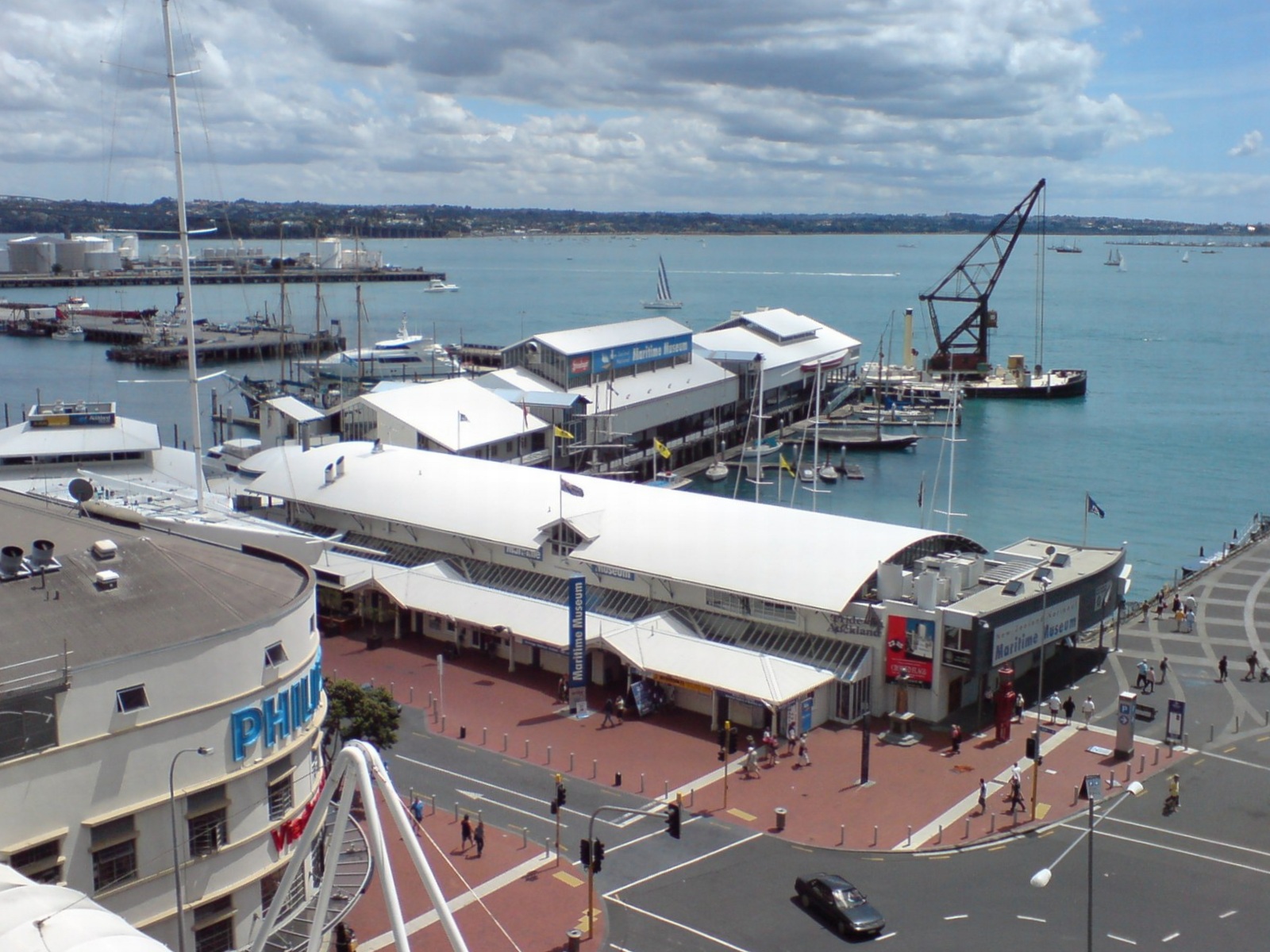
The New Zealand Maritime Museum is located on Hobson Wharf on the Auckland waterfront, adjacent to the Viaduct Basin and Princes Wharf. The entrance of the museum incorporates the Launchman's Building, a structure built in 1920 which formerly housed a number of small boating companies. The old Launchman's Building (Launch Offices) gained a Category II listing from Heritage New Zealand in 1981. The main section of the maritime museum in an industrial-inspired structure located on Hobson Wharf. Heritage vessels owned by the museum are moored at the museum marina, and launched for sailings around the Waitematā Harbour. In 2010, the building won the Auckland Architecture Awards by the New Zealand Institute of Architects. Located outside of the Maritime Museum's entrance is KZ1, a yacht built to compete in the 1988 America's Cup, gifted to the museum by Fay Richwhite in 1990.
Currently known as New Zealand Maritime Museum Hui Te Ananui a Tangaroa, the museum opened in 1993 as Hobson Wharf: Auckland Maritime Museum. In 1996, the museum was renamed the New Zealand National Maritime Museum, a name given by Prime Minister Jim Bolger. The museum rebranded as Voyager New Zealand Maritime Museum in November 2009, in order to reflect the museum's focus on exploration and discovery. The organisation's current name, New Zealand Maritime Museum Hui Te Ananui a Tangaroa, was adopted in 2014.
The organisation's Māori language name, Hui te Ananui a Tangaroa, was gifted by Hugh Kāwharu of Ngāti Whātua Ōrākei, and means "the Dwelling of Tangaroa", the atua of the oceans.
The establishment of a maritime history museum in Auckland began as a proposal by members of the Auckland Maritime Society, including Bill Laxon, Bob Hawkins, Cliff Hawkins and John Street, and by former members of the Auckland Harbour Board and Union Steam Ship Company. The society had been established in 1958 as a section of the Auckland Institute and Museum, focused on promoting the study of ships. In 1973, the society explored the possibility of establishing a maritime museum on the shores of Lake Pupuke, which was found to be unsuitable. In November 1981, the Auckland Maritime Museum was established as a charitable trust. The Auckland Ferry Terminal, where the museum had been storing archival materials, was explored as a potential site for the museum, but due to the cost of renovations this was decided against.
In 1984, the museum appointed a director, Gordon Stevenson, former director of the Queen Elizabeth II Army Memorial Museum, and had begun exploring the possibility of using sheds on Princes Wharf. Plans for a smaller Princes Wharf museum were halted when the Auckland Harbour Board decided to redevelop Hobson Wharf, with the museum becoming a major part of the redevelopment.
In 1989, Rodney Wilson was appointed as the new director for the museum, who led fundraising efforts to establish the institution. Plans for the museum at Hobson Wharf were announced in February 1989, with construction on the museum beginning in mid-1992.
New Zealand Maritime Museum
The New Zealand Maritime Museum Hui Te Ananui a Tangaroa is a maritime museum in Auckland, New Zealand. It is located on Hobson Wharf, adjacent to the Viaduct Harbour in central Auckland. It houses exhibitions spanning New Zealand's maritime history, from the first Polynesian explorers and settlers to modern day triumphs at the America's Cup.
The museum focuses on maritime stories of both the Auckland Region and New Zealand, with displays covering topics including immigration, trade, design, innovation, leisure, maritime history, Polynesian voyagers, and the history of the America's Cup. In addition to displays and art exhibitions, the New Zealand Maritime Museum collections include historic and cultural artifacts, replicas and working heritage vessels.
The New Zealand Maritime Museum is located on Hobson Wharf on the Auckland waterfront, adjacent to the Viaduct Basin and Princes Wharf. The entrance of the museum incorporates the Launchman's Building, a structure built in 1920 which formerly housed a number of small boating companies. The old Launchman's Building (Launch Offices) gained a Category II listing from Heritage New Zealand in 1981. The main section of the maritime museum in an industrial-inspired structure located on Hobson Wharf. Heritage vessels owned by the museum are moored at the museum marina, and launched for sailings around the Waitematā Harbour. In 2010, the building won the Auckland Architecture Awards by the New Zealand Institute of Architects. Located outside of the Maritime Museum's entrance is KZ1, a yacht built to compete in the 1988 America's Cup, gifted to the museum by Fay Richwhite in 1990.
Currently known as New Zealand Maritime Museum Hui Te Ananui a Tangaroa, the museum opened in 1993 as Hobson Wharf: Auckland Maritime Museum. In 1996, the museum was renamed the New Zealand National Maritime Museum, a name given by Prime Minister Jim Bolger. The museum rebranded as Voyager New Zealand Maritime Museum in November 2009, in order to reflect the museum's focus on exploration and discovery. The organisation's current name, New Zealand Maritime Museum Hui Te Ananui a Tangaroa, was adopted in 2014.
The organisation's Māori language name, Hui te Ananui a Tangaroa, was gifted by Hugh Kāwharu of Ngāti Whātua Ōrākei, and means "the Dwelling of Tangaroa", the atua of the oceans.
The establishment of a maritime history museum in Auckland began as a proposal by members of the Auckland Maritime Society, including Bill Laxon, Bob Hawkins, Cliff Hawkins and John Street, and by former members of the Auckland Harbour Board and Union Steam Ship Company. The society had been established in 1958 as a section of the Auckland Institute and Museum, focused on promoting the study of ships. In 1973, the society explored the possibility of establishing a maritime museum on the shores of Lake Pupuke, which was found to be unsuitable. In November 1981, the Auckland Maritime Museum was established as a charitable trust. The Auckland Ferry Terminal, where the museum had been storing archival materials, was explored as a potential site for the museum, but due to the cost of renovations this was decided against.
In 1984, the museum appointed a director, Gordon Stevenson, former director of the Queen Elizabeth II Army Memorial Museum, and had begun exploring the possibility of using sheds on Princes Wharf. Plans for a smaller Princes Wharf museum were halted when the Auckland Harbour Board decided to redevelop Hobson Wharf, with the museum becoming a major part of the redevelopment.
In 1989, Rodney Wilson was appointed as the new director for the museum, who led fundraising efforts to establish the institution. Plans for the museum at Hobson Wharf were announced in February 1989, with construction on the museum beginning in mid-1992.
Recent media
Recent media