



Community hub
Recent from talks
Knowledge base stats:
Talk channels stats:
Members stats:
Arboreal locomotion
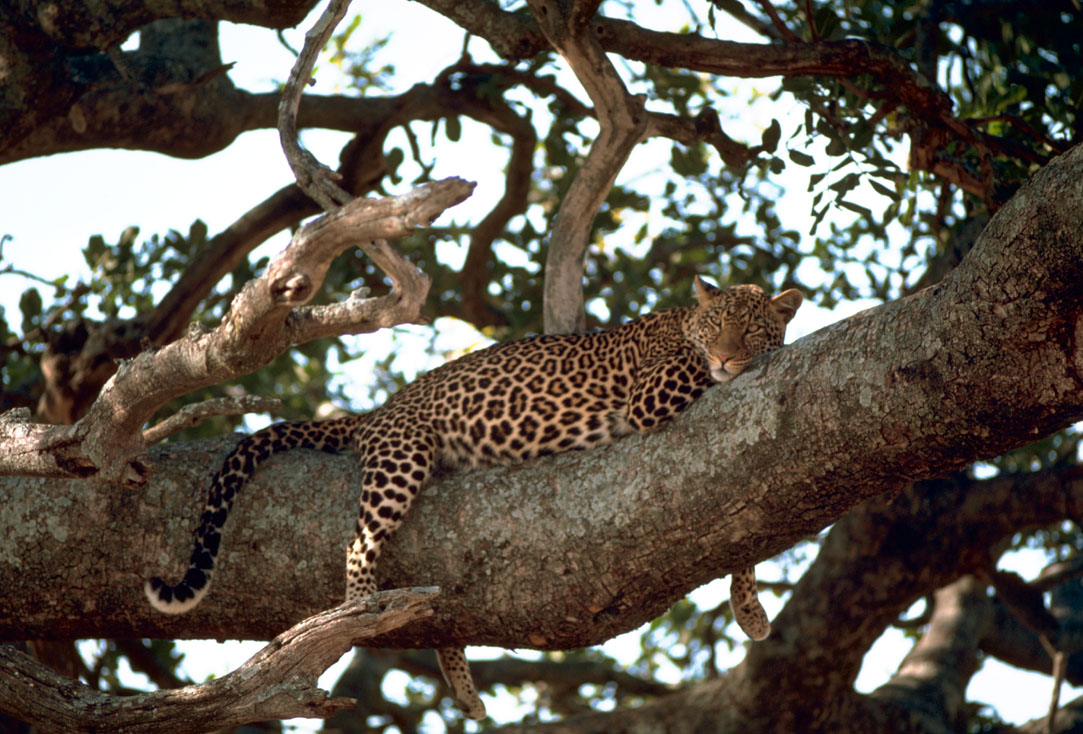
Arboreal locomotion is the locomotion of animals in trees. In habitats in which trees are present, animals have evolved to move in them. Some animals may scale trees only occasionally (scansorial), but others are exclusively arboreal. The habitats pose numerous mechanical challenges to animals moving through them and lead to a variety of anatomical, behavioral and ecological consequences as well as variations throughout different species. Furthermore, many of these same principles may be applied to climbing without trees, such as on rock piles or mountains.
Some animals are exclusively arboreal in habitat, such as tree snails.
Arboreal habitats pose numerous mechanical challenges to animals moving in them, which have been solved in diverse ways. These challenges include moving on narrow branches, moving up and down inclines, balancing, crossing gaps, and dealing with obstructions.
Moving along narrow surfaces, such as a branch of a tree, can create special difficulties for animals who are not adapted to deal with balancing on small diameter substrates. During locomotion on the ground, the location of the center of mass may swing from side to side. But during arboreal locomotion, this would result in the center of mass moving beyond the edge of the branch, resulting in a tendency to topple over and fall. Not only do some arboreal animals have to be able to move on branches of varying diameter, but they also have to eat on these branches, resulting in the need for the ability to balance while using their hands to feed themselves. This resulted in various types of grasping such as pedal grasping in order to clamp themselves onto small branches for better balance.
Branches are frequently oriented at an angle to gravity in arboreal habitats, including being vertical, which poses special problems. As an animal moves up an inclined branch, it must fight the force of gravity to raise its body, making the movement more difficult. To get past this difficulty, many animals have to grasp the substrate with all four limbs and increase the frequency of their gait sequence. Conversely, as the animal descends, it must also fight gravity to control its descent and prevent falling. Descent can be particularly problematic for many animals, and highly arboreal species often have specialized methods for controlling their descent. One way animals prevent falling while descending is to increase the amount of contact their limbs are making with the substrate to increase friction and braking power.
Due to the height of many branches and the potentially disastrous consequences of a fall, balance is of primary importance to arboreal animals. On horizontal and gently sloped branches, the primary problem is tipping to the side due to the narrow base of support. The narrower the branch, the greater the difficulty in balancing a given animal faces. On steep and vertical branches, tipping becomes less of an issue, and pitching backwards or slipping downwards becomes the most likely failure. In this case, large-diameter branches pose a greater challenge since the animal cannot place its forelimbs closer to the center of the branch than its hindlimbs.[citation needed]
Some arboreal animals need to be able to move from tree to tree in order to find food and shelter. To be able to get from tree to tree, animals have evolved various adaptations. In some areas trees are close together and can be crossed by simple brachiation. In other areas, trees are not close together and animals need to have specific adaptations to jump far distances or glide.
Arboreal habitats often contain many obstructions, both in the form of branches emerging from the one being moved on and other branches impinging on the space the animal needs to move through. These obstructions may impede locomotion, or may be used as additional contact points to enhance it. While obstructions tend to impede limbed animals, they benefit snakes by providing anchor points.
Hub AI
Arboreal locomotion AI simulator
(@Arboreal locomotion_simulator)
Arboreal locomotion
Arboreal locomotion is the locomotion of animals in trees. In habitats in which trees are present, animals have evolved to move in them. Some animals may scale trees only occasionally (scansorial), but others are exclusively arboreal. The habitats pose numerous mechanical challenges to animals moving through them and lead to a variety of anatomical, behavioral and ecological consequences as well as variations throughout different species. Furthermore, many of these same principles may be applied to climbing without trees, such as on rock piles or mountains.
Some animals are exclusively arboreal in habitat, such as tree snails.
Arboreal habitats pose numerous mechanical challenges to animals moving in them, which have been solved in diverse ways. These challenges include moving on narrow branches, moving up and down inclines, balancing, crossing gaps, and dealing with obstructions.
Moving along narrow surfaces, such as a branch of a tree, can create special difficulties for animals who are not adapted to deal with balancing on small diameter substrates. During locomotion on the ground, the location of the center of mass may swing from side to side. But during arboreal locomotion, this would result in the center of mass moving beyond the edge of the branch, resulting in a tendency to topple over and fall. Not only do some arboreal animals have to be able to move on branches of varying diameter, but they also have to eat on these branches, resulting in the need for the ability to balance while using their hands to feed themselves. This resulted in various types of grasping such as pedal grasping in order to clamp themselves onto small branches for better balance.
Branches are frequently oriented at an angle to gravity in arboreal habitats, including being vertical, which poses special problems. As an animal moves up an inclined branch, it must fight the force of gravity to raise its body, making the movement more difficult. To get past this difficulty, many animals have to grasp the substrate with all four limbs and increase the frequency of their gait sequence. Conversely, as the animal descends, it must also fight gravity to control its descent and prevent falling. Descent can be particularly problematic for many animals, and highly arboreal species often have specialized methods for controlling their descent. One way animals prevent falling while descending is to increase the amount of contact their limbs are making with the substrate to increase friction and braking power.
Due to the height of many branches and the potentially disastrous consequences of a fall, balance is of primary importance to arboreal animals. On horizontal and gently sloped branches, the primary problem is tipping to the side due to the narrow base of support. The narrower the branch, the greater the difficulty in balancing a given animal faces. On steep and vertical branches, tipping becomes less of an issue, and pitching backwards or slipping downwards becomes the most likely failure. In this case, large-diameter branches pose a greater challenge since the animal cannot place its forelimbs closer to the center of the branch than its hindlimbs.[citation needed]
Some arboreal animals need to be able to move from tree to tree in order to find food and shelter. To be able to get from tree to tree, animals have evolved various adaptations. In some areas trees are close together and can be crossed by simple brachiation. In other areas, trees are not close together and animals need to have specific adaptations to jump far distances or glide.
Arboreal habitats often contain many obstructions, both in the form of branches emerging from the one being moved on and other branches impinging on the space the animal needs to move through. These obstructions may impede locomotion, or may be used as additional contact points to enhance it. While obstructions tend to impede limbed animals, they benefit snakes by providing anchor points.