
Recent from talks
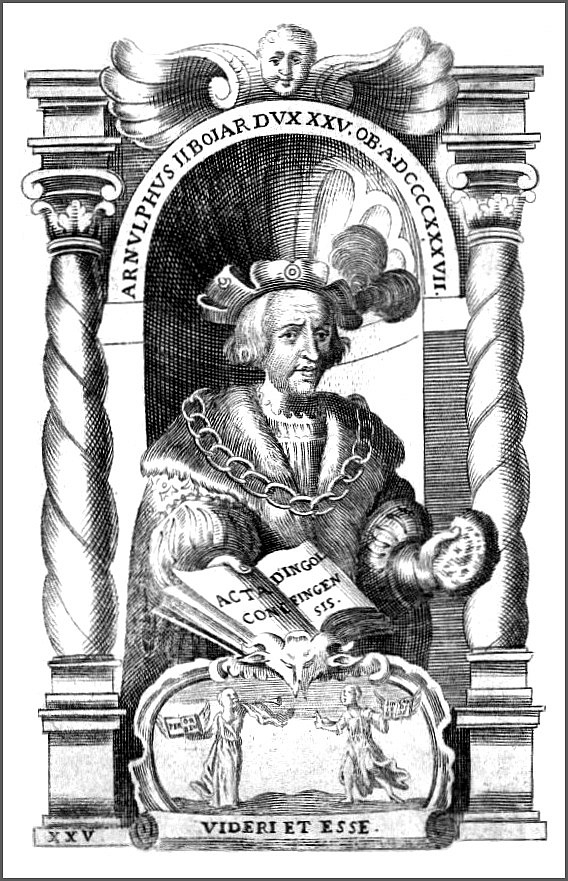
Arnulf, Duke of Bavaria
Knowledge base stats:
Talk channels stats:
Members stats:
Arnulf, Duke of Bavaria
Arnulf II (birth unknown; died 14 July 937), also known as the Bad (German: der Schlimme), the Evil (der Böse) or the Wicked, a member of the Luitpolding dynasty, held the title of Duke of Bavaria from about 907 until his death in 937. He is numbered in succession to Arnulf of Carinthia, counted as Arnulf I.
The year of Arnulf's birth is unknown, but it is said that he was the namesake of other Arnulfs born around the time of the reign of the seventh-century bishop Arnulf of Metz and the Carolingian king Arnulf of Carinthia. Arnulf was the son of Margrave Luitpold of Bavaria and Cunigunde, herself a member of the Ahalolfing dynasty, daughter of Berthold I, the count palatine of Swabia. Her brother Erchanger assumed the Swabian ducal title in 915.
Under the weak rule of the East Frankish king Louis the Child, Margrave Luitpold had already achieved a strong position in the Bavarian lands, succeeding the Wilhelminer margraves. He ruled over extended estates along the Danube with Regensburg (Ratisbon), and in the adjacent Nordgau.
Together with numerous Bavarian nobles, Arnulf's father was killed in the 907 Battle of Pressburg (Bratislava), when the Bavarian Heerbann under his command suffered a crushing defeat in a campaign against the Hungarian forces of Grand Prince Árpád. After the death of his father, Arnulf succeeded him in his Bavarian lands, and soon after he assumed the title of a "Duke of Bavaria" as ruler of the estates around Regensburg. An energetic and combative man, he received broad support from the local nobles, however, already during his ascension in to dukedom, he was faced with constant raids from the Hungarians. These attacks had laid waste the East Frankish lands of Bavaria, Saxony, and Thuringia.
Besieged by frequent Hungarian raids and desperate to raise funds to finance a re-organized defense, Arnulf strengthened his power through confiscation of church lands and the secularization of numerous monastery estates, which earned him the nickname "the Bad" by medieval chroniclers. In several skirmishes he was able to force back the Hungarian invaders and he defeated a small force in 913 with the support by his Swabian relatives. Having re-established the stem duchy of Bavaria, he eventually negotiated a truce with the Hungarian princes, who thereafter largely passed through Bavaria on their raids into other German duchies.
Duke Arnulf pursued a policy of independence from the East Frankish kings. Though in 911 he participated in the election of King Conrad I of Germany in 911; in Conrad's conflict with Erchanger of Swabia he backed his Swabian uncle and later challenged Conrad's Saxon successor, King Henry the Fowler. The dispute was only temporarily settled when in 913 Arnulf's widow mother Cunigunda married King Conrad.
In 916 Conrad's forces invaded Bavaria, attacking and pillaging Regensburg. These attacks drove Arnulf into exile with his former enemies in Hungary. In September, the king convoked a church council in Hohenaltheim, attended by the Bavarian episcopate, which summoned Arnulf and his younger brother Berthold on the grounds of excommunication at Regensburg on 1 November. It is more than likely that Arnulf and his family never appeared at the convocation, or that the council meeting was never held. As a result, they remained exiled among the Hungarians. In January 917, King Conrad, angered at the situation, called for the execution of his rebellious Swabian brother-in-law, Erchanger and his brother Berthold, giving Arnulf more pause for concern.
In 919, the death of Conrad I allowed Arnulf to return to Bavaria and expel the king's forces. Conrad I being childless, the throne was open to Arnulf, again. On his return, according to the Annales iuvavenses, in 920, Baiuarii sponte se reddiderunt Arnolfo duci et regnare ei fecerunt in regno teutonicorum ("the Bavarians freely submitted themselves to Duke Arnulf and asked him to reign within the realm of the Germans"). The 919 ascension of Henry the Fowler would bring forth a battle for the throne; however, whether the Bavarians, with some other East Franks, actually elected Arnulf anti-king in opposition to Henry has not been conclusively established.
Hub AI
Arnulf, Duke of Bavaria AI simulator
(@Arnulf, Duke of Bavaria_simulator)
Arnulf, Duke of Bavaria
Arnulf II (birth unknown; died 14 July 937), also known as the Bad (German: der Schlimme), the Evil (der Böse) or the Wicked, a member of the Luitpolding dynasty, held the title of Duke of Bavaria from about 907 until his death in 937. He is numbered in succession to Arnulf of Carinthia, counted as Arnulf I.
The year of Arnulf's birth is unknown, but it is said that he was the namesake of other Arnulfs born around the time of the reign of the seventh-century bishop Arnulf of Metz and the Carolingian king Arnulf of Carinthia. Arnulf was the son of Margrave Luitpold of Bavaria and Cunigunde, herself a member of the Ahalolfing dynasty, daughter of Berthold I, the count palatine of Swabia. Her brother Erchanger assumed the Swabian ducal title in 915.
Under the weak rule of the East Frankish king Louis the Child, Margrave Luitpold had already achieved a strong position in the Bavarian lands, succeeding the Wilhelminer margraves. He ruled over extended estates along the Danube with Regensburg (Ratisbon), and in the adjacent Nordgau.
Together with numerous Bavarian nobles, Arnulf's father was killed in the 907 Battle of Pressburg (Bratislava), when the Bavarian Heerbann under his command suffered a crushing defeat in a campaign against the Hungarian forces of Grand Prince Árpád. After the death of his father, Arnulf succeeded him in his Bavarian lands, and soon after he assumed the title of a "Duke of Bavaria" as ruler of the estates around Regensburg. An energetic and combative man, he received broad support from the local nobles, however, already during his ascension in to dukedom, he was faced with constant raids from the Hungarians. These attacks had laid waste the East Frankish lands of Bavaria, Saxony, and Thuringia.
Besieged by frequent Hungarian raids and desperate to raise funds to finance a re-organized defense, Arnulf strengthened his power through confiscation of church lands and the secularization of numerous monastery estates, which earned him the nickname "the Bad" by medieval chroniclers. In several skirmishes he was able to force back the Hungarian invaders and he defeated a small force in 913 with the support by his Swabian relatives. Having re-established the stem duchy of Bavaria, he eventually negotiated a truce with the Hungarian princes, who thereafter largely passed through Bavaria on their raids into other German duchies.
Duke Arnulf pursued a policy of independence from the East Frankish kings. Though in 911 he participated in the election of King Conrad I of Germany in 911; in Conrad's conflict with Erchanger of Swabia he backed his Swabian uncle and later challenged Conrad's Saxon successor, King Henry the Fowler. The dispute was only temporarily settled when in 913 Arnulf's widow mother Cunigunda married King Conrad.
In 916 Conrad's forces invaded Bavaria, attacking and pillaging Regensburg. These attacks drove Arnulf into exile with his former enemies in Hungary. In September, the king convoked a church council in Hohenaltheim, attended by the Bavarian episcopate, which summoned Arnulf and his younger brother Berthold on the grounds of excommunication at Regensburg on 1 November. It is more than likely that Arnulf and his family never appeared at the convocation, or that the council meeting was never held. As a result, they remained exiled among the Hungarians. In January 917, King Conrad, angered at the situation, called for the execution of his rebellious Swabian brother-in-law, Erchanger and his brother Berthold, giving Arnulf more pause for concern.
In 919, the death of Conrad I allowed Arnulf to return to Bavaria and expel the king's forces. Conrad I being childless, the throne was open to Arnulf, again. On his return, according to the Annales iuvavenses, in 920, Baiuarii sponte se reddiderunt Arnolfo duci et regnare ei fecerunt in regno teutonicorum ("the Bavarians freely submitted themselves to Duke Arnulf and asked him to reign within the realm of the Germans"). The 919 ascension of Henry the Fowler would bring forth a battle for the throne; however, whether the Bavarians, with some other East Franks, actually elected Arnulf anti-king in opposition to Henry has not been conclusively established.
Recent media