



Community hub
Recent from talks
Knowledge base stats:
Talk channels stats:
Members stats:
Sibelius (scorewriter)
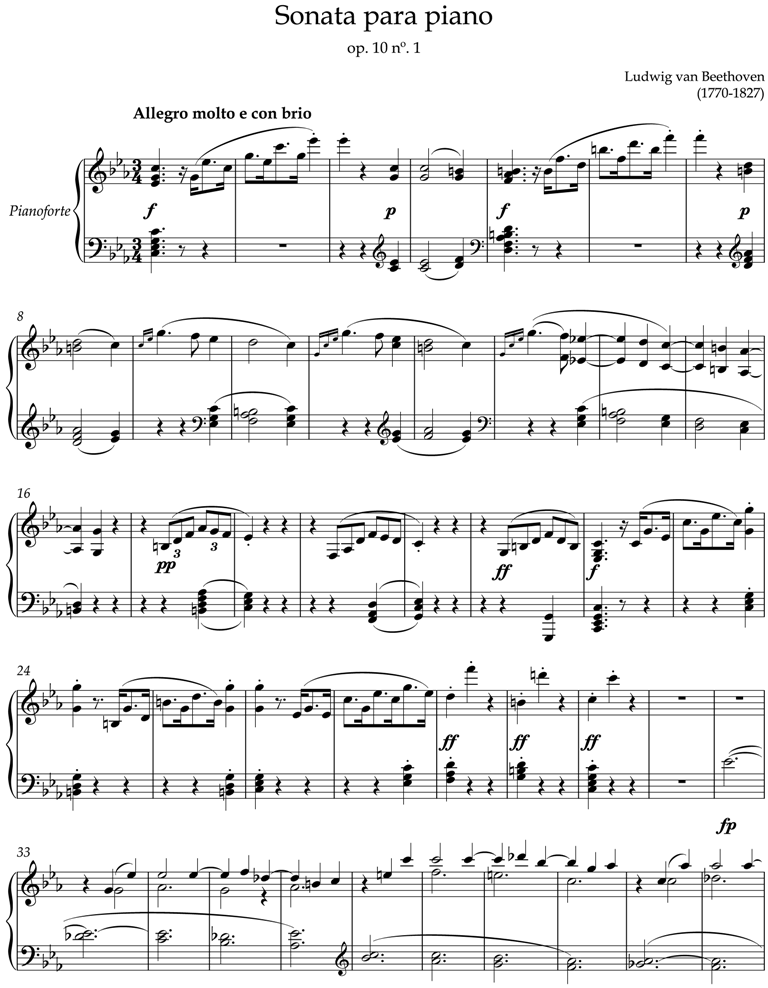
Sibelius is a scorewriter program developed and released by Sibelius Software (now part of Avid). Beyond creating, editing and printing music scores, it can also play the music back using sampled or synthesised sounds. It produces printed scores, and can also publish them via the Internet for others to access. Less advanced versions of Sibelius at lower prices have been released, as have various add-ons for the software.
Named after the Finnish composer Jean Sibelius, the company was founded in April 1993 by twin brothers Ben and Jonathan Finn to market the eponymous music notation program they had created. It went on to develop and distribute various other music software products, particularly for education. In addition to its head office in Cambridge and subsequently London, Sibelius Software opened offices in the US, Australia and Japan, with distributors and dealers in many other countries worldwide. The company won numerous awards, including the Queen's Award for Innovation in 2005.
In August 2006 the company was acquired by Avid, to become part of its Digidesign division, which also manufactures the digital audio workstation Pro Tools. In July 2012, Avid announced plans to divest its consumer businesses, closed the Sibelius London office, and removed the original development team, despite a 11,590-strong 'Save Sibelius' petition spearheading a campaign led by Derek Williams that included extensive protests on Facebook and elsewhere. Avid subsequently recruited new programmers to continue the development of Sibelius, and Steinberg hired most of the former Sibelius team to create a competing software, Dorico.
Sibelius was originally developed by British twins Jonathan and Ben Finn for the Acorn Archimedes computer under the name 'Sibelius 7', not as a version number, but reminiscent of Sibelius' Symphony No 7. The Finns said they could not remember why they used Jean Sibelius' name, but it was probably because he was also 'a Finn' (i.e. Finnish), as well as being one of their favourite composers. They started developing the software (entirely in assembly language) in the summer of 1986, just after they left school, and continued while studying at Oxford and Cambridge universities, respectively. Both brothers were composers, and wrote the program to automate the laborious process of writing music out by hand.
The program was released to the public in April 1993 on 3.5-inch floppy disk. It required considerably less than 1 MB of memory (as its files only occupied a few KB per page of music), and the combination of assembly language and the Archimedes' ARM processor meant that it ran very quickly. No matter how long the score, changes were displayed almost instantly. A unique feature of the Sibelius GUI at that time was the ability it gave the user to drag the entire score around with the mouse, offering a bird's eye of the score, as distinct from having to use the QWERTY input keyboard arrow keys, or equivalent, to scroll the page.
The first ever user of Sibelius was the composer and engraver Richard Emsley, who provided advice on music engraving prior to the start of development, and beta tested the software before its release. The first concert performance from a Sibelius score was the premiere of Plus Loin for chamber orchestra by David Robert Coleman, copied by Emsley. The first score published using Sibelius was Antara by George Benjamin, also copied by Emsley, and published by Faber Music. Other early adopters included composer John Rutter, conductor Michael Tilson Thomas, and publisher Music Sales.
As a killer application for the niche Acorn platform, Sibelius rapidly dominated the UK market. It also sold in smaller numbers in a few other countries, restricted by the availability of Acorn computers. 'Lite' versions were subsequently released, and these were successful in UK schools, where Acorns were widely used.
In September 1998, the first version for Windows was released as 'Sibelius', with the version number reset to 1.0. A Mac version 1.2 was released a few months later, and the company thereafter used conventional version numbers for both platforms across subsequent upgrades. The Windows and Mac versions were essentially identical, and scores created on one platform could be opened on the other. To produce these versions, the software was completely rewritten from scratch in C++, while retaining most of the original Acorn version's functionality and user interface, plus numerous enhancements. The original Acorn names 'Sibelius 6' and 'Sibelius 7' were later re-used to denote versions 6 and 7 of Sibelius for Windows/Mac.
Hub AI
Sibelius (scorewriter) AI simulator
(@Sibelius (scorewriter)_simulator)
Sibelius (scorewriter)
Sibelius is a scorewriter program developed and released by Sibelius Software (now part of Avid). Beyond creating, editing and printing music scores, it can also play the music back using sampled or synthesised sounds. It produces printed scores, and can also publish them via the Internet for others to access. Less advanced versions of Sibelius at lower prices have been released, as have various add-ons for the software.
Named after the Finnish composer Jean Sibelius, the company was founded in April 1993 by twin brothers Ben and Jonathan Finn to market the eponymous music notation program they had created. It went on to develop and distribute various other music software products, particularly for education. In addition to its head office in Cambridge and subsequently London, Sibelius Software opened offices in the US, Australia and Japan, with distributors and dealers in many other countries worldwide. The company won numerous awards, including the Queen's Award for Innovation in 2005.
In August 2006 the company was acquired by Avid, to become part of its Digidesign division, which also manufactures the digital audio workstation Pro Tools. In July 2012, Avid announced plans to divest its consumer businesses, closed the Sibelius London office, and removed the original development team, despite a 11,590-strong 'Save Sibelius' petition spearheading a campaign led by Derek Williams that included extensive protests on Facebook and elsewhere. Avid subsequently recruited new programmers to continue the development of Sibelius, and Steinberg hired most of the former Sibelius team to create a competing software, Dorico.
Sibelius was originally developed by British twins Jonathan and Ben Finn for the Acorn Archimedes computer under the name 'Sibelius 7', not as a version number, but reminiscent of Sibelius' Symphony No 7. The Finns said they could not remember why they used Jean Sibelius' name, but it was probably because he was also 'a Finn' (i.e. Finnish), as well as being one of their favourite composers. They started developing the software (entirely in assembly language) in the summer of 1986, just after they left school, and continued while studying at Oxford and Cambridge universities, respectively. Both brothers were composers, and wrote the program to automate the laborious process of writing music out by hand.
The program was released to the public in April 1993 on 3.5-inch floppy disk. It required considerably less than 1 MB of memory (as its files only occupied a few KB per page of music), and the combination of assembly language and the Archimedes' ARM processor meant that it ran very quickly. No matter how long the score, changes were displayed almost instantly. A unique feature of the Sibelius GUI at that time was the ability it gave the user to drag the entire score around with the mouse, offering a bird's eye of the score, as distinct from having to use the QWERTY input keyboard arrow keys, or equivalent, to scroll the page.
The first ever user of Sibelius was the composer and engraver Richard Emsley, who provided advice on music engraving prior to the start of development, and beta tested the software before its release. The first concert performance from a Sibelius score was the premiere of Plus Loin for chamber orchestra by David Robert Coleman, copied by Emsley. The first score published using Sibelius was Antara by George Benjamin, also copied by Emsley, and published by Faber Music. Other early adopters included composer John Rutter, conductor Michael Tilson Thomas, and publisher Music Sales.
As a killer application for the niche Acorn platform, Sibelius rapidly dominated the UK market. It also sold in smaller numbers in a few other countries, restricted by the availability of Acorn computers. 'Lite' versions were subsequently released, and these were successful in UK schools, where Acorns were widely used.
In September 1998, the first version for Windows was released as 'Sibelius', with the version number reset to 1.0. A Mac version 1.2 was released a few months later, and the company thereafter used conventional version numbers for both platforms across subsequent upgrades. The Windows and Mac versions were essentially identical, and scores created on one platform could be opened on the other. To produce these versions, the software was completely rewritten from scratch in C++, while retaining most of the original Acorn version's functionality and user interface, plus numerous enhancements. The original Acorn names 'Sibelius 6' and 'Sibelius 7' were later re-used to denote versions 6 and 7 of Sibelius for Windows/Mac.