

Austrian motorcycle Grand Prix
View on Wikipedia | |
| Grand Prix motorcycle racing | |
|---|---|
| Venue | Red Bull Ring (1996–1997, 2016–present) Salzburgring (1971–1979, 1981–1991, 1993–1994) |
| First race | 1971 |
| Most wins (rider) | Giacomo Agostini, Ángel Nieto (6) |
| Most wins (manufacturer) | Honda (24) |
The Austrian motorcycle Grand Prix is a motorcycling event that is part of the FIM Grand Prix motorcycle racing season from 1971 to 1997, and then again from 2016 onwards. The event is due to take place at the Red Bull Ring until at least 2025.[1]
History
[edit]The inaugural Austrian grand prix was held in 1971 at the Salzburgring, where it stayed until 1994. In 1995, the Austrian GP was taken off the calendar because the Salzburgring was deemed too dangerous for racing.,[2] but would return in 1996 on the then-called Österreichring.[3][4] In 1997, the Österreichring became the A1-Ring, named after the Austrian mobile network operator A1.
For the 1998 season, the Austrian round was scrapped, mainly due to the low number of spectators who visited the races.[5]
After a 19-year absence, the Austrian Grand Prix returned in 2016 and currently takes place at the Red Bull Ring in Spielberg.[6] The layout was changed, and a chicane was added before the 2022 race.
Track gallery
[edit]-
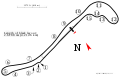 The Salzburgring, used from 1971 to 1994.
 -
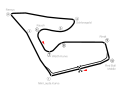 The Grand Prix layout of the A1/Red Bull Ring, used in 1996–1997, and 2016–2021.
.svg)

Official names and sponsors
[edit]- 1971, 1986–1991: Großer Preis von Österreich (no official sponsor)[7]
- 1972: Grosser Preis von Österreich (no official sponsor)[8]
- 1973–1977: Austrian Grand Prix/Grosser Preis von Österreich (no official sponsor)[9]
- 1978–1979, 1981–1985: Austrian Grand Prix/Großer Preis von Österreich (no official sponsor)[10]
- 1993: Austrian Grand Prix (no official sponsor)[11]
- 1994: Grand Prix Austria (no official sponsor)[12]
- 1996: HB Motorrad Grand Prix Austria[13]
- 1997, 2024: Motorrad Grand Prix von Österreich (no official sponsor)[14]
- 2016–2017: NeroGiardini Motorrad Grand Prix von Österreich[15]
- 2018: Eyetime Motorrad Grand Prix von Österreich
- 2019–2020: myWorld Motorrad Grand Prix von Österreich
- 2021: Bitci Motorrad Grand Prix von Österreich[16]
- 2022–2023: CryptoData Motorrad Grand Prix von Österreich[17]
- 2025: bwin Grand Prix of Austria
Winners
[edit]Multiple winners (riders)
[edit]| # Wins | Rider | Wins | |
|---|---|---|---|
| Category | Years won | ||
| 6 |  Giacomo Agostini Giacomo Agostini
|
500cc | 1971, 1972, 1974 |
| 350cc | 1971, 1972, 1974 | ||
 Ángel Nieto Ángel Nieto
|
125cc | 1971, 1972, 1979, 1981, 1982, 1983 | |
| 4 | Jorge Martínez
|
125cc | 1988, 1990 |
| 80cc | 1986, 1987 | ||
| Francesco Bagnaia
|
MotoGP | 2022, 2023, 2024 | |
| Moto2 | 2018 | ||
| 3 |  Kenny Roberts Kenny Roberts
|
500cc | 1978, 1979, 1983 |
| Eddie Lawson
|
500cc | 1984, 1986, 1988 | |
| Fausto Gresini
|
125cc | 1985, 1987, 1991 | |
| Kevin Schwantz
|
500cc | 1989, 1990, 1993 | |
 Mick Doohan Mick Doohan
|
500cc | 1991, 1994, 1997 | |
| Andrea Dovizioso
|
MotoGP | 2017, 2019, 2020 | |
| 2 |  Jarno Saarinen Jarno Saarinen
|
500cc | 1973 |
| 250cc | 1973 | ||
 Kent Andersson Kent Andersson
|
125cc | 1973, 1974 | |
 Hideo Kanaya Hideo Kanaya
|
500cc | 1975 | |
| 350cc | 1975 | ||
| Eugenio Lazzarini
|
125cc | 1977, 1978 | |
 Kork Ballington Kork Ballington
|
350cc | 1978, 1979 | |
| Freddie Spencer
|
500cc | 1985 | |
| 250cc | 1985 | ||
| Luca Cadalora
|
250cc | 1990 | |
| 125cc | 1986 | ||
| Joan Mir
|
Moto3 | 2016, 2017 | |
 Brad Binder Brad Binder
|
MotoGP | 2021 | |
| Moto2 | 2019 | ||
| Mattia Casadei
|
MotoE | 2023 Race 1, 2023 Race 2 | |
| Celestino Vietti
|
Moto2 | 2023, 2024 | |
| Matteo Ferrari
|
MotoE | 2025 Race 1, 2025 Race 2 | |
Multiple winners (manufacturers)
[edit]| # Wins | Manufacturer | Wins | |
|---|---|---|---|
| Category | Years won | ||
| 24 |  Honda Honda
|
500cc | 1985, 1986, 1987, 1991, 1994, 1996, 1997 |
| 250cc | 1985, 1987, 1988, 1989, 1991, 1993, 1994, 1996, 1997 | ||
| Moto3 | 2017, 2019 | ||
| 125cc | 1989, 1991, 1993, 1994, 1996, 1997 | ||
| 19 | Yamaha
|
500cc | 1973, 1974, 1975, 1978, 1979, 1983, 1984, 1988 |
| 350cc | 1973, 1974, 1975, 1976, 1981 | ||
| 250cc | 1973, 1984, 1986, 1990 | ||
| 125cc | 1973, 1974 | ||
| 15 | Ducati
|
MotoGP | 2016, 2017, 2018, 2019, 2020, 2022, 2023, 2024, 2025 |
| MotoE | 2023 Race 1, 2023 Race 2, 2024 Race 1, 2024 Race 2, 2025 Race 1, 2025 Race 2 | ||
| 9 |  Kalex Kalex
|
Moto2 | 2016, 2017, 2018, 2020, 2021, 2022, 2023, 2024, 2025 |
| 7 | Derbi
|
250cc | 1972 |
| 125cc | 1971, 1972, 1988, 1990 | ||
| 80cc | 1986, 1987 | ||
| Suzuki
|
500cc | 1976, 1977, 1981, 1982, 1989, 1990, 1993 | |
 KTM KTM
|
MotoGP | 2021 | |
| Moto2 | 2019 | ||
| Moto3 | 2016, 2018, 2020, 2023, 2025 | ||
| 5 | Garelli
|
125cc | 1982, 1983, 1985, 1986, 1987 |
| 4 | MV Agusta
|
500cc | 1971, 1972 |
| 350cc | 1971, 1972 | ||
| Morbidelli
|
125cc | 1975, 1976, 1977, 1978 | |
| 2 | Kawasaki
|
350cc | 1978, 1979 |
| Minarelli
|
125cc | 1979, 1981 | |
By year
[edit]A pink background indicates an event that was not part of the Grand Prix motorcycle racing championship.
| Year | Track | MotoE | Moto3 | Moto2 | MotoGP | Report | ||||||
|---|---|---|---|---|---|---|---|---|---|---|---|---|
| Race 1 | Race 2 | |||||||||||
| Rider | Manufacturer | Rider | Manufacturer | Rider | Manufacturer | Rider | Manufacturer | Rider | Manufacturer | |||
| 2025 | Red Bull Ring | Matteo Ferrari
|
Ducati | Matteo Ferrari
|
Ducati | Ángel Piqueras
|
KTM |  Diogo Moreira Diogo Moreira
|
Kalex | Marc Márquez
|
Ducati | Report |
| 2024 | Óscar Gutiérrez
|
Ducati | Héctor Garzó
|
Ducati |  David Alonso David Alonso
|
CFMoto | Celestino Vietti
|
Kalex | Francesco Bagnaia
|
Ducati | Report | |
| 2023 | Mattia Casadei
|
Ducati | Mattia Casadei
|
Ducati |  Deniz Öncü Deniz Öncü
|
KTM | Celestino Vietti
|
Kalex | Francesco Bagnaia
|
Ducati | Report | |
| 2022 | Eric Granado
|
Energica | Eric Granado
|
Energica | Ayumu Sasaki
|
Husqvarna | Ai Ogura
|
Kalex | Francesco Bagnaia
|
Ducati | Report | |
| 2021 | Lukas Tulovic
|
Energica | — | Sergio García
|
Gas Gas | Raúl Fernández
|
Kalex | Brad Binder
|
KTM | Report | ||
| 2020 | Cancelled due to COVID-19 concerns | Albert Arenas
|
KTM | Jorge Martín
|
Kalex | Andrea Dovizioso
|
Ducati | Report | ||||
| 2019 |  Mike Di Meglio Mike Di Meglio
|
Energica | Romano Fenati
|
Honda | Brad Binder
|
KTM | Andrea Dovizioso
|
Ducati | Report | |||
| Year | Track | Moto3 | Moto2 | MotoGP | Report | |||
|---|---|---|---|---|---|---|---|---|
| Rider | Manufacturer | Rider | Manufacturer | Rider | Manufacturer | |||
| 2018 | Red Bull Ring | Marco Bezzecchi
|
KTM | Francesco Bagnaia
|
Kalex | Jorge Lorenzo
|
Ducati | Report |
| 2017 | Joan Mir
|
Honda | Franco Morbidelli
|
Kalex | Andrea Dovizioso
|
Ducati | Report | |
| 2016 | Joan Mir
|
KTM | Johann Zarco
|
Kalex | Andrea Iannone
|
Ducati | Report | |
| Year | Track | 125cc | 250cc | 500cc | Report | |||
| Rider | Manufacturer | Rider | Manufacturer | Rider | Manufacturer | |||
| 1997 | A1-Ring | Noboru Ueda
|
Honda | Olivier Jacque
|
Honda | Mick Doohan
|
Honda | Report |
| 1996 | Ivan Goi
|
Honda | Ralf Waldmann
|
Honda | Àlex Crivillé
|
Honda | Report | |
| 1994 | Salzburgring | Dirk Raudies
|
Honda | Loris Capirossi
|
Honda | Mick Doohan
|
Honda | Report |
| 1993 | Takeshi Tsujimura
|
Honda | Doriano Romboni
|
Honda | Kevin Schwantz
|
Suzuki | Report | |
| 1991 | Fausto Gresini
|
Honda | Helmut Bradl
|
Honda | Mick Doohan
|
Honda | Report | |
| 1990 | Jorge Martínez
|
Derbi | Luca Cadalora
|
Yamaha | Kevin Schwantz
|
Suzuki | Report | |
| Year | Track | 80cc | 125cc | 250cc | 500cc | Report | ||||
|---|---|---|---|---|---|---|---|---|---|---|
| Rider | Manufacturer | Rider | Manufacturer | Rider | Manufacturer | Rider | Manufacturer | |||
| 1989 | Salzburgring |  Hans Spaan Hans Spaan
|
Honda | Sito Pons
|
Honda | Kevin Schwantz
|
Suzuki | Report | ||
| 1988 | Jorge Martínez
|
Derbi |  Jacques Cornu Jacques Cornu
|
Honda | Eddie Lawson
|
Yamaha | Report | |||
| 1987 | Jorge Martínez
|
Derbi | Fausto Gresini
|
Garelli | Anton Mang
|
Honda | Wayne Gardner
|
Honda | Report | |
| 1986 | Jorge Martínez
|
Derbi | Luca Cadalora
|
Garelli |  Carlos Lavado Carlos Lavado
|
Yamaha | Eddie Lawson
|
Honda | Report | |
| 1985 | Fausto Gresini
|
Garelli | Freddie Spencer
|
Honda | Freddie Spencer
|
Honda | Report | |||
| 1984 | Stefan Dörflinger
|
Zündapp | Christian Sarron
|
Yamaha | Eddie Lawson
|
Yamaha | Report | |||
| Year | Track | 50cc | 125cc | 250cc | 500cc | Report | ||||
| Rider | Manufacturer | Rider | Manufacturer | Rider | Manufacturer | Rider | Manufacturer | |||
| 1983 | Salzburgring | Ángel Nieto
|
Garelli | Manfred Herweh
|
Real-Rotax | Kenny Roberts
|
Yamaha | Report | ||


- Footnotes
- ^ The 1977 350cc race was cancelled after a crash that led to the death of Hans Stadelmann.[18]
References
[edit]- "History of the Grand Prix of Austria" (in French). Racing Memory. Retrieved 2008-04-05.
- ^ "MotoGP to race at the Red Bull Ring until at least 2025". MotoGP.com. Dorna Sports. 10 August 2019. Retrieved 3 September 2022.
- ^ "Grand Prix uitslagen en bijzonderheden 1995". Archive.today. 13 April 2013. Archived from the original on 13 April 2013. Retrieved 20 July 2018.
- ^ "MotoGP: Casey Stoner among several riders concerned with Red Bull Ring safety ahead of test – Fox Sports". Foxsports.com.au. 2016-07-19. Retrieved 20 July 2018.
- ^ "Austria 1996 500cc". YouTube. 30 August 2017. Retrieved 20 July 2018.
- ^ "Grand Prix uitslagen en bijzonderheden 1998". archive.today. 25 July 2015. Archived from the original on 25 July 2015. Retrieved 20 July 2018.
- ^ "MotoGP™ to return to Austria in 2016 – MotoGP". Motogp.com. Retrieved 20 July 2018.
- ^ "1971 500cc Class (FIM Grand Prix World Championship) Programmes | the Motor Racing Programme Covers Project".
- ^ "1972 500cc Class (FIM Grand Prix World Championship) Programmes | the Motor Racing Programme Covers Project".
- ^ "1973 500cc Class (FIM Grand Prix World Championship) Programmes | the Motor Racing Programme Covers Project".
- ^ "1978 500cc Class (FIM Grand Prix World Championship) Programmes | the Motor Racing Programme Covers Project".
- ^ "1993 500cc Class (FIM Grand Prix World Championship) Programmes | the Motor Racing Programme Covers Project".
- ^ "1994 500cc Class (FIM Grand Prix World Championship) Programmes | the Motor Racing Programme Covers Project".
- ^ "1996 500cc Class (FIM Grand Prix World Championship) Programmes | the Motor Racing Programme Covers Project".
- ^ "1997 500cc Class (FIM Grand Prix World Championship) Programmes | the Motor Racing Programme Covers Project".
- ^ "2016 MotoGP Class (FIM Grand Prix World Championship) Programmes | the Motor Racing Programme Covers Project".
- ^ "2021 MotoGP Class (FIM Grand Prix World Championship) Programmes | The Motor Racing Programme Covers Project". www.progcovers.com.
- ^ "2022 MotoGP Class (FIM Grand Prix World Championship) Programmes | The Motor Racing Programme Covers Project". www.progcovers.com.
- ^ "Les Championnats du Monde de Courses sur Route – L'année 1977" [World Championship Road Racing – 1977]. Racing Memory (in French). Archived from the original on 8 February 2012. Retrieved 2 November 2011.
Austrian motorcycle Grand Prix
View on GrokipediaCircuits
Salzburgring
The Salzburgring, situated in the Salzkammergut hills east of Salzburg, Austria, spans 4.24 kilometers and is renowned for its demanding layout featuring pronounced elevation changes of up to 60 meters, long fast straights along valley sides, and technical corners that test rider precision and bravery.[10] Key sections include the high-speed Ostschleife, a sweeping right-hander with limited run-off areas, and the challenging Schwalbe curve, which demands late braking amid the circuit's flowing, undulating design.[10] These characteristics made it a favorite for motorcycle racing, emphasizing outright speed and cornering stability while exposing riders to risks from its natural terrain constraints.[11] Construction of the Salzburgring began in 1968 and was completed the following year, positioning it as Austria's second permanent racing facility alongside the Österreichring.[10] The circuit's development was influenced by the advocacy of Jochen Rindt, the Austrian Formula One World Champion, who pushed for a dedicated venue to host international motorcycle events and elevate Austria's presence in Grand Prix racing.[12] It debuted with combined car and motorcycle races in September 1969 before securing the inaugural Austrian Motorcycle Grand Prix in 1971, marking the start of its role as the event's primary host.[13] The Salzburgring hosted the Austrian Grand Prix across 22 rounds from 1971 to 1979, 1981 to 1991, and 1993 to 1994, skipping 1980 due to severe snow that canceled the event.[14] The circuit's final Grand Prix in 1994 concluded its era as the venue, with Mick Doohan securing victory in the 500cc class under dry conditions.[3] Throughout its tenure, the track saw modifications to enhance safety, particularly after serious crashes in the 1980s that highlighted vulnerabilities in high-speed sections. A chicane was added at the final corner in 1976 to reduce speeds into the Fahrerlagerkurve, while a dedicated motorcycle chicane was installed at the Emco corner in 1986, slowing approaches and providing better control amid rising concerns over rider injuries.[10] These updates, informed by incidents like multi-rider pile-ups, contributed to gradual improvements in circuit standards before the event's relocation after 1994.[10]Red Bull Ring
The Red Bull Ring is located in Spielberg, Styria, Austria, serving as the modern venue for the Austrian motorcycle Grand Prix since its revival in 2016. The circuit measures 4.348 km in length and features 11 turns, characterized by a high-speed layout that emphasizes long straights and sweeping corners, including the fast Hella Licht Kurve and the Rindt Kurve near the pits; a MotoGP-specific chicane was added at Turn 2 in 2022 to improve safety by reducing speeds into Turn 3.[1][15][3][16] Originally opened in 1969 as the Österreichring, the track underwent significant modifications in the mid-1990s, being shortened and rebuilt before being renamed the A1-Ring in 1997 to reflect sponsorship; it hosted the Austrian Grand Prix for motorcycles in 1996 and 1997 prior to a long hiatus. In 2004, the circuit was acquired by Red Bull co-founder Dietrich Mateschitz, leading to further redevelopment that reduced its length and modernized facilities, culminating in its rebranding as the Red Bull Ring in 2011. This ownership has deeply integrated Red Bull's branding into the venue, including event sponsorship and promotional elements that enhance the spectacle of MotoGP races.[17][18][3][19] Technically, the Red Bull Ring runs in a clockwise direction with a notable elevation change of 65 meters across the lap, contributing to its demanding nature for riders who must manage significant gradients, such as the uphill climb after Turn 3 and the downhill approach to Turn 7. The all-time MotoGP lap record at the circuit stands at 1:27.748, set by Jorge Martin on a Ducati during qualifying for the 2024 Austrian Grand Prix. These features, combined with the track's location amid the Styrian hills, make it a favorite for high-speed duels in the premier class, particularly in the final sector where overtaking opportunities abound.[1][20][21]History
Inception and early years (1971–1994)
The Austrian Motorcycle Grand Prix was introduced in 1971 as part of the FIM Grand Prix World Championship's expansion into new European venues, spurred by the posthumous 1970 Formula 1 World Championship victory of Austrian driver Jochen Rindt, which heightened national interest in motorsport.[22] The event aimed to capitalize on Austria's growing racing infrastructure, including the newly developed Salzburgring circuit near Salzburg, designed partly in response to Rindt's legacy.[23] This addition integrated the race into the championship's European schedule, complementing established events while promoting multi-class competition from smaller displacements like 50cc and 125cc up to the premier 500cc category.[24] The inaugural race occurred on May 9, 1971, at the Salzburgring, where Italian rider Giacomo Agostini claimed victory in both the 350cc and 500cc classes aboard MV Agusta machines, establishing an immediate benchmark for dominance in the premier divisions.[3] Early editions emphasized the 350cc and 500cc classes, reflecting the era's focus on high-capacity two-strokes, but the event quickly expanded to showcase a broader spectrum of classes, drawing crowds that grew to around 100,000 spectators by the mid-1970s.[22] Key milestones included the 1975 race, where Japanese rider Hideo Kanaya secured the 500cc win on a Yamaha, highlighting the increasing international competition and technological advancements in Japanese manufacturers.[25] These years solidified the GP's role in the calendar, with consistent attendance underscoring its appeal amid Austria's burgeoning motorsport culture. Challenges emerged prominently in the 1980s, including the outright cancellation of the 1980 edition scheduled for April 27 due to heavy, unseasonable snowfall that blocked access roads, stranded teams, and made the 4.24 km Salzburgring circuit unraceable.[26] The following year, 1981, saw practice sessions delayed by similar wintry conditions, though the race proceeded with American Randy Mamola winning the 500cc class on a Suzuki, demonstrating the venue's vulnerability to alpine weather.[26] Broader issues encompassed safety concerns, such as inadequate run-off areas and outdated facilities at the Salzburgring, compounded by economic constraints in Austria's motorsport sector that limited upgrades and funding.[22] These factors strained the event's viability, leading to intermittent scheduling adjustments and a gradual shift toward prioritizing rider safety in line with evolving FIM regulations. The GP's early decades fostered a distinct cultural impact by elevating Austria's profile in international motorcycle racing, channeling national pride from Rindt's achievements into grassroots enthusiasm and local participation.[22] It inspired emerging Austrian talents, such as August Auinger, who competed in 125cc and 250cc classes during the 1980s, contributing to a sense of homegrown involvement despite the dominance of foreign stars. By 1994, after 22 editions at Salzburgring, the event had cemented its legacy as a cornerstone of European Grand Prix racing, though persistent infrastructural and financial hurdles prompted its hiatus following the final race won by Max Biaggi in the 250cc class.[22]Hiatus and revival (2016–present)
Following the 1997 Austrian Grand Prix at the A1-Ring, the event was removed from the MotoGP calendar due to persistently low spectator attendance, which undermined its financial viability, compounded by the circuit's own economic challenges that led to its partial demolition and abandonment by 2004.[27][28] Earlier, the shift from the Salzburgring in 1995 stemmed from safety concerns, including inadequate infrastructure and insufficient runoff areas that posed risks to riders amid evolving FIM standards.[12] These venue issues, alongside a crowded international calendar prioritizing higher-profile races, contributed to an 18-year hiatus from 1998 to 2015, during which Austria lacked the necessary facilities and organizational support to host a world championship round.[3] The revival began with a 2014 agreement between Red Bull owner Dietrich Mateschitz and MotoGP rights holder Dorna Sports CEO Carmelo Ezpeleta, securing the Red Bull Ring—rebuilt and reopened in 2011—as the venue for the event's return.[29] The first post-hiatus Grand Prix occurred on August 14, 2016, marking MotoGP's re-entry to Austria after nearly two decades, with Ducati's Andrea Iannone claiming victory in the premier class ahead of teammate Andrea Dovizioso.[30] The full MotoGP lineup debuted in 2017, where Dovizioso again triumphed in a dramatic last-lap duel with Marc Márquez, underscoring the circuit's high-speed layout favoring Ducati machinery.[31] Red Bull's sponsorship played a pivotal role in funding the infrastructure upgrades and promotion that facilitated this resurgence.[32] Since 2016, the Austrian Grand Prix has been an annual fixture, adapting to challenges like the COVID-19 pandemic in 2020, when the event—held twice that year as the Austrian and Styrian Grands Prix—proceeded without spectators to comply with health restrictions, limiting access to essential personnel only.[33] By 2025, on August 17, Márquez secured his maiden win at the Red Bull Ring aboard the Ducati Desmosedici GP, extending the Italian manufacturer's dominance at the track where it has claimed multiple victories amid intense competition.[34] Looking ahead, a contract extension announced in 2024 ensures the event's place on the MotoGP calendar through 2030, reflecting sustained investment in the venue.[9] The revival has boosted the race's international draw, with early editions like 2016 attracting over 215,000 attendees and establishing it as a fan favorite for its alpine setting and thrilling on-track action.[32]Event details
Official names and sponsors
The Austrian motorcycle Grand Prix originated in 1971 as the Großer Preis von Österreich, held without a title sponsor at the Salzburgring circuit.[23] Throughout the 1970s and into the 1980s, the event maintained this name or slight variations like the Austrian 500cc Grand Prix, with no official title sponsorship, though participating teams received significant backing from tobacco companies such as Marlboro, which supported Yamaha and Honda squads during races at the Österreichring.[35] These corporate partnerships elevated team budgets and professionalized the series but faced growing scrutiny amid emerging tobacco advertising restrictions in Europe during the late 1980s and 1990s.[36] The imposition of stricter EU tobacco sponsorship bans in the 1990s severely curtailed funding for Grand Prix events, exacerbating financial challenges that contributed to the Austrian round's discontinuation after 1997 and an 18-year hiatus.[36] Upon its revival in 2016 at the Red Bull Ring, the race returned under the name Motorrad Grand Prix von Österreich, bolstered by the circuit's owner, Red Bull, which invested in track renovations and event logistics to facilitate MotoGP's return.[37] From 2017 to 2018, it retained this designation without a title sponsor, emphasizing the venue's branding through Red Bull's ongoing involvement.[1] Title sponsorship resumed in 2019 with myWorld, an Austrian loyalty program company, renaming the event the myWorld Motorrad Grand Prix von Österreich through 2021 and enabling enhancements like expanded fan zones.[38] In 2022, Romanian blockchain firm CryptoDATA Tech assumed title rights for a three-year deal, rebranding it the CryptoDATA Motorrad Grand Prix von Österreich until 2024, which supported digital initiatives including app-based ticketing and virtual reality experiences for spectators.[39] For 2025, international betting operator bwin secured the sponsorship, officially titling the event the bwin Grand Prix of Austria and continuing the trend of corporate funding driving modern operational upgrades.[40]Race formats and classes
The Austrian motorcycle Grand Prix, during its initial run from 1971 to 1994, featured classes aligned with the era's FIM Grand Prix standards, primarily focusing on the 500cc and 350cc categories for solo machines, alongside 250cc, 125cc, 50cc, and sidecar events.[41] The 350cc class was discontinued after the 1982 season, leaving the 500cc as the premier solo category through the event's hiatus, while sidecars remained contested until their removal from the world championship calendar in 1996.[42] These races emphasized two-stroke and early four-stroke technologies, with multiple heats per class to determine overall results.[43] Following the event's revival in 2016 at the Red Bull Ring, the Austrian Grand Prix adopted the modern MotoGP structure, contesting three classes: the premier MotoGP (1000cc four-stroke prototypes), Moto2 (765cc four-stroke intermediates), and Moto3 (250cc four-stroke lightweight machines).[41] This format has remained consistent since 2017, emphasizing technological parity and rider development across support categories. In 2023, the FIM introduced sprint races—a shorter, approximately half-distance format awarding reduced points (12 for first, down to 1 for ninth)—held on Saturdays across all classes to heighten weekend intensity without altering the traditional Grand Prix on Sundays.[44] The typical race weekend follows a three-day schedule: Friday dedicated to free practice sessions for setup and data gathering; Saturday encompassing further practice, qualifying (split into Q1 and Q2 for grid positions), and the sprint race since 2023; and Sunday hosting warm-up, rider parades, and the full-distance main races for each class, starting with Moto3, followed by Moto2, and concluding with MotoGP.[45] This structure maximizes track time while accommodating the circuit's demands. Specific to the Austrian event at the Red Bull Ring, situated at approximately 700 meters above sea level, teams adjust bike setups for thinner air, which affects engine performance due to lower oxygen density, necessitating tweaks to fuel mapping, aerodynamics, and cooling systems for optimal performance. The 2021 season featured a double-header experiment with the Styrian Grand Prix preceding the Austrian round the following weekend at the same venue, a COVID-19 adaptation that compressed logistics but tested team adaptability.[46] Weather variability, influenced by the circuit's alpine location, often leads to mixed wet-dry conditions, prompting flag-to-flag rules allowing mid-race bike swaps for tire changes or red flags for safety.[47] Under FIM regulations, adaptations like the concession system classify manufacturers into tiers based on prior performance, imposing restrictions on leading teams such as Ducati (in Rank A), including limited testing days, reduced tire allocations, and limited to 2 wildcards per season, which particularly challenges their dominance at high-profile events like the home Austrian round despite the track's suitability for their Desmosedici machines.[48]Winners and records
Multiple winners (riders)
Several riders have secured multiple victories at the Austrian motorcycle Grand Prix since its inception in 1971, spanning various displacement classes from the smaller categories to the premier 500cc and modern MotoGP divisions.[1] Italian legend Giacomo Agostini dominated the early years with three wins in the 500cc class (1971, 1972, 1974) and three in the 350cc class (1971, 1972, 1974), showcasing MV Agusta's superiority on the Salzburgring circuit during an era of technological and rider excellence.[3] Similarly, Spanish rider Ángel Nieto achieved six triumphs in the 125cc class between 1971 and 1983, including victories in 1971, 1972, and 1979, which contributed to his record 13 world titles in smaller classes and highlighted his mastery in lightweight machinery.[49] American Kenny Roberts claimed three 500cc wins (1978, 1979, 1983), marking his breakthrough in Europe and helping establish U.S. riders as global contenders amid fierce battles with Yamaha and Suzuki rivals.[50] In the modern era at the Red Bull Ring, Italian Francesco Bagnaia leads with three consecutive MotoGP victories from 2022 to 2024, leveraging Ducati's straight-line speed advantage on the Spielberg layout.[51] Andrea Dovizioso also recorded three MotoGP wins (2017, 2019, 2020), capitalizing on Ducati's early dominance post-revival in 2016.[51] Spaniard Marc Márquez claimed his first MotoGP triumph at the Austrian Grand Prix in 2025, in a race marked by intense rivalry against Ducati-mounted competitors and extending his personal record at the circuit despite previous challenges on Honda machinery.[7] The following table summarizes key riders with three or more wins across all classes:| Wins | Rider | Years and Classes |
|---|---|---|
| 6 | Giacomo Agostini | 1971, 1972, 1974 (350cc & 500cc) |
| 6 | Ángel Nieto | 1971, 1972, 1979, 1981, 1982, 1983 (125cc) |
| 3 | Kenny Roberts | 1978, 1979, 1983 (500cc) |
| 3 | Francesco Bagnaia | 2018 (Moto2), 2022–2024 (MotoGP) |
| 3 | Andrea Dovizioso | 2017, 2019, 2020 (MotoGP) |
Multiple winners (manufacturers)
Yamaha holds the record for the most victories by a manufacturer at the Austrian Motorcycle Grand Prix, with nine wins primarily achieved during the two-stroke 500cc era through innovative engineering in their YZR500 models. These successes, spanning the 1970s and 1980s, were driven by riders like Jarno Saarinen, Giacomo Agostini, Hideo Kanaya, and Kenny Roberts, whose bikes excelled in the demanding Salzburgring layout due to superior power delivery and chassis stability.[43] Ducati matches Yamaha's tally with nine wins since the event's 2016 revival at the Red Bull Ring, capitalizing on the circuit's long straights where their Desmosedici GP prototypes demonstrate exceptional top speeds often exceeding 310 km/h. This dominance reflects Ducati's focus on aerodynamic efficiency and engine performance in modern 1000cc four-stroke prototypes, securing consecutive victories from 2016 to 2020 and again from 2022 to 2025, interrupted only by KTM's 2021 triumph.[43][52] Suzuki follows with seven wins, mostly in the 1970s and 1980s using their RG500 two-stroke machines, which provided agile handling suited to the Salzburgring's technical sections, as seen in victories by Barry Sheene, Randy Mamola, and Kevin Schwantz. Honda has six successes, highlighted by the NSR500's V4 engine prowess in the 1990s under Mick Doohan and Alex Crivillé, emphasizing reliability during the transition to more powerful prototypes.[43] The Austrian GP has witnessed a technological evolution from the two-stroke 500cc dominance of the 1971–2001 era, where raw power and rider skill defined outcomes, to the post-2002 four-stroke 1000cc prototype class that prioritizes electronics, aerodynamics, and tire management—evident in Ducati's recent streak adapting to the Red Bull Ring's high-speed demands.[43][53]| Wins | Manufacturer | Notable models and years |
|---|---|---|
| 9 | Yamaha | YZR500 (1973, 1974, 1975, 1978, 1979, 1983, 1984, 1986, 1988) |
| 9 | Ducati | Desmosedici GP (2016, 2017, 2018, 2019, 2020, 2022, 2023, 2024, 2025) |
| 7 | [Suzuki | RG500](/page/Suzuki_RG500) (1976, 1977, 1981, 1982, 1989, 1990, 1993) |
| 6 | [Honda | NSR500](/page/Honda_NSR500) (1985, 1987, 1991, 1994, 1996, 1997) |
Results by year
The Austrian Motorcycle Grand Prix results span from its debut in 1971 at the Salzburgring through a hiatus period to its revival at the Red Bull Ring in 2016, with the event featuring the premier class (initially 500cc, later MotoGP) alongside support classes that evolved from 125cc and 250cc to Moto3 and Moto2. The following table lists the winners in these classes for each edition, along with the circuit, pole position holder in the premier class where documented, and attendance figures when available from official records. No race was held in 1980 due to scheduling issues, 1992 and 1995 due to circuit concerns, and 1998–2015 during the hiatus. Double-header events occurred in 2020 and 2021, with the Styrian Grand Prix serving as a companion race at the same venue.[1][43]| Year | Circuit | 125cc/Moto3 Winner | 250cc/Moto2 Winner | 500cc/MotoGP Winner | Pole Position (Premier Class) | Attendance |
|---|---|---|---|---|---|---|
| 1971 | Salzburgring | Ángel Nieto (Derbi) | Silvio Grassetti (MZ) | Giacomo Agostini (MV Agusta) | Unknown | Unknown |
| 1972 | Salzburgring | Ángel Nieto (Derbi) | Unknown | Giacomo Agostini (MV Agusta) | Unknown | Unknown |
| 1973 | Salzburgring | Otto Gröbner (Bultaco) | Dieter Braun (Suzuki) | Jarno Saarinen (Yamaha) | Unknown | Unknown |
| 1974 | Salzburgring | Kent Andersson (Yamaha) | Walter Villa (Yamaha) | Giacomo Agostini (Yamaha) | Unknown | Unknown |
| 1975 | Salzburgring | Unknown | Otto Schäfer (Yamaha) | Hideo Kanaya (Yamaha) | Unknown | Unknown |
| 1976 | Salzburgring | Pierluigi Albano (Yamaha) | Walter Villa (Yamaha) | Barry Sheene (Suzuki) | Unknown | Unknown |
| 1977 | Salzburgring | Unknown | Mario Lega (Yamaha) | Jack Findlay (Suzuki) | Unknown | Unknown |
| 1978 | Salzburgring | Unknown | Kenny Roberts (Yamaha) | Kenny Roberts (Yamaha) | Unknown | Unknown |
| 1979 | Salzburgring | Guy Bertin (Minarelli) | Unknown | Kenny Roberts (Yamaha) | Unknown | Unknown |
| 1981 | Salzburgring | Ricardo Tormo (Minarelli) | Carlos Lavado (Yamaha) | Randy Mamola (Suzuki) | Unknown | Unknown |
| 1982 | Salzburgring | Unknown | Carlos Lavado (Yamaha) | Franco Uncini (Suzuki) | Unknown | Unknown |
| 1983 | Salzburgring | Unknown | Carlos Lavado (Yamaha) | Kenny Roberts (Yamaha) | Unknown | Unknown |
| 1984 | Salzburgring | Unknown | Unknown | Eddie Lawson (Yamaha) | Unknown | Unknown |
| 1985 | Salzburgring | Unknown | Freddie Spencer (Honda) | Freddie Spencer (Honda) | Unknown | Unknown |
| 1986 | Salzburgring | Luca Cadalora (Garelli) | Carlos Lavado (Yamaha) | Eddie Lawson (Yamaha) | Unknown | Unknown |
| 1987 | Salzburgring | Fausto Gresini (Garelli) | Anton Mang (Honda) | Wayne Gardner (Honda) | Unknown | Unknown |
| 1988 | Salzburgring | Unknown | Juan Garriga (Yamaha) | Eddie Lawson (Yamaha) | Unknown | Unknown |
| 1989 | Salzburgring | Manuel Herreros (Honda) | Sito Pons (Honda) | Kevin Schwantz (Suzuki) | Unknown | Unknown |
| 1990 | Salzburgring | Manuel Herreros (Honda) | John Kocinski (Yamaha) | Kevin Schwantz (Suzuki) | Unknown | Unknown |
| 1991 | Salzburgring | Unknown | Luca Cadalora (Yamaha) | Mick Doohan (Honda) | Unknown | Unknown |
| 1993 | Salzburgring | Unknown | Tetsuya Harada (Yamaha) | Kevin Schwantz (Suzuki) | Unknown | Unknown |
| 1994 | Salzburgring | Noboru Ueda (Honda) | Max Biaggi (Aprilia) | Mick Doohan (Honda) | Unknown | Unknown |
| 1996 | Red Bull Ring | Haruchika Aoki (Honda) | Max Biaggi (Aprilia) | Àlex Crivillé (Honda) | Mick Doohan (Honda) | Unknown |
| 1997 | Red Bull Ring | Valentino Rossi (Aprilia) | Max Biaggi (Aprilia) | Mick Doohan (Honda) | Mick Doohan (Honda) | Unknown |
| 2016 | Red Bull Ring | Brad Binder (KTM) | Johann Zarco (Kalex) | Andrea Iannone (Ducati) | Marc Márquez (Honda) | 88,410 |
| 2017 | Red Bull Ring | Joan Mir (Honda) | Franco Morbidelli (Kalex) | Andrea Dovizioso (Ducati) | Marc Márquez (Honda) | 95,238 |
| 2018 | Red Bull Ring | Jorge Martín (Honda) | Francesco Bagnaia (Kalex) | Jorge Lorenzo (Ducati) | Marc Márquez (Honda) | 99,007 |
| 2019 | Red Bull Ring | Aron Canet (KTM) | Enea Bastianini (Italtrans) | Andrea Dovizioso (Ducati) | Marc Márquez (Honda) | 95,984 |
| 2020 | Red Bull Ring | Ai Ogura (KTM) | Tetsuta Nagashima (Kalex) | Andrea Dovizioso (Ducati) | Unknown | Unknown |
| 2021 | Red Bull Ring | Sergio García (GasGas) | Raúl Fernández (Kalex) | Brad Binder (KTM) | Miguel Oliveira (KTM) | 80,000 |
| 2022 | Red Bull Ring | Izan Guevara (GasGas) | Ai Ogura (Kalex) | Francesco Bagnaia (Ducati) | Francesco Bagnaia (Ducati) | 88,616 |
| 2023 | Red Bull Ring | Jaume Masià (Honda) | Tony Arbolino (Kalex) | Francesco Bagnaia (Ducati) | Francesco Bagnaia (Ducati) | 90,000 |
| 2024 | Red Bull Ring | David Alonso (CFMoto) | Celestino Vietti (Kalex) | Francesco Bagnaia (Ducati) | Francesco Bagnaia (Ducati) | 92,000 |
| 2025 | Red Bull Ring | Angel Piqueras (Honda) | Diogo Moreira (Kalex) | Marc Márquez (Ducati) | Marc Márquez (Ducati) | Unknown |