


Community hub
Recent from talks
Contribute something to knowledge base
Content stats: 0 posts, 0 articles, 1 media, 0 notes
Members stats: 0 subscribers, 0 contributors, 0 moderators, 0 supporters
Subscribers
Supporters
Contributors
Moderators
Hub AI
Air traffic control AI simulator
(@Air traffic control_simulator)
Hub AI
Air traffic control AI simulator
(@Air traffic control_simulator)
Air traffic control
Air traffic control (ATC) is a service provided by ground-based air traffic controllers who direct aircraft on the ground and through controlled airspace. The primary purpose of ATC is to prevent collisions, organise and expedite the flow of air traffic, and provide information and other support for pilots. In some countries, ATC can also provide advisory services to aircraft in non-controlled airspace. Controllers monitor the location of aircraft in their assigned airspace using radar and communicate with pilots by radio. To prevent collisions, ATC enforces traffic separation rules, which ensure each aircraft maintains a minimum amount of empty space around it. ATC services are provided to all types of aircraft, including private, military, and commercial flights. Depending on the type of flight and the class of airspace, ATC may issue mandatory instructions or non-binding advisories (known as flight information in some countries). While pilots are required to obey all ATC instructions, the pilot in command of an aircraft always retains final authority for its safe operation. In an emergency, the pilot may deviate from ATC instructions to the extent required to maintain the safety of the aircraft. Weather conditions, such as thunderstorms, strong winds, and low visibility, can significantly affect air traffic control operations, leading to delays, diversions, and the need for alternate routing.
Pursuant to requirements of the International Civil Aviation Organization (ICAO), ATC operations are conducted either in the English language, or the local language used by the station on the ground. In practice, the native language for a region is used; however, English must be used upon request.
In 1920, Croydon Airport near London, England, was the first airport in the world to introduce air traffic control. The 'aerodrome control tower' was a wooden hut 15 feet (5 metres) high with windows on all four sides. It was commissioned on 25 February 1920, and provided basic traffic, weather, and location information to pilots.
In the United States, air traffic control developed three divisions. The first of several air mail radio stations (AMRS) was created in 1922, after World War I, when the U.S. Post Office began using techniques developed by the U.S. Army to direct and track the movements of reconnaissance aircraft. Over time, the AMRS morphed into flight service stations. Today's flight service stations do not issue control instructions, but provide pilots with many other flight related informational services. They do relay control instructions from ATC in areas where flight service is the only facility with radio or phone coverage. The first airport traffic control tower, regulating arrivals, departures, and surface movement of aircraft in the US at a specific airport, opened in Cleveland in 1930. Approach- and departure-control facilities were created after adoption of radar in the 1950s to monitor and control the busy airspace around larger airports. The first air route traffic control center (ARTCC), which directs the movement of aircraft between departure and destination, was opened in Newark in 1935, followed in 1936 by Chicago and Cleveland.
After the 1956 Grand Canyon mid-air collision, killing all 128 on board, the FAA was given the air-traffic responsibility in the United States in 1958, and this was followed by other countries. In 1960, Britain, France, Germany, and the Benelux countries set up Eurocontrol, intending to merge their airspaces. The first and only attempt to pool controllers between countries is the Maastricht Upper Area Control Centre (MUAC), founded in 1972 by Eurocontrol, and covering Belgium, Luxembourg, the Netherlands, and north-western Germany. In 2001, the European Union (EU) aimed to create a 'Single European Sky', hoping to boost efficiency and gain economies of scale.
In the USSR, the first air traffic control service was organized in 1929 on the Moscow - Irkutsk air route; in 1930, control areas were defined along all existing air routes.
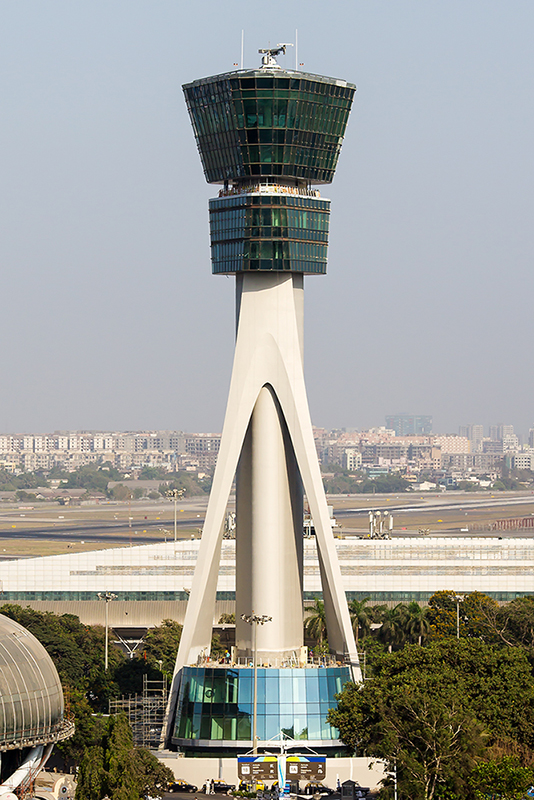
The primary method of controlling the immediate airport environment is visual observation from the airport control tower. The tower is typically a tall, windowed structure, located within the airport grounds. The air traffic controllers, usually abbreviated 'controller', are responsible for separation and efficient movement of aircraft and vehicles operating on the taxiways and runways of the airport itself, and aircraft in the air near the airport, generally 5 to 10 nautical miles (9 to 19 kilometres; 6 to 12 miles), depending on the airport procedures. A controller must carry out the job using the precise and effective application of rules and procedures; however, they need flexible adjustments according to differing circumstances, often under time pressure. In a study which compared stress in the general population and among staff working in this kind of system, there was markedly showed more stress level for controllers. This variation can be explained, at least in part, by the characteristics of the job.
Remote and virtual tower (RVT) is a system based on air traffic controllers being located somewhere other than at the local airport tower, and still able to provide air traffic control services.
Air traffic control
Air traffic control (ATC) is a service provided by ground-based air traffic controllers who direct aircraft on the ground and through controlled airspace. The primary purpose of ATC is to prevent collisions, organise and expedite the flow of air traffic, and provide information and other support for pilots. In some countries, ATC can also provide advisory services to aircraft in non-controlled airspace. Controllers monitor the location of aircraft in their assigned airspace using radar and communicate with pilots by radio. To prevent collisions, ATC enforces traffic separation rules, which ensure each aircraft maintains a minimum amount of empty space around it. ATC services are provided to all types of aircraft, including private, military, and commercial flights. Depending on the type of flight and the class of airspace, ATC may issue mandatory instructions or non-binding advisories (known as flight information in some countries). While pilots are required to obey all ATC instructions, the pilot in command of an aircraft always retains final authority for its safe operation. In an emergency, the pilot may deviate from ATC instructions to the extent required to maintain the safety of the aircraft. Weather conditions, such as thunderstorms, strong winds, and low visibility, can significantly affect air traffic control operations, leading to delays, diversions, and the need for alternate routing.
Pursuant to requirements of the International Civil Aviation Organization (ICAO), ATC operations are conducted either in the English language, or the local language used by the station on the ground. In practice, the native language for a region is used; however, English must be used upon request.
In 1920, Croydon Airport near London, England, was the first airport in the world to introduce air traffic control. The 'aerodrome control tower' was a wooden hut 15 feet (5 metres) high with windows on all four sides. It was commissioned on 25 February 1920, and provided basic traffic, weather, and location information to pilots.
In the United States, air traffic control developed three divisions. The first of several air mail radio stations (AMRS) was created in 1922, after World War I, when the U.S. Post Office began using techniques developed by the U.S. Army to direct and track the movements of reconnaissance aircraft. Over time, the AMRS morphed into flight service stations. Today's flight service stations do not issue control instructions, but provide pilots with many other flight related informational services. They do relay control instructions from ATC in areas where flight service is the only facility with radio or phone coverage. The first airport traffic control tower, regulating arrivals, departures, and surface movement of aircraft in the US at a specific airport, opened in Cleveland in 1930. Approach- and departure-control facilities were created after adoption of radar in the 1950s to monitor and control the busy airspace around larger airports. The first air route traffic control center (ARTCC), which directs the movement of aircraft between departure and destination, was opened in Newark in 1935, followed in 1936 by Chicago and Cleveland.
After the 1956 Grand Canyon mid-air collision, killing all 128 on board, the FAA was given the air-traffic responsibility in the United States in 1958, and this was followed by other countries. In 1960, Britain, France, Germany, and the Benelux countries set up Eurocontrol, intending to merge their airspaces. The first and only attempt to pool controllers between countries is the Maastricht Upper Area Control Centre (MUAC), founded in 1972 by Eurocontrol, and covering Belgium, Luxembourg, the Netherlands, and north-western Germany. In 2001, the European Union (EU) aimed to create a 'Single European Sky', hoping to boost efficiency and gain economies of scale.
In the USSR, the first air traffic control service was organized in 1929 on the Moscow - Irkutsk air route; in 1930, control areas were defined along all existing air routes.
The primary method of controlling the immediate airport environment is visual observation from the airport control tower. The tower is typically a tall, windowed structure, located within the airport grounds. The air traffic controllers, usually abbreviated 'controller', are responsible for separation and efficient movement of aircraft and vehicles operating on the taxiways and runways of the airport itself, and aircraft in the air near the airport, generally 5 to 10 nautical miles (9 to 19 kilometres; 6 to 12 miles), depending on the airport procedures. A controller must carry out the job using the precise and effective application of rules and procedures; however, they need flexible adjustments according to differing circumstances, often under time pressure. In a study which compared stress in the general population and among staff working in this kind of system, there was markedly showed more stress level for controllers. This variation can be explained, at least in part, by the characteristics of the job.
Remote and virtual tower (RVT) is a system based on air traffic controllers being located somewhere other than at the local airport tower, and still able to provide air traffic control services.
Recent media
Recent media