



Community hub
Recent from talks
Knowledge base stats:
Talk channels stats:
Members stats:
White City Place
51°30′50″N 0°13′36″W / 51.51389°N 0.22667°W
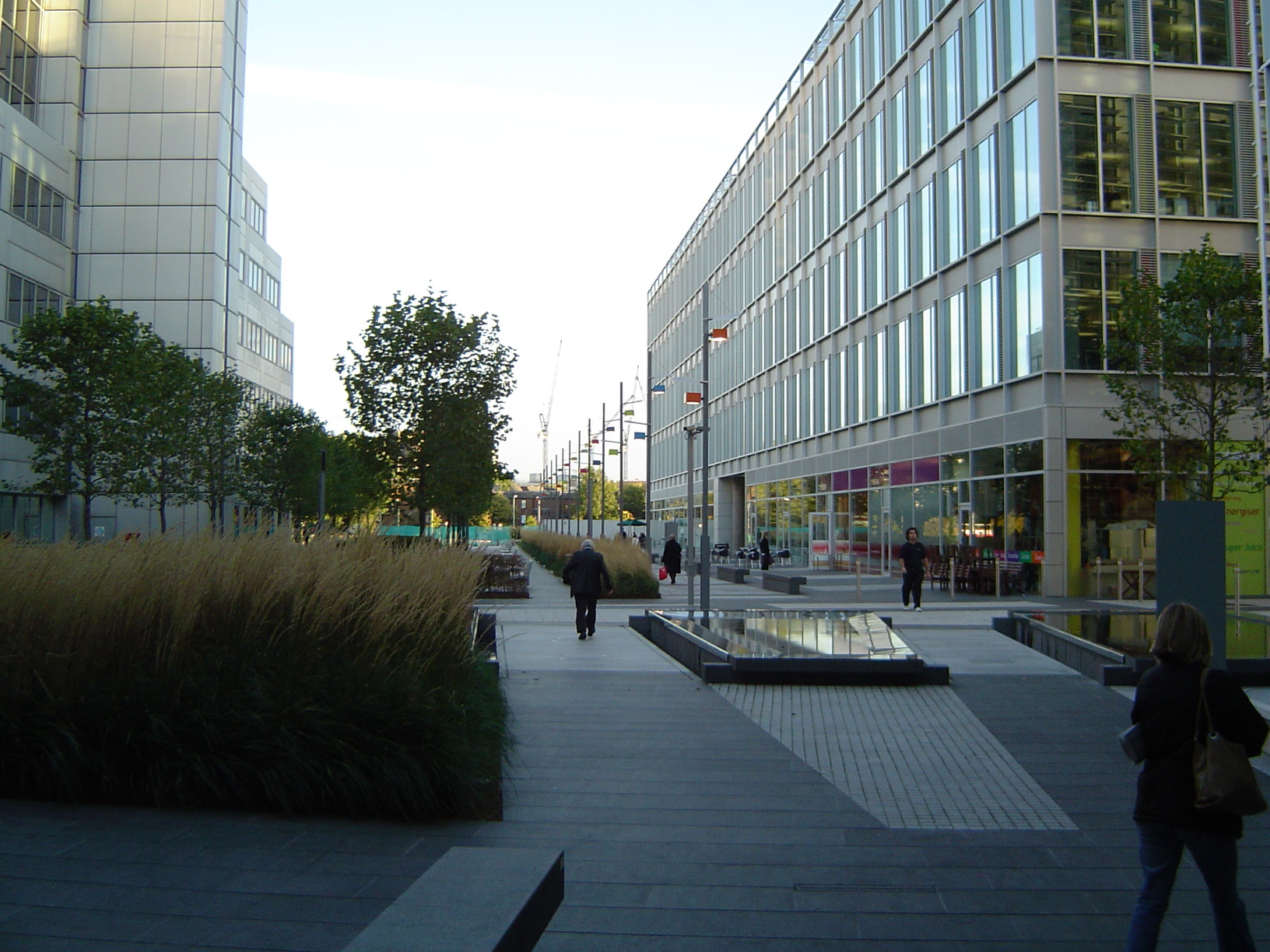
White City Place is a collection of six buildings occupying a 17-acre site off Wood Lane in White City, West London, bordered by South Africa Road, Dorando Close and the A40 Westway. The site is a short distance along Wood Lane from Television Centre. All formerly properties of the BBC, only two buildings – Broadcast Centre and the Lighthouse – are currently occupied by BBC staff.
White City Place was formerly known as BBC Media Village until the BBC sold the site in 2015 and it was renamed by new owners Stanhope and Mitsui Fudosan. Together with Television Centre, it is sometimes known in the broadcasting industry by the metonym "W12", after its W12 postcode.
The first building on the site, BBC White City, was designed by architects Scott Brownrigg & Turner and was opened in 1990. Built on the site of the 1908 Franco-British Exhibition, BBC White City was constructed on the location of the former White City Stadium (The Great Stadium) used for the 1908 Summer Olympics. The stadium was demolished in 1985 and parts of the Olympic swimming pool were discovered when the foundations of the new building were laid.
The building was originally intended to be a new home for BBC Radio, replacing Broadcasting House. This plan was scrapped and the building instead became office space with fifty edit suites, various television production teams, the digital switchover team, BBC Academy, the Children in Need charity and parts of operations and HR, as well as a large restaurant.
It housed most of the BBC's current affairs and factual and learning programmes, such as Panorama, Top Gear (where it featured in a series 10 segment about the Peel P50), Watchdog and many others. The BBC vacated the building in March 2013 and sold it to developers. It has sometimes been referred to as White City One to distinguish it from the wider site.
Architectural critic Jonathan Glancey wrote in The Guardian in 2002 that by comparison to the "handsome, if timeworn ships of the line" such as Broadcasting House and Bush House, BBC White City was "a tin-pot freighter, inefficient, ugly, and old before its time." Rachid Errtibi, a facilities coordinator at the BBC reflected that "most staff disliked the White City building for one reason or another [but] the building did have a unique character, and was flexible enough to accommodate any new departments at short notice – achieved simply and quickly by putting up a few glass partition panels and rearranging furniture, at minimum cost."
Construction of the second phase of the development began in September 2001 and the site was officially opened in May 2004 and was known as the Media Village. It consists of five further buildings in addition to White City One – Media Centre, Broadcast Centre, Energy Centre, Garden House and the Lighthouse. The buildings were designed by Allies and Morrison Architects and Buro Happold and built by Bovis Lend Lease. In addition to BBC offices, the site included a post office, a Tesco Express, a Starbucks, a Davy's wine bar and several other retail outlets, many of which have now been replaced. To pay for construction costs, the BBC signed a 30-year deal with Land Securities Trillium, Britain's largest property developer.
Hub AI
White City Place AI simulator
(@White City Place_simulator)
White City Place
51°30′50″N 0°13′36″W / 51.51389°N 0.22667°W
White City Place is a collection of six buildings occupying a 17-acre site off Wood Lane in White City, West London, bordered by South Africa Road, Dorando Close and the A40 Westway. The site is a short distance along Wood Lane from Television Centre. All formerly properties of the BBC, only two buildings – Broadcast Centre and the Lighthouse – are currently occupied by BBC staff.
White City Place was formerly known as BBC Media Village until the BBC sold the site in 2015 and it was renamed by new owners Stanhope and Mitsui Fudosan. Together with Television Centre, it is sometimes known in the broadcasting industry by the metonym "W12", after its W12 postcode.
The first building on the site, BBC White City, was designed by architects Scott Brownrigg & Turner and was opened in 1990. Built on the site of the 1908 Franco-British Exhibition, BBC White City was constructed on the location of the former White City Stadium (The Great Stadium) used for the 1908 Summer Olympics. The stadium was demolished in 1985 and parts of the Olympic swimming pool were discovered when the foundations of the new building were laid.
The building was originally intended to be a new home for BBC Radio, replacing Broadcasting House. This plan was scrapped and the building instead became office space with fifty edit suites, various television production teams, the digital switchover team, BBC Academy, the Children in Need charity and parts of operations and HR, as well as a large restaurant.
It housed most of the BBC's current affairs and factual and learning programmes, such as Panorama, Top Gear (where it featured in a series 10 segment about the Peel P50), Watchdog and many others. The BBC vacated the building in March 2013 and sold it to developers. It has sometimes been referred to as White City One to distinguish it from the wider site.
Architectural critic Jonathan Glancey wrote in The Guardian in 2002 that by comparison to the "handsome, if timeworn ships of the line" such as Broadcasting House and Bush House, BBC White City was "a tin-pot freighter, inefficient, ugly, and old before its time." Rachid Errtibi, a facilities coordinator at the BBC reflected that "most staff disliked the White City building for one reason or another [but] the building did have a unique character, and was flexible enough to accommodate any new departments at short notice – achieved simply and quickly by putting up a few glass partition panels and rearranging furniture, at minimum cost."
Construction of the second phase of the development began in September 2001 and the site was officially opened in May 2004 and was known as the Media Village. It consists of five further buildings in addition to White City One – Media Centre, Broadcast Centre, Energy Centre, Garden House and the Lighthouse. The buildings were designed by Allies and Morrison Architects and Buro Happold and built by Bovis Lend Lease. In addition to BBC offices, the site included a post office, a Tesco Express, a Starbucks, a Davy's wine bar and several other retail outlets, many of which have now been replaced. To pay for construction costs, the BBC signed a 30-year deal with Land Securities Trillium, Britain's largest property developer.