Hubbry Logo
Basque ciderBasque ciderMain
Open search
Basque cider
Community hub
Basque cider
logo
8 pages, 0 posts
0 subscribers
Be the first to start a discussion here.
Contribute something
Basque cider
Basque cider
from Wikipedia

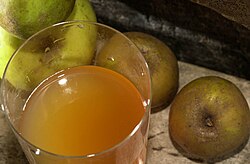
Basque cider is an apple cider from the Basque region of Europe served at sagardotegi (cider houses).[1] Known as Sagardoa, the cider in Basque cuisine is produced at cider houses in areas such as Astigarraga, Spain, an apple growing region. It is sold in bottles, is still (non-carbonated), and poured from height.[2] Salted cod omelette is a traditional dish eaten in Basque cider houses. Quince jelly and nuts are also served as well as steak.

The production of the Basque cider is similar to winemaking in many ways. Apple harvesting starts in September and October to prepare raw material for barrel fermentation. The cider is then fermented up to the middle of spring. Compared to natural winemaking, Basque cider manufacturers do not add any commercial yeast. Spontaneous fermentation is the preferred way to produce cider in the Basque region. There's also a Basque tradition called "txotx" when barkeeps pour the cider right from the barrel directly into a glass 3 to 6 feet away to add natural carbonation. [3]

References

[edit]
Revisions and contributorsEdit on WikipediaRead on Wikipedia
from Grokipedia
Basque cider, known as sagardoa in the , is a naturally fermented made from the juice of local apple varieties indigenous to the Basque Country, a region spanning northern and southwestern . It is characterized by its dry profile, with an alcohol content typically ranging from 5% to 6% ABV, no added sugars, and subtle natural resulting from wild , yielding complex flavors that often include notes of , tropical fruit, and high acidity. The production of sagardoa relies on over 1,000 varieties of Basque apples, of which 106 are authorized under the Euskal Sagardoa Designation of Origin, now a cross-border designation since 2024 encompassing the entire Basque Country in and , harvested by hand between and November. The process involves crushing the apples, pressing the pulp to extract juice, and fermenting it—first alcoholic and then malolactic—in traditional oak barrels called kupelas, before bottling for year-round availability or draft serving during the seasonal txotx period from January to April. This method emphasizes minimal intervention, preserving the cider's fresh, palate-cleansing qualities that distinguish it from sweeter or more carbonated ciders elsewhere. Historically, sagardoa traces its roots to ancient times, with early references to cider-like beverages in the region noted by the Greek geographer Strabo in the 1st century, regarding neighboring peoples like the Cantabrians, followed by a 1024 document mentioning Basque apple trees. It flourished during the 15th and 16th centuries, serving as a vital ration for Basque whalers and sailors—up to 2–3 liters per day—to prevent scurvy on long voyages, thanks to the vitamin C in fresh apples, and supporting the region's maritime economy that exported cider barrels worldwide. Culturally, sagardoa is deeply embedded in Basque identity, protected by medieval charters as early as the and celebrated in sagardotegiak (cider houses), where around 100 establishments today host communal meals featuring omelets, T-bone steaks, and sheep's cheese, all paired with the poured from barrels in the iconic txotx ritual—shouting "Txotx!" to signal the pour into glasses from a height to aerate it. The annual harvest yields approximately 13 million liters across the region, as of 2023, underscoring its role in rural traditions and modern gastronomic tourism along routes like the Sagardoa Route.

History

Origins

The tradition of Basque cider has roots extending to the Neolithic era, evidenced by archaeological discoveries of wild apple consumption among early inhabitants of the Basque Country. Carbonized remains of crab apples (Malus sylvestris), including halved and calcined specimens likely used for flavoring or preservation, have been found at sites such as Aizpea cave in Navarra (dating to 5580–5430 BC) and Lumentxa cave in Bizkaia (4220–3710 BC), alongside other Rosaceae fruits. These findings indicate that prehistoric communities gathered and processed apples as part of their diet, predating organized cider production but establishing the region's long-standing affinity for the fruit. The earliest written mentions of apple cultivation and related beverages in the Basque area emerge from classical and medieval sources. In the 1st century AD, Greek geographer referenced the —the pre-Roman Basque tribe—and described a local drink known as pitarra, prepared by boiling apples with honey and water, suggesting early experimentation with fruit-based fermentation or infusion. By 1024 AD, a historical document explicitly records apple trees in the Basque Country, pointing to the development of orchards and sustained cultivation practices. A more direct account of cider appears in the 12th century , where French pilgrim Aymeric Picaud depicted the Basque lands (Euskal Herria) as rich in apples and cider yet poor in wine, emphasizing cider's prominence as a everyday refreshment derived from abundant local produce. Theories on cider's introduction propose possible external influences from Greek and Roman settlers, who brought advanced knowledge of fruit processing and beverages to the , but the practice is fundamentally indigenous, evolving from the ' adaptation of native wild apples into a distinct cultural element over millennia. In its formative phases, Basque cider functioned as a basic beverage in a region where wine grapes struggled to thrive, serving as a reliable, nutritious alternative for households and vital for maritime communities.

Historical Significance

The 11th-century Gipuzkoan Charter played a pivotal role in establishing the legal and economic foundations of Basque cider production by prohibiting the importation of foreign cider until all local stocks were depleted, thereby protecting domestic apple orchards and fostering a robust internal network. This measure underscored cider's status as a of the regional from the medieval period onward, ensuring that Basque producers maintained control over supply and distribution amid growing demand. By the , had surged in popularity across , surpassing wine in consumption in several regions due to its accessibility and the expansion of apple cultivation, with Basque production emerging as a key contributor to this trend through trade routes that connected the to broader continental markets. In the Basque Country, 's widespread adoption as a dietary staple, as noted by 12th-century pilgrims like Aymeric Picaud, further integrated it into daily life and commerce, fueling agricultural development and local industries. The 15th and 16th centuries marked a golden age for Basque cider, particularly in its navigational significance, as it became an essential ration for sailors embarking on long voyages to the North Atlantic for and . Each sailor received 2-3 liters daily, with the beverage's high content proving vital in preventing and sustaining endurance during extended expeditions to places like . Barrels of cider filled ship holds as a practical, affordable alternative to spoiling water or costly wine, enhancing the Basques' reputation for maritime prowess and supporting economic expansion in ports like and . Cider houses, or sagardotegiak, evolved as central social and economic hubs during this era, anchoring rural by processing apples from expansive orchards and facilitating both local consumption and export activities that bolstered the region's prosperity. These establishments not only met surging demand through on-site pressing but also served as gathering points for farmers, traders, and sailors, intertwining production with the broader fabric of Basque society and .

Production

Apple Varieties

The Basque Country boasts a rich heritage of apple cultivation, with historical records indicating over 1,000 distinct varieties developed over centuries, many adapted to the region's unique . Of these, 115 are currently authorized for use in cider production under the Euskal Sagardoa (PDO), a Denomination of Origin established in 2017 with PDO protection granted by 2025 to ensure quality and regional authenticity. These authorized varieties form the foundation of Basque cider, selected for their ability to contribute to a balanced profile when blended. Basque cider apples are classified into three primary categories based on their phenolic and acid content: acidic, bitter, and bitter-acidic types. Acidic varieties, such as Aritza and Txalaka, provide sharpness and freshness. Bitter types, including Urtebi and Gezamin, impart tannic and astringency. Bitter-acidic hybrids like Errezila and Goikoetxea offer a combination of both qualities. This system guides producers in creating harmonious blends that support natural processes. Cultivation of these apples occurs primarily in the cool, humid Atlantic climate of and adjacent areas in the Basque Autonomous , where annual rainfall exceeds 1,200 mm and mild temperatures favor slow maturation. Traditional orchards, often managed by family-run baserri farms, promote and , with densities typically under 400 trees per . Harvesting takes place from early September to late November, when apples reach optimal ripeness as determined by sugar levels and phenolic maturity; fruits are hand-picked using the traditional kizkia—a hooked wooden tool—to avoid bruising and ensure quality. Efforts to preserve emphasize the use of local varieties inherently suited to Basque soils, which are slightly acidic and rich in , enhancing resilience against diseases like scab and . Initiatives by organizations such as the Natural Cider Association promote sustainable practices, including the replanting of heirloom trees and selection of disease-resistant cultivars like Txalaka, to safeguard amid climate challenges. These measures not only maintain varietal purity but also support long-term ecological balance in orchards spanning approximately 500 hectares under the DO as of 2024. In 2025, the DO produced 3.5 million liters using apples from these orchards.

Traditional Production Process

The traditional production of Basque cider, known as sagardoa, begins with the harvesting of apples, which are hand-picked from local orchards primarily between late and mid-November. This manual process, often using tools like the kizkia (a traditional hooked stick), ensures the selection of ripe fruit from indigenous varieties such as Urtebi or Txalaka, requiring several kilograms of apples per bottle due to juice yields of 50-70%. The harvest timing aligns with the natural maturation cycle, influenced by biennial bearing (vecería), where productive years alternate with leaner ones. Following , the apples are washed, crushed into a pulp called pastor, and then pressed to extract the , or musto. Traditional pressing methods, often involving manual or mechanical basket-style presses, achieve a juice yield of 50-70%, with the resulting cloudy liquid retaining natural sediments for flavor complexity. The must is transferred directly to large barrels known as kupelas, where spontaneous occurs without any additives, relying solely on native yeasts present on the apple skins. The fermentation process unfolds in two main stages within the kupelas: first, alcoholic fermentation converts sugars to alcohol over 2-4 weeks, producing a reddish, sweet intermediate liquid; this is followed by , where malic acid transforms into softer , typically lasting several additional months for a total aging period of at least 8 months. This minimal-intervention approach results in an unfiltered, naturally carbonated with low alcohol content (around 5-7% ABV) and no , preserving its rustic character. Once fermentation completes, the cider remains stored in kupelas until the txotx season from January to April, when it is drawn directly from the barrels for serving; for year-round distribution, it is bottled without further processing, maintaining its live, effervescent quality. The DO is progressing toward cross-border inclusion of Navarra, potentially expanding production.

Characteristics

Sensory Profile

Basque cider, known as Euskal Sagardoa, presents a hazy, golden-yellow appearance due to its unfiltered nature, with subtle natural carbonation manifesting as fine, dispersed bubbles within the liquid. This cloudy straw-to-gold hue reflects the retention of apple sediments and from traditional production, contributing to its rustic visual character without the clarity of filtered beverages. The aroma and taste profile of Basque cider is distinctly dry, with an (ABV) typically ranging from 5% to 6%, emphasizing sharp acidity and subtle bitterness derived from native apple varieties and wild yeast . Key sensory notes include pome fruit aromas, light funky or barnyard character, tangy tartness with accents, and herbal elements; is minimal, with no added sugars to preserve its dry, refreshing essence. This results in a balanced yet assertive flavor, where the post- complexity highlights fruity and slightly sour accents without overpowering . In terms of , Basque cider is light- to medium-bodied and effervescent, particularly when poured traditionally from a height to aerate and create a temporary , yielding a clean, crisp finish that enhances its drinkability. The subtle sparkle, known as txinparta, integrates smoothly with the low residual sugars, providing a refreshing sensation that underscores its dry profile. Compared to sweeter Norman ciders, which often feature higher residual sugars and a milder acidity, Basque cider stands out for its emphasis on dryness and earthiness. Similarly, it differs from the fruitier, more floral Asturian varieties by exhibiting greater tannic structure, bitterness, and sourness, rooted in its wild fermentation and local .

Regulations and Standards

Basque cider has long been protected through historical legal measures that safeguarded local production and trade. As early as the , the prohibited the importation of foreign cider until all local production was consumed, thereby preserving apple orchards, cider houses, and the regional economy dependent on sagardoa. These early protections, embedded in regional charters known as fueros, emphasized the cultural and economic importance of cider, building a foundation for modern regulations that highlight the product's and traditional practices. In the Spanish Basque Country, the Euskal Sagardoa (PDO) was established in 2017 to certify authentic Basque , officially recognized by the in 2023 under the name 'Euskal Sagardoa / Sidra del País Vasco'. This PDO requires that be produced exclusively from 100% native Basque apple varieties grown in the defined geographical area of Bizkaia, , and Álava/Araba provinces, using traditional methods that underscore the region's mild, wet climate and clayey soils. Authorized varieties number 106, including 76 with unique genetic profiles such as Azpeiti Sagarra and Bostkantoi, ensuring and adaptation to local conditions. The PDO mandates natural alcoholic and of unfiltered without added sugars, water, or artificial flavors, resulting in a naturally carbonated product that must be bottled within the production area to maintain quality and retention. Compositional standards include an alcoholic strength greater than 5% v/v, total sulphur dioxide below 100 mg/L, volatile acidity under 2.2 g/L, and a total dry extract exceeding 14 g/L, with residual glucose and limited to 0.2 g/L to preserve the cider's natural profile. Production encompasses apple cultivation, harvesting, washing, juice extraction, , and maturation, all conducted under strict oversight to prevent deviations from tradition. In the Northern (French) Basque Country, while there is no equivalent PDO, traditional production is protected through the Presidium, which promotes the use of local apple varieties like Eztika and Mamula to preserve and . Certification is managed by the Euskal Sagardoa Regulatory Council, which maintains a register of approved producers and conducts regular audits to verify compliance with PDO specifications. Certified ciders must bear numbered labels featuring the PDO logo, guaranteeing and authenticity for over 270 apple producers and 48 associated cider houses. This framework not only enforces quality controls but also promotes sustainable practices tied to the Basque , ensuring that sagardoa remains a distinct expression of regional heritage.

Cultural Significance

Cider Houses and Traditions

Cider houses, known as sagardotegiak or tolare in Basque, serve as the traditional venues for consuming , functioning as communal gathering spots that blend rural heritage with social rituals. These establishments originated in the as meeting places for Basque sailors and whalers, who relied on 's content to prevent during long voyages to distant waters like . Over time, they evolved from practical hubs tied to the maritime economy into enduring cultural institutions that preserve Basque identity through shared experiences of tasting and feasting. Today, around 100 active cider houses operate primarily in , with concentrations in areas like Astigarraga, emphasizing communal dining for groups of friends known as cuadrillas—and as of 2025, bookings for guided tours have increased by 28% and online reservations by 37%, highlighting growing gastronomic tourism. The seasonal cycle of cider consumption, centered on the txotx period, underscores the folklore and socialization integral to Basque traditions. This season officially begins around mid-January and extends through late or early May, aligning with the maturation of the previous autumn's apple harvest after . During this time, cider houses open their doors to welcome visitors, transforming into lively spaces where locals and tourists alike participate in age-old customs that foster community bonds and celebrate the natural rhythm of production. The emphasis on seasonal availability highlights 's role in Basque , where the opening of barrels marks a communal rite of renewal and anticipation for the year's . At the heart of these gatherings is the txotx ritual, a ceremonial practice that signals the unveiling of fresh cider from the barrel. The term "txotx" derives from the Basque word for "toothpick," referring to the small wooden plugs used to seal the barrels, which are dramatically removed amid cheers. Participants shout "Txotx!" to initiate the serving, after which the cider maker pours the unfiltered, young cider from a height of 1 to 2 meters directly into wide-mouthed glasses, allowing it to aerate and foam upon impact—a technique known as "breaking" the cider to enhance its flavor and effervescence. This ritual, which gained widespread popularity in the post-World War II era through gastronomic societies, originally served a practical purpose: allowing neighbors and buyers to sample the new vintage for quality assessment before purchase, with barrels opened sequentially to maintain the flow throughout the evening. In cuadrilla groups, this act not only aerates the tart, slightly sparkling cider but also symbolizes collective enjoyment, reinforcing the egalitarian and convivial spirit of Basque social life.

Role in Basque Cuisine

Basque cider, known as sagardoa, plays a central role in by complementing the region's hearty, rustic dishes with its sharp acidity and effervescence, which balance rich flavors and fats. Classic pairings include grilled txuleta steak, a thick cooked rare over embers, where the cider's tartness cuts through the meat's savoriness; cod-based preparations like , a fluffy omelet that benefits from the drink's crisp refreshment; simmered chorizo or txistorra sausages, often served as an appetizer boiled in cider itself; and , a smoked variety, paired with walnuts and jelly for dessert, allowing the cider to cleanse the palate of the cheese's intensity. In traditional cider houses, or sagardotegis, menus are structured as multi-course meals meticulously designed to harmonize with , emphasizing seasonal and local ingredients. These typically begin with simple appetizers such as chorizo in or a omelet, progress to the main course of txuleta, and conclude with cheese platters, all served family-style to encourage sharing and prolong the enjoyment of the throughout the meal. This format underscores 's function as the unifying element, with each dish sequenced to highlight its oxidative, slightly funky profile against evolving flavors. Beyond its culinary applications, Basque cider holds deep cultural symbolism as a social equalizer during meals, fostering communal bonds through shared rituals like the txotx pouring , where guests serve themselves directly from barrels, eliminating hierarchies. It embodies Basque identity, rooted in the region's agrarian heritage and seasonal apple harvests that dictate the cider season from mid-January to late or early May, transforming meals into celebrations of community and resilience. Nutritionally, Basque cider's high vitamin C content, derived from fresh apples, complements the protein-heavy and vegetable-based elements of , providing a healthful contrast to dishes rich in meats and cheeses while historically supporting the vitality of seafaring .

Modern Developments

Current Industry

The contemporary Basque cider industry is concentrated primarily in the province of in , with additional production in Bizkaia and Araba, as well as in the , where initiatives like the Presidium support local producers. To promote sustainability, new apple orchards have been planted using traditional varieties, helping to preserve and secure future supplies. As of 2023, the Euskal Sagardoa Denomination of Origin encompassed 50 producers, who collectively yielded approximately 12 million liters of natural annually across Euskal Herria. In 2024, production under the DO fell to 4 million liters, reflecting a 60% reduction in apple harvest due to adverse weather conditions. This scale reflects a rebound from mid-20th-century lows, when production dipped below 1.1 million liters in 1967 amid earlier declines linked to reduced maritime activities and industrial shifts starting in the ; today, over 100 cider houses operate, many offering guided tours and tastings to visitors. The sector plays a vital economic role by sustaining local through apple farming on hundreds of hectares and driving via the Sagardoa Route, a network of experiential tours that highlight heritage and attract international visitors. Exports of Basque-style are expanding, with Spanish cider shipments rising from 15% to 20% of total production in recent years, positioning the product as a global emblem of Basque identity. Efforts are underway to extend the Euskal Sagardoa DO to the , potentially creating Europe's first transborder designation of origin.

Innovations and Challenges

In recent years, Basque cider producers have introduced innovative variations to diversify their offerings and appeal to broader markets. Sparkling natural ciders and ice ciders, made by freezing apples to concentrate sugars before , represent key advancements that build on traditional methods while introducing and sweetness profiles not found in classic still sagardoa. Additionally, modern cooling systems during bottling have enabled year-round production and sales, stabilizing by preventing premature fermentation and allowing ciders to be preserved beyond the seasonal period. Sustainable practices have gained prominence, with producers investing in disease-resistant apple grafts and new plantations to combat vulnerabilities in varieties. For instance, efforts to replant over 16,000 trees using local acidic and sweet cultivars like Eztika and emphasize preservation and resilience against pests such as , which affects many traditional apples. The establishment of the Euskal Sagardoa (PDO) in 2017 has significantly boosted export and marketing efforts, certifying 106 local apple varieties and facilitating international distribution to countries across and beyond. This has been complemented by integrations, such as the Sagardoa Route, which offers guided experiences through orchards and cider houses, promoting cultural immersion and sustainable economic growth in rural areas. Despite these advances, the industry faces notable challenges, including the impacts of on apple yields, with shifting phenological patterns in northwestern leading to earlier blooming and increased frost risks that threaten production stability—as evidenced by the reduced 2024 harvest. Competition from the region's established wine sector, particularly and red varieties, has historically overshadowed cider, while urbanization and industrial shifts have reduced traditional orchard land, exacerbating among the over 1,000 native apple types. Low orchard productivity due to genetic factors also poses ongoing issues. Looking ahead, Basque councils and associations are prioritizing new plantations and youth engagement programs to sustain the tradition, with initiatives like the fostering young producers through education and cooperative models to ensure long-term viability.

References

Add your contribution
Related Hubs
Contribute something
User Avatar
No comments yet.