



Community hub
Recent from talks
Knowledge base stats:
Talk channels stats:
Members stats:
Batesian mimicry
Batesian mimicry is a form of mimicry wherein a harmless species has evolved to imitate the warning signals of a harmful species in order to benefit from these signals' tendency to deter their mutual predators. It is named after the English naturalist Henry Walter Bates, who worked on butterflies in the rainforests of Brazil.
Batesian mimicry is the most commonly-known and widely-studied of the mimicry complexes, such that the word "mimicry" is often synonymous with the type described by Batesian mimicry. However, there are many other forms of mimicry, some very similar in principle to the Batesian variety, others far separated.
Batesian mimicry is often compared with Müllerian mimicry, the mutually beneficial, converging appearance of two or more harmful species. Batesian mimicry is often thought to be diametrically opposed to aggressive mimicry, wherein a predator or parasite mimics a harmless species, thereby avoiding detection and improving its odds of a successful hunt.
In scientific studies of biological mimicry the imitating species is called the mimic, while the imitated species (protected by its own toxicity, foul taste or other defenses) is known as the model. The predatory species that mediates the indirect interaction between the mimic and the model (the interaction over evolutionary timescales by which the mimic approaches the model in appearance) is variously known as the [signal] receiver, the dupe or the operator.
By parasitising the honest warning signal of the model, the Batesian mimic gains an advantage without expending the energy required to actually arm itself. The model, on the other hand, is disadvantaged, along with the dupe. If impostors appear in large numbers then positive experiences with, and successful predation upon, the mimic may result in the model being treated as harmless. When the mimics continue to outnumber the model there is also a stronger selective advantage for the predator to distinguish mimic from model. For these reasons, in a given environment, mimics are generally less numerous than models. This is an instance of frequency-dependent selection. Some mimetic populations have evolved multiple forms (polymorphism), enabling them to mimic several different models and thereby to gain greater protection. Batesian mimicry is not always perfect. A variety of explanations have been proposed for this, including limitations in predators' cognition.
While visual signals have attracted the most study, Batesian mimicry can employ deception of any of the senses. For example, auditory Batesian mimicry can be seen in moths that mimic the ultrasonic warning signals transmitted by unpalatable moths to bat predators, while some weakly electric fish appear to mimic the electrolocation signals of strongly electric fish, constituting electrical mimicry.
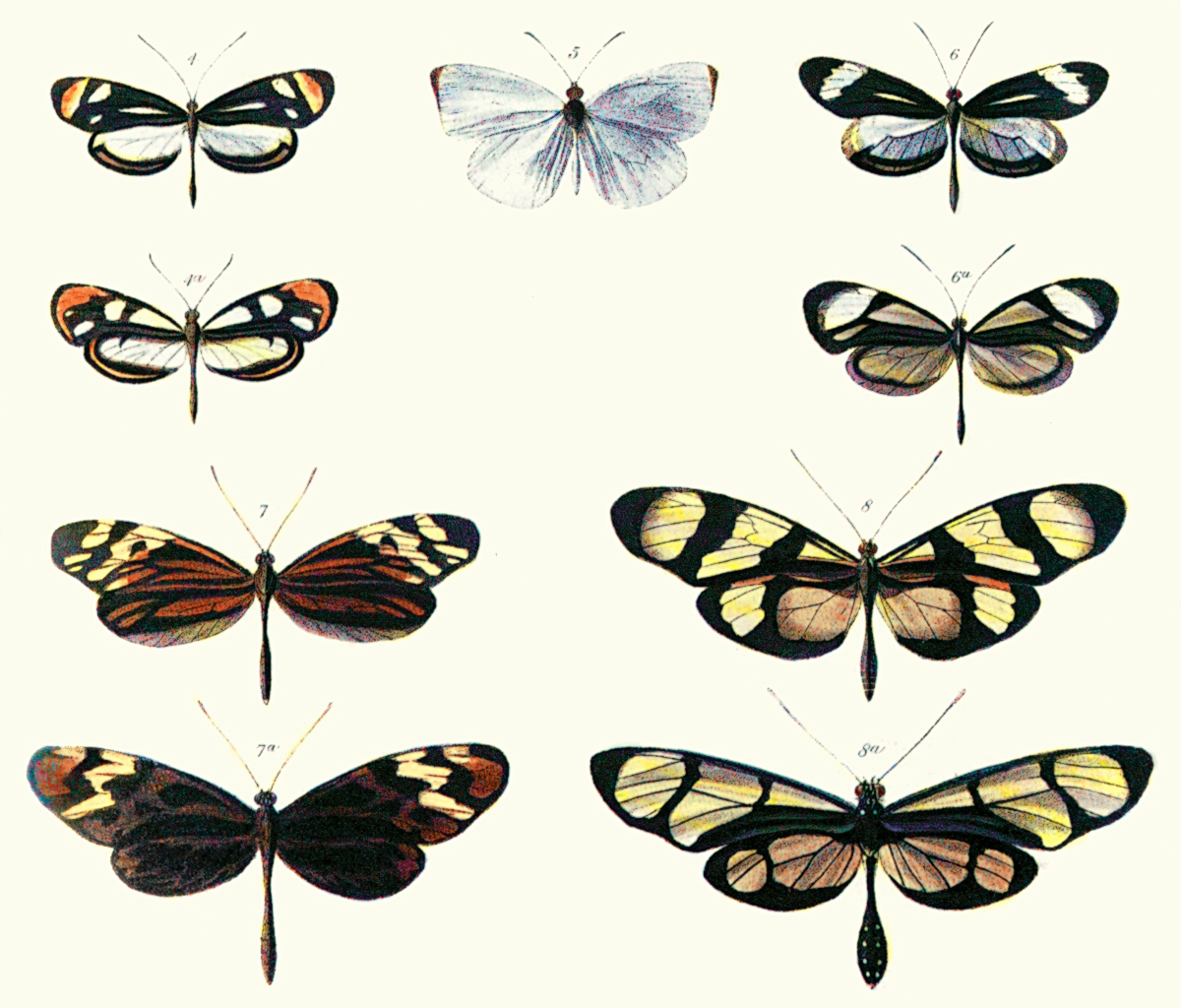
Henry Walter Bates (1825–1892) was an English explorer-naturalist who surveyed the Amazon rainforest with Alfred Russel Wallace in 1848. While Wallace returned in 1852, Bates remained for over a decade. Bates's field research included collecting almost a hundred species of butterflies from the families Ithomiinae and Heliconiinae, as well as thousands of other insects specimens. In sorting these butterflies into similar groups based on appearance, inconsistencies began to arise. Some appeared superficially similar to others, so much so that even Bates could not tell some species apart based only on wing appearance. However, closer examination of less obvious morphological characters seemed to show that they were not even closely related. Shortly after his return to England, he read a paper on his theory of mimicry at a meeting of the Linnean Society of London on 21 November 1861, which was then published in 1862 as 'Contributions to an Insect Fauna of the Amazon Valley' in the society's Transactions. He elaborated on his experiences further in The Naturalist on the River Amazons.
Bates put forward the hypothesis that the close resemblance between unrelated species was an antipredator adaptation. He noted that some species showed very striking coloration and flew in a leisurely manner, almost as if taunting predators to eat them. He reasoned that these butterflies were unpalatable to birds and other insectivores, and were thus avoided by them. He extended that logic to forms that closely resembled such protected species and mimicked their warning coloration but not their toxicity.
Hub AI
Batesian mimicry AI simulator
(@Batesian mimicry_simulator)
Batesian mimicry
Batesian mimicry is a form of mimicry wherein a harmless species has evolved to imitate the warning signals of a harmful species in order to benefit from these signals' tendency to deter their mutual predators. It is named after the English naturalist Henry Walter Bates, who worked on butterflies in the rainforests of Brazil.
Batesian mimicry is the most commonly-known and widely-studied of the mimicry complexes, such that the word "mimicry" is often synonymous with the type described by Batesian mimicry. However, there are many other forms of mimicry, some very similar in principle to the Batesian variety, others far separated.
Batesian mimicry is often compared with Müllerian mimicry, the mutually beneficial, converging appearance of two or more harmful species. Batesian mimicry is often thought to be diametrically opposed to aggressive mimicry, wherein a predator or parasite mimics a harmless species, thereby avoiding detection and improving its odds of a successful hunt.
In scientific studies of biological mimicry the imitating species is called the mimic, while the imitated species (protected by its own toxicity, foul taste or other defenses) is known as the model. The predatory species that mediates the indirect interaction between the mimic and the model (the interaction over evolutionary timescales by which the mimic approaches the model in appearance) is variously known as the [signal] receiver, the dupe or the operator.
By parasitising the honest warning signal of the model, the Batesian mimic gains an advantage without expending the energy required to actually arm itself. The model, on the other hand, is disadvantaged, along with the dupe. If impostors appear in large numbers then positive experiences with, and successful predation upon, the mimic may result in the model being treated as harmless. When the mimics continue to outnumber the model there is also a stronger selective advantage for the predator to distinguish mimic from model. For these reasons, in a given environment, mimics are generally less numerous than models. This is an instance of frequency-dependent selection. Some mimetic populations have evolved multiple forms (polymorphism), enabling them to mimic several different models and thereby to gain greater protection. Batesian mimicry is not always perfect. A variety of explanations have been proposed for this, including limitations in predators' cognition.
While visual signals have attracted the most study, Batesian mimicry can employ deception of any of the senses. For example, auditory Batesian mimicry can be seen in moths that mimic the ultrasonic warning signals transmitted by unpalatable moths to bat predators, while some weakly electric fish appear to mimic the electrolocation signals of strongly electric fish, constituting electrical mimicry.
Henry Walter Bates (1825–1892) was an English explorer-naturalist who surveyed the Amazon rainforest with Alfred Russel Wallace in 1848. While Wallace returned in 1852, Bates remained for over a decade. Bates's field research included collecting almost a hundred species of butterflies from the families Ithomiinae and Heliconiinae, as well as thousands of other insects specimens. In sorting these butterflies into similar groups based on appearance, inconsistencies began to arise. Some appeared superficially similar to others, so much so that even Bates could not tell some species apart based only on wing appearance. However, closer examination of less obvious morphological characters seemed to show that they were not even closely related. Shortly after his return to England, he read a paper on his theory of mimicry at a meeting of the Linnean Society of London on 21 November 1861, which was then published in 1862 as 'Contributions to an Insect Fauna of the Amazon Valley' in the society's Transactions. He elaborated on his experiences further in The Naturalist on the River Amazons.
Bates put forward the hypothesis that the close resemblance between unrelated species was an antipredator adaptation. He noted that some species showed very striking coloration and flew in a leisurely manner, almost as if taunting predators to eat them. He reasoned that these butterflies were unpalatable to birds and other insectivores, and were thus avoided by them. He extended that logic to forms that closely resembled such protected species and mimicked their warning coloration but not their toxicity.