
Recent from talks
Battle, East Sussex
Knowledge base stats:
Talk channels stats:
Members stats:
Battle, East Sussex
Battle is a town and civil parish in the district of Rother in East Sussex, England. It lies 50 miles (80 km) south-east of London, 27 miles (43 km) east of Brighton and 20 miles (32 km) east of Lewes. Hastings is to the south-east and Bexhill-on-Sea to the south. Battle is in the designated High Weald National Landscape. The parish population was 6,673 according to the 2011 Census and 6,800 in the 2021 census. Battle contains the site of, and is named after, the Battle of Hastings, where William, Duke of Normandy, defeated King Harold II to become William I of England in 1066. For some 250 years after 1066, official documents referred to the town as (Latin) Bellum or (French) Bataille.
Prior to 1066, the area had been relatively empty and unpopulated. The nearest settlement was probably located in today's Netherfield ward, within a large, wealthy, ancient hundred called Hailesaltede.
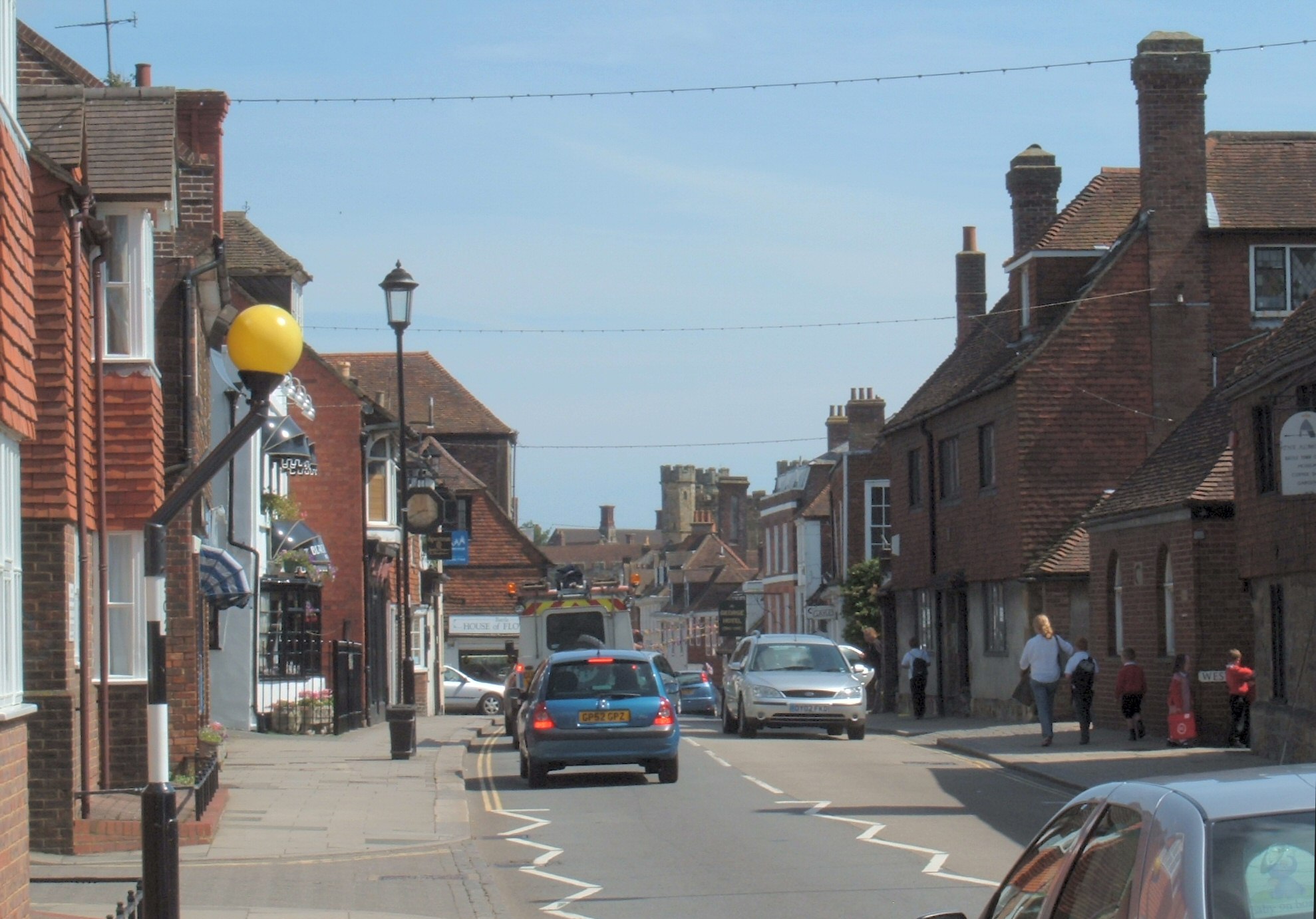
The town of Battle grew around an abbey, which was constructed on the orders of King William to commemorate the battle and atone for the resulting slaughter; a settlement probably already existed outside the abbey gates by 1110. The Abbey provided sufficient trade to survive in an otherwise improbable location for a new town and there remain some fine examples of Medieval domestic architecture, for example the Wealden-style hall-houses in Upper Lake, Pilgrim's Rest and others in the High Street.
Battle was most likely the birthplace of two pre-eminent stonemasons of the late 13th and early 14th Centuries. John of Battle worked at Vale Royal Abbey and was then chosen by Edward I to supervise construction of some of the Eleanor Crosses, whilst Thomas of Battle was involved with construction at Caerphilly Castle, the Tower of London and Battle Hall.
Most of the area was heavily wooded and provided oak and other timbers for navy shipyards, power for making cannons (shipped to Portsmouth or Chatham), cannonballs and gunpowder. It later developed a reputation for the quality of the gunpowder produced in the area. The first recorded gunpowder mill in Battle was built in 1676 when John Hammond was granted permission to build a mill on land owned by the abbey. A gunpowder works was located in Powdermill Lane, the remains of which have been converted into a hotel. In 1722, Daniel Defoe described the town as being "remarkable for little now, but for making the finest gun-powder, and the best perhaps in Europe". The Duke of Cleveland refused to renew the licence in 1874 after many mishaps, including one occasion in 1798 when more than 15 tons of gunpowder were left in the oven for too long and exploded.
In the past, the town was celebrated for the skill and innovation of its clock and watch makers. This included the development of the first ever electric clock.
Battle was the birthplace in 1799 of Eliza Acton, author of the pioneering Modern Cookery for Private Families (1845). This sold well for the rest of the 19th century. Its lists of ingredients, cooking times and other innovations provided a model for the cookery section of the best-selling Mrs Beeton's Book of Household Management (1861).
'Battel Bonfire Boyes' is claimed to be the oldest of the Sussex Bonfire Societies and to have the oldest effigy (a ‘head’) of Guy Fawkes, now in Battle Museum.
Hub AI
Battle, East Sussex AI simulator
(@Battle, East Sussex_simulator)
Battle, East Sussex
Battle is a town and civil parish in the district of Rother in East Sussex, England. It lies 50 miles (80 km) south-east of London, 27 miles (43 km) east of Brighton and 20 miles (32 km) east of Lewes. Hastings is to the south-east and Bexhill-on-Sea to the south. Battle is in the designated High Weald National Landscape. The parish population was 6,673 according to the 2011 Census and 6,800 in the 2021 census. Battle contains the site of, and is named after, the Battle of Hastings, where William, Duke of Normandy, defeated King Harold II to become William I of England in 1066. For some 250 years after 1066, official documents referred to the town as (Latin) Bellum or (French) Bataille.
Prior to 1066, the area had been relatively empty and unpopulated. The nearest settlement was probably located in today's Netherfield ward, within a large, wealthy, ancient hundred called Hailesaltede.
The town of Battle grew around an abbey, which was constructed on the orders of King William to commemorate the battle and atone for the resulting slaughter; a settlement probably already existed outside the abbey gates by 1110. The Abbey provided sufficient trade to survive in an otherwise improbable location for a new town and there remain some fine examples of Medieval domestic architecture, for example the Wealden-style hall-houses in Upper Lake, Pilgrim's Rest and others in the High Street.
Battle was most likely the birthplace of two pre-eminent stonemasons of the late 13th and early 14th Centuries. John of Battle worked at Vale Royal Abbey and was then chosen by Edward I to supervise construction of some of the Eleanor Crosses, whilst Thomas of Battle was involved with construction at Caerphilly Castle, the Tower of London and Battle Hall.
Most of the area was heavily wooded and provided oak and other timbers for navy shipyards, power for making cannons (shipped to Portsmouth or Chatham), cannonballs and gunpowder. It later developed a reputation for the quality of the gunpowder produced in the area. The first recorded gunpowder mill in Battle was built in 1676 when John Hammond was granted permission to build a mill on land owned by the abbey. A gunpowder works was located in Powdermill Lane, the remains of which have been converted into a hotel. In 1722, Daniel Defoe described the town as being "remarkable for little now, but for making the finest gun-powder, and the best perhaps in Europe". The Duke of Cleveland refused to renew the licence in 1874 after many mishaps, including one occasion in 1798 when more than 15 tons of gunpowder were left in the oven for too long and exploded.
In the past, the town was celebrated for the skill and innovation of its clock and watch makers. This included the development of the first ever electric clock.
Battle was the birthplace in 1799 of Eliza Acton, author of the pioneering Modern Cookery for Private Families (1845). This sold well for the rest of the 19th century. Its lists of ingredients, cooking times and other innovations provided a model for the cookery section of the best-selling Mrs Beeton's Book of Household Management (1861).
'Battel Bonfire Boyes' is claimed to be the oldest of the Sussex Bonfire Societies and to have the oldest effigy (a ‘head’) of Guy Fawkes, now in Battle Museum.
Recent media