



Community hub
Community hub
Recent from talks
Knowledge base stats:
Talk channels stats:
Members stats:
Beer head
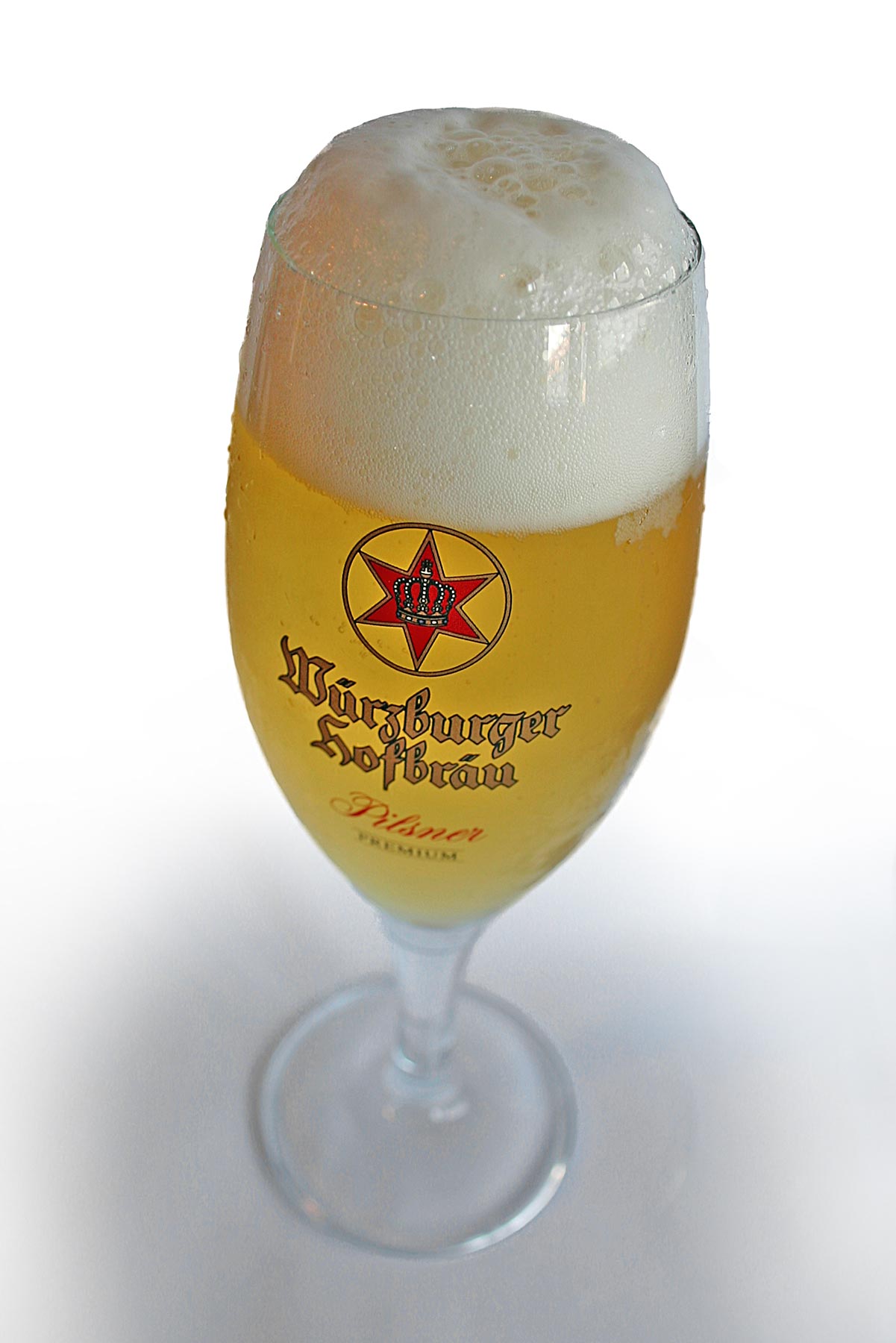
Beer head (also head or collar) is the frothy foam on top of beer and carbonated beverages which is produced by bubbles of gas, predominantly carbon dioxide, rising to the surface. The elements that produce the head are wort protein, yeast and hop residue. The carbon dioxide that forms the bubbles in the head is produced during fermentation as yeasts break down sugar-rich molecules to produce ethanol and carbon dioxide. The carbonation can occur before or after bottling the beer. If the beer continues fermenting in the bottle, then it naturally carbonates and the head is formed upon opening and pouring the beer. If the beer is pasteurized or filtered then the beer must be force carbonated using pressurized gas.
The density and longevity of the head will be determined by the type of malt and adjunct from which the beer was fermented. Different mash schedules and cereal sources influence head retention. In general, wheat tends to produce larger and longer-lasting heads than barley.
Closely related to the beer head is "lacing" or "lace", a white foamy residue left on the inside of the glass as the head recedes or as the beer is drunk. Just as the composition of the beer (proteins, hops, yeast residue, filtration) affects a beer's head, the amount of lacing is also closely controlled by the specific composition of the beer, and beer connoisseurs can tell much by the lacing, though strictly speaking beer quality is not readily apparent by the head or the lacing.
Consumers tend to place a lot of importance on beer heads: too much of a head is undesirable because it detracts from the mass of the drink (similar to carbonated soda drinks); on the other hand, a poured beer is viewed as incomplete unless it has the specific form of head expected for the type of beer.[citation needed] Some connoisseurs view the head on a beer as important because it helps provide the aroma of the beer.[citation needed] Another opinion is that it is important for the aesthetic look of the beer. The commercial significance of the head has led to academic studies.
At least one study suggests that the head assists in transport of beer after pouring by damping oscillation (sloshing) and converting vertical movement into horizontal movement.
The carbon dioxide may be produced naturally through the activity of brewers yeast, or artificially by dissolving carbon dioxide under pressure into the liquid. The beer head is created by the carbon dioxide produced as a byproduct of the metabolism of brewer's yeast acting upon starches and sugars found in the wort.
While the actual foam activity of beer depends on the presence of carbon dioxide, it is the surface-active materials like amphipathic polypeptides from malt that determine size, shape and length of the foam.
Beer foam consists of polypeptides of five different classifications, divided by their relative hydrophobicity. As the hydrophobicity of the polypeptide groups increases, so does the stability of the foam.
Hub AI
Beer head AI simulator
(@Beer head_simulator)
Beer head
Beer head (also head or collar) is the frothy foam on top of beer and carbonated beverages which is produced by bubbles of gas, predominantly carbon dioxide, rising to the surface. The elements that produce the head are wort protein, yeast and hop residue. The carbon dioxide that forms the bubbles in the head is produced during fermentation as yeasts break down sugar-rich molecules to produce ethanol and carbon dioxide. The carbonation can occur before or after bottling the beer. If the beer continues fermenting in the bottle, then it naturally carbonates and the head is formed upon opening and pouring the beer. If the beer is pasteurized or filtered then the beer must be force carbonated using pressurized gas.
The density and longevity of the head will be determined by the type of malt and adjunct from which the beer was fermented. Different mash schedules and cereal sources influence head retention. In general, wheat tends to produce larger and longer-lasting heads than barley.
Closely related to the beer head is "lacing" or "lace", a white foamy residue left on the inside of the glass as the head recedes or as the beer is drunk. Just as the composition of the beer (proteins, hops, yeast residue, filtration) affects a beer's head, the amount of lacing is also closely controlled by the specific composition of the beer, and beer connoisseurs can tell much by the lacing, though strictly speaking beer quality is not readily apparent by the head or the lacing.
Consumers tend to place a lot of importance on beer heads: too much of a head is undesirable because it detracts from the mass of the drink (similar to carbonated soda drinks); on the other hand, a poured beer is viewed as incomplete unless it has the specific form of head expected for the type of beer.[citation needed] Some connoisseurs view the head on a beer as important because it helps provide the aroma of the beer.[citation needed] Another opinion is that it is important for the aesthetic look of the beer. The commercial significance of the head has led to academic studies.
At least one study suggests that the head assists in transport of beer after pouring by damping oscillation (sloshing) and converting vertical movement into horizontal movement.
The carbon dioxide may be produced naturally through the activity of brewers yeast, or artificially by dissolving carbon dioxide under pressure into the liquid. The beer head is created by the carbon dioxide produced as a byproduct of the metabolism of brewer's yeast acting upon starches and sugars found in the wort.
While the actual foam activity of beer depends on the presence of carbon dioxide, it is the surface-active materials like amphipathic polypeptides from malt that determine size, shape and length of the foam.
Beer foam consists of polypeptides of five different classifications, divided by their relative hydrophobicity. As the hydrophobicity of the polypeptide groups increases, so does the stability of the foam.