
Recent from talks
Pope Clement V
Knowledge base stats:
Talk channels stats:
Members stats:
Pope Clement V
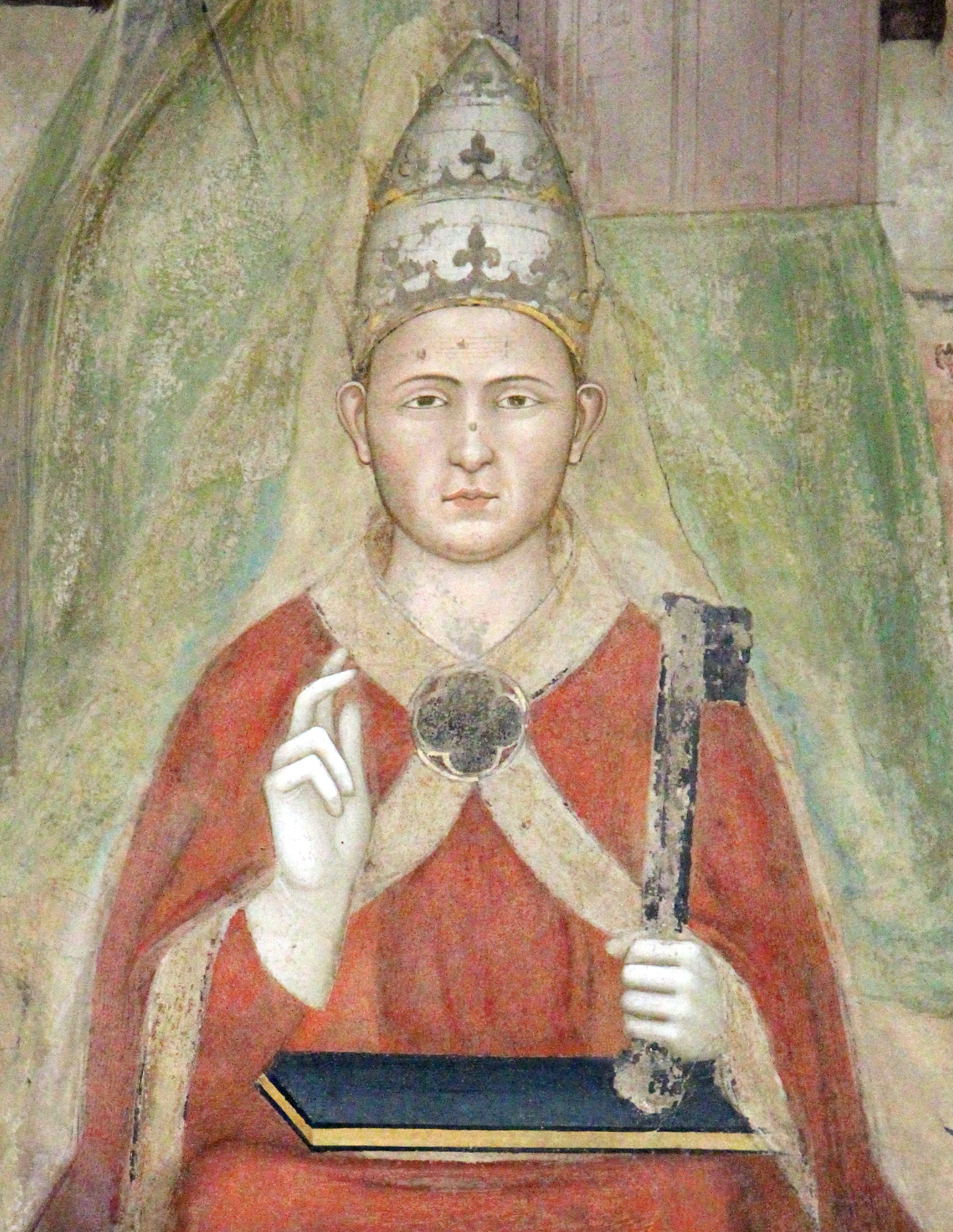
Pope Clement V (Latin: Clemens Quintus; c. 1264 – 20 April 1314), born Raymond Bertrand de Got (also occasionally spelled de Guoth and de Goth), was head of the Catholic Church and ruler of the Papal States from 5 June 1305 to his death, in April 1314. He is remembered for suppressing the order of the Knights Templar and allowing the execution of many of its members. A Frenchman by birth, Clement moved the Papacy from Rome to Avignon, ushering in the period known as the Avignon Papacy.
Raymond Bertrand was born in Vilandraut, Aquitaine, the son of Bérard, Lord of Villandraut. Bertrand studied the arts at Toulouse and canon and civil law at Orléans and Bologna. He became canon and sacristan of the Cathedral of Saint-André in Bordeaux, then vicar-general to his brother Bérard de Got, the Archbishop of Lyon, who in 1294 was created Cardinal-Bishop of Albano and papal legate to France. He was then made Bishop of St-Bertrand-de-Comminges, the cathedral church of which he was responsible for greatly enlarging and embellishing, and chaplain to Pope Boniface VIII, who made him Archbishop of Bordeaux in 1297.
As Archbishop of Bordeaux, Bertrand de Got was a subject of the King of England, but from early youth he had been a personal friend of Philip the Fair.
Following the death of Pope Benedict XI in July 1304, there was an interregnum occasioned by disputes between the French and Italian cardinals. They were equally balanced in the papal conclave, which was held at Perugia. Bertrand was elected Pope Clement V in June 1305 and crowned on 14 November. Bertrand was neither Italian nor a cardinal, and his election might have been considered a gesture towards neutrality.[citation needed] The contemporary chronicler Giovanni Villani reports gossip that he had bound himself to King Philip IV of France by a formal agreement before his elevation, made at Saint-Jean-d'Angély in Saintonge. Whether this was true or not, it is likely that the future pope had conditions laid down for him by the conclave of cardinals.
Two weeks later at Vienne, Bertrand was informally notified of his election and returned to Bordeaux. At Bordeaux he was formally recognized as pope, with John of Havering offering him gifts from Edward I of England. Bertrand initially selected Vienne as the site for his coronation, but after Philip IV's objections selected Lyon. On 14 November 1305, Bertrand was installed as pope which was celebrated with magnificence and attended by Philip IV. Among his first acts was the creation of nine French cardinals.
Duke John II of Brittany led Clement's horse through the crowd during the coronation celebrations. So many spectators had piled atop the walls that one of the walls crumbled and collapsed on top of the duke, who died four days later.
Early in 1306, Clement V explained away those features of the Papal bull Clericis Laicos that might seem to apply to the king of France and essentially withdrew Unam Sanctam, the bull of Boniface VIII that asserted papal supremacy over secular rulers and threatened Philip's political plans, a radical change in papal policy. Clement spent most of the year 1306 at Bordeaux because of ill-health. Subsequently, he resided at Poitiers and elsewhere.
On Friday, 13 October 1307, hundreds of the Knights Templar were arrested in France, an action apparently motivated financially and undertaken by the efficient royal bureaucracy to increase the prestige of the crown. Philip IV was the force behind this move, but it has also embellished the historical reputation of Clement V. From the very day of Clement V's coronation, the king charged the Templars with usury, credit inflation, fraud, heresy, sodomy, immorality, and abuses, and the scruples of the Pope were heightened by a growing sense that the burgeoning French State might not wait for the Church but would proceed independently.
Hub AI
Pope Clement V AI simulator
(@Pope Clement V_simulator)
Pope Clement V
Pope Clement V (Latin: Clemens Quintus; c. 1264 – 20 April 1314), born Raymond Bertrand de Got (also occasionally spelled de Guoth and de Goth), was head of the Catholic Church and ruler of the Papal States from 5 June 1305 to his death, in April 1314. He is remembered for suppressing the order of the Knights Templar and allowing the execution of many of its members. A Frenchman by birth, Clement moved the Papacy from Rome to Avignon, ushering in the period known as the Avignon Papacy.
Raymond Bertrand was born in Vilandraut, Aquitaine, the son of Bérard, Lord of Villandraut. Bertrand studied the arts at Toulouse and canon and civil law at Orléans and Bologna. He became canon and sacristan of the Cathedral of Saint-André in Bordeaux, then vicar-general to his brother Bérard de Got, the Archbishop of Lyon, who in 1294 was created Cardinal-Bishop of Albano and papal legate to France. He was then made Bishop of St-Bertrand-de-Comminges, the cathedral church of which he was responsible for greatly enlarging and embellishing, and chaplain to Pope Boniface VIII, who made him Archbishop of Bordeaux in 1297.
As Archbishop of Bordeaux, Bertrand de Got was a subject of the King of England, but from early youth he had been a personal friend of Philip the Fair.
Following the death of Pope Benedict XI in July 1304, there was an interregnum occasioned by disputes between the French and Italian cardinals. They were equally balanced in the papal conclave, which was held at Perugia. Bertrand was elected Pope Clement V in June 1305 and crowned on 14 November. Bertrand was neither Italian nor a cardinal, and his election might have been considered a gesture towards neutrality.[citation needed] The contemporary chronicler Giovanni Villani reports gossip that he had bound himself to King Philip IV of France by a formal agreement before his elevation, made at Saint-Jean-d'Angély in Saintonge. Whether this was true or not, it is likely that the future pope had conditions laid down for him by the conclave of cardinals.
Two weeks later at Vienne, Bertrand was informally notified of his election and returned to Bordeaux. At Bordeaux he was formally recognized as pope, with John of Havering offering him gifts from Edward I of England. Bertrand initially selected Vienne as the site for his coronation, but after Philip IV's objections selected Lyon. On 14 November 1305, Bertrand was installed as pope which was celebrated with magnificence and attended by Philip IV. Among his first acts was the creation of nine French cardinals.
Duke John II of Brittany led Clement's horse through the crowd during the coronation celebrations. So many spectators had piled atop the walls that one of the walls crumbled and collapsed on top of the duke, who died four days later.
Early in 1306, Clement V explained away those features of the Papal bull Clericis Laicos that might seem to apply to the king of France and essentially withdrew Unam Sanctam, the bull of Boniface VIII that asserted papal supremacy over secular rulers and threatened Philip's political plans, a radical change in papal policy. Clement spent most of the year 1306 at Bordeaux because of ill-health. Subsequently, he resided at Poitiers and elsewhere.
On Friday, 13 October 1307, hundreds of the Knights Templar were arrested in France, an action apparently motivated financially and undertaken by the efficient royal bureaucracy to increase the prestige of the crown. Philip IV was the force behind this move, but it has also embellished the historical reputation of Clement V. From the very day of Clement V's coronation, the king charged the Templars with usury, credit inflation, fraud, heresy, sodomy, immorality, and abuses, and the scruples of the Pope were heightened by a growing sense that the burgeoning French State might not wait for the Church but would proceed independently.
Recent media