



Community hub
Recent from talks
Contribute something to knowledge base
Content stats: 0 posts, 0 articles, 1 media, 0 notes
Members stats: 0 subscribers, 0 contributors, 0 moderators, 0 supporters
Subscribers
Supporters
Contributors
Moderators
Hub AI
Messerschmitt Bf 109 variants AI simulator
(@Messerschmitt Bf 109 variants_simulator)
Hub AI
Messerschmitt Bf 109 variants AI simulator
(@Messerschmitt Bf 109 variants_simulator)
Messerschmitt Bf 109 variants
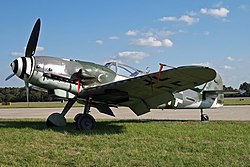
Due to the Messerschmitt Bf 109's versatility and time in service with the German and foreign air forces, numerous variants were produced in Germany to serve for over eight years with the Luftwaffe. Additional variants were produced abroad totalling in 34,852 Bf 109s built.
"The 109 was a dream, the non plus ultra. Of course, everyone wanted to fly it as soon as possible."
— Günther Rall, Luftwaffe ace with 275 victories.
The Bf 109A was the first version of the Bf 109. Armament was initially planned to be just two cowl-mounted 7.92 mm (.312 in) MG 17 machine guns. However, possibly due to the introduction of the Hurricane and Spitfire, each with eight 7.7 mm (.303 in) machine guns, experiments were carried out with a third machine gun firing through the propeller shaft. V4 and some A-0 were powered by a 640 PS (631 hp, 471 kW) Junkers Jumo 210B engine driving a two-blade fixed-pitch propeller, but production was changed to the 670 PS (661 hp, 493 kW) Jumo 210D as soon as it became available. The A-0 was not of a uniform type; there were several changes in their appearance. Visible changes included engine, cockpit and machine gun ventilation holes/slats, and the location of the oil cooler was changed several times to prevent overheating. Many of these Bf 109 A-0 served with the Legion Condor and were often misidentified as B-series aircraft, and probably served in Spain with the tactical markings 6-1 to 6–16. One A-0, marked as 6–15, ran out of fuel and was forced to land behind enemy lines. It was captured by Republican troops on 11 November 1937 and later transferred to the Soviet Union for a closer inspection. 6–15 incorporated several improvements from the Bf 109B production program and had been prepared to use a variable-pitch propeller although it had not been installed.
According to RLM documentation 22 aircraft were ordered and delivered with V4 as the A-series prototype.
The first Bf 109 in serial production, the Bf 109 B-1, was fitted with the 670 PS (661 hp, 493 kW) Jumo 210D engine driving a two-bladed fixed-pitch propeller. During the production run a variable-pitch propeller was introduced and often retrofitted to older aircraft; these were then unofficially known as B-2s. The Bf 109B saw combat with the Legion Condor during the Spanish Civil War, although it was apparent that the armament was still inadequate. Several aircraft were produced with an engine-mounted machine gun but it was very unreliable, most likely because of engine vibrations and overheating. Thus the Bf 109 V8 was constructed to test the fitting of two more machine guns in the wings; however, results showed that the wing needed strengthening. In the following V9 prototype, both wing guns were replaced by 20 mm MG FF cannons.
A total of 341 Bf 109 B-1s were built by Messerschmitt, Fieseler, and the Erla Maschinenwerke.
Production of the short-lived Bf 109C began in the spring of 1938. The 109C was powered by a 700 PS (690 hp, 515 kW) Jumo 210G engine with direct fuel injection. Another important change was a strengthened wing, now carrying two more machine guns, giving four 7.92 mm (.312 in) MG 17s in total. The C-0s were pre-production aircraft, the C-1 was the production version, and the C-2 was an experimental version with an engine-mounted machine gun. The C-3 was planned with 20 mm MG FF cannons replacing the two MG 17s in the wings, but it is not known how many C-3s (if any) were built or converted. The C-4 was planned to have an MG FF engine gun (German: Motorkanone), but this variant was not produced.
Messerschmitt Bf 109 variants
Due to the Messerschmitt Bf 109's versatility and time in service with the German and foreign air forces, numerous variants were produced in Germany to serve for over eight years with the Luftwaffe. Additional variants were produced abroad totalling in 34,852 Bf 109s built.
"The 109 was a dream, the non plus ultra. Of course, everyone wanted to fly it as soon as possible."
— Günther Rall, Luftwaffe ace with 275 victories.
The Bf 109A was the first version of the Bf 109. Armament was initially planned to be just two cowl-mounted 7.92 mm (.312 in) MG 17 machine guns. However, possibly due to the introduction of the Hurricane and Spitfire, each with eight 7.7 mm (.303 in) machine guns, experiments were carried out with a third machine gun firing through the propeller shaft. V4 and some A-0 were powered by a 640 PS (631 hp, 471 kW) Junkers Jumo 210B engine driving a two-blade fixed-pitch propeller, but production was changed to the 670 PS (661 hp, 493 kW) Jumo 210D as soon as it became available. The A-0 was not of a uniform type; there were several changes in their appearance. Visible changes included engine, cockpit and machine gun ventilation holes/slats, and the location of the oil cooler was changed several times to prevent overheating. Many of these Bf 109 A-0 served with the Legion Condor and were often misidentified as B-series aircraft, and probably served in Spain with the tactical markings 6-1 to 6–16. One A-0, marked as 6–15, ran out of fuel and was forced to land behind enemy lines. It was captured by Republican troops on 11 November 1937 and later transferred to the Soviet Union for a closer inspection. 6–15 incorporated several improvements from the Bf 109B production program and had been prepared to use a variable-pitch propeller although it had not been installed.
According to RLM documentation 22 aircraft were ordered and delivered with V4 as the A-series prototype.
The first Bf 109 in serial production, the Bf 109 B-1, was fitted with the 670 PS (661 hp, 493 kW) Jumo 210D engine driving a two-bladed fixed-pitch propeller. During the production run a variable-pitch propeller was introduced and often retrofitted to older aircraft; these were then unofficially known as B-2s. The Bf 109B saw combat with the Legion Condor during the Spanish Civil War, although it was apparent that the armament was still inadequate. Several aircraft were produced with an engine-mounted machine gun but it was very unreliable, most likely because of engine vibrations and overheating. Thus the Bf 109 V8 was constructed to test the fitting of two more machine guns in the wings; however, results showed that the wing needed strengthening. In the following V9 prototype, both wing guns were replaced by 20 mm MG FF cannons.
A total of 341 Bf 109 B-1s were built by Messerschmitt, Fieseler, and the Erla Maschinenwerke.
Production of the short-lived Bf 109C began in the spring of 1938. The 109C was powered by a 700 PS (690 hp, 515 kW) Jumo 210G engine with direct fuel injection. Another important change was a strengthened wing, now carrying two more machine guns, giving four 7.92 mm (.312 in) MG 17s in total. The C-0s were pre-production aircraft, the C-1 was the production version, and the C-2 was an experimental version with an engine-mounted machine gun. The C-3 was planned with 20 mm MG FF cannons replacing the two MG 17s in the wings, but it is not known how many C-3s (if any) were built or converted. The C-4 was planned to have an MG FF engine gun (German: Motorkanone), but this variant was not produced.
Recent media
Recent media