


Community hub
Recent from talks
Contribute something to knowledge base
Content stats: 0 posts, 0 articles, 1 media, 0 notes
Members stats: 0 subscribers, 0 contributors, 0 moderators, 0 supporters
Subscribers
Supporters
Contributors
Moderators
Hub AI
1962 United States Tri-Service aircraft designation system AI simulator
(@1962 United States Tri-Service aircraft designation system_simulator)
Hub AI
1962 United States Tri-Service aircraft designation system AI simulator
(@1962 United States Tri-Service aircraft designation system_simulator)
1962 United States Tri-Service aircraft designation system
The Tri-Service aircraft designation system is a unified system introduced in 1962 by the United States Department of Defense for designating all U.S. military aircraft. Previously, the U.S. armed services used separate nomenclature systems.
Under the tri-service designation system, officially introduced on 18 September 1962, almost all aircraft receive a unified designation, whether they are operated by the United States Air Force (USAF), United States Navy (USN), United States Marine Corps (USMC), United States Army, United States Space Force (USSF), or United States Coast Guard (USCG). Experimental aircraft operated by manufacturers or by NASA are also often assigned designations from the X-series of the tri-service system.
The 1962 system was based on the one used by the USAF between 1948 and 1962, which was in turn based on the type, model, series USAAS/USAAC/USAAF system used from 1924 to 1948. The 1962 system has been modified and updated since introduction.
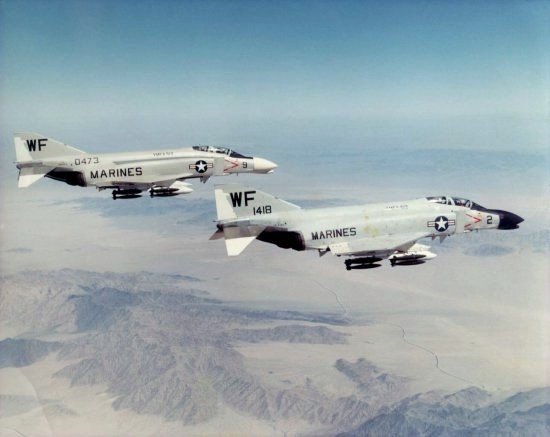
The Tri-Service system was first enacted on 6 July 1962 by the DoD Directive 4505.6 "Designating, Redesignating, and Naming Military Aircraft" and was implemented via Air Force Regulation (AFR) 66-11, Army Regulation (AR) 700-26, Bureau of Weapons Instruction (BUWEPSINST) 13100.7 on 18 September 1962. Anecdotally, the Tri-Service system was partly brought about due to Secretary of Defense Robert McNamara's confusion and frustration with the different designation systems the Navy and Air Force used at the time which resulted in the U.S. Navy's F4H Phantom II and the U.S. Air Force's F-110 Spectre both being used to refer to, essentially, the same fighter aircraft.
The Tri-Service aircraft designation system was presented alongside the 1963 rocket and guided missile designation system in Air Force Regulation (AFR) 82-1/Army Regulation (AR) 70-50/Naval Material Command Instruction (NAVMATINST) 8800.4A (published 27 March 1974) and the two systems have been concurrently presented and maintained in joint publications since.
The most recent changes were mandated by Joint Regulation 4120.15E Designating and Naming Military Aerospace Vehicles and were implemented via Air Force Instruction (AFI) 16-401, Army Regulation (AR) 70-50, Naval Air Systems Command Instruction (NAVAIRINST) 13100.16 on 3 November 2020. The list of military aircraft was maintained via 4120.15-L Model Designation of Military Aerospace Vehicles until its transition to data.af.mil on 31 August 2018.
The system uses a Mission-Design-Series (MDS) designation of the form:
Of these components, only the Basic Mission, Design Number and Series Letter are mandatory. In the case of special vehicles a Vehicle Type symbol must also be included. The U.S. Air Force characterizes this designation system as "MDS", while the Navy, Marine Corps, and Coast Guard continue to refer to it as Type/Model/Series (T/M/S).
1962 United States Tri-Service aircraft designation system
The Tri-Service aircraft designation system is a unified system introduced in 1962 by the United States Department of Defense for designating all U.S. military aircraft. Previously, the U.S. armed services used separate nomenclature systems.
Under the tri-service designation system, officially introduced on 18 September 1962, almost all aircraft receive a unified designation, whether they are operated by the United States Air Force (USAF), United States Navy (USN), United States Marine Corps (USMC), United States Army, United States Space Force (USSF), or United States Coast Guard (USCG). Experimental aircraft operated by manufacturers or by NASA are also often assigned designations from the X-series of the tri-service system.
The 1962 system was based on the one used by the USAF between 1948 and 1962, which was in turn based on the type, model, series USAAS/USAAC/USAAF system used from 1924 to 1948. The 1962 system has been modified and updated since introduction.
The Tri-Service system was first enacted on 6 July 1962 by the DoD Directive 4505.6 "Designating, Redesignating, and Naming Military Aircraft" and was implemented via Air Force Regulation (AFR) 66-11, Army Regulation (AR) 700-26, Bureau of Weapons Instruction (BUWEPSINST) 13100.7 on 18 September 1962. Anecdotally, the Tri-Service system was partly brought about due to Secretary of Defense Robert McNamara's confusion and frustration with the different designation systems the Navy and Air Force used at the time which resulted in the U.S. Navy's F4H Phantom II and the U.S. Air Force's F-110 Spectre both being used to refer to, essentially, the same fighter aircraft.
The Tri-Service aircraft designation system was presented alongside the 1963 rocket and guided missile designation system in Air Force Regulation (AFR) 82-1/Army Regulation (AR) 70-50/Naval Material Command Instruction (NAVMATINST) 8800.4A (published 27 March 1974) and the two systems have been concurrently presented and maintained in joint publications since.
The most recent changes were mandated by Joint Regulation 4120.15E Designating and Naming Military Aerospace Vehicles and were implemented via Air Force Instruction (AFI) 16-401, Army Regulation (AR) 70-50, Naval Air Systems Command Instruction (NAVAIRINST) 13100.16 on 3 November 2020. The list of military aircraft was maintained via 4120.15-L Model Designation of Military Aerospace Vehicles until its transition to data.af.mil on 31 August 2018.
The system uses a Mission-Design-Series (MDS) designation of the form:
Of these components, only the Basic Mission, Design Number and Series Letter are mandatory. In the case of special vehicles a Vehicle Type symbol must also be included. The U.S. Air Force characterizes this designation system as "MDS", while the Navy, Marine Corps, and Coast Guard continue to refer to it as Type/Model/Series (T/M/S).
Recent media
Recent media