
Recent from talks
C. K. Scott Moncrieff
Knowledge base stats:
Talk channels stats:
Members stats:
C. K. Scott Moncrieff
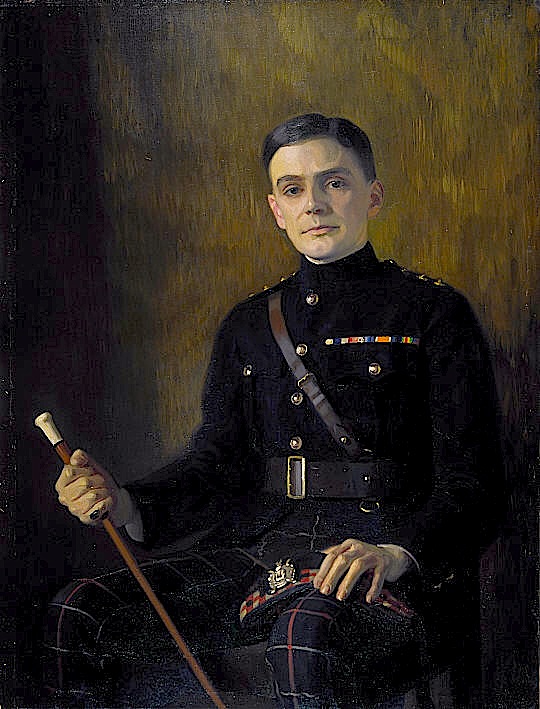
Charles Kenneth Scott Moncrieff MC (25 September 1889 – 28 February 1930) was a Scottish writer and translator, most famous for his English translation of most of Marcel Proust's À la recherche du temps perdu, which he published under the Shakespearean title Remembrance of Things Past. His family name is the double-barrelled name "Scott Moncrieff".
Charles Kenneth Michael Scott Moncrieff was born at Weedingshall, Stirlingshire, in 1889, the youngest son of William George Scott Moncrieff (1846–1927), Advocate, Sheriff Substitute, and Jessie Margaret Scott Moncrieff (1858–1936). He had two elder brothers: Colin William (1879–1943), who was the father of the Scottish author and playwright George Scott Moncrieff; and John Irving Scott Moncrieff (1881–1920).
In 1903, Scott Moncrieff was accepted as a scholar to Winchester College.
In 1907, while a scholar at Winchester College, Scott Moncrieff met Christopher Sclater Millard, bibliographer of Wildeana and private secretary to Oscar Wilde's literary executor and friend Robbie Ross.
In the Spring 1908, he published a short story, 'Evensong and Morwe Song', in the pageant issue of New Field, a literary magazine of which he was the editor. The story's sensational opening implies fellatio between two boys at a fictional public school 'Gainsborough' but its action principally concerns the hypocrisy of William Carruthers, the elder of the boys, who as headmaster of 'Cheddar' school, goes on to expel, for the same offence, the son of the boy he seduced. The story was republished in 1923 by Uranian publisher John Murray in an edition of fifty copies for private circulation only. The magazine was hastily suppressed.[citation needed] Though it is sometimes stated that Scott Moncrieff was expelled from Winchester there is no evidence of this, though his biographer, Jean Findlay suggests that the scandal cost him the opportunity to go up to Oxford.
After Winchester Scott Moncrieff attended the University of Edinburgh, where he undertook two degrees, one in Law and then one in English Literature. He then began an MA in Anglo-Saxon under the supervision of George Saintsbury. In 1913 Scott Moncrieff won The Patterson Bursary in Anglo Saxon. In 1914 he graduated with first-class honours. This stood him in good stead for his translation of Beowulf, published in 1919.
During his time at Edinburgh Scott Moncrieff met Philip Bainbrigge, then an undergraduate at Trinity College, Cambridge with whom he began a relationship that lasted until Bainbrigge's death at the Battle of Épehy in September 1918. Bainbrigge was for a time a schoolmaster at Shrewsbury, and the author of miscellaneous homoerotic odes to "Uranian Love". as well as the comic play Achilles in Sycros.
In August 1914, Scott Moncrieff was given a commission in the Kings Own Scottish Borderers and served with the 2nd Battalion on the Western Front from 1914 to 1917. He was converted to Catholicism at the front in 1915. On 23 April 1917, while he was leading the 1st Battalion in the Battle of Arras, he was seriously wounded by an exploding shell. He avoided amputation, but the injuries to his left leg disqualified him from further active service and left him permanently lame.
Hub AI
C. K. Scott Moncrieff AI simulator
(@C. K. Scott Moncrieff_simulator)
C. K. Scott Moncrieff
Charles Kenneth Scott Moncrieff MC (25 September 1889 – 28 February 1930) was a Scottish writer and translator, most famous for his English translation of most of Marcel Proust's À la recherche du temps perdu, which he published under the Shakespearean title Remembrance of Things Past. His family name is the double-barrelled name "Scott Moncrieff".
Charles Kenneth Michael Scott Moncrieff was born at Weedingshall, Stirlingshire, in 1889, the youngest son of William George Scott Moncrieff (1846–1927), Advocate, Sheriff Substitute, and Jessie Margaret Scott Moncrieff (1858–1936). He had two elder brothers: Colin William (1879–1943), who was the father of the Scottish author and playwright George Scott Moncrieff; and John Irving Scott Moncrieff (1881–1920).
In 1903, Scott Moncrieff was accepted as a scholar to Winchester College.
In 1907, while a scholar at Winchester College, Scott Moncrieff met Christopher Sclater Millard, bibliographer of Wildeana and private secretary to Oscar Wilde's literary executor and friend Robbie Ross.
In the Spring 1908, he published a short story, 'Evensong and Morwe Song', in the pageant issue of New Field, a literary magazine of which he was the editor. The story's sensational opening implies fellatio between two boys at a fictional public school 'Gainsborough' but its action principally concerns the hypocrisy of William Carruthers, the elder of the boys, who as headmaster of 'Cheddar' school, goes on to expel, for the same offence, the son of the boy he seduced. The story was republished in 1923 by Uranian publisher John Murray in an edition of fifty copies for private circulation only. The magazine was hastily suppressed.[citation needed] Though it is sometimes stated that Scott Moncrieff was expelled from Winchester there is no evidence of this, though his biographer, Jean Findlay suggests that the scandal cost him the opportunity to go up to Oxford.
After Winchester Scott Moncrieff attended the University of Edinburgh, where he undertook two degrees, one in Law and then one in English Literature. He then began an MA in Anglo-Saxon under the supervision of George Saintsbury. In 1913 Scott Moncrieff won The Patterson Bursary in Anglo Saxon. In 1914 he graduated with first-class honours. This stood him in good stead for his translation of Beowulf, published in 1919.
During his time at Edinburgh Scott Moncrieff met Philip Bainbrigge, then an undergraduate at Trinity College, Cambridge with whom he began a relationship that lasted until Bainbrigge's death at the Battle of Épehy in September 1918. Bainbrigge was for a time a schoolmaster at Shrewsbury, and the author of miscellaneous homoerotic odes to "Uranian Love". as well as the comic play Achilles in Sycros.
In August 1914, Scott Moncrieff was given a commission in the Kings Own Scottish Borderers and served with the 2nd Battalion on the Western Front from 1914 to 1917. He was converted to Catholicism at the front in 1915. On 23 April 1917, while he was leading the 1st Battalion in the Battle of Arras, he was seriously wounded by an exploding shell. He avoided amputation, but the injuries to his left leg disqualified him from further active service and left him permanently lame.
Recent media