
Recent from talks
2009–10 CONCACAF Champions League
Knowledge base stats:
Talk channels stats:
Members stats:
2009–10 CONCACAF Champions League
The 2009–10 CONCACAF Champions League was the second edition of the CONCACAF Champions League.Under its current format, and overall, it was the 45th edition of the premier football club competition organized by CONCACAF, the regional governing body of North America, Central America and the Caribbean.
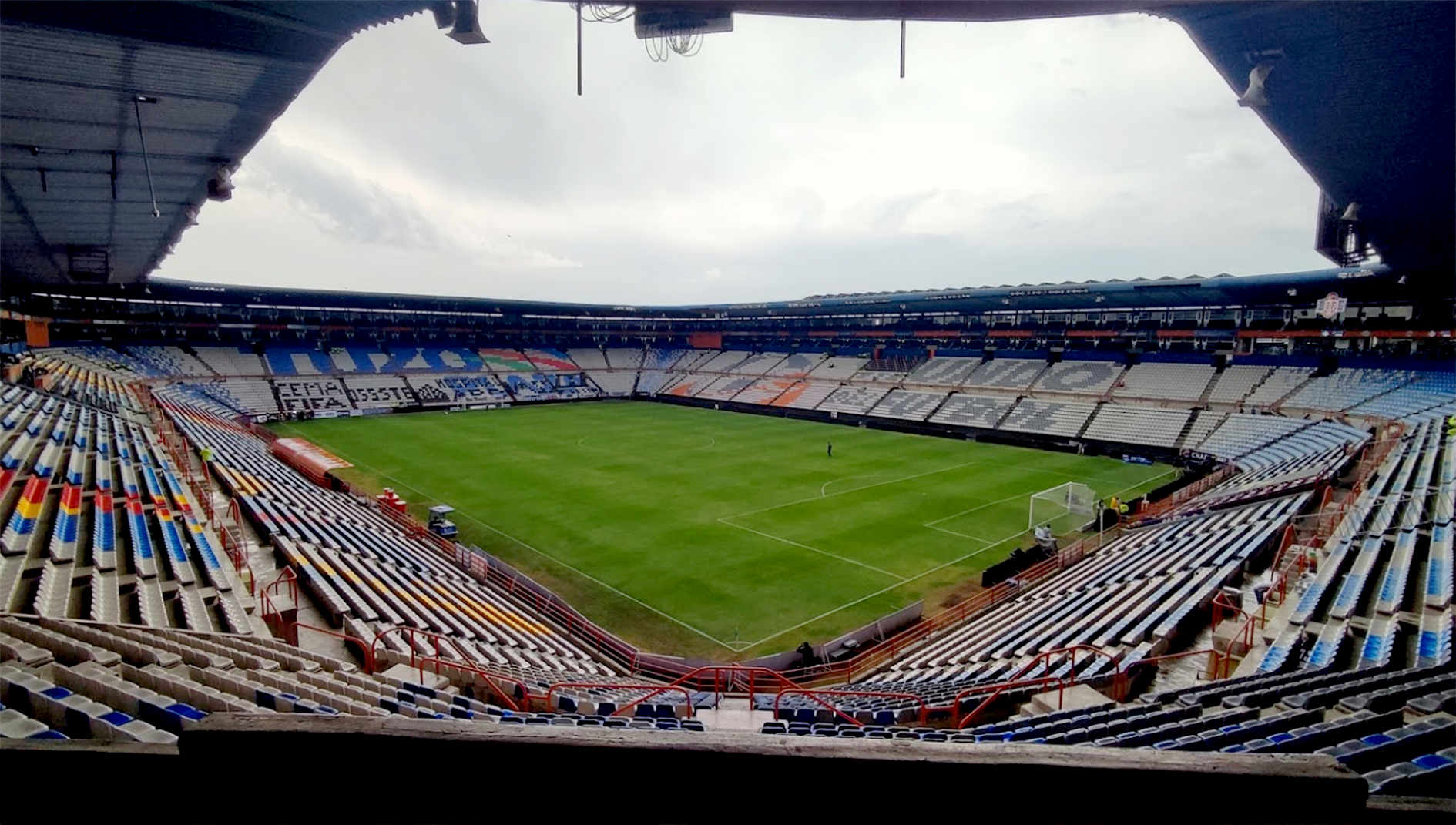
The tournament began on July 28, 2009, and ran through April 28, 2010. All four Mexican teams topped their groups and reached the semi-finals, with Pachuca winning the final against Cruz Azul with a 2–2 aggregate score, via the away goals rule. As winners, Pachuca qualified for the 2010 FIFA Club World Cup as the CONCACAF representative. Atlante are the defending champions, but failed to qualify and cannot defend titles.
24 teams participated in the 2009–10 CONCACAF Champions League from the North American, Central American, and Caribbean zones. Nine of the teams came from North America, twelve from Central America, and three from the Caribbean. However, after problems in the previous year's tournament, CONCACAF decided that teams may be disqualified and replaced if they don't have a stadium for the tournament that CONCACAF deems suitable.
Also, in response to fixture congestion during the previous year's tournament, the Central American representatives that qualify via split seasons will no longer play-off solely to determine which team will gain entry into the group stage. In nations that regularly play a playoff to determine a national champion, these will continue as usual. For those that don't, total points over both seasons, followed by other tiebreakers, will determine which team enters the group stage without playing extra matches.
It was announced on May 12, 2009, that Belize had lost their lone qualification to Honduras due to the inability of the Belize federation to meet CONCACAF's minimum requirements in regard to stadium facilities. The spot vacated by Belize was awarded to Honduras, increasing their total to three qualified clubs, due to their association's teams' superior performance in the 2008–09 Champions League.
A second bid was reallocated on June 9 when it was determined that Real Estelí of Nicaragua did not have a suitable venue to host a CONCACAF club match. The Nicaraguan bid was initially intended to be given to a third team from Panama, but Panama only had one stadium pass inspection, which under CONCACAF rules, meant that only two Panamanian clubs could host matches. Thus, the bid was awarded to a third team from Costa Rica, Herediano, the highest non-champion from the combined 2008 Invierno and 2009 Verano seasons. Initially, there was a tie between Costa Rica, El Salvador, and Guatemala, based upon the results of the 2008–09 Champions League, for the reallocated Nicaraguan bid. Therefore, CONCACAF officials drew on results from previous CONCACAF tournaments in order to break the tie, which proved Costa Rica to historically have the strongest representation.
On July 10, 2009 CONCACAF announced that Luís Ángel Firpo of El Salvador was invited to take the place of Chalatenango due to Chalatengo's failure to sign and return the required participation agreement. Firpo was selected as the team with the second-best cumulative record among the runners-up in the El Salvadoran Apertura and Clausura championships.
Teams in bold qualify directly for the group stage.
Hub AI
2009–10 CONCACAF Champions League AI simulator
(@2009–10 CONCACAF Champions League_simulator)
2009–10 CONCACAF Champions League
The 2009–10 CONCACAF Champions League was the second edition of the CONCACAF Champions League.Under its current format, and overall, it was the 45th edition of the premier football club competition organized by CONCACAF, the regional governing body of North America, Central America and the Caribbean.
The tournament began on July 28, 2009, and ran through April 28, 2010. All four Mexican teams topped their groups and reached the semi-finals, with Pachuca winning the final against Cruz Azul with a 2–2 aggregate score, via the away goals rule. As winners, Pachuca qualified for the 2010 FIFA Club World Cup as the CONCACAF representative. Atlante are the defending champions, but failed to qualify and cannot defend titles.
24 teams participated in the 2009–10 CONCACAF Champions League from the North American, Central American, and Caribbean zones. Nine of the teams came from North America, twelve from Central America, and three from the Caribbean. However, after problems in the previous year's tournament, CONCACAF decided that teams may be disqualified and replaced if they don't have a stadium for the tournament that CONCACAF deems suitable.
Also, in response to fixture congestion during the previous year's tournament, the Central American representatives that qualify via split seasons will no longer play-off solely to determine which team will gain entry into the group stage. In nations that regularly play a playoff to determine a national champion, these will continue as usual. For those that don't, total points over both seasons, followed by other tiebreakers, will determine which team enters the group stage without playing extra matches.
It was announced on May 12, 2009, that Belize had lost their lone qualification to Honduras due to the inability of the Belize federation to meet CONCACAF's minimum requirements in regard to stadium facilities. The spot vacated by Belize was awarded to Honduras, increasing their total to three qualified clubs, due to their association's teams' superior performance in the 2008–09 Champions League.
A second bid was reallocated on June 9 when it was determined that Real Estelí of Nicaragua did not have a suitable venue to host a CONCACAF club match. The Nicaraguan bid was initially intended to be given to a third team from Panama, but Panama only had one stadium pass inspection, which under CONCACAF rules, meant that only two Panamanian clubs could host matches. Thus, the bid was awarded to a third team from Costa Rica, Herediano, the highest non-champion from the combined 2008 Invierno and 2009 Verano seasons. Initially, there was a tie between Costa Rica, El Salvador, and Guatemala, based upon the results of the 2008–09 Champions League, for the reallocated Nicaraguan bid. Therefore, CONCACAF officials drew on results from previous CONCACAF tournaments in order to break the tie, which proved Costa Rica to historically have the strongest representation.
On July 10, 2009 CONCACAF announced that Luís Ángel Firpo of El Salvador was invited to take the place of Chalatenango due to Chalatengo's failure to sign and return the required participation agreement. Firpo was selected as the team with the second-best cumulative record among the runners-up in the El Salvadoran Apertura and Clausura championships.
Teams in bold qualify directly for the group stage.
Recent media