



Community hub
Recent from talks
Knowledge base stats:
Talk channels stats:
Members stats:
Cab signalling
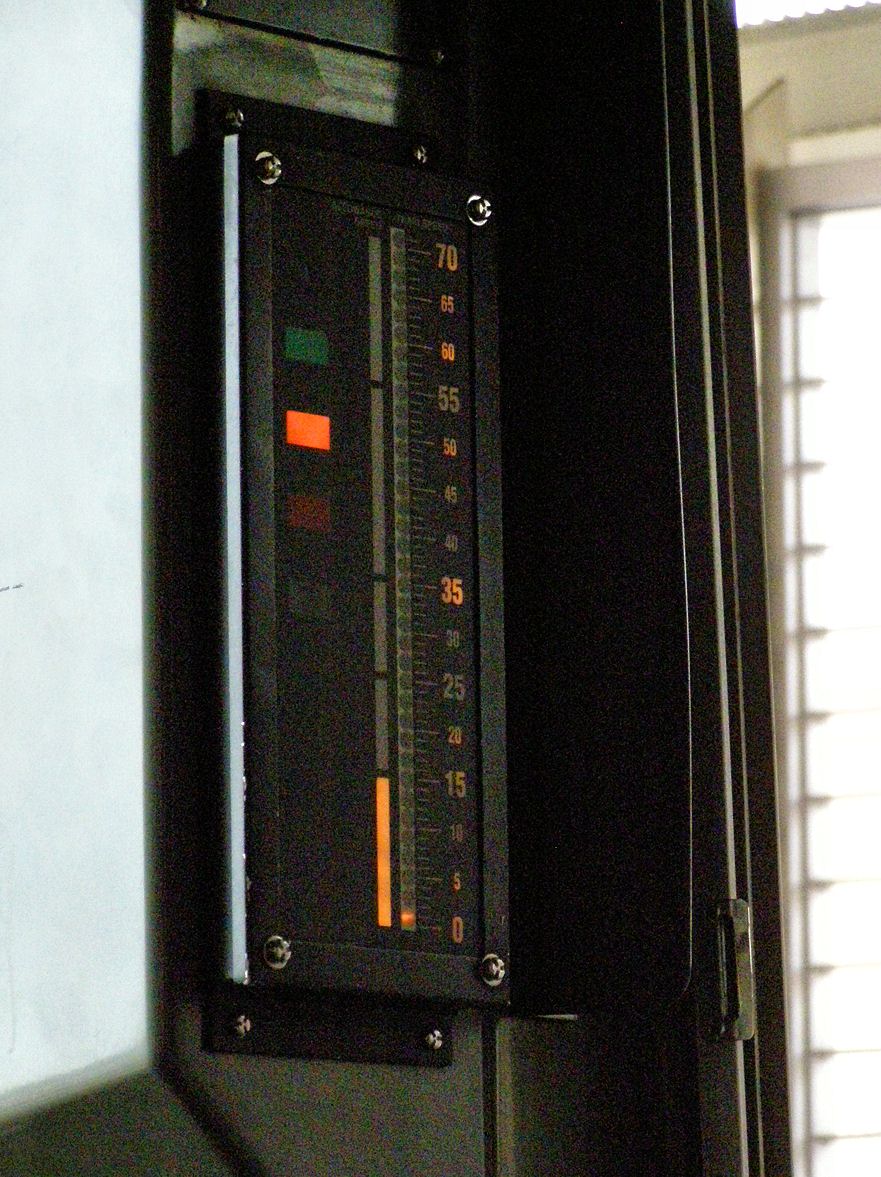
Cab signalling is a railway safety system that communicates track status and condition information to the cab, crew compartment or driver's compartment of a locomotive, railcar or multiple unit. The information is continually updated giving an easy to read display to the train driver or engine driver.
The simplest systems display the trackside signal, while more sophisticated systems also display allowable speed, location of nearby trains, and dynamic information about the track ahead. Cab signals can also be part of a more comprehensive train protection system that can automatically apply the brakes stopping the train if the operator does not respond appropriately to a dangerous condition.
The main purpose of a signal system is to enforce a safe separation between trains and to stop or slow trains in advance of a restrictive situation. The cab signal system is an improvement over the wayside signal system, where visual signals beside or above the right-of-way govern the movement of trains, as it provides the train operator with a continuous reminder of the last wayside signal or a continuous indication of the state of the track ahead.
The first such systems were installed on an experimental basis in the 1910s in the United Kingdom, in the 1920s in the United States, and in the Netherlands in the 1940s. Modern high-speed rail systems such as those in Japan, France, and Germany were all designed from the start to use in-cab signalling due to the impracticality of sighting wayside signals at the new higher train speeds. Worldwide, legacy rail lines continue to see limited adoption of Cab signalling outside of high density or suburban rail districts and in many cases is precluded by use of older intermittent Automatic Train Stop technology.
In North America, the coded track circuit system developed by the Pennsylvania Railroad (PRR) and Union Switch & Signal (US&S) became the de facto national standard. Variations of this system are also in use on many rapid transit systems and form the basis for several international cab signalling systems such as CAWS in Ireland, BACC in Italy, ALSN in Russia and the first generation Shinkansen signalling developed by Japan National Railways (JNR).
In Europe and elsewhere in the world, cab signalling standards were developed on a country by country basis with limited interoperability, however new technologies like the European Rail Traffic Management System (ERTMS) aim to improve interoperability. The train-control component of ERTMS, termed European Train Control System (ETCS), is a functional specification that incorporates some of the former national standards and allows them to be fully interoperable with a few modifications.
All cab signalling systems must have a continuous in-cab indication to inform the driver of track condition ahead; however, these fall into two main categories. Intermittent cab signals are updated at discrete points along the rail line and between these points the display will reflect information from the last update. Continuous cab signals receive a continuous flow of information about the state of the track ahead and can have the cab indication change at any time to reflect any updates. The majority of cab signalling systems, including those that use coded track circuits, are continuous.
The German Indusi and Dutch ATB-NG fall into this category. These and other such systems provide constant reminders to drivers of track conditions ahead, but are only updated at discrete points. This can lead to situations where the information displayed to the driver has become out of date. Intermittent cab signalling systems have functional overlap with many other train protection systems such as trip stops, but the distinction is that a driver or automatic operating system makes continuous reference to the last received update.
Hub AI
Cab signalling AI simulator
(@Cab signalling_simulator)
Cab signalling
Cab signalling is a railway safety system that communicates track status and condition information to the cab, crew compartment or driver's compartment of a locomotive, railcar or multiple unit. The information is continually updated giving an easy to read display to the train driver or engine driver.
The simplest systems display the trackside signal, while more sophisticated systems also display allowable speed, location of nearby trains, and dynamic information about the track ahead. Cab signals can also be part of a more comprehensive train protection system that can automatically apply the brakes stopping the train if the operator does not respond appropriately to a dangerous condition.
The main purpose of a signal system is to enforce a safe separation between trains and to stop or slow trains in advance of a restrictive situation. The cab signal system is an improvement over the wayside signal system, where visual signals beside or above the right-of-way govern the movement of trains, as it provides the train operator with a continuous reminder of the last wayside signal or a continuous indication of the state of the track ahead.
The first such systems were installed on an experimental basis in the 1910s in the United Kingdom, in the 1920s in the United States, and in the Netherlands in the 1940s. Modern high-speed rail systems such as those in Japan, France, and Germany were all designed from the start to use in-cab signalling due to the impracticality of sighting wayside signals at the new higher train speeds. Worldwide, legacy rail lines continue to see limited adoption of Cab signalling outside of high density or suburban rail districts and in many cases is precluded by use of older intermittent Automatic Train Stop technology.
In North America, the coded track circuit system developed by the Pennsylvania Railroad (PRR) and Union Switch & Signal (US&S) became the de facto national standard. Variations of this system are also in use on many rapid transit systems and form the basis for several international cab signalling systems such as CAWS in Ireland, BACC in Italy, ALSN in Russia and the first generation Shinkansen signalling developed by Japan National Railways (JNR).
In Europe and elsewhere in the world, cab signalling standards were developed on a country by country basis with limited interoperability, however new technologies like the European Rail Traffic Management System (ERTMS) aim to improve interoperability. The train-control component of ERTMS, termed European Train Control System (ETCS), is a functional specification that incorporates some of the former national standards and allows them to be fully interoperable with a few modifications.
All cab signalling systems must have a continuous in-cab indication to inform the driver of track condition ahead; however, these fall into two main categories. Intermittent cab signals are updated at discrete points along the rail line and between these points the display will reflect information from the last update. Continuous cab signals receive a continuous flow of information about the state of the track ahead and can have the cab indication change at any time to reflect any updates. The majority of cab signalling systems, including those that use coded track circuits, are continuous.
The German Indusi and Dutch ATB-NG fall into this category. These and other such systems provide constant reminders to drivers of track conditions ahead, but are only updated at discrete points. This can lead to situations where the information displayed to the driver has become out of date. Intermittent cab signalling systems have functional overlap with many other train protection systems such as trip stops, but the distinction is that a driver or automatic operating system makes continuous reference to the last received update.