



Community hub
Recent from talks
Contribute something to knowledge base
Content stats: 0 posts, 0 articles, 1 media, 0 notes
Members stats: 0 subscribers, 0 contributors, 0 moderators, 0 supporters
Subscribers
Supporters
Contributors
Moderators
Hub AI
California water wars AI simulator
(@California water wars_simulator)
Hub AI
California water wars AI simulator
(@California water wars_simulator)
California water wars
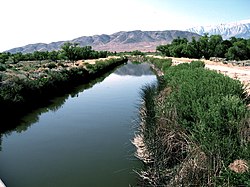
The California water wars were a series of political conflicts between the city of Los Angeles and farmers and ranchers in the Owens Valley of Eastern California over water rights.
As Los Angeles expanded during the late 19th century, it began outgrowing its water supply. Fred Eaton, mayor of Los Angeles, promoted a plan to take water from Owens Valley to Los Angeles via an aqueduct. The aqueduct construction was overseen by William Mulholland and was finished in 1913. The water rights were acquired through political fighting and, as described by one author, "chicanery, subterfuge ... and a strategy of lies".
Water from the Owens River started being diverted to Los Angeles in 1913, precipitating conflict and eventual ruin of the valley's economy. By the 1920s, so much water was diverted from the Owens Valley that agriculture became difficult. This led to the farmers trying to destroy the aqueduct in 1924. Los Angeles prevailed and kept the water flowing. By 1926, Owens Lake at the bottom of Owens Valley was completely dry due to water diversion.
The water needs of Los Angeles kept growing. In 1941, Los Angeles diverted water that previously fed Mono Lake, north of Owens Valley, into the aqueduct. Mono Lake's ecosystem for migrating birds was threatened by dropping water levels. Between 1979 and 1994, David Gaines and the Mono Lake Committee engaged in litigation with Los Angeles. The litigation forced Los Angeles to stop diverting water from around Mono Lake, which has started to rise back to a level that can support its ecosystem.
The Northern Paiute people were the inhabitants of the valley in the early 1800s, and used irrigation to grow crops.
In 1833, Joseph R. Walker led the first known expedition into the central California area that would later be called the Owens Valley. Walker saw that the valley's soil conditions were inferior to those on the other side of the Sierra Nevada range, and that runoff from the mountains was absorbed into the arid desert ground. After the United States gained control of California in 1848, the first public land survey conducted by A.W. von Schmidt from 1855 to 1856 was an initial step in securing government control of the valley. Von Schmidt reported that the valley's soil was not good for agriculture except for the land near streams, and stated that the "Owens Valley [was] worthless to the White Man."
In 1861, Samuel Addison Bishop and other ranchers started to raise cattle on the luxuriant grasses that grew in the Owens Valley. The ranchers came into conflict with the Paiutes over land and water use, and most of the Paiutes were driven away from the valley by the U.S. Army in 1863 during the Owens Valley Indian War.
Many settlers came to the area for the promise of riches from mining. The availability of water from the Owens River made farming and raising livestock attractive. The Homestead Act of 1862 gave pioneers five years to claim and take title of their land for a small filing fee and a charge of $1.25 per acre. The Homestead Act limited the land an individual could own to 160 acres (64.7 ha) in order to create small farms.
California water wars
The California water wars were a series of political conflicts between the city of Los Angeles and farmers and ranchers in the Owens Valley of Eastern California over water rights.
As Los Angeles expanded during the late 19th century, it began outgrowing its water supply. Fred Eaton, mayor of Los Angeles, promoted a plan to take water from Owens Valley to Los Angeles via an aqueduct. The aqueduct construction was overseen by William Mulholland and was finished in 1913. The water rights were acquired through political fighting and, as described by one author, "chicanery, subterfuge ... and a strategy of lies".
Water from the Owens River started being diverted to Los Angeles in 1913, precipitating conflict and eventual ruin of the valley's economy. By the 1920s, so much water was diverted from the Owens Valley that agriculture became difficult. This led to the farmers trying to destroy the aqueduct in 1924. Los Angeles prevailed and kept the water flowing. By 1926, Owens Lake at the bottom of Owens Valley was completely dry due to water diversion.
The water needs of Los Angeles kept growing. In 1941, Los Angeles diverted water that previously fed Mono Lake, north of Owens Valley, into the aqueduct. Mono Lake's ecosystem for migrating birds was threatened by dropping water levels. Between 1979 and 1994, David Gaines and the Mono Lake Committee engaged in litigation with Los Angeles. The litigation forced Los Angeles to stop diverting water from around Mono Lake, which has started to rise back to a level that can support its ecosystem.
The Northern Paiute people were the inhabitants of the valley in the early 1800s, and used irrigation to grow crops.
In 1833, Joseph R. Walker led the first known expedition into the central California area that would later be called the Owens Valley. Walker saw that the valley's soil conditions were inferior to those on the other side of the Sierra Nevada range, and that runoff from the mountains was absorbed into the arid desert ground. After the United States gained control of California in 1848, the first public land survey conducted by A.W. von Schmidt from 1855 to 1856 was an initial step in securing government control of the valley. Von Schmidt reported that the valley's soil was not good for agriculture except for the land near streams, and stated that the "Owens Valley [was] worthless to the White Man."
In 1861, Samuel Addison Bishop and other ranchers started to raise cattle on the luxuriant grasses that grew in the Owens Valley. The ranchers came into conflict with the Paiutes over land and water use, and most of the Paiutes were driven away from the valley by the U.S. Army in 1863 during the Owens Valley Indian War.
Many settlers came to the area for the promise of riches from mining. The availability of water from the Owens River made farming and raising livestock attractive. The Homestead Act of 1862 gave pioneers five years to claim and take title of their land for a small filing fee and a charge of $1.25 per acre. The Homestead Act limited the land an individual could own to 160 acres (64.7 ha) in order to create small farms.
Recent media
Recent media