



Community hub
Recent from talks
Contribute something to knowledge base
Content stats: 0 posts, 0 articles, 1 media, 0 notes
Members stats: 0 subscribers, 0 contributors, 0 moderators, 0 supporters
Subscribers
Supporters
Contributors
Moderators
Hub AI
Chadron, Nebraska AI simulator
(@Chadron, Nebraska_simulator)
Hub AI
Chadron, Nebraska AI simulator
(@Chadron, Nebraska_simulator)
Chadron, Nebraska
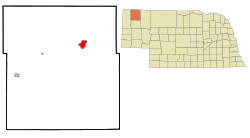
Chadron (/ˈʃædrən/ SHAD-rən) is a city in and the county seat of Dawes County, Nebraska, United States, in the Great Plains region. The population was 5,206 at the 2020 census.
The city is home to an 11-story high-rise on the campus of Chadron State College, with the building being the tallest in the Nebraska Panhandle.
Chadron also is the United States Forest Service headquarters of the Nebraska and Samuel R. McKelvie National Forests, and the Buffalo Gap, Fort Pierre, and Oglala National Grasslands. The Museum of the Fur Trade is located near Chadron, at the site of the American Fur Company's former Bordeaux Trading Post.
Succeeding cultures of indigenous peoples lived in the area for thousands of years. In historic times, tribes such as the Oglala Lakota (Oglala Sioux Tribe), Cheyenne and others lived in the area. The Sioux used this territory as a hunting ground after pushing other tribes to the west.
Chadron is named for Louis Chartran, a French-Indian (Métis) fur trapper who ran a trading post on Chadron Creek in 1841. He was married to a Native American woman.
In 1884 the town was formally established when the Fremont, Elkhorn, and Missouri Valley Railroad was constructed through the area from Omaha, Nebraska, en route to Wyoming. Chadron was first named O'Linn for its founder Fannie O'Linn, who built a community at the confluence of the White River and Chadron Creek. This is where the railroad was expected to branch. When it was built six miles away on Bordeaux Creek, the townspeople packed up the entire town—buildings included—and moved it to the new location.
Among the founders of the town were the businessman Charles Henry King and his wife Martha. King established retail and freight businesses and banks in towns along the railroad's route; he capitalized on the flow of settlers and pioneers to the region. Four of the five King children were born in Chadron, including their second son Leslie Lynch King. In 1908 the family moved to Omaha, the business center of the state. In 1912 Leslie married, and in July 1913 became the father of the future president, Gerald Ford. King and his wife divorced soon after that.
During the 1893 Chicago World's Fair, Chadron was the starting point of the 1,000-mile "Chadron-Chicago Cowboy Horse Race." Nine riders competed for the $1,000 prize to be the first to reach the entrance of Buffalo Bill's Wild West Show. Among the riders was the former outlaw Doc Middleton. John Berry won the race in 13 days and 16 hours.
Chadron, Nebraska
Chadron (/ˈʃædrən/ SHAD-rən) is a city in and the county seat of Dawes County, Nebraska, United States, in the Great Plains region. The population was 5,206 at the 2020 census.
The city is home to an 11-story high-rise on the campus of Chadron State College, with the building being the tallest in the Nebraska Panhandle.
Chadron also is the United States Forest Service headquarters of the Nebraska and Samuel R. McKelvie National Forests, and the Buffalo Gap, Fort Pierre, and Oglala National Grasslands. The Museum of the Fur Trade is located near Chadron, at the site of the American Fur Company's former Bordeaux Trading Post.
Succeeding cultures of indigenous peoples lived in the area for thousands of years. In historic times, tribes such as the Oglala Lakota (Oglala Sioux Tribe), Cheyenne and others lived in the area. The Sioux used this territory as a hunting ground after pushing other tribes to the west.
Chadron is named for Louis Chartran, a French-Indian (Métis) fur trapper who ran a trading post on Chadron Creek in 1841. He was married to a Native American woman.
In 1884 the town was formally established when the Fremont, Elkhorn, and Missouri Valley Railroad was constructed through the area from Omaha, Nebraska, en route to Wyoming. Chadron was first named O'Linn for its founder Fannie O'Linn, who built a community at the confluence of the White River and Chadron Creek. This is where the railroad was expected to branch. When it was built six miles away on Bordeaux Creek, the townspeople packed up the entire town—buildings included—and moved it to the new location.
Among the founders of the town were the businessman Charles Henry King and his wife Martha. King established retail and freight businesses and banks in towns along the railroad's route; he capitalized on the flow of settlers and pioneers to the region. Four of the five King children were born in Chadron, including their second son Leslie Lynch King. In 1908 the family moved to Omaha, the business center of the state. In 1912 Leslie married, and in July 1913 became the father of the future president, Gerald Ford. King and his wife divorced soon after that.
During the 1893 Chicago World's Fair, Chadron was the starting point of the 1,000-mile "Chadron-Chicago Cowboy Horse Race." Nine riders competed for the $1,000 prize to be the first to reach the entrance of Buffalo Bill's Wild West Show. Among the riders was the former outlaw Doc Middleton. John Berry won the race in 13 days and 16 hours.
Recent media
Recent media