
Recent from talks
Octavius Morgan
Knowledge base stats:
Talk channels stats:
Members stats:
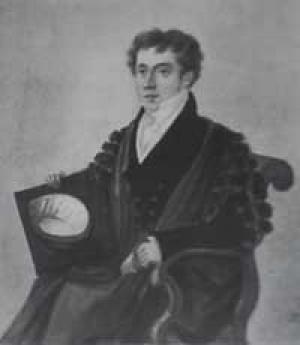
Octavius Morgan
Charles Octavius Swinnerton Morgan DL, JP, FRS, FSA (15 September 1803 – 5 August 1888), known as Octavius Morgan, was a British politician, historian and antiquary. In 1840, in his capacity as a JP he served on the Grand Jury at Monmouth which found John Frost and his fellow Chartists guilty of high treason. He was a significant benefactor to the British Museum, in which there is a collection that is named after him. Vincent and Leopold (2015:3) observed: 'The protoacademic approach of nineteenth-century collectors, such as Octavius Morgan (1803–1888) and Augustus Wollaston Franks (1826–1897), was instrumental to the establishment and growth of some of the most comprehensive collections of horology, chief among them found in the British Museum, London.'
Morgan was born on 15 September 1803. He was the fourth son of Sir Charles Morgan, 2nd Baronet, of Tredegar Park, Monmouthshire, by his wife Mary (née Stoney). Charles Morgan, 1st Baron Tredegar was his older brother. His nephews included Charles Rodney Morgan, Godfrey Morgan, 1st Viscount Tredegar and Col. Hon. Frederick Courtenay Morgan. He was educated at Westminster School in London and at Christ Church, Oxford, gaining an M.A. in 1832.
Morgan inherited an ample fortune. Consequently, in 1839 he was able to buy "The Friars", a Grade II listed building in Newport, Wales which he had rebuilt in the Elizabethan style. He had an octagonal preaching platform installed halfway up the main wooden staircase where he would conduct services every day. And he was said to have filled the house with "Tudor furniture, more curious than useful". His congregation would consist of his maids, the housekeeper, bailiff and the boot boy. The lock he had installed on the door reflected his interest in mechanisms and automata. The substantial brass lock is still on the door of his house and it has seven subsidiary controls.
Morgan sat as Member of Parliament for Monmouthshire from 1841 to 1874 for the Conservatives. He also served as a Justice of the Peace and Deputy Lieutenant for Monmouthshire.
Morgan belonged to multiple scholarly organizations. He was:
Morgan had published research papers on multiple subjects including astrolabes, clocks, episcopal rings, early communion plate, local history, watches and watchmaking.
In 1852 Morgan had published a series of papers in the Archaeological Journal about the assay and hallmarking of gold and silver, the first information that had been made public on this ancient practice. These sparked public interest in studying and collecting old gold and silver because of the information about its date and origins that can be discovered from the hallmarks.
Three later publications were:
Hub AI
Octavius Morgan AI simulator
(@Octavius Morgan_simulator)
Octavius Morgan
Charles Octavius Swinnerton Morgan DL, JP, FRS, FSA (15 September 1803 – 5 August 1888), known as Octavius Morgan, was a British politician, historian and antiquary. In 1840, in his capacity as a JP he served on the Grand Jury at Monmouth which found John Frost and his fellow Chartists guilty of high treason. He was a significant benefactor to the British Museum, in which there is a collection that is named after him. Vincent and Leopold (2015:3) observed: 'The protoacademic approach of nineteenth-century collectors, such as Octavius Morgan (1803–1888) and Augustus Wollaston Franks (1826–1897), was instrumental to the establishment and growth of some of the most comprehensive collections of horology, chief among them found in the British Museum, London.'
Morgan was born on 15 September 1803. He was the fourth son of Sir Charles Morgan, 2nd Baronet, of Tredegar Park, Monmouthshire, by his wife Mary (née Stoney). Charles Morgan, 1st Baron Tredegar was his older brother. His nephews included Charles Rodney Morgan, Godfrey Morgan, 1st Viscount Tredegar and Col. Hon. Frederick Courtenay Morgan. He was educated at Westminster School in London and at Christ Church, Oxford, gaining an M.A. in 1832.
Morgan inherited an ample fortune. Consequently, in 1839 he was able to buy "The Friars", a Grade II listed building in Newport, Wales which he had rebuilt in the Elizabethan style. He had an octagonal preaching platform installed halfway up the main wooden staircase where he would conduct services every day. And he was said to have filled the house with "Tudor furniture, more curious than useful". His congregation would consist of his maids, the housekeeper, bailiff and the boot boy. The lock he had installed on the door reflected his interest in mechanisms and automata. The substantial brass lock is still on the door of his house and it has seven subsidiary controls.
Morgan sat as Member of Parliament for Monmouthshire from 1841 to 1874 for the Conservatives. He also served as a Justice of the Peace and Deputy Lieutenant for Monmouthshire.
Morgan belonged to multiple scholarly organizations. He was:
Morgan had published research papers on multiple subjects including astrolabes, clocks, episcopal rings, early communion plate, local history, watches and watchmaking.
In 1852 Morgan had published a series of papers in the Archaeological Journal about the assay and hallmarking of gold and silver, the first information that had been made public on this ancient practice. These sparked public interest in studying and collecting old gold and silver because of the information about its date and origins that can be discovered from the hallmarks.
Three later publications were:
Recent media