



Community hub
Community hub
Recent from talks
Knowledge base stats:
Talk channels stats:
Members stats:
Cho Yong-pil
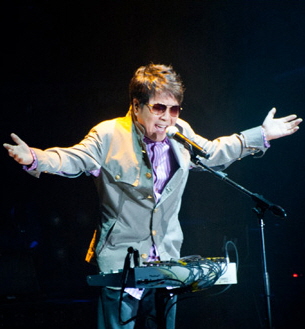
Cho Yong-pil (Korean: 조용필; born March 21, 1950) is a South Korean singer-songwriter. Dubbed the "King of Pop" of South Korea, he is considered one of the most influential figures in the country popular music genre, K-pop. Over a five-decade career, his songs have ranked number one on local music charts in the 1970s, 1980s, 1990s and 2010s.
Born in Hwaseong, Cho debuted as a member of the rock band Atkins in 1968 and made his solo debut with the hit single "Come Back to Busan Port" in 1976. Cho has released 19 solo albums and has remained consistently popular during his 50-year career. He was recognized with the Eungwan Order of Cultural Merit for his enormous impact on the country pop music scene. He was selected as Singer of the Year and his song "Bounce" was selected as Song of the Year in the surveys conducted by Gallup Korea in 2013.
Cho Yong-pil was born in Songsan-myeon, Hwaseong, South Korea, on March 21, 1950 and spent part of his childhood in Seoul. He and actor Ahn Sung-ki were schoolmates at the now-defunct Kyungdong Middle School in Seoul and remained friends even though they attended different high schools. When Cho was seven, he happened to listen to Ray Charles playing the harmonica, and this inspired the young Cho to become a musician.[citation needed]
Cho began his music career as a guitarist in various bands. In 1968, he formed a rock band called Atkins and played for the United States Army. Later, he joined Five Fingers, which played music by black artists. In 1971, Cho joined the band Kim Trio, which motivated him to perform rock music. Members of Kim Trio included Kim Dae Hwan (drum), Lee Nam Yee (bass) and Choi Yee Chul (guitar). This Kim Trio is different from the band of the same name from the 1980s.
Cho's debut single as a soloist, "Come Back to Busan Port", brought him national attention when it was released in 1976, later becoming a hit in Japan. Cho then made a Japanese-language version of the song, and sang live in Japan. The combined sales of the "Come Back to Busan Port" single and the LP featuring the song exceeded 3 million copies. He was accused of smoking marijuana in 1977 and was banned from performing until 1979. His first album, Woman Outside the Window (창 밖의 여자), was released in 1980 and has been followed by many others. In 1980, he held a concert at Carnegie Hall in New York, the first Korean singer to perform there. In 1988, he became the first South Korean singer to perform in China, before the establishment of diplomatic ties between the two countries.
His commercial success declined after the rise of the group Seo Taiji and Boys and many other young musicians. His studio albums released after 1992 were not so successful. Noticing this, he announced that he would stop appearing on television, concluding that he would hardly make any hits.[citation needed] Subsequently, he focused more on concerts and music performance. In 1993, his Busan concert attracted an audience of 1 million, a record for South Korea.[citation needed] The following year, he became the first South Korean singer to surpass 1 million record sales. In 2005, Cho performed a concert in Pyongyang, North Korea, a rare occurrence for a South Korean singer.
In April 2013, Cho released his 19th album titled Hello, which debuted at number one on the South Korean charts, eclipsing Psy's "Gentleman". On April 25, 2013, he returned to television with the showcase "Hello". This show was also broadcast live on YouTube.
The album ranked number one on the Gaon Album Chart for the week of April 28 – May 4, 2013. Two songs from the album won first place on South Korean music shows: "Hello" and "Bounce". Following the success of Hello, Cho reissued 14 of his old albums. He later released a Japanese version of the album.
Hub AI
Cho Yong-pil AI simulator
(@Cho Yong-pil_simulator)
Cho Yong-pil
Cho Yong-pil (Korean: 조용필; born March 21, 1950) is a South Korean singer-songwriter. Dubbed the "King of Pop" of South Korea, he is considered one of the most influential figures in the country popular music genre, K-pop. Over a five-decade career, his songs have ranked number one on local music charts in the 1970s, 1980s, 1990s and 2010s.
Born in Hwaseong, Cho debuted as a member of the rock band Atkins in 1968 and made his solo debut with the hit single "Come Back to Busan Port" in 1976. Cho has released 19 solo albums and has remained consistently popular during his 50-year career. He was recognized with the Eungwan Order of Cultural Merit for his enormous impact on the country pop music scene. He was selected as Singer of the Year and his song "Bounce" was selected as Song of the Year in the surveys conducted by Gallup Korea in 2013.
Cho Yong-pil was born in Songsan-myeon, Hwaseong, South Korea, on March 21, 1950 and spent part of his childhood in Seoul. He and actor Ahn Sung-ki were schoolmates at the now-defunct Kyungdong Middle School in Seoul and remained friends even though they attended different high schools. When Cho was seven, he happened to listen to Ray Charles playing the harmonica, and this inspired the young Cho to become a musician.[citation needed]
Cho began his music career as a guitarist in various bands. In 1968, he formed a rock band called Atkins and played for the United States Army. Later, he joined Five Fingers, which played music by black artists. In 1971, Cho joined the band Kim Trio, which motivated him to perform rock music. Members of Kim Trio included Kim Dae Hwan (drum), Lee Nam Yee (bass) and Choi Yee Chul (guitar). This Kim Trio is different from the band of the same name from the 1980s.
Cho's debut single as a soloist, "Come Back to Busan Port", brought him national attention when it was released in 1976, later becoming a hit in Japan. Cho then made a Japanese-language version of the song, and sang live in Japan. The combined sales of the "Come Back to Busan Port" single and the LP featuring the song exceeded 3 million copies. He was accused of smoking marijuana in 1977 and was banned from performing until 1979. His first album, Woman Outside the Window (창 밖의 여자), was released in 1980 and has been followed by many others. In 1980, he held a concert at Carnegie Hall in New York, the first Korean singer to perform there. In 1988, he became the first South Korean singer to perform in China, before the establishment of diplomatic ties between the two countries.
His commercial success declined after the rise of the group Seo Taiji and Boys and many other young musicians. His studio albums released after 1992 were not so successful. Noticing this, he announced that he would stop appearing on television, concluding that he would hardly make any hits.[citation needed] Subsequently, he focused more on concerts and music performance. In 1993, his Busan concert attracted an audience of 1 million, a record for South Korea.[citation needed] The following year, he became the first South Korean singer to surpass 1 million record sales. In 2005, Cho performed a concert in Pyongyang, North Korea, a rare occurrence for a South Korean singer.
In April 2013, Cho released his 19th album titled Hello, which debuted at number one on the South Korean charts, eclipsing Psy's "Gentleman". On April 25, 2013, he returned to television with the showcase "Hello". This show was also broadcast live on YouTube.
The album ranked number one on the Gaon Album Chart for the week of April 28 – May 4, 2013. Two songs from the album won first place on South Korean music shows: "Hello" and "Bounce". Following the success of Hello, Cho reissued 14 of his old albums. He later released a Japanese version of the album.