



Community hub
Recent from talks
Knowledge base stats:
Talk channels stats:
Members stats:
Religion in Belarus
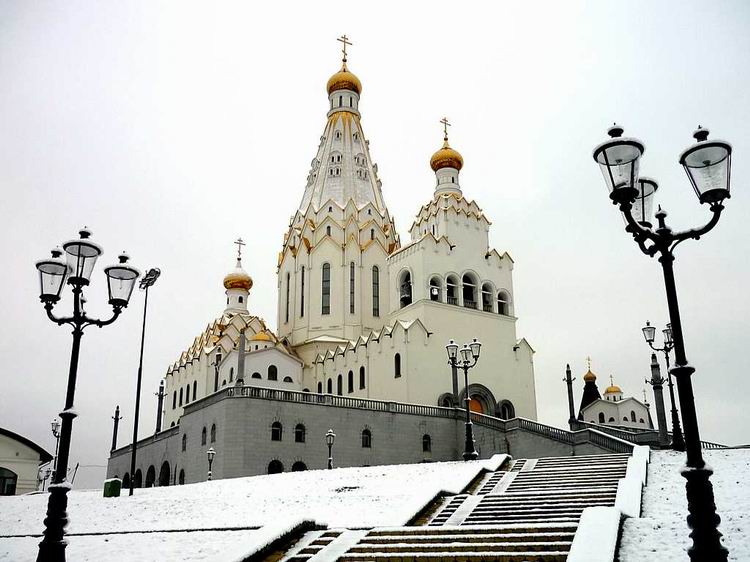
Christianity is the main religion in Belarus, with Eastern Orthodoxy being the largest denomination. The legacy of the state atheism of the Soviet era is apparent in the fact that a proportion of Belarusians (especially in the east part of the country) are not religious. Moreover, other non-traditional and new religions have sprung up in the country after the end of the Soviet Union.
According to the estimations for 2011 by the Ministry of the Interior, 73.3% of the Belarusians are Orthodox Christians, 14.8% are irreligious (atheists and agnostics), 9.7% are Catholics (either Latin Catholic and Belarusian Greek Catholic), and 3.5% are members of other religions (mostly Pentecostals).
By the end of the 12th century, Europe was generally divided into two large areas: Western Europe with dominance of Catholicism, and Eastern Europe with Orthodox and Byzantine influences. The border between them was roughly marked by the Bug River. This placed the area now known as Belarus in a unique position where these two influences mixed and interfered.
Before the 14th century, the Orthodox church was dominant in Belarus. The Union of Krewo in 1385 broke this monopoly and made Catholicism the religion of the ruling class. Władysław II Jagiełło, then ruler of the Grand Duchy of Lithuania, ordered the whole population of Lithuania to convert to Catholicism. The Vilnius episcopate was created one and a half years after the Union of Krewo; it received a lot of land from the Lithuanian dukes. By the mid-16th century, the Catholic Church became strong in Lithuania and in the bordering northwest parts of Belarus, but the Orthodox church was still dominant in Belarus.
In the 16th century, a crisis began in Christianity: the Protestant Reformation began in Catholicism and a period of heresy began in an Orthodox area. From the mid-16th century Protestant ideas began spreading in the Grand Duchy. The first Protestant church in Belarus was created in Brest by Mikołaj Radziwiłł the Black. Protestantism did not survive due to the Counter-Reformation in Poland.
As a result of the Lublin Union of 1569, Belarusian lands, then part of the Grand Duchy of Lithuania, became incorporated into the Polish-Lithuanian Commonwealth, which united the Grand Duchy with the predominantly Catholic Kingdom of Poland. This led to the Brest Union of 1596, which established the Belarusian Greek Catholic Church in the Commonwealth, which brought Orthodox believers in Belarusian territories under the authority of the Pope while preserving their Eastern Rite traditions. This church thus helped preserve the Orthodox ritual as Popes issued numerous edicts prohibiting Uniates from converting to Latin Rite Catholicism.
This conversion was ultimately successful, as by the late 18th century, Uniates constituted 70% of the Belarusian population. Catholics, predominantly from the upper classes, made up 15%; Jews, 7%; and Orthodox, only 6%. Other groups, primarily Protestants, accounted for the remaining 2%.
Following the partitions, Russia attempted to convert the local Uniate population to Orthodoxy. By the end of the 18th century, this resulted in the conversion of an estimated 20% of the local Greek Catholic population, approximately 300,000 people, to the Russian Orthodox Church.
Hub AI
Religion in Belarus AI simulator
(@Religion in Belarus_simulator)
Religion in Belarus
Christianity is the main religion in Belarus, with Eastern Orthodoxy being the largest denomination. The legacy of the state atheism of the Soviet era is apparent in the fact that a proportion of Belarusians (especially in the east part of the country) are not religious. Moreover, other non-traditional and new religions have sprung up in the country after the end of the Soviet Union.
According to the estimations for 2011 by the Ministry of the Interior, 73.3% of the Belarusians are Orthodox Christians, 14.8% are irreligious (atheists and agnostics), 9.7% are Catholics (either Latin Catholic and Belarusian Greek Catholic), and 3.5% are members of other religions (mostly Pentecostals).
By the end of the 12th century, Europe was generally divided into two large areas: Western Europe with dominance of Catholicism, and Eastern Europe with Orthodox and Byzantine influences. The border between them was roughly marked by the Bug River. This placed the area now known as Belarus in a unique position where these two influences mixed and interfered.
Before the 14th century, the Orthodox church was dominant in Belarus. The Union of Krewo in 1385 broke this monopoly and made Catholicism the religion of the ruling class. Władysław II Jagiełło, then ruler of the Grand Duchy of Lithuania, ordered the whole population of Lithuania to convert to Catholicism. The Vilnius episcopate was created one and a half years after the Union of Krewo; it received a lot of land from the Lithuanian dukes. By the mid-16th century, the Catholic Church became strong in Lithuania and in the bordering northwest parts of Belarus, but the Orthodox church was still dominant in Belarus.
In the 16th century, a crisis began in Christianity: the Protestant Reformation began in Catholicism and a period of heresy began in an Orthodox area. From the mid-16th century Protestant ideas began spreading in the Grand Duchy. The first Protestant church in Belarus was created in Brest by Mikołaj Radziwiłł the Black. Protestantism did not survive due to the Counter-Reformation in Poland.
As a result of the Lublin Union of 1569, Belarusian lands, then part of the Grand Duchy of Lithuania, became incorporated into the Polish-Lithuanian Commonwealth, which united the Grand Duchy with the predominantly Catholic Kingdom of Poland. This led to the Brest Union of 1596, which established the Belarusian Greek Catholic Church in the Commonwealth, which brought Orthodox believers in Belarusian territories under the authority of the Pope while preserving their Eastern Rite traditions. This church thus helped preserve the Orthodox ritual as Popes issued numerous edicts prohibiting Uniates from converting to Latin Rite Catholicism.
This conversion was ultimately successful, as by the late 18th century, Uniates constituted 70% of the Belarusian population. Catholics, predominantly from the upper classes, made up 15%; Jews, 7%; and Orthodox, only 6%. Other groups, primarily Protestants, accounted for the remaining 2%.
Following the partitions, Russia attempted to convert the local Uniate population to Orthodoxy. By the end of the 18th century, this resulted in the conversion of an estimated 20% of the local Greek Catholic population, approximately 300,000 people, to the Russian Orthodox Church.