Hubbry Logo
Christopher ScarverChristopher ScarverMain
Open search
Christopher Scarver
Community hub
Christopher Scarver
logo
18 pages, 0 posts
0 subscribers
Be the first to start a discussion here.
Christopher Scarver
Christopher Scarver
from Wikipedia

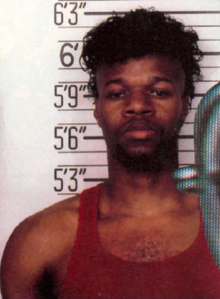
Christopher J. Scarver Sr. (born July 6, 1969) is an American criminal who is known for the 1994 murders of his fellow inmates Jeffrey Dahmer and Jesse Anderson, both convicted murderers, at the Columbia Correctional Institution in Wisconsin. The three inmates were on a work detail together in the prison gymnasium, and had a confrontation while unsupervised. Scarver had concealed a metal bar that he used to beat and fatally injure Dahmer and Anderson. Scarver was convicted and sentenced to two further life sentences for these murders. He had already been sentenced to life in prison after being convicted of the murder of Steve Lohman in 1990.

Key Information

Early life

[edit]

Scarver is the second of five children and was born and raised in Milwaukee, Wisconsin. He attended James Madison High School before dropping out in the eleventh grade. His mother forced him out of her house after he became addicted to alcohol and marijuana.

Scarver was hired as a trainee carpenter in a Wisconsin Conservation Corps job program. He said that his supervisor, Edward Patts, promised that upon completion of this program he would be hired full-time. After Patts was dismissed, Scarver did not gain a full-time job there.

He began to drink heavily. Later he said that while drunk, he started to hear voices calling him the "chosen one".[1] He was later diagnosed with schizophrenia and was said to have been suffering from messianic delusions.[2][3]

Murder of Steve Lohman

[edit]

On June 1, 1990, Scarver went to the Wisconsin Conservation Corps training office and found site manager John Feyen and employee Steve Lohman present. Forcing Lohman down at gunpoint, Scarver demanded money from Feyen. Upon receiving only US$15 from him (equivalent to $36 in 2024), the enraged Scarver shot Lohman once in the head, killing him. According to authorities, Scarver said: "Now do you think I'm kidding? I need more money." After Scarver shot Lohman twice more, both post-mortem, Feyen wrote Scarver a check for US$3,000 (equivalent to $7,220 in 2024). As Feyen fled outside to his car, Scarver fired at him, but missed.[1][4]

In 1992, Scarver was convicted of murder at a jury trial and sentenced to life in prison.[5] He was incarcerated at the Columbia Correctional Institution in Portage, Wisconsin.[6]

Murders of Jeffrey Dahmer and Jesse Anderson

[edit]

Two years later, on the morning of November 28, 1994, Scarver was assigned to a work detail in the gymnasium with two other inmates: Jesse Anderson, convicted for murdering his wife; and Jeffrey Dahmer, a serial killer. When corrections officers left the three unsupervised, a confrontation ensued. Scarver went out and retrieved a metal bar from the weight room, which he used to bludgeon Dahmer. He then attacked Anderson with a wooden stick at the showers. He returned to his cell and informed a corrections officer "God told me to do it. Jesse Anderson and Jeffrey Dahmer are dead."[7][8]

Both men were mortally wounded by the beatings. Dahmer was declared dead an hour after arriving at the hospital. Anderson died two days later after doctors removed him from life support.

Scarver was assessed for mental illness and found competent to stand trial on murder charges for the two killings.[9] He changed his "not guilty" plea to "no contest" in exchange for being transferred to a federal penitentiary, was convicted of each murder, and received two more life sentences.[10] When asked if he believed his sentence was just, Scarver was quoted as having said "Nothing white people do to blacks is just."[1]

Aftermath

[edit]

In 1995, Scarver was transferred into the custody of the Federal Bureau of Prisons under the register number #08157-045. At the time, prison officials in Wisconsin believed they did not have a facility secure enough to house Scarver. Scarver underwent psychiatric evaluation again at the MCFP Springfield and was later transferred to ADX Florence, the federal supermax in Florence, Colorado, where he remained until 2000.[11]

In 2000, Scarver was transferred to the Wisconsin Secure Program Facility when it opened.[12] In 2001, federal district court judge Barbara Crabb ordered that Scarver and about three dozen other seriously mentally ill inmates be relocated from the Wisconsin facility. Scarver was eventually relocated to the Centennial Correctional Facility in Colorado.[12]

In 2005, Scarver brought a federal civil rights suit against officials of the Wisconsin Secure Program Facility[13] arguing that he had been subjected to cruel and unusual punishment, contrary to his constitutional rights.[14] A district court judge dismissed the suit against several of the defendants and ruled that the actions of the remaining officials could not be considered unlawful. Scarver unsuccessfully appealed the decision in 2006.[13] Scarver would later say that he had been held for 16 years in solitary confinement as a result of the murders of Dahmer and Anderson.[15]

In 2012, an agent representing Scarver announced that he was willing to write a tell-all book about the murder of Dahmer.[16][17][18]

See also

[edit]

References

[edit]
[edit]
Revisions and contributorsEdit on WikipediaRead on Wikipedia
from Grokipedia
Christopher J. Scarver Sr. (born July 6, 1969) is an American convicted murderer who killed his job training supervisor, Steven Lohman, in 1990 during an armed robbery and, while incarcerated, murdered and convicted murderer in 1994. Scarver, originating from , , participated in a state-funded job training program where he shot Lohman in the head on June 1, 1990, after demanding money and later claiming auditory hallucinations compelled the act. Convicted of first-degree intentional in 1992, he received a life sentence without and was imprisoned at Columbia Correctional Institution. On November 28, 1994, during an unsupervised work detail in the prison gym, Scarver attacked Dahmer and Anderson with a 20-inch metal bar detached from exercise equipment, beating them fatally; Anderson died two days later from his injuries. Scarver, who professed delusions of being the "," faced additional charges but was deemed mentally ill, leading to transfers to high-security facilities including Supermax, where federal court records document his severe conditions and ongoing confinement.

Early Life

Childhood and Family Background

Christopher Scarver was born in 1969 in , , the second of five children in his family. He was reared in the city amid circumstances that later contributed to his personal struggles, though specific details about his parents' backgrounds or occupations remain undocumented in primary reports from the era. Scarver's early family environment involved typical urban challenges in Milwaukee's working-class neighborhoods, with limited public records detailing parental dynamics or socioeconomic factors beyond his position in the sibling lineup. By his teenage years, tensions arose, leading to his ejection from his mother's home due to involvement with alcohol and marijuana, signaling the onset of behavioral issues rooted in his upbringing.

Education, Employment, and Early Struggles

Scarver, born on July 6, 1969, in , , as the second of five children, attended High School but dropped out during his 11th grade year. His departure from school coincided with escalating , including alcohol and marijuana use, which prompted his mother to expel him from the family home. Following his expulsion, Scarver enrolled in a Youth Conservation Corps job training program, where he worked as a trainee carpenter for one year. Program officials had promised him a full-time position upon completion, but this opportunity did not materialize after his supervisor was dismissed, leaving Scarver without steady employment. He perceived the denial of the job as influenced by racial bias, fostering toward program management. These setbacks exacerbated Scarver's personal difficulties, as he descended into heavy daily alcohol consumption—approximately three 40-ounce beers—and marijuana use of at least four joints. He also began experiencing auditory hallucinations in which voices identified him as the "chosen one," a claim later echoed in his behavior upon entering in 1992. These struggles with addiction, , and emerging symptoms marked a period of instability leading up to his first criminal conviction in 1990.

First Murder

The Killing of Steve Lohman

On June 1, 1990, Christopher Scarver entered the Milwaukee office of the Wisconsin Conservation Corps, a state-sponsored job training program where he had been participating, armed with a .25-caliber semiautomatic pistol. Scarver, who harbored resentment toward the program after the dismissal of a previous supervisor he favored, confronted Steve Lohman, the 27-year-old site manager who had replaced that individual, and demanded money from the cash drawer. Lohman complied by handing over $15, but Scarver, dissatisfied with the amount, shot Lohman once in the head. Enraged, Scarver then fired two additional shots into Lohman's body postmortem before turning to John Feyen, another employee present in the office, whom he forced at gunpoint to write a check for $3,000. Scarver fled the scene with the check, cash, and weapon. Lohman was pronounced dead at the scene from the gunshot wounds. Authorities arrested Scarver several hours later after tracing the check; he was found in possession of the forged document, the stolen money, and the murder weapon. The incident was classified as a robbery homicide, stemming from Scarver's financial desperation and workplace grievances.

Investigation, Trial, and Sentencing

On June 1, 1990, Scarver entered the Conservation Corps training office in , where he had previously been employed and fired, armed with a .22-caliber borrowed from a friend. He demanded money from site manager John Feyen, but when employee Steven Lohman intervened, Scarver shot Lohman once in the head; Lohman, aged 27, died shortly thereafter from the wounds. Feyen struggled with Scarver, knocking the away after Scarver fired two additional shots into Lohman, before fleeing the scene. Police investigation proceeded rapidly due to Feyen's eyewitness account and the recovery of the ; Scarver fled the office but was arrested hours later while sitting on a nearby park bench, where he made statements indicating delusional beliefs, including claims of divine instruction. Authorities charged Scarver with first-degree intentional and armed robbery, as the incident involved an attempted theft amid his grievances over unpaid wages from the program. In 1992, following a trial in , a convicted Scarver of first-degree intentional for Lohman's death, rejecting any defenses despite evaluations noting his and history of hallucinations. He was sentenced to without the possibility of parole, with eligibility for release not until 2057 under law at the time. Scarver was incarcerated at the Columbia Correctional Institution to begin serving his term.

Imprisonment Prior to 1994

Adjustment to Prison Life

Upon conviction in 1992 for the first-degree intentional homicide of Steve Lohman, Christopher Scarver was sentenced to without eligibility until 2042 and transferred to Columbia Correctional Institution in . Immediately upon intake, Scarver exhibited signs of maladjustment, proclaiming to prison staff that he was the "" and guided by a family of voices instructing him on trust and enmity. Scarver informed a court-appointed of auditory hallucinations featuring high-pitched male and female voices, which he interpreted as affirming his status as the "chosen one"—a belief reinforced by his given name (, evoking Christ), his mother's name (Mary), and his prior work. These delusions, linked to the Lohman incident where voices purportedly urged the killing to reclaim his job, persisted into incarceration, contributing to his isolated demeanor as a self-described "lone wolf" who maintained distance from fellow inmates. No records indicate successful participation in rehabilitative programs or routine institutional compliance during this period; instead, Scarver's early conduct reflected ongoing detachment, with minimal reported interpersonal engagements beyond wary observation of others. This pattern of withdrawal and delusional ideation underscored a to adapt conventionally to the structured environment of maximum-security confinement.

Ongoing Mental Health Concerns

Upon entering the Columbia Correctional Institution in following his conviction for the murder of Steve Lohman, Christopher Scarver exhibited persistent religious delusions, informing a prison psychiatrist that he was the "chosen one" sent by to warn society about evil. These statements echoed claims he made during his , where he asserted to the that he was the and that divine command had directed the killing. Prison evaluations documented Scarver's severe mental instability, including messianic delusions consistent with psychotic disorders, prompting ongoing monitoring by staff prior to November 1994. Although assessed as competent to stand trial in 1992, his condition generated sustained concerns about potential risks to himself and others, as evidenced by reports of his grandiose beliefs persisting in the custodial environment. Subsequent psychological assessments during his early imprisonment confirmed diagnoses of paranoid schizophrenia and related conditions, such as and , underscoring the chronic nature of his symptoms despite institutional interventions. These issues were not resolved through available treatments, with Scarver's delusions remaining a focal point of psychiatric oversight in the years leading to the 1994 incidents.

1994 Prison Murders

Context at Columbia Correctional Institution

Columbia Correctional Institution (CCI), situated in , operated as a maximum-security facility for adult male inmates under the . The prison encompassed ten maximum-security housing units, each accommodating 50 single-occupancy cells, alongside a separate 150-bed minimum-security unit, emphasizing secure confinement for high-risk offenders. Established in , CCI housed inmates serving lengthy sentences, including those convicted of violent crimes, and implemented programs such as work details to structure daily routines. Upon his transfer to CCI in July 1992 following sentencing for 15 murders, was initially placed in to shield him from potential retaliation by other inmates aware of his crimes involving and . This isolation limited his interactions, with restraints required during any movement outside his cell. Approximately one year later, in mid-1993, Dahmer was reassigned to a specialized unit for prisoners exhibiting emotional or behavioral challenges, which permitted expanded privileges such as attending group classes, sharing communal meals, and participating in assigned labor tasks. Three weeks prior to the incident, Dahmer began cleaning duties in the gymnasium bathrooms as part of this routine. Christopher Scarver, convicted in of first-degree intentional for the 1990 beating death of Steve Lohman during a at a youth training facility, had been incarcerated at CCI since his sentencing to . Diagnosed with , Scarver experienced auditory hallucinations and delusions, including beliefs of divine selection, which influenced his behavior and led to prior institutional adjustments. , serving life for the murder of his Terry, whom he falsely blamed on two men, was also housed at CCI in a comparable status. Both Scarver and Anderson joined similar work details, reflecting the facility's practice of assigning maintenance tasks to eligible inmates despite their violent histories. The murders unfolded on November 28, , during a standard work shift in the gymnasium area, where Dahmer, Scarver, and Anderson were tasked with cleaning and left unsupervised for about 20 minutes by correctional staff. This lapse in oversight occurred within the broader operational context of CCI, where work programs aimed to occupy but occasionally exposed vulnerabilities in monitoring high-profile or mentally unstable individuals together. Dahmer and Anderson sustained fatal blunt force injuries from a metal bar improvised by Scarver, who returned to his housing unit afterward, prompting an immediate .

Attack on Jeffrey Dahmer and Jesse Anderson

On November 28, 1994, Christopher Scarver attacked fellow inmates and during an unsupervised work detail at the Columbia Correctional Institution in . The three men—Scarver, Dahmer, and Anderson—had been assigned to clean the prison gymnasium and were left alone for about 20 minutes without guards present, despite protocols requiring supervision for high-risk inmates like Dahmer. Scarver first assaulted Dahmer in an adjacent locker room or shower area, using a 20-pound metal bar detached from a weightlifting machine as the weapon. He struck Dahmer multiple times in the head, inflicting severe blunt force trauma that fractured his skull and caused immediate unconsciousness; Dahmer was transported to a hospital, where he was pronounced dead later that morning from head injuries. Scarver then proceeded to the weight room, where he bludgeoned Anderson in a similar manner, striking him repeatedly with the same bar and leaving him critically injured on the floor. After the assaults, Scarver returned to his cell block, where he was observed covered in blood and making erratic statements, including references to being "the chosen one." Prison officials quickly identified him as the suspect based on witness accounts from other inmates and physical evidence; Anderson succumbed to his injuries two days later on November 30, 1994, from complications of severe head trauma. The attacks highlighted lapses in security, as the unsupervised period enabled Scarver to access and wield the improvised weapon without immediate intervention.

Scarver's Stated Motivations

Christopher Scarver provided varying accounts of his motivations following the November 28, 1994, killings of and at Columbia Correctional Institution. Immediately after the attacks, Scarver reportedly proclaimed himself "the chosen one," claiming divine instruction to carry out the murders as the , a statement made to prison guards upon his return from the unsupervised work detail. This assertion aligned with prior instances of Scarver expressing messianic delusions, including during his 1992 trial for the murder of Steve Lohman, where he similarly invoked religious themes. In a 2015 interview with the New York Post, Scarver offered a more detailed, retrospective explanation, attributing the killings to the victims' behaviors and Dahmer's perceived lack of . He described Dahmer as engaging in "creepy practical jokes," such as fashioning prison food into limb-like shapes doused with ketchup to mimic blood, which disturbed inmates and staff. Scarver recounted confronting Dahmer with a newspaper clipping detailing his crimes, to which Dahmer reacted with shock but no denial, fueling Scarver's disgust and conviction that Dahmer remained unrepentant for murdering, raping, and cannibalizing 17 victims. Regarding Anderson, Scarver stated in the same that the killings stemmed from shared taunting during the cleaning detail, with Anderson joining Dahmer in mocking other prisoners; he further cited Anderson's and dishonesty, noting Anderson's for murdering his wife and attempting to falsely implicate two men. Scarver emphasized that both men exemplified unaccountable evil—Dahmer through his cannibalistic impulses and Anderson through racial deception—prompting him to act when left alone with a metal bar. These later statements contrast with the initial religious claims, potentially reflecting Scarver's diagnosis, though he maintained the acts were deliberate responses to provocation rather than hallucination-driven.

Additional Convictions and Sentencing

Following the fatal attacks on and on November 28, 1994, at Columbia Correctional Institution, Christopher Scarver faced charges of first-degree intentional for each victim. He initially entered a of not guilty by reason of , citing his diagnosed mental health conditions. Scarver subsequently withdrew the and changed his to no contest for both murders, an arrangement that secured his transfer from the state prison system to a federal penitentiary. This avoided a full on the merits while still resulting in conviction, as no contest pleas in are treated equivalently to guilty pleas for sentencing purposes in cases. On May 10, 1995, Scarver was sentenced in Dane County Circuit Court to two additional consecutive terms without the possibility of or extended supervision, to run consecutively with his prior life sentence for the 1990 of Steve Lohman. The court imposed these sentences reflecting the premeditated nature of the attacks, during which Scarver used a 20-inch metal bar from the equipment as the weapon. No further appeals or resentencings related to these convictions have been documented in primary legal records.

Prison Transfers and Solitary Confinement

Following his conviction for the murders of and on May 15, 1995, Scarver faced heightened security risks at Columbia Correctional Institution, prompting officials to determine that the facility could no longer ensure the safety of staff or other inmates. Arrangements were made for his transfer to an out-of-state maximum-security prison, specifically Colorado's in Cañon City, where he was housed for several years due to the absence of a comparable high-security unit in at the time. In 1999, opened the Secure Program Facility—commonly known as Supermax—in Boscobel, designed for long-term housing of the state's most dangerous and unmanageable inmates under conditions of administrative segregation. Scarver was transferred back to this facility in early 2000, where he remained until at least August 2003, subjected to 23- to 24-hour daily isolation in a 7-by-12-foot cell, with limited out-of-cell time, no congregate activities, and minimal human interaction to mitigate risks of violence. Scarver initiated multiple lawsuits against prison officials, including Scarver v. Litscher (filed circa 2001), alleging that the prolonged at Supermax violated his Eighth Amendment rights by deliberately exacerbating his diagnosed and other mental illnesses through and lack of treatment access. The U.S. District Court for the Western District of granted to defendants in 2005, finding insufficient evidence of deliberate indifference despite acknowledging the harsh conditions, a ruling affirmed by the Seventh Circuit Court of Appeals in 2006 on the grounds that officials had legitimate penological interests in segregation given Scarver's history of murdering fellow inmates. These placements reflected standard protocols for inmates deemed predatory risks, prioritizing institutional security over rehabilitative programming.

Mental Health and Psychological Profile

Diagnosed Conditions and Delusions

Scarver was diagnosed with following psychiatric evaluations related to his criminal cases and incarceration. This condition manifested in symptoms including hallucinations, psychotic delusions, and disorganized thinking, distinguishing him as an unusually violent case among schizophrenics due to his history of multiple murders. Legal records from federal appeals in 2006 explicitly described him as "schizophrenic and delusional," emphasizing the severity of his mental illness in the context of treatment challenges. His delusions often took a messianic form, with Scarver believing himself selected by divine authority for acts of judgment. Immediately after the 1994 prison killings of and on November 28, he proclaimed to guards, "I'm the Chosen One," aligning with reports of God-directed imperatives in his . These delusions were compounded by auditory hallucinations, which Scarver later referenced in personal accounts as influencing his perceptions of victims and moral imperatives, though prison evaluations noted ongoing risks despite medication attempts. For his 1990 murder of supervisor Steven Lohman, Scarver entered a of not guilty by reason of mental disease or defect, prompting evaluations where psychiatrists debated his competency but ultimately led to on grounds of at the time of the act. Subsequent assessments confirmed persistent , with delusions exacerbating his non-compliance with treatment and contributing to isolation protocols, as his violent outbursts were linked to untreated psychotic episodes rather than mere antisocial traits.

Role in Criminal Behavior and Post-Incident Claims

Scarver's diagnosed mental health conditions, including schizophrenia and paranoid delusions, were cited by prison officials and psychiatrists as contributing factors to his mindset leading up to the November 28, 1994, attacks on Jeffrey Dahmer and Jesse Anderson at Columbia Correctional Institution. Scarver had informed a prison psychiatrist that he was "the chosen one," implying a divine mandate to enact retribution against perceived evildoers like Dahmer. These delusions aligned with his earlier claims upon entering prison in 1992, where he proclaimed himself the son of God tasked with confronting evil. In the immediate aftermath, Scarver entered not guilty pleas by reason of mental disease or defect for both murders, reflecting an initial legal acknowledgment of his psychological state as potentially exculpatory. He later withdrew the , pleading no contest to the charges in 1995, which resulted in two additional life sentences without . Two decades later, in a 2015 interview with the New York Post, Scarver detailed his motivations, asserting that Dahmer routinely taunted inmates by fashioning fake severed limbs from prison food laced with ketchup to simulate blood, and stored them conspicuously in his bunk bed. Scarver claimed Dahmer exhibited no genuine remorse for his prior crimes, viewing the serial killer's behavior as ongoing provocation that justified lethal response. Regarding Anderson, Scarver described him as a racist who had previously attempted to frame a Black man for murdering his wife after she was killed by a passing vehicle. Scarver also alleged a prison-wide conspiracy against Dahmer, claiming guards deliberately left the cellblock unlocked and unsupervised during the attack, facilitating the killings. These post-incident assertions frame the murders as acts of vigilante justice influenced by both personal grievances and delusional beliefs in moral retribution, though no independent verification of the guard complicity claims has been documented in official investigations.

Later Years and Public Commentary

Writings and Personal Accounts

Christopher Scarver has self-published multiple volumes of poetry during his incarceration, drawing from his prison experiences to explore themes of suffering, redemption, and spiritual insight. His 2016 collection Pain: Poetry of Christopher J. Scarver presents a "poetic vision of the world as seen through prison walls," chronicling a personal progression from despair to hope and from mistrust to faith, as described in the book's promotional summary. Similarly, The Child Left Behind: Poetry of Christopher J. Scarver, published in 2015, echoes these motifs, portraying incarceration as a lens for reflecting on isolation, injustice, and eventual spiritual awakening. Another work, God Seed: Poetry of Christopher J. Scarver, extends this introspective style, with verses attributed to Scarver emphasizing resilience amid adversity. In personal statements, Scarver has occasionally addressed his actions and prison life through media interviews rather than prose memoirs. In a 2015 interview, conducted via correspondence from , Scarver detailed his stated rationale for the 1994 attacks, asserting that provoked the incident by molding breakfast food into body parts and using to simulate , taunting fellow inmates including himself. He described Dahmer as unrepentant, claiming the cannibal showed no remorse for his crimes and engaged in such behaviors to "cross the line" with vulnerable prisoners. Scarver further alleged a broader to protect high-profile inmates like Dahmer, positioning his intervention as a response to systemic failures in safeguarding others. These accounts, while self-reported, align with Scarver's documented history of messianic delusions but lack independent corroboration from prison records or witnesses regarding the specific claims.

Lawsuits and Criticisms of Prison System

In 2001, Christopher Scarver filed a civil lawsuit under 42 U.S.C. § 1983 against officials, including Secretary Jon Litscher and Warden Gerald Berge, alleging violations of his Eighth Amendment due to conditions of confinement at the (WSPF), a supermaximum-security . The suit, reopened in July 2004 after initial procedural dismissal, centered on Scarver's placement in long-term from April 2000 to August 2003, which he claimed constituted deliberate indifference to his severe needs. Scarver, diagnosed with paranoid and other disorders, described conditions including placement in a windowless cell with constant artificial lighting, extreme heat exceeding 100°F in summer, , and limited out-of-cell time restricted to about four hours per week for exercise or showers, with no meaningful social interaction. He argued these measures exacerbated his symptoms, leading to increased , hallucinations, and incidents such as attempts by overdose and head-banging against cell walls. Defendants maintained the restrictions were necessary for institutional , given Scarver's history of violence—including the 1994 killings of and —and provided evidence of ongoing psychiatric monitoring, medication, and some therapeutic interventions, though denying requests like audiotapes for reasons. On May 27, 2005, the U.S. District Court for the Western District of granted to the defendants, ruling that while the conditions were harsh, prison officials had not acted with deliberate indifference, as care was deemed adequate under standards from cases like (1994), and applied since no clearly established law prohibited such confinement for high-risk inmates. Scarver appealed to the Seventh Circuit, reiterating that the isolation deliberately worsened his illness without sufficient justification, but on January 18, 2006, the court affirmed the dismissal, finding insufficient evidence that officials knowingly disregarded an excessive risk to his health and emphasizing the primacy of security over comfort in housing violent, mentally ill prisoners. Scarver was transferred to San Carlos Correctional Facility in in June 2003, prior to the district court's final ruling. The litigation highlighted broader debates on solitary confinement's use for with mental illness, with Scarver's claims aligning with criticisms that such practices can constitute , though federal courts prioritized institutional safety and found no constitutional breach in his specific case. No further successful lawsuits by Scarver against the prison system have been documented in .

Current Incarceration Status

Christopher Scarver is serving three consecutive life sentences without , imposed for the 1990 first-degree intentional of Steven Lohman during an armed robbery and the 1994 first-degree intentional of fellow and while incarcerated at the Columbia Correctional Institution in . Following the 1994 killings, Scarver was transferred out of the prison system in the mid-1990s due to concerns over the safety of staff and other . As of April 2015, he was housed at the , a maximum-security facility in , where he granted an interview detailing his actions. No publicly available records indicate subsequent transfers or changes in his custodial status as of October 2025.

Reception and Controversies

Public and Media Reactions

The murder of and by Christopher Scarver on November 28, , at Columbia Correctional Institution drew immediate media attention focused on the mechanics of the attack and Scarver's reported statements to guards that he was "the chosen one" tasked by to carry out the killings. Coverage in outlets like and local papers emphasized Scarver's prior conviction for murder, his history of proclaiming messianic delusions during his , and the prison's lapses that allowed unsupervised access to a weight room bar used as the weapon. Public sentiment, as captured in contemporaneous informal accounts and later retrospectives, included notable among some that Dahmer—the convicted killer of 17 men and boys—could no longer represent a symbolic ongoing threat or burden on the system, though no formal polls documented this view. Media reports did not broadly endorse such sentiments, instead framing the incident as an unlawful within a facility already criticized for inadequate oversight of high-profile inmates. In the years following, Scarver's 2015 interviews detailing motives—such as Dahmer allegedly taunting inmates with food shaped like severed limbs—received coverage in tabloid-style pieces but faced skepticism from regional media questioning the consistency and credibility of his narrative given his diagnosed and prior unsubstantiated claims. Outlets like the highlighted discrepancies between Scarver's accounts and records, portraying the killings as products of personal pathology rather than justified retribution. No major victims' families publicly commented on the event in sourced reports from the period, though broader discourse avoided glorifying Scarver's actions amid concerns over vigilantism.

Debates on Vigilantism and Mental Illness

Scarver's killing of Dahmer and Anderson has fueled debates over whether the acts constituted —self-administered against perceived evil—or were substantially driven by his untreated mental illness. Supporters of the vigilantism interpretation point to Scarver's 2015 account, in which he described confronting Dahmer after the serial killer allegedly fashioned simulated severed limbs from prison food to mock fellow inmates, claiming Dahmer "crossed the line" by displaying no for his crimes that killed 17 between 1978 and 1991. This view posits that, despite the prison context, Scarver acted on a to eliminate a figure whose life sentences in —a state without —allowed continued existence, with some public reactions expressing relief or implicit endorsement of Dahmer's elimination as overdue retribution. Opponents argue that labeling the killings vigilantism overlooks Scarver's documented , diagnosed post his murder conviction, which included persistent auditory hallucinations, messianic delusions, and self-proclamations as the "chosen one" or . Immediately after the 1994 incident, Scarver reportedly invoked divine selection in statements to authorities, aligning with his history of that influenced prior violence, such as believing commanded his initial employer's killing. Legal proceedings resulted in additional life sentences without crediting an , but psychiatric evaluations highlighted how and inadequate treatment exacerbated his delusions, potentially distorting any rational intent into symptomatic aggression rather than principled . These debates underscore tensions between retributive satisfaction and systemic concerns: affirming risks incentivizing inmate violence against high-profile offenders, eroding judicial authority, while minimizing mental illness attributes undue agency to a perpetrator whose condition—evidenced by ongoing hallucinations and erratic behavior—likely impaired . Scarver's later denial of hallucinatory influence in the Dahmer killing contrasts with contemporaneous reports, illustrating challenges in assessing credibility amid chronic .

References

Add your contribution
Related Hubs
User Avatar
No comments yet.