


Community hub
Recent from talks
Contribute something to knowledge base
Content stats: 0 posts, 0 articles, 1 media, 0 notes
Members stats: 0 subscribers, 0 contributors, 0 moderators, 0 supporters
Subscribers
Supporters
Contributors
Moderators
Hub AI
Client–server model AI simulator
(@Client–server model_simulator)
Hub AI
Client–server model AI simulator
(@Client–server model_simulator)
Client–server model
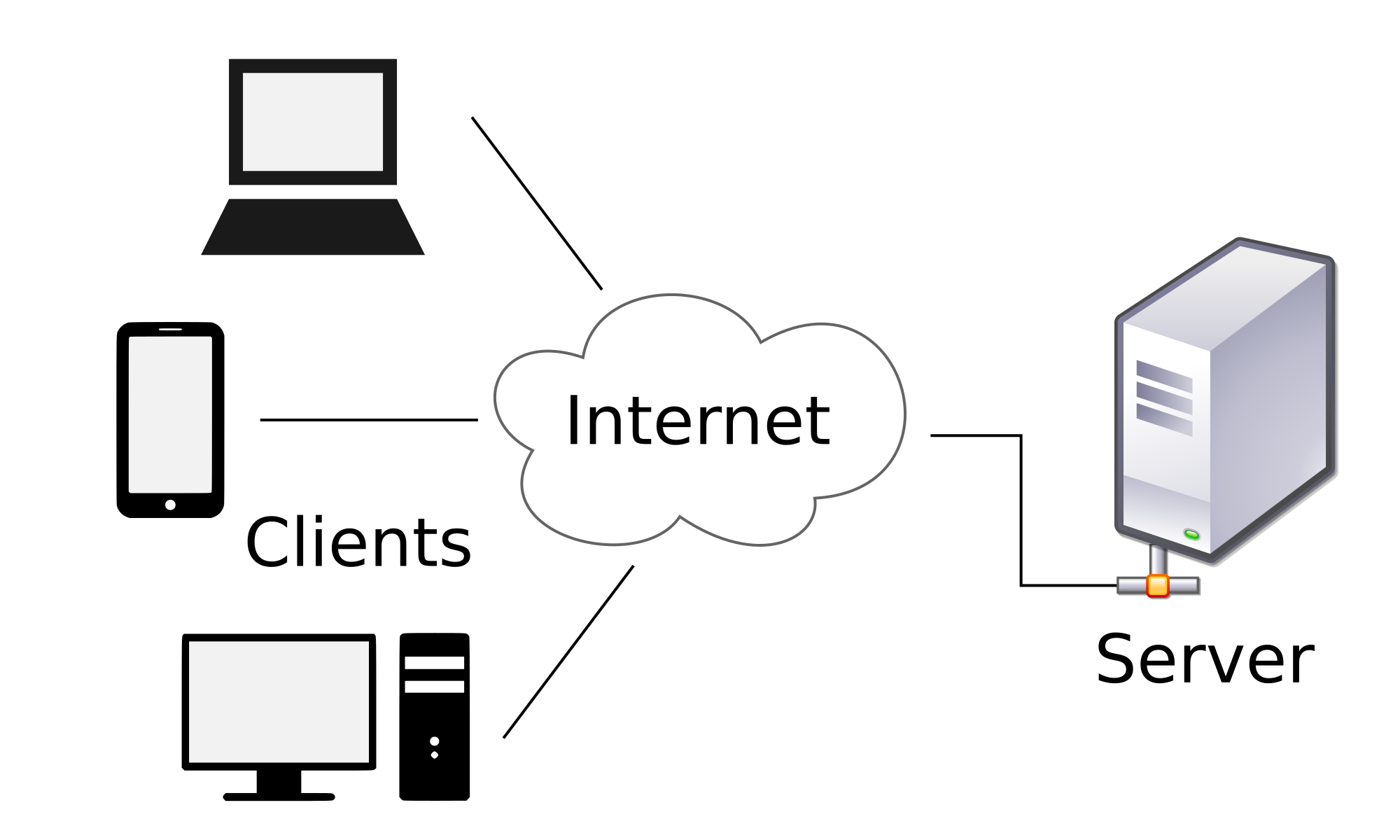
The client–server model is a distributed application structure that partitions tasks or workloads between the providers of a resource or service, called servers, and service requesters, called clients. Often clients and servers communicate over a computer network on separate hardware, but both client and server may be on the same device. A server host runs one or more server programs, which share their resources with clients. A client usually does not share its computing resources, but it requests content or service from a server and may share its own content as part of the request. Clients, therefore, initiate communication sessions with servers, which await incoming requests. Examples of computer applications that use the client–server model are email, network printing, and the World Wide Web.
The server component provides a function or service to one or many clients, which initiate requests for such services. Servers are classified by the services they provide. For example, a web server serves web pages and a file server serves computer files. A shared resource may be any of the server computer's software and electronic components, from programs and data to processors and storage devices. The sharing of resources of a server constitutes a service.
Whether a computer is a client, a server, or both, is determined by the nature of the application that requires the service functions. For example, a single computer can run a web server and file server software at the same time to serve different data to clients making different kinds of requests. The client software can also communicate with server software within the same computer. Communication between servers, such as to synchronize data, is sometimes called inter-server or server-to-server communication.
Generally, a service is an abstraction of computer resources and a client does not have to be concerned with how the server performs while fulfilling the request and delivering the response. The client only has to understand the response based on the relevant application protocol, i.e. the content and the formatting of the data for the requested service.
Clients and servers exchange messages in a request–response messaging pattern. The client sends a request, and the server returns a response. This exchange of messages is an example of inter-process communication. To communicate, the computers must have a common language, and they must follow rules so that both the client and the server know what to expect. The language and rules of communication are defined in a communications protocol. All protocols operate in the application layer. The application layer protocol defines the basic patterns of the dialogue. To formalize the data exchange even further, the server may implement an application programming interface (API). The API is an abstraction layer for accessing a service. By restricting communication to a specific content format, it facilitates parsing. By abstracting access, it facilitates cross-platform data exchange.
A server may receive requests from many distinct clients in a short period. A computer can only perform a limited number of tasks at any moment, and relies on a scheduling system to prioritize incoming requests from clients to accommodate them. To prevent abuse and maximize availability, the server software may limit the availability to clients. Denial of service attacks are designed to exploit a server's obligation to process requests by overloading it with excessive request rates. Encryption should be applied if sensitive information is to be communicated between the client and the server.
When a bank customer accesses online banking services with a web browser (the client), the client initiates a request to the bank's web server. The customer's login credentials are compared against a database, and the webserver accesses that database server as a client. An application server interprets the returned data by applying the bank's business logic and provides the output to the webserver. Finally, the webserver returns the result to the client web browser for display.
In each step of this sequence of client–server message exchanges, a computer processes a request and returns data. This is the request-response messaging pattern. When all the requests are met, the sequence is complete.
Client–server model
The client–server model is a distributed application structure that partitions tasks or workloads between the providers of a resource or service, called servers, and service requesters, called clients. Often clients and servers communicate over a computer network on separate hardware, but both client and server may be on the same device. A server host runs one or more server programs, which share their resources with clients. A client usually does not share its computing resources, but it requests content or service from a server and may share its own content as part of the request. Clients, therefore, initiate communication sessions with servers, which await incoming requests. Examples of computer applications that use the client–server model are email, network printing, and the World Wide Web.
The server component provides a function or service to one or many clients, which initiate requests for such services. Servers are classified by the services they provide. For example, a web server serves web pages and a file server serves computer files. A shared resource may be any of the server computer's software and electronic components, from programs and data to processors and storage devices. The sharing of resources of a server constitutes a service.
Whether a computer is a client, a server, or both, is determined by the nature of the application that requires the service functions. For example, a single computer can run a web server and file server software at the same time to serve different data to clients making different kinds of requests. The client software can also communicate with server software within the same computer. Communication between servers, such as to synchronize data, is sometimes called inter-server or server-to-server communication.
Generally, a service is an abstraction of computer resources and a client does not have to be concerned with how the server performs while fulfilling the request and delivering the response. The client only has to understand the response based on the relevant application protocol, i.e. the content and the formatting of the data for the requested service.
Clients and servers exchange messages in a request–response messaging pattern. The client sends a request, and the server returns a response. This exchange of messages is an example of inter-process communication. To communicate, the computers must have a common language, and they must follow rules so that both the client and the server know what to expect. The language and rules of communication are defined in a communications protocol. All protocols operate in the application layer. The application layer protocol defines the basic patterns of the dialogue. To formalize the data exchange even further, the server may implement an application programming interface (API). The API is an abstraction layer for accessing a service. By restricting communication to a specific content format, it facilitates parsing. By abstracting access, it facilitates cross-platform data exchange.
A server may receive requests from many distinct clients in a short period. A computer can only perform a limited number of tasks at any moment, and relies on a scheduling system to prioritize incoming requests from clients to accommodate them. To prevent abuse and maximize availability, the server software may limit the availability to clients. Denial of service attacks are designed to exploit a server's obligation to process requests by overloading it with excessive request rates. Encryption should be applied if sensitive information is to be communicated between the client and the server.
When a bank customer accesses online banking services with a web browser (the client), the client initiates a request to the bank's web server. The customer's login credentials are compared against a database, and the webserver accesses that database server as a client. An application server interprets the returned data by applying the bank's business logic and provides the output to the webserver. Finally, the webserver returns the result to the client web browser for display.
In each step of this sequence of client–server message exchanges, a computer processes a request and returns data. This is the request-response messaging pattern. When all the requests are met, the sequence is complete.
Recent media
Recent media