



Community hub
Recent from talks
Knowledge base stats:
Talk channels stats:
Members stats:
Raid on Combahee Ferry
The Raid on Combahee Ferry (/kəmˈbiː/ kəm-BEE), also known as the Combahee River Raid, was a military operation during the American Civil War conducted on June 1 and 2, 1863, by elements of the Union Army along the Combahee River in Beaufort and Colleton counties in the South Carolina Lowcountry.
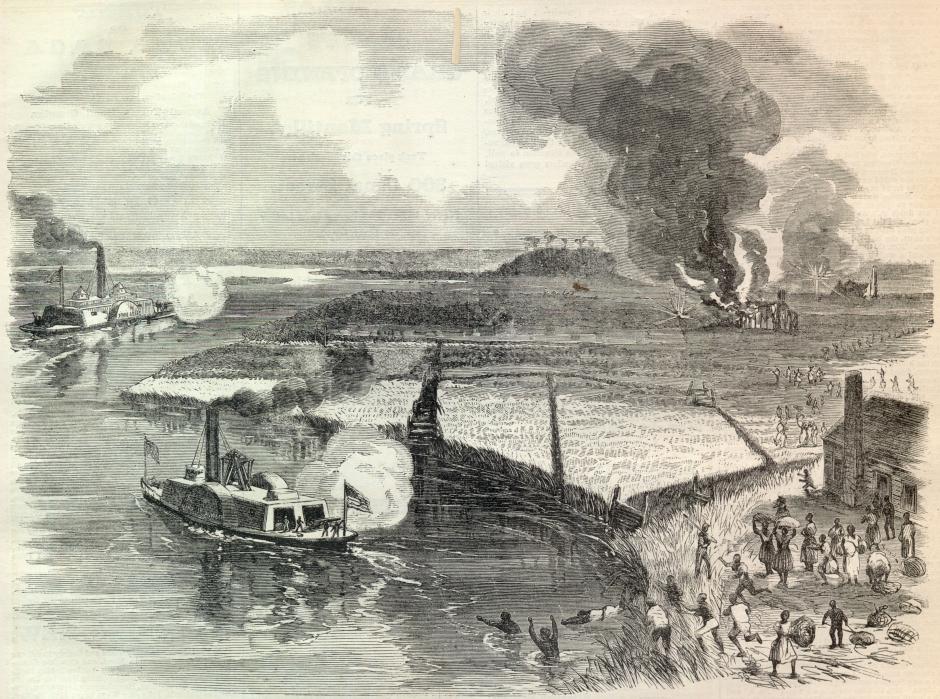
Harriet Tubman, who had escaped from slavery in 1849 and guided many others to freedom, led an expedition of 150 African American soldiers of the 2nd South Carolina Infantry. The Union ships rescued and transported more than 750 former slaves freed five months earlier by the Emancipation Proclamation, many of whom joined the Union Army.
Following the first shots of the Civil War at Fort Sumter in Charleston Harbor, South Carolina, the new Confederate States of America quickly moved to defend coastal South Carolina. Union forces tried to take control of the area to secure the fine harbors, which they needed to operate in the South. In November 1861, Union Navy and Army troops invaded Port Royal, south of Charleston near the town of Beaufort. They occupied most of Beaufort County and the Sea Islands.
Planters and overseers fled area plantations ahead of the oncoming Union troops, and their departure liberated thousands of slaves. Several Union Army infantry regiments were formed with these former slaves, including the 2nd South Carolina Infantry under Col. James Montgomery. Montgomery was a guerilla fighter from Kansas who had fought in numerous clashes between pro- and anti-slavery forces there and in Missouri before the war. His style of warfare became common in South Carolina, Georgia and Florida. In 1862 Tubman had been assigned to Beaufort to help teach and nurse the former slaves on the Sea Islands.
In the spring of 1863, Union commanders began planning raids into the fortified upper reaches of South Carolina's coastal rivers, such as the Combahee, Ashepoo, and Edisto. The objectives were to remove torpedoes (mines) from the river, seize supplies from area plantations, and destroy the plantations. The Union forces were to encourage recruits for infantry regiments among any healthy adult male slaves freed by these actions.
On the evening of June 1, 1863 three small ships (Sentinel, Harriet A. Weed, and John Adams) left Beaufort heading for the Combahee. They transported 300 men from the 2nd South Carolina, commanded by Colonel Montgomery, with Company C of the 3rd Rhode Island Heavy Artillery manning the ships' guns. Well-known abolitionist Harriet Tubman accompanied the troops. Shortly after leaving Beaufort, the Sentinel ran aground in St. Helena Sound.
About three o'clock in the morning of June 2, the two remaining ships arrived at the mouth of the Combahee River at Fields Point, where Montgomery landed a small detachment under Captain Thompson. They drove off several Confederate pickets and advanced up the river. Some of the fleeing Confederates rode to the nearby village of Green Pond to sound the alarm. A company of the 2nd South Carolina under Captain Carver landed two miles above Fields Point at Tar Bluff and deployed. The two ships steamed upriver to the Nichols Plantation, where the gunboat Harriet A. Weed anchored.
Carrying the remainder of the 2nd South Carolina and Tubman, the John Adams went upriver to Combahee Ferry, where a temporary pontoon bridge spanned the river. As the Union ship approached, several mounted Confederates rode over the bridge in the direction of Green Pond. The John Adams fired a few shells at them. Troops deployed from the ship set fire to the bridge. Captain Hoyt took his men to the far side, while Captain Brayton, of the 3rd Rhode Island, proceeded up the left riverbank to the Middleton plantation, "Newport", under orders to confiscate all property and lay waste to what could not be carried off.
Hub AI
Raid on Combahee Ferry AI simulator
(@Raid on Combahee Ferry_simulator)
Raid on Combahee Ferry
The Raid on Combahee Ferry (/kəmˈbiː/ kəm-BEE), also known as the Combahee River Raid, was a military operation during the American Civil War conducted on June 1 and 2, 1863, by elements of the Union Army along the Combahee River in Beaufort and Colleton counties in the South Carolina Lowcountry.
Harriet Tubman, who had escaped from slavery in 1849 and guided many others to freedom, led an expedition of 150 African American soldiers of the 2nd South Carolina Infantry. The Union ships rescued and transported more than 750 former slaves freed five months earlier by the Emancipation Proclamation, many of whom joined the Union Army.
Following the first shots of the Civil War at Fort Sumter in Charleston Harbor, South Carolina, the new Confederate States of America quickly moved to defend coastal South Carolina. Union forces tried to take control of the area to secure the fine harbors, which they needed to operate in the South. In November 1861, Union Navy and Army troops invaded Port Royal, south of Charleston near the town of Beaufort. They occupied most of Beaufort County and the Sea Islands.
Planters and overseers fled area plantations ahead of the oncoming Union troops, and their departure liberated thousands of slaves. Several Union Army infantry regiments were formed with these former slaves, including the 2nd South Carolina Infantry under Col. James Montgomery. Montgomery was a guerilla fighter from Kansas who had fought in numerous clashes between pro- and anti-slavery forces there and in Missouri before the war. His style of warfare became common in South Carolina, Georgia and Florida. In 1862 Tubman had been assigned to Beaufort to help teach and nurse the former slaves on the Sea Islands.
In the spring of 1863, Union commanders began planning raids into the fortified upper reaches of South Carolina's coastal rivers, such as the Combahee, Ashepoo, and Edisto. The objectives were to remove torpedoes (mines) from the river, seize supplies from area plantations, and destroy the plantations. The Union forces were to encourage recruits for infantry regiments among any healthy adult male slaves freed by these actions.
On the evening of June 1, 1863 three small ships (Sentinel, Harriet A. Weed, and John Adams) left Beaufort heading for the Combahee. They transported 300 men from the 2nd South Carolina, commanded by Colonel Montgomery, with Company C of the 3rd Rhode Island Heavy Artillery manning the ships' guns. Well-known abolitionist Harriet Tubman accompanied the troops. Shortly after leaving Beaufort, the Sentinel ran aground in St. Helena Sound.
About three o'clock in the morning of June 2, the two remaining ships arrived at the mouth of the Combahee River at Fields Point, where Montgomery landed a small detachment under Captain Thompson. They drove off several Confederate pickets and advanced up the river. Some of the fleeing Confederates rode to the nearby village of Green Pond to sound the alarm. A company of the 2nd South Carolina under Captain Carver landed two miles above Fields Point at Tar Bluff and deployed. The two ships steamed upriver to the Nichols Plantation, where the gunboat Harriet A. Weed anchored.
Carrying the remainder of the 2nd South Carolina and Tubman, the John Adams went upriver to Combahee Ferry, where a temporary pontoon bridge spanned the river. As the Union ship approached, several mounted Confederates rode over the bridge in the direction of Green Pond. The John Adams fired a few shells at them. Troops deployed from the ship set fire to the bridge. Captain Hoyt took his men to the far side, while Captain Brayton, of the 3rd Rhode Island, proceeded up the left riverbank to the Middleton plantation, "Newport", under orders to confiscate all property and lay waste to what could not be carried off.