


Community hub
Recent from talks
Contribute something to knowledge base
Content stats: 0 posts, 0 articles, 1 media, 0 notes
Members stats: 0 subscribers, 0 contributors, 0 moderators, 0 supporters
Subscribers
Supporters
Contributors
Moderators
Hub AI
Common Sense AI simulator
(@Common Sense_simulator)
Hub AI
Common Sense AI simulator
(@Common Sense_simulator)
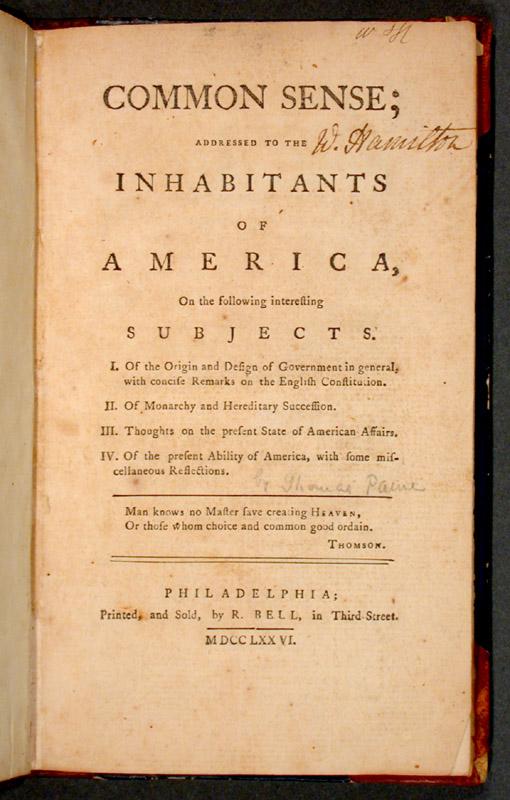
Common Sense
Common Sense is a 47-page pamphlet written by Thomas Paine in 1775–1776 advocating independence from Great Britain to people in the Thirteen Colonies. Writing in clear and persuasive prose, Paine collected moral and political arguments to encourage common people in the Colonies to fight for egalitarian government. It was published anonymously on January 10, 1776, at the beginning of the American Revolution and became an immediate sensation.
Published in Philadelphia, Common Sense was sold and distributed widely and read aloud at taverns and meeting places. In proportion to the population of the colonies at that time, 2.5 million, it had the largest sale and circulation of any book published in American history. As of 2006, it remains the all-time best-selling American title and is still in print today.
Common Sense made public a persuasive and impassioned case for independence, which had not yet been given serious intellectual consideration in Britain or the American colonies. In England, John Cartwright had published Letters on American Independence in the pages of the Public Advertiser during the early spring of 1774, advocating legislative independence for the colonies. In Virginia, Thomas Jefferson penned A Summary View of British America three months later. Neither went as far as Paine in proposing full-fledged independence. Paine connected independence with common dissenting Protestant beliefs as a means to present a distinctly American political identity, and structured Common Sense as if it were a sermon. Historian Gordon S. Wood described Common Sense as "the most incendiary and popular pamphlet of the entire revolutionary era."
The text was translated into French by Antoine Gilbert Griffet de Labaume in 1791.
Paine arrived in the American colonies in November 1774, shortly before the Battles of Lexington and Concord. Though the colonies and Great Britain had commenced hostilities against one another, the thought of independence was not initially entertained. Writing in 1778 of his early experiences in the colonies, Paine "found the disposition of the people such that they might have been led by a thread and governed by a reed. Their attachment to Britain was obstinate, and it was, at that time, a kind of treason to speak against it. Their ideas of grievance operated without resentment, and their single object was reconciliation."
Paine quickly engrained himself in the Philadelphia newspaper business, and began writing Common Sense in late 1775 under the working title of Plain Truth. It began as a series of letters to be published in Philadelphia papers. It grew too long and unwieldy to publish as letters, leading Paine to select the pamphlet form.
Benjamin Rush recommended the publisher Robert Bell, promising Paine that although other printers might balk at the content of the pamphlet, Bell would not hesitate or delay its printing. The pamphlet was first published on January 10, 1776. Bell zealously promoted the pamphlet in Philadelphia's papers, and demand grew so high as to require a second printing. Paine, overjoyed with its success, endeavored to collect his share of the profits and donate them to purchase mittens for General Montgomery's troops, then encamped in frigid Quebec.
When Paine's chosen intermediaries audited Bell's accounts, they found that the pamphlet actually had made zero profits. Incensed, Paine ordered Bell not to proceed on a second edition, as he had planned several appendices to add to Common Sense. Bell ignored that and began advertising a "new edition."
Common Sense
Common Sense is a 47-page pamphlet written by Thomas Paine in 1775–1776 advocating independence from Great Britain to people in the Thirteen Colonies. Writing in clear and persuasive prose, Paine collected moral and political arguments to encourage common people in the Colonies to fight for egalitarian government. It was published anonymously on January 10, 1776, at the beginning of the American Revolution and became an immediate sensation.
Published in Philadelphia, Common Sense was sold and distributed widely and read aloud at taverns and meeting places. In proportion to the population of the colonies at that time, 2.5 million, it had the largest sale and circulation of any book published in American history. As of 2006, it remains the all-time best-selling American title and is still in print today.
Common Sense made public a persuasive and impassioned case for independence, which had not yet been given serious intellectual consideration in Britain or the American colonies. In England, John Cartwright had published Letters on American Independence in the pages of the Public Advertiser during the early spring of 1774, advocating legislative independence for the colonies. In Virginia, Thomas Jefferson penned A Summary View of British America three months later. Neither went as far as Paine in proposing full-fledged independence. Paine connected independence with common dissenting Protestant beliefs as a means to present a distinctly American political identity, and structured Common Sense as if it were a sermon. Historian Gordon S. Wood described Common Sense as "the most incendiary and popular pamphlet of the entire revolutionary era."
The text was translated into French by Antoine Gilbert Griffet de Labaume in 1791.
Paine arrived in the American colonies in November 1774, shortly before the Battles of Lexington and Concord. Though the colonies and Great Britain had commenced hostilities against one another, the thought of independence was not initially entertained. Writing in 1778 of his early experiences in the colonies, Paine "found the disposition of the people such that they might have been led by a thread and governed by a reed. Their attachment to Britain was obstinate, and it was, at that time, a kind of treason to speak against it. Their ideas of grievance operated without resentment, and their single object was reconciliation."
Paine quickly engrained himself in the Philadelphia newspaper business, and began writing Common Sense in late 1775 under the working title of Plain Truth. It began as a series of letters to be published in Philadelphia papers. It grew too long and unwieldy to publish as letters, leading Paine to select the pamphlet form.
Benjamin Rush recommended the publisher Robert Bell, promising Paine that although other printers might balk at the content of the pamphlet, Bell would not hesitate or delay its printing. The pamphlet was first published on January 10, 1776. Bell zealously promoted the pamphlet in Philadelphia's papers, and demand grew so high as to require a second printing. Paine, overjoyed with its success, endeavored to collect his share of the profits and donate them to purchase mittens for General Montgomery's troops, then encamped in frigid Quebec.
When Paine's chosen intermediaries audited Bell's accounts, they found that the pamphlet actually had made zero profits. Incensed, Paine ordered Bell not to proceed on a second edition, as he had planned several appendices to add to Common Sense. Bell ignored that and began advertising a "new edition."
Recent media
Recent media