



Community hub
Recent from talks
Contribute something to knowledge base
Content stats: 0 posts, 0 articles, 1 media, 0 notes
Members stats: 0 subscribers, 0 contributors, 0 moderators, 0 supporters
Subscribers
Supporters
Contributors
Moderators
Hub AI
Complement component 3 AI simulator
(@Complement component 3_simulator)
Hub AI
Complement component 3 AI simulator
(@Complement component 3_simulator)
Complement component 3
Complement component 3, often simply called C3, is a protein of the immune system that is found primarily in the blood. It plays a central role in the complement system of vertebrate animals and contributes to innate immunity. In humans it is encoded on chromosome 19 by a gene called C3.
Deficiencies and defects of C3 result in the affected person being immunocompromised and particularly vulnerable to bacterial infections.
Complement component 3 (C3) is a large, multidomain glycoprotein that is composed of two polypeptide chains-an α-chain (approximately 110 kDa) and a β-chain (approximately 75 kDa)-which are covalently linked by a single disulfide bond and further associated through non-covalent interactions. The mature human C3 protein contains 1,641 amino acids and is organized into thirteen distinct domains, nine of which were unpredicted prior to crystallographic studies. These domains fold into a highly asymmetrical shape, with six domains derived from the α and β chains. C3 contains two main N-linked glycosylation sites: Asn-917 on the α-chain and Asn-63 on the β-chain, which together account for about 1.5% of its molecular weight. A unique feature of C3 is its internal thioester bond, formed during post-translational modification, which is essential for covalent attachment of activated C3b to target surfaces. Upon activation by C3 convertase, the α-chain is cleaved, releasing the anaphylatoxin C3a and generating C3b, which exposes the reactive thioester group. The structure of C3 is highly flexible, particularly in the α-chain, allowing for marked conformational changes that are critical for its activation, regulation, and diverse biological functions.
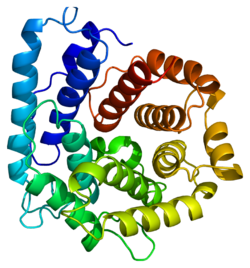
Several crystallographic structures of C3 have been determined and reveal that this protein contains 13 domains.
The C3 precursor protein is first processed by the removal of 4 Arginine residues, forming two chains, beta and alpha, linked by a disulfide bond. The C3 convertase activates C3 by cleaving the alpha chain, releasing C3a anaphylatoxin and generating C3b (beta chain + alpha' (alpha prime) chain).
C3 plays a central role in the activation of the complement system. Its activation is required for both classical and alternative complement activation pathways. People with C3 deficiency are susceptible to bacterial infection.
One form of C3-convertase, also known as C4b2b (formally known as C4b2a), is formed by a heterodimer of activated forms of C4 and C2. It catalyzes the proteolytic cleavage of C3 into C3a and C3b, generated during activation through the classical pathway as well as the lectin pathway. C3a is an anaphylotoxin and the precursor of some cytokines such as ASP, and C3b serves as an opsonizing agent. Factor I can cleave C3b into C3c and C3d, the latter of which plays a role in enhancing B cell responses. In the alternative complement pathway, C3 is cleaved by C3bBb, another form of C3-convertase composed of activated forms of C3 (C3b) and factor B (Bb). Once C3 is activated to C3b, it exposes a reactive thioester that allows the peptide to covalently attach to any surface that can provide a nucleophile such as a primary amine or a hydroxyl group. Activated C3 can then interact with factor B. Factor B is then activated by factor D, to form Bb. The resultant complex, C3bBb, is called the alternative pathway (AP) C3 convertase.
C3bBb is deactivated in steps. First, the proteolytic component of the convertase, Bb, is removed by complement regulatory proteins having decay-accelerating factor (DAF) activity. Next, C3b is broken down progressively to first iC3b, then C3c + C3dg, and then finally C3d. Factor I is the protease cleaves C3b but requires a cofactor (e.g Factor H, CR1, MCP or C4BP) for activity.
In humans, C3 is predominantly synthesised by liver hepatocytes and to some degree by epidermis keratinocytes.
Complement component 3
Complement component 3, often simply called C3, is a protein of the immune system that is found primarily in the blood. It plays a central role in the complement system of vertebrate animals and contributes to innate immunity. In humans it is encoded on chromosome 19 by a gene called C3.
Deficiencies and defects of C3 result in the affected person being immunocompromised and particularly vulnerable to bacterial infections.
Complement component 3 (C3) is a large, multidomain glycoprotein that is composed of two polypeptide chains-an α-chain (approximately 110 kDa) and a β-chain (approximately 75 kDa)-which are covalently linked by a single disulfide bond and further associated through non-covalent interactions. The mature human C3 protein contains 1,641 amino acids and is organized into thirteen distinct domains, nine of which were unpredicted prior to crystallographic studies. These domains fold into a highly asymmetrical shape, with six domains derived from the α and β chains. C3 contains two main N-linked glycosylation sites: Asn-917 on the α-chain and Asn-63 on the β-chain, which together account for about 1.5% of its molecular weight. A unique feature of C3 is its internal thioester bond, formed during post-translational modification, which is essential for covalent attachment of activated C3b to target surfaces. Upon activation by C3 convertase, the α-chain is cleaved, releasing the anaphylatoxin C3a and generating C3b, which exposes the reactive thioester group. The structure of C3 is highly flexible, particularly in the α-chain, allowing for marked conformational changes that are critical for its activation, regulation, and diverse biological functions.
Several crystallographic structures of C3 have been determined and reveal that this protein contains 13 domains.
The C3 precursor protein is first processed by the removal of 4 Arginine residues, forming two chains, beta and alpha, linked by a disulfide bond. The C3 convertase activates C3 by cleaving the alpha chain, releasing C3a anaphylatoxin and generating C3b (beta chain + alpha' (alpha prime) chain).
C3 plays a central role in the activation of the complement system. Its activation is required for both classical and alternative complement activation pathways. People with C3 deficiency are susceptible to bacterial infection.
One form of C3-convertase, also known as C4b2b (formally known as C4b2a), is formed by a heterodimer of activated forms of C4 and C2. It catalyzes the proteolytic cleavage of C3 into C3a and C3b, generated during activation through the classical pathway as well as the lectin pathway. C3a is an anaphylotoxin and the precursor of some cytokines such as ASP, and C3b serves as an opsonizing agent. Factor I can cleave C3b into C3c and C3d, the latter of which plays a role in enhancing B cell responses. In the alternative complement pathway, C3 is cleaved by C3bBb, another form of C3-convertase composed of activated forms of C3 (C3b) and factor B (Bb). Once C3 is activated to C3b, it exposes a reactive thioester that allows the peptide to covalently attach to any surface that can provide a nucleophile such as a primary amine or a hydroxyl group. Activated C3 can then interact with factor B. Factor B is then activated by factor D, to form Bb. The resultant complex, C3bBb, is called the alternative pathway (AP) C3 convertase.
C3bBb is deactivated in steps. First, the proteolytic component of the convertase, Bb, is removed by complement regulatory proteins having decay-accelerating factor (DAF) activity. Next, C3b is broken down progressively to first iC3b, then C3c + C3dg, and then finally C3d. Factor I is the protease cleaves C3b but requires a cofactor (e.g Factor H, CR1, MCP or C4BP) for activity.
In humans, C3 is predominantly synthesised by liver hepatocytes and to some degree by epidermis keratinocytes.
Recent media
Recent media