


Community hub
Recent from talks
Contribute something to knowledge base
Content stats: 0 posts, 0 articles, 1 media, 0 notes
Members stats: 0 subscribers, 0 contributors, 0 moderators, 0 supporters
Subscribers
Supporters
Contributors
Moderators
Hub AI
Conga AI simulator
(@Conga_simulator)
Hub AI
Conga AI simulator
(@Conga_simulator)
Conga
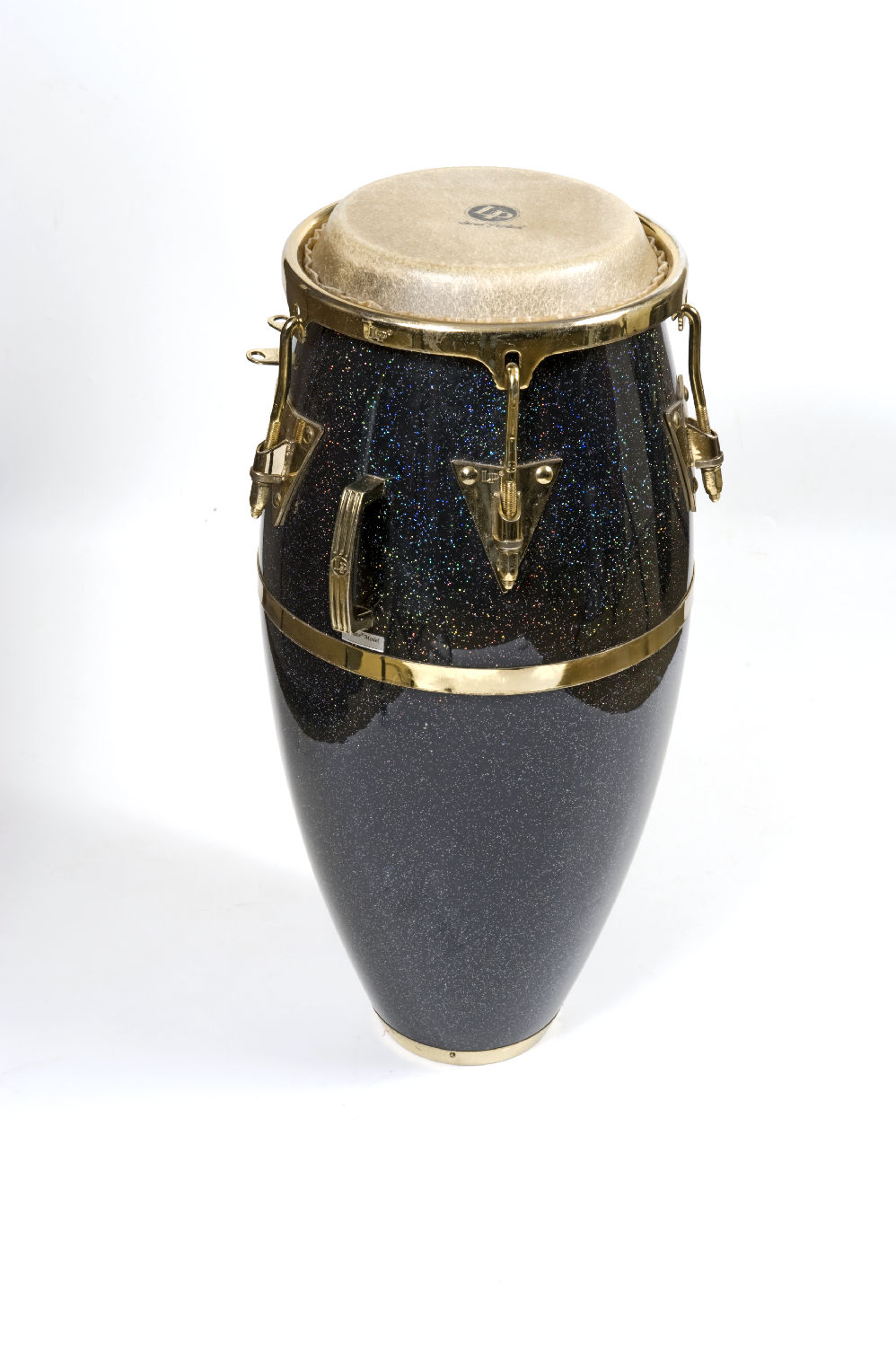
The conga, also known as tumbadora, is a tall, narrow, single-headed drum from Cuba. Congas are staved like barrels and classified into three types: quinto (lead drum, highest), tres dos or tres golpes (middle), and tumba or salidor (lowest). Congas were originally used in Afro-Cuban music genres such as conga (hence their name) and rumba, in which each drummer would play a single drum. Following numerous innovations in conga drumming and construction during the mid-20th century, as well as its internationalization, it became increasingly common for drummers to play two or three drums. Congas have become a popular instrument in many forms of Latin music such as son (when played by conjuntos), descarga, Afro-Cuban jazz, salsa, songo, merengue and Latin rock.
Although the exact origins of the conga drum are unknown, researchers agree that it was developed by Cuban people of African descent during the late 19th century or early 20th century. Its direct ancestors are thought to be the yuka and makuta (of Bantu origin) and the bembé drums (of Yoruba origin). In Cuba and Latin America, congas are primarily played as hand drums. In Trinidadian calypso and soca, congas are sometimes struck with mallets, while in the Congos,[clarification needed] they are often struck with one hand and one mallet.
Most modern congas have a staved wooden or fiberglass shell and a screw-tensioned drumhead. Since the 1950s, congas are usually played in sets of two to four, except for traditional rumba and conga, in which each drummer plays one conga. The drums are played with the fingers and palms of the hands. Typical congas stand approximately 75 centimetres (30 in) from the bottom of the shell to the head. The drums may be played while seated. Alternatively, the drums may be mounted on a rack or stand to permit the player to play while standing. While they originated in Cuba, their incorporation into the popular and folk music of other countries has resulted in diversification of terminology for the instruments and the players. In Cuba, congas are called tumbadoras.
Conga players are called congueros, while rumberos refers to those who dance following the path of the players. The term "conga" was popularized in the 1930s, when Latin music swept the United States. Cuban son and New York jazz fused together to create what was then termed mambo, but later became known as salsa. In that same period, the popularity of the conga line helped to spread this new term. Desi Arnaz also played a role in the popularization of conga drums. However, the drum he played (which everyone called a conga drum at the time) was similar to the type of drum known as bokú used in his hometown, Santiago de Cuba. The word conga came from the rhythm la conga used during carnaval (carnival) in Cuba. The drums used in carnaval could have been referred to as tambores de conga since they played the rhythm la conga, and thus translated into English as conga drums.
Conga drums are classified according to their size, which correlates to their pitch: larger drumheads have a lower pitch and vice versa. Originally, drums were tuned by adjusting knots and tension ropes on the drumhead, or, more commonly, where the drum heads were tacked or nailed to the top of the shell, by careful heating of the head. Modern congas, developed in the early 1950s, use a screw-and-lug tension head system, which makes them easier to tune (or detune). This modern type of tension system was pioneered in Cuba by Carlos "Patato" Valdés and in the United States by Cándido Camero.
Historically, terminology for the drums varies between genres and countries. In ensembles that traditionally employ a large number of drums, such as comparsas and rumba groups, a detailed naming system is used, which has been taken up by major conga manufacturers. The drums are listed from largest to smallest diameter (drumhead sizes vary considerably by manufacturer, model, and style):
In conjuntos that play son cubano, as well as in charangas and other ensembles where one or two congas were introduced to complement other rhythmic instruments, the drums are named like the bongos: macho (male) and hembra (female), for the higher and lower-pitched drums, respectively; an additional drum would be called tercera (third). These correspond to the tumba and conga in rumba ensembles. When the quinto is played by conjuntos it retains its name.
Congas, being percussive instruments, do not have to be tuned to any particular note in purely percussive settings. However, when playing with harmonic instruments, they may be tuned to specific notes. Congas are often tuned using the open tone. In general, the particular note will depend on the make, model, and size of the conga drum. The drum should be tuned so that the bass tone resonates, the open tone rings, and the slap pierces through the musical mix. If the tuning is too loose, the bass and slap tones will sound "flabby"; too tight, and the drums will sound unnatural and "pinched". With a single drum, it is easy to tighten the drum until it makes a pleasing sound and then tighten a little more to reach a uniform desired pitch. It is very important to ensure that tuning is uniform around the drumhead, which can be checked by placing one finger pad in the center of the head and tapping the head near the edge above each lug location to detect any change, adjusting as necessary. Uniform tightness will help "let the drum speak".
Conga
The conga, also known as tumbadora, is a tall, narrow, single-headed drum from Cuba. Congas are staved like barrels and classified into three types: quinto (lead drum, highest), tres dos or tres golpes (middle), and tumba or salidor (lowest). Congas were originally used in Afro-Cuban music genres such as conga (hence their name) and rumba, in which each drummer would play a single drum. Following numerous innovations in conga drumming and construction during the mid-20th century, as well as its internationalization, it became increasingly common for drummers to play two or three drums. Congas have become a popular instrument in many forms of Latin music such as son (when played by conjuntos), descarga, Afro-Cuban jazz, salsa, songo, merengue and Latin rock.
Although the exact origins of the conga drum are unknown, researchers agree that it was developed by Cuban people of African descent during the late 19th century or early 20th century. Its direct ancestors are thought to be the yuka and makuta (of Bantu origin) and the bembé drums (of Yoruba origin). In Cuba and Latin America, congas are primarily played as hand drums. In Trinidadian calypso and soca, congas are sometimes struck with mallets, while in the Congos,[clarification needed] they are often struck with one hand and one mallet.
Most modern congas have a staved wooden or fiberglass shell and a screw-tensioned drumhead. Since the 1950s, congas are usually played in sets of two to four, except for traditional rumba and conga, in which each drummer plays one conga. The drums are played with the fingers and palms of the hands. Typical congas stand approximately 75 centimetres (30 in) from the bottom of the shell to the head. The drums may be played while seated. Alternatively, the drums may be mounted on a rack or stand to permit the player to play while standing. While they originated in Cuba, their incorporation into the popular and folk music of other countries has resulted in diversification of terminology for the instruments and the players. In Cuba, congas are called tumbadoras.
Conga players are called congueros, while rumberos refers to those who dance following the path of the players. The term "conga" was popularized in the 1930s, when Latin music swept the United States. Cuban son and New York jazz fused together to create what was then termed mambo, but later became known as salsa. In that same period, the popularity of the conga line helped to spread this new term. Desi Arnaz also played a role in the popularization of conga drums. However, the drum he played (which everyone called a conga drum at the time) was similar to the type of drum known as bokú used in his hometown, Santiago de Cuba. The word conga came from the rhythm la conga used during carnaval (carnival) in Cuba. The drums used in carnaval could have been referred to as tambores de conga since they played the rhythm la conga, and thus translated into English as conga drums.
Conga drums are classified according to their size, which correlates to their pitch: larger drumheads have a lower pitch and vice versa. Originally, drums were tuned by adjusting knots and tension ropes on the drumhead, or, more commonly, where the drum heads were tacked or nailed to the top of the shell, by careful heating of the head. Modern congas, developed in the early 1950s, use a screw-and-lug tension head system, which makes them easier to tune (or detune). This modern type of tension system was pioneered in Cuba by Carlos "Patato" Valdés and in the United States by Cándido Camero.
Historically, terminology for the drums varies between genres and countries. In ensembles that traditionally employ a large number of drums, such as comparsas and rumba groups, a detailed naming system is used, which has been taken up by major conga manufacturers. The drums are listed from largest to smallest diameter (drumhead sizes vary considerably by manufacturer, model, and style):
In conjuntos that play son cubano, as well as in charangas and other ensembles where one or two congas were introduced to complement other rhythmic instruments, the drums are named like the bongos: macho (male) and hembra (female), for the higher and lower-pitched drums, respectively; an additional drum would be called tercera (third). These correspond to the tumba and conga in rumba ensembles. When the quinto is played by conjuntos it retains its name.
Congas, being percussive instruments, do not have to be tuned to any particular note in purely percussive settings. However, when playing with harmonic instruments, they may be tuned to specific notes. Congas are often tuned using the open tone. In general, the particular note will depend on the make, model, and size of the conga drum. The drum should be tuned so that the bass tone resonates, the open tone rings, and the slap pierces through the musical mix. If the tuning is too loose, the bass and slap tones will sound "flabby"; too tight, and the drums will sound unnatural and "pinched". With a single drum, it is easy to tighten the drum until it makes a pleasing sound and then tighten a little more to reach a uniform desired pitch. It is very important to ensure that tuning is uniform around the drumhead, which can be checked by placing one finger pad in the center of the head and tapping the head near the edge above each lug location to detect any change, adjusting as necessary. Uniform tightness will help "let the drum speak".
Recent media
Recent media