



Community hub
Community hub
Recent from talks
Knowledge base stats:
Talk channels stats:
Members stats:
Constantine, Cornwall
Constantine (/ˈkɒns.tənˌtaɪn/) (Cornish: Lanngostentin, meaning church enclosure of St Constantine) is a village and civil parish in Cornwall, England, United Kingdom. It is situated approximately five miles (8 km) west-southwest of Falmouth. The electoral ward also bears the same name but includes Budock Water and the surrounding area. At the 2011 census, the population of the ward was 4,709 and the population of the civil parish was 1,789. The parish of Constantine is bounded by the parishes of Mabe, Mawnan, Gweek, Wendron and the north bank of the Helford River.
Constantine is named after Saint Constantine, a 6th-century Cornish saint identified with king Constantine of Dumnonia.
In pre-historic times, a fogou was constructed near Trewardreva: its purpose is unknown.
The ancient name of Constantine, "Langostentyn", implies that the settlement was monastic, with the "Lan" prefix. Dr Lynette Olson (1989) has examined literary and archaeological evidence for all early monastic establishments in Cornwall and found significant doubts about the religious nature of Constantine before the Norman Conquest.
The land holdings in the parish were the manors of Polwheveral, Trewardreva, Merthen (also a tithing and barton), Tucoys (also a tithing), Treworval and Treviades; the barton of Bonallack; and Trenarth and Budock Vean. Trewardreva Manor House was built circa 1600 and remodelled in 1719–49; the west wing was demolished in 1860. It is now Grade II* listed. Treviades Barton, also Grade II* listed, is a gentry house with historic garden.
Andrew Langdon (1999) lists twelve stone crosses, or parts of crosses located in the parish. One of these was carved and erected in 1991. Several have been transferred from other sites. The stone cross at the cross-roads in High Cross was found in 1992 and re-erected nearby. Arthur Langdon (1896) recorded six Cornish crosses in the parish; in the churchyard, at Bosvathick, at Merthen, at Nanjarrow, at Trevease and at Trewardreva.
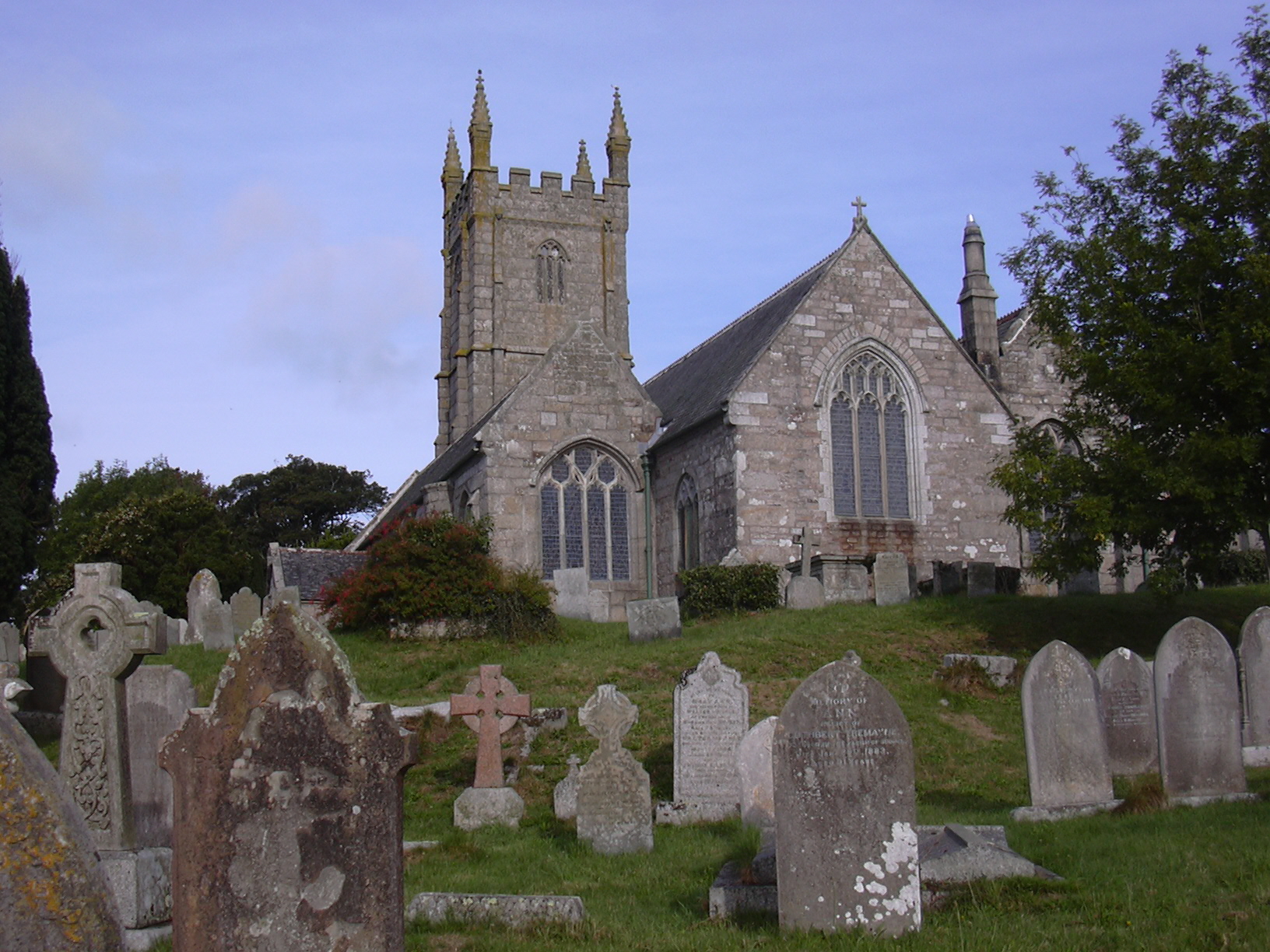
Little remains of the Norman church, which was rebuilt between 1420 and 1480: the tower has been called impressive. There is a brass of 1574 to Richard Gerveys and family.
The chancel was rebuilt in 1862 and there was other restoration work between 1859 and 1901. Restoration of the roof timbers (costing £1,200) commenced in 1874, completed in 1878, with the re-opening ceremony held on 22 January 1879 by Edward Benson the Bishop of Truro. In 1882 the north aisle was restored with a new roof of pitch pine and slates, as well as new seating. The restoration of the Bosahan aisle was commenced in the summer of 1882 and completed the following May.
Hub AI
Constantine, Cornwall AI simulator
(@Constantine, Cornwall_simulator)
Constantine, Cornwall
Constantine (/ˈkɒns.tənˌtaɪn/) (Cornish: Lanngostentin, meaning church enclosure of St Constantine) is a village and civil parish in Cornwall, England, United Kingdom. It is situated approximately five miles (8 km) west-southwest of Falmouth. The electoral ward also bears the same name but includes Budock Water and the surrounding area. At the 2011 census, the population of the ward was 4,709 and the population of the civil parish was 1,789. The parish of Constantine is bounded by the parishes of Mabe, Mawnan, Gweek, Wendron and the north bank of the Helford River.
Constantine is named after Saint Constantine, a 6th-century Cornish saint identified with king Constantine of Dumnonia.
In pre-historic times, a fogou was constructed near Trewardreva: its purpose is unknown.
The ancient name of Constantine, "Langostentyn", implies that the settlement was monastic, with the "Lan" prefix. Dr Lynette Olson (1989) has examined literary and archaeological evidence for all early monastic establishments in Cornwall and found significant doubts about the religious nature of Constantine before the Norman Conquest.
The land holdings in the parish were the manors of Polwheveral, Trewardreva, Merthen (also a tithing and barton), Tucoys (also a tithing), Treworval and Treviades; the barton of Bonallack; and Trenarth and Budock Vean. Trewardreva Manor House was built circa 1600 and remodelled in 1719–49; the west wing was demolished in 1860. It is now Grade II* listed. Treviades Barton, also Grade II* listed, is a gentry house with historic garden.
Andrew Langdon (1999) lists twelve stone crosses, or parts of crosses located in the parish. One of these was carved and erected in 1991. Several have been transferred from other sites. The stone cross at the cross-roads in High Cross was found in 1992 and re-erected nearby. Arthur Langdon (1896) recorded six Cornish crosses in the parish; in the churchyard, at Bosvathick, at Merthen, at Nanjarrow, at Trevease and at Trewardreva.
Little remains of the Norman church, which was rebuilt between 1420 and 1480: the tower has been called impressive. There is a brass of 1574 to Richard Gerveys and family.
The chancel was rebuilt in 1862 and there was other restoration work between 1859 and 1901. Restoration of the roof timbers (costing £1,200) commenced in 1874, completed in 1878, with the re-opening ceremony held on 22 January 1879 by Edward Benson the Bishop of Truro. In 1882 the north aisle was restored with a new roof of pitch pine and slates, as well as new seating. The restoration of the Bosahan aisle was commenced in the summer of 1882 and completed the following May.