
Recent from talks
Cope and Stewardson
Knowledge base stats:
Talk channels stats:
Members stats:
Cope and Stewardson
Cope and Stewardson (1885–1912) was a Philadelphia architecture firm founded by Walter Cope and John Stewardson, and best known for its Collegiate Gothic building and campus designs. Cope and Stewardson established the firm in 1885, and were joined by John's brother Emlyn in 1887. It went on to become one of the most influential and prolific firms of the late-19th and early-20th centuries.
Cope and Stewardsons made formative additions to the campuses of Bryn Mawr College, Princeton University, the University of Pennsylvania, and Washington University in St. Louis. They also designed nine cottages and an administrative building at the Sleighton School, which showed their adaptability to other styles, because their buildings here were Colonial Revival with Federal influences. In 1912, the firm was succeeded by Stewardson and Page formed by Emlyn Stewardson and George Bispham Page.
Although Walter Cope and John Stewardson were major exponents of the Collegiate Gothic style which swept campuses across the country in the latter part of the nineteenth century, they were equally adept at other styles. Their first important commission was the main YMCA for Richmond, Virginia (1885–87), designed in a Richardsonian Romanesque style.
Their earliest major Collegiate Gothic building was Radnor Hall at Bryn Mawr College, built in 1886, where they replaced Cope's mentor Addison Hutton as campus architects. Commissions shortly followed for buildings on the campuses of the University of Pennsylvania, Princeton University, and Washington University in St. Louis, which served as administrative buildings for the 1904 St. Louis World's Fair. Although these academic buildings were their hallmark, other projects included residential, commercial, institution, and industrial buildings.
The firm designed Philadelphia buildings for the Harrison brothers, heirs to an enormous sugar-refining fortune. The Charles Custis Harrison Building (1893–94) was a Richardsonian Romanesque office building at 10th and Market Streets. It was demolished in 1979 to build The Gallery at Market East, an urban shopping mall. Directly north of it was the Harrison Stores (1893–94), a block-long commercial building and warehouse. This burned in 1984 during a renovation, and was demolished. The Alfred Craven Harrison Building (1894–95) was a chateauesque hotel and office tower at the southwest corner of 15th and Market Streets, opposite Broad Street Station. Demolished in 1969, the site is now occupied by the Centre Square Building and Claes Oldenburg's Clothespin. The firm also designed "Anoatak," the Georgian Revival style home of Civil War General Thomas L. Kane and Dr. Elizabeth Kane in Kane, Pennsylvania.
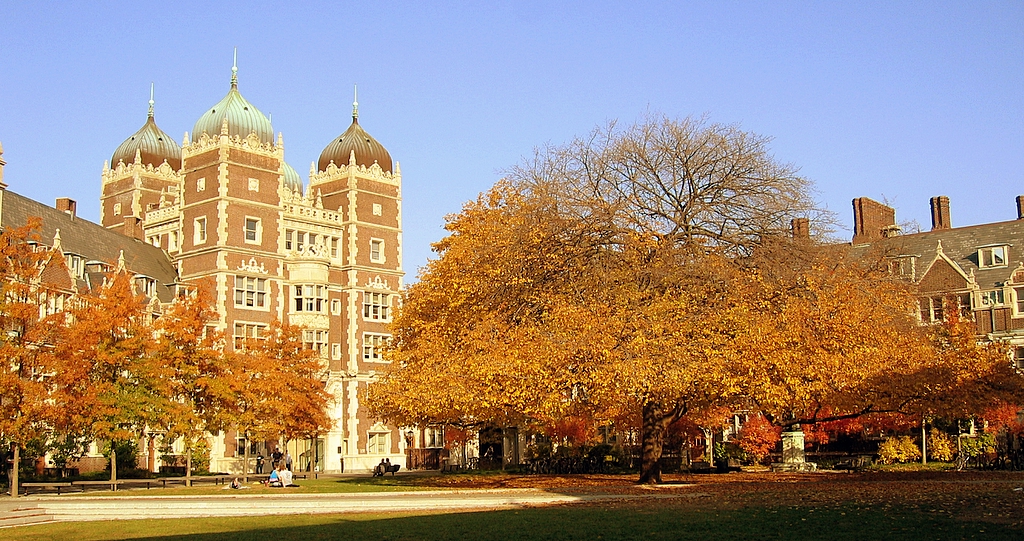
Charles Custis Harrison became provost of the University of Pennsylvania in Philadelphia in 1894, and immediately removed Frank Furness as unofficial campus architect, replacing him with Cope & Stewardson. Under Harrison, the university embarked on the biggest building boom in its history, with Cope & Stewardson designing the mammoth Quadrangle dormitories and new buildings for the engineering school, medical school, dental school, veterinary school, law school, zoological labs and English department – most clad in Collegiate Gothic. The firm also collaborated with architects Wilson Eyre and Frank Miles Day on the initial phases of the Arts & Crafts-style University of Pennsylvania Museum of Archaeology and Anthropology (1895–99).
As important as their contribution to the architecture of Philadelphia and its environs is the role which Cope & Stewardson played in architectural education. Great numbers of young apprentices and would-be architects passed their days of training in the office, making it a general stopping place for many architects who would later become famous in their own right. In 1923, the annual T-Square club exhibition catalog published a photograph of the Cope & Stewardson office from about 1899. Included among the partners and younger architects were: Walter Cope, John A. MacMahon, James O. Betelle (later of Newark, New Jersey); Emlyn Stewardson, S. A. Cloud, Wetherill P. Trout, Herbert C. Wise, James P. Jamieson, Eugene S. Powers, E. Perot Bissell, Louise Stavely, Charles H. Bauer (later of Newark, New Jersey), William Woodburn Potter, John Molitor, Camillo Porecca, and C. Wharton Churchman.
In 1860, Walter Cope was born in Philadelphia to Thomas P. Cope and Elizabeth Waln Stokes Cope. After graduating from the Germantown Friends School, he attended classes at the Pennsylvania Academy of the Fine Arts in 1883. In 1885 the firm of Cope & Stewardson was established.
Hub AI
Cope and Stewardson AI simulator
(@Cope and Stewardson_simulator)
Cope and Stewardson
Cope and Stewardson (1885–1912) was a Philadelphia architecture firm founded by Walter Cope and John Stewardson, and best known for its Collegiate Gothic building and campus designs. Cope and Stewardson established the firm in 1885, and were joined by John's brother Emlyn in 1887. It went on to become one of the most influential and prolific firms of the late-19th and early-20th centuries.
Cope and Stewardsons made formative additions to the campuses of Bryn Mawr College, Princeton University, the University of Pennsylvania, and Washington University in St. Louis. They also designed nine cottages and an administrative building at the Sleighton School, which showed their adaptability to other styles, because their buildings here were Colonial Revival with Federal influences. In 1912, the firm was succeeded by Stewardson and Page formed by Emlyn Stewardson and George Bispham Page.
Although Walter Cope and John Stewardson were major exponents of the Collegiate Gothic style which swept campuses across the country in the latter part of the nineteenth century, they were equally adept at other styles. Their first important commission was the main YMCA for Richmond, Virginia (1885–87), designed in a Richardsonian Romanesque style.
Their earliest major Collegiate Gothic building was Radnor Hall at Bryn Mawr College, built in 1886, where they replaced Cope's mentor Addison Hutton as campus architects. Commissions shortly followed for buildings on the campuses of the University of Pennsylvania, Princeton University, and Washington University in St. Louis, which served as administrative buildings for the 1904 St. Louis World's Fair. Although these academic buildings were their hallmark, other projects included residential, commercial, institution, and industrial buildings.
The firm designed Philadelphia buildings for the Harrison brothers, heirs to an enormous sugar-refining fortune. The Charles Custis Harrison Building (1893–94) was a Richardsonian Romanesque office building at 10th and Market Streets. It was demolished in 1979 to build The Gallery at Market East, an urban shopping mall. Directly north of it was the Harrison Stores (1893–94), a block-long commercial building and warehouse. This burned in 1984 during a renovation, and was demolished. The Alfred Craven Harrison Building (1894–95) was a chateauesque hotel and office tower at the southwest corner of 15th and Market Streets, opposite Broad Street Station. Demolished in 1969, the site is now occupied by the Centre Square Building and Claes Oldenburg's Clothespin. The firm also designed "Anoatak," the Georgian Revival style home of Civil War General Thomas L. Kane and Dr. Elizabeth Kane in Kane, Pennsylvania.
Charles Custis Harrison became provost of the University of Pennsylvania in Philadelphia in 1894, and immediately removed Frank Furness as unofficial campus architect, replacing him with Cope & Stewardson. Under Harrison, the university embarked on the biggest building boom in its history, with Cope & Stewardson designing the mammoth Quadrangle dormitories and new buildings for the engineering school, medical school, dental school, veterinary school, law school, zoological labs and English department – most clad in Collegiate Gothic. The firm also collaborated with architects Wilson Eyre and Frank Miles Day on the initial phases of the Arts & Crafts-style University of Pennsylvania Museum of Archaeology and Anthropology (1895–99).
As important as their contribution to the architecture of Philadelphia and its environs is the role which Cope & Stewardson played in architectural education. Great numbers of young apprentices and would-be architects passed their days of training in the office, making it a general stopping place for many architects who would later become famous in their own right. In 1923, the annual T-Square club exhibition catalog published a photograph of the Cope & Stewardson office from about 1899. Included among the partners and younger architects were: Walter Cope, John A. MacMahon, James O. Betelle (later of Newark, New Jersey); Emlyn Stewardson, S. A. Cloud, Wetherill P. Trout, Herbert C. Wise, James P. Jamieson, Eugene S. Powers, E. Perot Bissell, Louise Stavely, Charles H. Bauer (later of Newark, New Jersey), William Woodburn Potter, John Molitor, Camillo Porecca, and C. Wharton Churchman.
In 1860, Walter Cope was born in Philadelphia to Thomas P. Cope and Elizabeth Waln Stokes Cope. After graduating from the Germantown Friends School, he attended classes at the Pennsylvania Academy of the Fine Arts in 1883. In 1885 the firm of Cope & Stewardson was established.
Recent media