Hubbry Logo
DNA vaccineDNA vaccineMain
Open search
DNA vaccine
Community hub
DNA vaccine
logo
8 pages, 0 posts
0 subscribers
Be the first to start a discussion here.
DNA vaccine
DNA vaccine
from Wikipedia

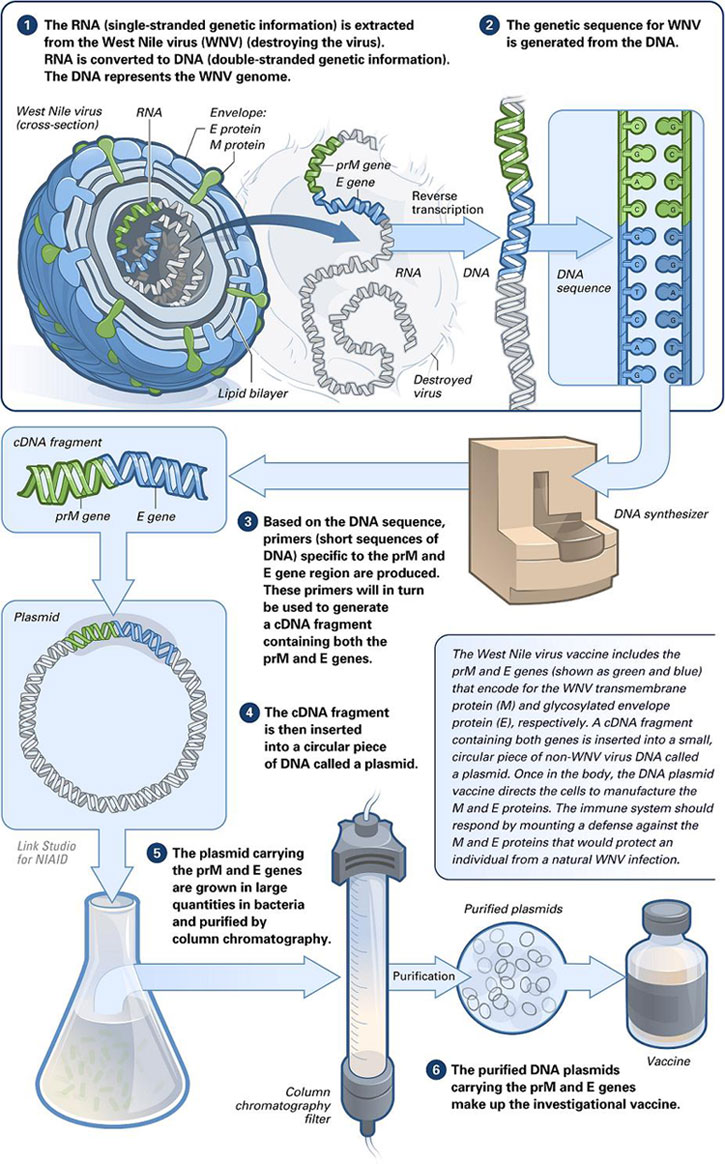
The making of a DNA vaccine

A DNA vaccine is a type of vaccine that transfects a specific antigen-coding DNA sequence into the cells of an organism as a mechanism to induce an immune response.[1][2]

DNA vaccines work by injecting genetically engineered plasmid containing the DNA sequence encoding the antigen(s) against which an immune response is sought, so the cells directly produce the antigen, thus causing a protective immunological response.[3] DNA vaccines have theoretical advantages over conventional vaccines, including the "ability to induce a wider range of types of immune response".[4] Several DNA vaccines have been tested for veterinary use.[3] In some cases, protection from disease in animals has been obtained, in others not.[3] Research is ongoing over the approach for viral, bacterial and parasitic diseases in humans, as well as for cancers.[4] In August 2021, Indian authorities gave emergency approval to ZyCoV-D. Developed by Cadila Healthcare, it is the first DNA vaccine approved for humans.[5]

History

[edit]

Conventional vaccines contain either specific antigens from a pathogen, or attenuated viruses which stimulate an immune response in the vaccinated organism. DNA vaccines are members of the genetic vaccines, because they contain a genetic information (DNA or RNA) that codes for the cellular production (protein biosynthesis) of an antigen. DNA vaccines contain DNA that codes for specific antigens from a pathogen. The DNA is injected into the body and taken up by cells, whose normal metabolic processes synthesize proteins based on the genetic code in the plasmid that they have taken up. Because these proteins contain regions of amino acid sequences that are characteristic of bacteria or viruses, they are recognized as foreign and when they are processed by the host cells and displayed on their surface, the immune system is alerted, which then triggers immune responses.[6][7] Alternatively, the DNA may be encapsulated in protein to facilitate cell entry. If this capsid protein is included in the DNA, the resulting vaccine can combine the potency of a live vaccine without reversion risks.[citation needed]

In 1983, Enzo Paoletti and Dennis Panicali at the New York Department of Health devised a strategy to produce recombinant DNA vaccines by using genetic engineering to transform ordinary smallpox vaccine into vaccines that may be able to prevent other diseases.[8] They altered the DNA of cowpox virus by inserting a gene from other viruses (namely Herpes simplex virus, hepatitis B and influenza).[9][10] In 1993, Jeffrey Ulmer and co-workers at Merck Research Laboratories demonstrated that direct injection of mice with plasmid DNA encoding a flu antigen protected the animals against subsequent experimental infection with influenza virus.[11] In 2016 a DNA vaccine for the Zika virus began testing in humans at the National Institutes of Health. The study was planned to involve up to 120 subjects aged between 18 and 35. Separately, Inovio Pharmaceuticals and GeneOne Life Science began tests of a different DNA vaccine against Zika in Miami. The NIH vaccine is injected into the upper arm under high pressure. Manufacturing the vaccines in volume remained unsolved as of August 2016.[12] Clinical trials for DNA vaccines to prevent HIV are underway.[13]

In August 2021, Indian authorities gave emergency approval to ZyCoV-D. Developed by Cadila Healthcare, it is the first DNA vaccine against COVID-19.[5]

Applications

[edit]

As of 2021 no DNA vaccines have been approved for human use in the United States. Few experimental trials have evoked a response strong enough to protect against disease and the technique's usefulness remains to be proven in humans.

A veterinary DNA vaccine to protect horses from West Nile virus has been approved.[14] Another West Nile virus vaccine has been tested successfully on American robins.[15]

DNA immunization is also being investigated as a means of developing antivenom sera.[1] DNA immunization can be used as a technology platform for monoclonal antibody induction.[2]

Advantages

[edit]
  • No risk for infections[7]
  • Antigen presentation by both MHC class I and class II molecules[7]
  • Polarise T-cell response toward type 1 or type 2[7]
  • Immune response focused on the antigen of interest
  • Ease of development and production[7]
  • Stability for storage and shipping
  • Cost-effectiveness
  • Obviates need for peptide synthesis, expression and purification of recombinant proteins and use of toxic adjuvants[16]
  • Long-term persistence of immunogen[6]
  • In vivo expression ensures protein more closely resembles normal eukaryotic structure, with accompanying post-translational modifications[6]

Disadvantages

[edit]
  • Limited to protein immunogens (not useful for non-protein based antigens such as bacterial polysaccharides)
  • Potential for atypical processing of bacterial and parasite proteins[7]
  • Potential when using nasal spray administration of plasmid DNA nanoparticles to transfect non-target cells, such as brain cells[17]
  • Cross-contamination when manufacturing different types of live vaccines in same facility

Plasmid vectors

[edit]

Vector design

[edit]

DNA vaccines elicit the best immune response when high-expression vectors are used. These are plasmids that usually consist of a strong viral promoter to drive the in vivo transcription and translation of the gene (or complementary DNA) of interest.[18] Intron A may sometimes be included to improve mRNA stability and hence increase protein expression.[19] Plasmids also include a strong polyadenylation/transcriptional termination signal, such as bovine growth hormone or rabbit beta-globulin polyadenylation sequences.[6][7][20] Polycistronic vectors (with multiple genes of interest) are sometimes constructed to express more than one immunogen, or to express an immunogen and an immunostimulatory protein.[21]

Because the plasmid – carrying relatively small genetic code up to about 200 Kbp – is the "vehicle" from which the immunogen is expressed, optimising vector design for maximal protein expression is essential.[21] One way of enhancing protein expression is by optimising the codon usage of pathogenic mRNAs for eukaryotic cells. Pathogens often have different AT-contents than the target species, so altering the gene sequence of the immunogen to reflect the codons more commonly used in the target species may improve its expression.[22]

Another consideration is the choice of promoter. The SV40 promoter was conventionally used until research showed that vectors driven by the Rous Sarcoma Virus (RSV) promoter had much higher expression rates.[6] More recently, expression and immunogenicity have been further increased in model systems by the use of the cytomegalovirus (CMV) immediate early promoter, and a retroviral cis-acting transcriptional element.[23] Additional modifications to improve expression rates include the insertion of enhancer sequences, synthetic introns, adenovirus tripartite leader (TPL) sequences and modifications to the polyadenylation and transcriptional termination sequences.[6] An example of DNA vaccine plasmid is pVAC, which uses SV40 promoter.

Structural instability phenomena are of particular concern for plasmid manufacture, DNA vaccination and gene therapy.[24] Accessory regions pertaining to the plasmid backbone may engage in a wide range of structural instability phenomena. Well-known catalysts of genetic instability include direct, inverted and tandem repeats, which are conspicuous in many commercially available cloning and expression vectors. Therefore, the reduction or complete elimination of extraneous noncoding backbone sequences would pointedly reduce the propensity for such events to take place and consequently the overall plasmid's recombinogenic potential.[25]

Mechanism of plasmids

[edit]

Once the plasmid inserts itself into the transfected cell nucleus, it codes for a peptide string of a foreign antigen. On its surface the cell displays the foreign antigen with both histocompatibility complex (MHC) classes I and class II molecules. The antigen-presenting cell then travels to the lymph nodes and presents the antigen peptide and costimulatory molecule signalling to T-cell, initiating the immune response.[26]

Vaccine insert design

[edit]

Immunogens can be targeted to various cellular compartments to improve antibody or cytotoxic T-cell responses. Secreted or plasma membrane-bound antigens are more effective at inducing antibody responses than cytosolic antigens, while cytotoxic T-cell responses can be improved by targeting antigens for cytoplasmic degradation and subsequent entry into the major histocompatibility complex (MHC) class I pathway.[7] This is usually accomplished by the addition of N-terminal ubiquitin signals.[27][28][29]

The conformation of the protein can also affect antibody responses. "Ordered" structures (such as viral particles) are more effective than unordered structures.[30] Strings of minigenes (or MHC class I epitopes) from different pathogens raise cytotoxic T-cell responses to some pathogens, especially if a TH epitope is also included.[7]

Delivery

[edit]
DNA vaccine and Gene therapy techniques are similar.

DNA vaccines have been introduced into animal tissues by multiple methods. In 1999, the two most popular approaches were injection of DNA in saline: by using a standard hypodermic needle, or by using a gene gun delivery.[31] Several other techniques have been documented in the intervening years.

Saline injection

[edit]

Injection in saline is normally conducted intramuscularly (IM) in skeletal muscle, or intradermally (ID), delivering DNA to extracellular spaces. This can be assisted either 1) by electroporation;[32] 2) by temporarily damaging muscle fibres with myotoxins such as bupivacaine; or 3) by using hypertonic solutions of saline or sucrose.[6] Immune responses to this method can be affected by factors including needle type,[16] needle alignment, speed of injection, volume of injection, muscle type, and age, sex and physiological condition of the recipient.[6]

Gene gun

[edit]

Gene gun delivery ballistically accelerates plasmid DNA (pDNA) that has been absorbed onto gold or tungsten microparticles into the target cells, using compressed helium as an accelerant.[6][21]

Mucosal surface delivery

[edit]

Alternatives included aerosol instillation of naked DNA on mucosal surfaces, such as the nasal and lung mucosa,[21] and topical administration of pDNA to the eye[33] and vaginal mucosa.[21] Mucosal surface delivery has also been achieved using cationic liposome-DNA preparations,[7] biodegradable microspheres,[34][21] attenuated Salmonalla,[35] Shigella or Listeria vectors for oral administration to the intestinal mucosa[36] and recombinant adenovirus vectors.[21]

Polymer vehicle

[edit]

A hybrid vehicle composed of bacteria cell and synthetic polymers has been employed for DNA vaccine delivery. An E. coli inner core and poly(beta-amino ester) outer coat function synergistically to increase efficiency by addressing barriers associated with antigen-presenting cell gene delivery which include cellular uptake and internalization, phagosomal escape and intracellular cargo concentration.[jargon] Tested in mice, the hybrid vector was found to induce immune response.[37][38]

ELI immunization

[edit]

Another approach to DNA vaccination is expression library immunization (ELI). Using this technique, potentially all the genes from a pathogen can be delivered at one time, which may be useful for pathogens that are difficult to attenuate or culture.[6] ELI can be used to identify which genes induce a protective response. This has been tested with Mycoplasma pulmonis, a murine lung pathogen with a relatively small genome. Even partial expression libraries can induce protection from subsequent challenge.[39]

Dosage

[edit]

The delivery method determines the dose required to raise an effective immune response. Saline injections require variable amounts of DNA, from 10 μg to 1 mg, whereas gene gun deliveries require 100 to 1000 times less.[40] Generally, 0.2 μg – 20 μg are required, although quantities as low as 16 ng have been reported.[6] These quantities vary by species. Mice for example, require approximately 10 times less DNA than primates.[7] Saline injections require more DNA because the DNA is delivered to the extracellular spaces of the target tissue (normally muscle), where it has to overcome physical barriers (such as the basal lamina and large amounts of connective tissue) before it is taken up by the cells, while gene gun deliveries drive/force DNA directly into the cells, resulting in less "wastage".[6][7]

Immune response

[edit]

Helper T cell responses

[edit]
Antigen presentation stimulates T cells to become either "cytotoxic" CD8+ cells or "helper" CD4+ cells. Cytotoxic cells directly attack other cells carrying certain foreign or abnormal molecules on their surfaces. Helper T cells, or Th cells, coordinate immune responses by communicating with other cells. In most cases, T cells only recognize an antigen if it is carried on the surface of a cell by one of the body's own MHC, or major histocompatibility complex, molecules.

DNA immunization can raise multiple TH responses, including lymphoproliferation and the generation of a variety of cytokine profiles. A major advantage of DNA vaccines is the ease with which they can be manipulated to bias the type of T-cell help towards a TH1 or TH2 response.[41] Each type has distinctive patterns of lymphokine and chemokine expression, specific types of immunoglobulins, patterns of lymphocyte trafficking and types of innate immune responses.

Other types of T-cell help

[edit]

The type of T-cell help raised is influenced by the delivery method and the type of immunogen expressed, as well as the targeting of different lymphoid compartments.[6][42] Generally, saline needle injections (either IM or ID) tend to induce TH1 responses, while gene gun delivery raises TH2 responses.[41][42] This is true for intracellular and plasma membrane-bound antigens, but not for secreted antigens, which seem to generate TH2 responses, regardless of the method of delivery.[43]

Generally the type of T-cell help raised is stable over time, and does not change when challenged or after subsequent immunizations that would normally have raised the opposite type of response in a naïve specimen.[41][42] However, Mor et al.. (1995)[18] immunized and boosted mice with pDNA encoding the circumsporozoite protein of the mouse malarial parasite Plasmodium yoelii (PyCSP) and found that the initial TH2 response changed, after boosting, to a TH1 response.

Basis for different types of T-cell help

[edit]

How these different methods operate, the forms of antigen expressed, and the different profiles of T-cell help is not understood. It was thought that the relatively large amounts of DNA used in IM injection were responsible for the induction of TH1 responses. However, evidence shows no dose-related differences in TH type.[41] The type of T-cell help raised is determined by the differentiated state of antigen presenting cells. Dendritic cells can differentiate to secrete IL-12 (which supports TH1 cell development) or IL-4 (which supports TH2 responses).[44] pDNA injected by needle is endocytosed into the dendritic cell, which is then stimulated to differentiate for TH1 cytokine (IL-12) production,[45] while the gene gun bombards the DNA directly into the cell, thus bypassing TH1 stimulation.

Practical uses of polarised T-cell help

[edit]

Polarisation in T-cell help is useful in influencing allergic responses and autoimmune diseases. In autoimmune diseases, the goal is to shift the self-destructive TH1 response (with its associated cytotoxic T cell activity) to a non-destructive TH2 response. This has been successfully applied in predisease priming for the desired type of response in preclinical models[7] and is somewhat successful in shifting the response for an established disease.[46]

Cytotoxic T-cell responses

[edit]

One of the advantages of DNA vaccines is that they are able to induce cytotoxic T lymphocytes (CTL) without the inherent risk associated with live vaccines. CTL responses can be raised against immunodominant and immunorecessive CTL epitopes,[47] as well as subdominant CTL epitopes,[34][jargon] in a manner that appears to mimic natural infection. This may prove to be a useful tool in assessing CTL epitopes and their role in providing immunity.

Cytotoxic T-cells recognise small peptides (8-10 amino acids) complexed to MHC class I molecules.[48] These peptides are derived from cytosolic proteins that are degraded and delivered to the nascent MHC class I molecule within the endoplasmic reticulum (ER).[48] Targeting gene products directly to the ER (by the addition of an ER insertion signal sequence at the N-terminus) should thus enhance CTL responses. This was successfully demonstrated using recombinant vaccinia viruses expressing influenza proteins,[48] but the principle should also be applicable to DNA vaccines. Targeting antigens for intracellular degradation (and thus entry into the MHC class I pathway) by the addition of ubiquitin signal sequences, or mutation of other signal sequences, was shown to be effective at increasing CTL responses.[28]

CTL responses can be enhanced by co-inoculation with co-stimulatory molecules such as B7-1 or B7-2 for DNA vaccines against influenza nucleoprotein,[47][49] or GM-CSF for DNA vaccines against the murine malaria model P. yoelii.[50] Co-inoculation with plasmids encoding co-stimulatory molecules IL-12 and TCA3 were shown to increase CTL activity against HIV-1 and influenza nucleoprotein antigens.[49][51]

Humoral (antibody) response

[edit]
Schematic diagram of an antibody and antigens

Antibody responses elicited by DNA vaccinations are influenced by multiple variables, including antigen type; antigen location (i.e. intracellular vs. secreted); number, frequency and immunization dose; site and method of antigen delivery.

Kinetics of antibody response

[edit]

Humoral responses after a single DNA injection can be much longer-lived than after a single injection with a recombinant protein. Antibody responses against hepatitis B virus (HBV) envelope protein (HBsAg) have been sustained for up to 74 weeks without boost, while lifelong maintenance of protective response to influenza haemagglutinin was demonstrated in mice after gene gun delivery.[52] Antibody-secreting cells (ASC) migrate to the bone marrow and spleen for long-term antibody production, and generally localise there after one year.[52]

Comparisons of antibody responses generated by natural (viral) infection, immunization with recombinant protein and immunization with pDNA are summarised in Table 4. DNA-raised antibody responses rise much more slowly than when natural infection or recombinant protein immunization occurs. As many as 12 weeks may be required to reach peak titres in mice, although boosting can decrease the interval. This response is probably due to the low levels of antigen expressed over several weeks, which supports both primary and secondary phases of antibody response.[clarification needed] DNA vaccine expressing HBV small and middle envelope protein was injected into adults with chronic hepatitis. The vaccine resulted in specific interferon gamma cell production. Also specific T-cells for middle envelop proteins antigens were developed. The immune response of the patients was not robust enough to control HBV infection[53]

Table 4. Comparison of T-dependent antibody responses raise by DNA immunisations, protein inoculations and viral infections
  Method of Immunization
DNA vaccine Recombinant protein Natural infection
Amount of inducing antigen ng μg ? (ng-μg)
Duration of antigen presentation several weeks < 1 week several weeks
Kinetics of antibody response slow rise rapid rise rapid rise
Number of inoculations to obtain high avidity IgG and migration of ASC to bone marrow one two one
Ab isotype (murine models) C’-dependent or C’-independent C’-dependent C’-independent

Additionally, the titres of specific antibodies raised by DNA vaccination are lower than those obtained after vaccination with a recombinant protein. However, DNA immunization-induced antibodies show greater affinity to native epitopes than recombinant protein-induced antibodies. In other words, DNA immunization induces a qualitatively superior response. Antibodies can be induced after one vaccination with DNA, whereas recombinant protein vaccinations generally require a boost. DNA immunization can be used to bias the TH profile of the immune response and thus the antibody isotype, which is not possible with either natural infection or recombinant protein immunization. Antibody responses generated by DNA are useful as a preparative tool. For example, polyclonal and monoclonal antibodies can be generated for use as reagents.[citation needed]

Mechanistic basis for DNA-raised immune responses

[edit]

DNA uptake mechanism

[edit]

When DNA uptake and subsequent expression was first demonstrated in vivo in muscle cells,[54] these cells were thought to be unique because of their extensive network of T-tubules. Using electron microscopy, it was proposed that DNA uptake was facilitated by caveolae (or, non-clathrin coated pits).[55] However, subsequent research revealed that other cells (such as keratinocytes, fibroblasts and epithelial Langerhans cells) could also internalize DNA.[46][56] The mechanism of DNA uptake is not known.

Two theories dominate – that in vivo uptake of DNA occurs non-specifically, in a method similar to phago- or pinocytosis,[21] or through specific receptors.[57] These might include a 30kDa surface receptor, or macrophage scavenger receptors.[clarification needed] The 30kDa surface receptor binds specifically to 4500-bp DNA fragments (which are then internalised) and is found on professional APCs and T-cells. Macrophage scavenger receptors bind to a variety of macromolecules, including polyribonucleotides and are thus candidates for DNA uptake.[57][58] Receptor-mediated DNA uptake could be facilitated by the presence of polyguanylate sequences.[clarification needed][citation needed] Gene gun delivery systems, cationic liposome packaging, and other delivery methods bypass this entry method, but understanding it may be useful in reducing costs (e.g. by reducing the requirement for cytofectins), which could be important in animal husbandry.

Antigen presentation by bone marrow-derived cells

[edit]
A dendritic cell

Studies using chimeric mice have shown that antigen is presented by bone-marrow derived cells, which include dendritic cells, macrophages and specialised B-cells called professional antigen presenting cells (APC).[49][59] After gene gun inoculation to the skin, transfected Langerhans cells migrate to the draining lymph node to present antigens.[7] After IM and ID injections, dendritic cells present antigen in the draining lymph node[56] and transfected macrophages have been found in the peripheral blood.[60]

Besides direct transfection of dendritic cells or macrophages, cross priming occurs following IM, ID and gene gun DNA deliveries. Cross-priming occurs when a bone marrow-derived cell presents peptides from proteins synthesised in another cell in the context of MHC class 1. This can prime cytotoxic T-cell responses and seems to be important for a full primary immune response.[7][61]

Target site role

[edit]

IM and ID DNA delivery initiate immune responses differently. In the skin, keratinocytes, fibroblasts and Langerhans cells take up and express antigens and are responsible for inducing a primary antibody response. Transfected Langerhans cells migrate out of the skin (within 12 hours) to the draining lymph node where they prime secondary B- and T-cell responses. In skeletal muscle, striated muscle cells are most frequently transfected, but seem to be unimportant in immune response. Instead, IM inoculated DNA "washes" into the draining lymph node within minutes, where distal dendritic cells are transfected and then initiate an immune response. Transfected myocytes seem to act as a "reservoir" of antigen for trafficking professional APCs.[21][54][61]

Maintenance of immune response

[edit]

DNA vaccination generates an effective immune memory via the display of antigen-antibody complexes on follicular dendritic cells (FDC), which are potent B-cell stimulators. T-cells can be stimulated by similar, germinal centre dendritic cells. FDC are able to generate an immune memory because antibodies production "overlaps" long-term expression of antigen, allowing antigen-antibody immunocomplexes to form and be displayed by FDC.[7]

Interferons

[edit]

Both helper and cytotoxic T-cells can control viral infections by secreting interferons. Cytotoxic T cells usually kill virally infected cells. However, they can also be stimulated to secrete antiviral cytokines such as IFN-γ and TNF-α, which do not kill the cell, but limit viral infection by down-regulating the expression of viral components.[62] DNA vaccinations can be used to curb viral infections by non-destructive IFN-mediated control. This was demonstrated for hepatitis B.[63] IFN-γ is critically important in controlling malaria infections[64] and is a consideration for anti-malarial DNA vaccines.

Immune response modulation

[edit]

Cytokine modulation

[edit]

An effective vaccine must induce an appropriate immune response for a given pathogen. DNA vaccines can polarise T-cell help towards TH1 or TH2 profiles and generate CTL and/or antibody when required. This can be accomplished by modifications to the form of antigen expressed (i.e. intracellular vs. secreted), the method and route of delivery or the dose.[41][42][65][66][67] It can also be accomplished by the co-administration of plasmid DNA encoding immune regulatory molecules, i.e. cytokines, lymphokines or co-stimulatory molecules. These "genetic adjuvants" can be administered as a:

  • mixture of 2 plasmids, one encoding the immunogen and the other encoding the cytokine
  • single bi- or polycistronic vector, separated by spacer regions
  • plasmid-encoded chimera, or fusion protein

In general, co-administration of pro-inflammatory agents (such as various interleukins, tumor necrosis factor, and GM-CSF) plus TH2-inducing cytokines increase antibody responses, whereas pro-inflammatory agents and TH1-inducing cytokines decrease humoral responses and increase cytotoxic responses (more important in viral protection). Co-stimulatory molecules such as B7-1, B7-2 and CD40L are sometimes used.

This concept was applied in topical administration of pDNA encoding IL-10.[33] Plasmid encoding B7-1 (a ligand on APCs) successfully enhanced the immune response in tumour models. Mixing plasmids encoding GM-CSF and the circumsporozoite protein of P. yoelii (PyCSP) enhanced protection against subsequent challenge (whereas plasmid-encoded PyCSP alone did not). It was proposed that GM-CSF caused dendritic cells to present antigen more efficiently and enhance IL-2 production and TH cell activation, thus driving the increased immune response.[50] This can be further enhanced by first priming with a pPyCSP and pGM-CSF mixture, followed by boosting with a recombinant poxvirus expressing PyCSP.[68] However, co-injection of plasmids encoding GM-CSF (or IFN-γ, or IL-2) and a fusion protein of P. chabaudi merozoite surface protein 1 (C-terminus)-hepatitis B virus surface protein (PcMSP1-HBs) abolished protection against challenge, compared to protection acquired by delivery of pPcMSP1-HBs alone.[30]

The advantages of genetic adjuvants are their low cost and simple administration, as well as avoidance of unstable recombinant cytokines and potentially toxic, "conventional" adjuvants (such as alum, calcium phosphate, monophosphoryl lipid A, cholera toxin, cationic and mannan-coated liposomes, QS21, carboxymethyl cellulose and ubenimex).[7][21] However, the potential toxicity of prolonged cytokine expression is not established. In many commercially important animal species, cytokine genes have not been identified and isolated. In addition, various plasmid-encoded cytokines modulate the immune system differently according to the delivery time. For example, some cytokine plasmid DNAs are best delivered after immunogen pDNA, because pre- or co-delivery can decrease specific responses and increase non-specific responses.[69]

Immunostimulatory CpG motifs

[edit]

Plasmid DNA itself appears to have an adjuvant effect on the immune system.[6][7] Bacterially derived DNA can trigger innate immune defence mechanisms, the activation of dendritic cells and the production of TH1 cytokines.[45][70] This is due to recognition of certain CpG dinucleotide sequences that are immunostimulatory.[66][71] CpG stimulatory (CpG-S) sequences occur twenty times more frequently in bacterially derived DNA than in eukaryotes. This is because eukaryotes exhibit "CpG suppression" – i.e. CpG dinucleotide pairs occur much less frequently than expected. Additionally, CpG-S sequences are hypomethylated. This occurs frequently in bacterial DNA, while CpG motifs occurring in eukaryotes are methylated at the cytosine nucleotide. In contrast, nucleotide sequences that inhibit the activation of an immune response (termed CpG neutralising, or CpG-N) are over represented in eukaryotic genomes.[72] The optimal immunostimulatory sequence is an unmethylated CpG dinucleotide flanked by two 5’ purines and two 3’ pyrimidines.[66][70] Additionally, flanking regions outside this immunostimulatory hexamer must be guanine-rich to ensure binding and uptake into target cells.

The innate system works with the adaptive immune system to mount a response against the DNA encoded protein. CpG-S sequences induce polyclonal B-cell activation and the upregulation of cytokine expression and secretion.[73] Stimulated macrophages secrete IL-12, IL-18, TNF-α, IFN-α, IFN-β and IFN-γ, while stimulated B-cells secrete IL-6 and some IL-12.[21][73][74]

Manipulation of CpG-S and CpG-N sequences in the plasmid backbone of DNA vaccines can ensure the success of the immune response to the encoded antigen and drive the immune response toward a TH1 phenotype. This is useful if a pathogen requires a TH response for protection. CpG-S sequences have also been used as external adjuvants for both DNA and recombinant protein vaccination with variable success rates. Other organisms with hypomethylated CpG motifs have demonstrated the stimulation of polyclonal B-cell expansion.[75] The mechanism behind this may be more complicated than simple methylation – hypomethylated murine DNA has not been found to mount an immune response.

Most of the evidence for immunostimulatory CpG sequences comes from murine studies. Extrapolation of this data to other species requires caution – individual species may require different flanking sequences, as binding specificities of scavenger receptors vary across species. Additionally, species such as ruminants may be insensitive to immunostimulatory sequences due to their large gastrointestinal load.

Alternative boosts

[edit]

DNA-primed immune responses can be boosted by the administration of recombinant protein or recombinant poxviruses. "Prime-boost" strategies with recombinant protein have successfully increased both neutralising antibody titre, and antibody avidity and persistence, for weak immunogens, such as HIV-1 envelope protein.[7][76] Recombinant virus boosts have been shown to be very efficient at boosting DNA-primed CTL responses. Priming with DNA focuses the immune response on the required immunogen, while boosting with the recombinant virus provides a larger amount of expressed antigen, leading to a large increase in specific CTL responses.

Prime-boost strategies have been successful in inducing protection against malarial challenge in a number of studies. Primed mice with plasmid DNA encoding Plasmodium yoelii circumsporozoite surface protein (PyCSP), then boosted with a recombinant vaccinia virus expressing the same protein had significantly higher levels of antibody, CTL activity and IFN-γ, and hence higher levels of protection, than mice immunized and boosted with plasmid DNA alone.[77] This can be further enhanced by priming with a mixture of plasmids encoding PyCSP and murine GM-CSF, before boosting with recombinant vaccinia virus.[68] An effective prime-boost strategy for the simian malarial model P. knowlesi has also been demonstrated.[78] Rhesus monkeys were primed with a multicomponent, multistage DNA vaccine encoding two liver-stage antigens – the circumsporozoite surface protein (PkCSP) and sporozoite surface protein 2 (PkSSP2) – and two blood stage antigens – the apical merozoite surface protein 1 (PkAMA1) and merozoite surface protein 1 (PkMSP1p42). They were then boosted with a recombinant canarypox virus encoding all four antigens (ALVAC-4). Immunized monkeys developed antibodies against sporozoites and infected erythrocytes, and IFN-γ-secreting T-cell responses against peptides from PkCSP. Partial protection against sporozoite challenge was achieved, and mean parasitemia was significantly reduced, compared to control monkeys. These models, while not ideal for extrapolation to P. falciparum in humans, will be important in pre-clinical trials.

Enhancing immune responses

[edit]

DNA

[edit]

The efficiency of DNA immunization can be improved by stabilising DNA against degradation, and increasing the efficiency of delivery of DNA into antigen-presenting cells.[7] This has been demonstrated by coating biodegradable cationic microparticles (such as poly(lactide-co-glycolide) formulated with cetyltrimethylammonium bromide) with DNA. Such DNA-coated microparticles can be as effective at raising CTL as recombinant viruses, especially when mixed with alum. Particles 300 nm in diameter appear to be most efficient for uptake by antigen presenting cells.[7]

Alphavirus vectors

[edit]

Recombinant alphavirus-based vectors have been used to improve DNA vaccination efficiency.[7] The gene encoding the antigen of interest is inserted into the alphavirus replicon, replacing structural genes but leaving non-structural replicase genes intact. The Sindbis virus and Semliki Forest virus have been used to build recombinant alphavirus replicons. Unlike conventional DNA vaccinations alphavirus vectors kill transfected cells and are only transiently expressed. Alphavirus replicase genes are expressed in addition to the vaccine insert. It is not clear how alphavirus replicons raise an immune response, but it may be due to the high levels of protein expressed by this vector, replicon-induced cytokine responses, or replicon-induced apoptosis leading to enhanced antigen uptake by dendritic cells.

See also

[edit]

References

[edit]
Revisions and contributorsEdit on WikipediaRead on Wikipedia
from Grokipedia
A DNA vaccine is a biological preparation consisting of plasmid DNA that encodes one or more antigenic proteins from a , which is introduced into host cells to express the and stimulate both humoral and cellular immune responses for against infectious diseases. These vaccines represent a third-generation approach to , leveraging genetic material rather than attenuated or proteins, and have been developed since the early 1990s following demonstrations that injected DNA could transfect mammalian cells and induce protective immunity in animal models. The molecular mechanism of DNA vaccines involves the uptake of circular plasmid DNA—typically via or other delivery methods—into host cells, where it enters the nucleus without integrating into the genome and is transcribed into (mRNA). This mRNA is then translated in the into the target antigen, which is processed and presented on the cell surface via ( molecules to activate cytotoxic + T cells, while secreted antigens or those captured by antigen-presenting cells engage pathways to stimulate helper + T cells and production by B cells. This dual activation of adaptive immunity distinguishes DNA vaccines from traditional subunit vaccines, which primarily elicit humoral responses, and contributes to their potential for long-lasting protection, including against intracellular pathogens like viruses. Key advantages of DNA vaccines include their simplicity of manufacture, as plasmids can be produced rapidly in bacterial cultures without the need for complex cell lines or pathogen handling; high thermostability, allowing storage without cold chains; and safety profile, with no risk of causing disease since they do not contain live organisms or integrate into host DNA. However, challenges persist, particularly lower immunogenicity in humans compared to rodents or larger animals, necessitating enhancements like electroporation for improved DNA delivery, codon optimization for better expression, or co-administration with adjuvants to boost responses. Historically, the concept traces back to the 1960s with early observations of DNA transfection, but pivotal advances occurred in 1990–1992 when studies showed that direct injection of DNA encoding antigens could elicit antibodies and protection in mice, marking the birth of DNA . The first human clinical trials began in 1998 for diseases like and , and while veterinary applications succeeded earlier—such as the 2005 approval of a vaccine for horses—human approvals lagged until 2021, when India's became the first DNA vaccine authorized for emergency use against , demonstrating 66.6% efficacy in phase 3 trials via a needle-free device. However, as of 2025, no DNA vaccines have received full approval from major regulatory bodies like the FDA or EMA for human use. As of 2025, DNA vaccines are licensed for several veterinary uses, including against in dogs and infectious hematopoietic necrosis in fish, and over 200 candidates are in clinical trials for human applications ranging from infectious diseases like Zika, , and to cancers such as and cervical. As of 2025, research continues to focus on next-generation platforms, including delivery and prime-boost strategies with mRNA or viral vectors, to overcome hurdles and expand their role in pandemic preparedness and .

History

Early Concepts and Development

The concept of DNA vaccines emerged in the late as an extension of research aimed at delivering genetic material directly into cells to express therapeutic proteins. Pioneering work at institutions like Vical Incorporated and the University of Wisconsin focused on -based systems for non-viral . A foundational demonstration occurred in 1990 when Jon A. Wolff and colleagues at the University of Wisconsin injected naked DNA encoding reporter genes, such as acetyltransferase, directly into the quadriceps muscle of mice, resulting in detectable protein expression without viral vectors or specialized delivery systems. This proof-of-concept highlighted the feasibility of intramuscular DNA uptake and transient , initially pursued for applications. Building on this, early 1990s experiments shifted toward immunization potential. In 1992, David C. Tang and colleagues demonstrated that of DNA encoding A elicited robust cytotoxic T-lymphocyte responses and protected mice against lethal viral challenge, marking the first evidence of DNA-mediated protective immunity. Similar studies soon extended to other antigens, such as those from and , confirming that DNA immunization could induce both humoral and cellular immune responses in murine models. Vical Incorporated played a pivotal role in advancing plasmid technologies, with researchers like Philip L. Felgner developing optimized vectors for efficient DNA delivery, which were licensed to in 1991 for vaccine exploration. However, initial challenges emerged, including limited expression and low when tested in larger animals like nonhuman primates, where responses were weaker than in mice due to physiological barriers to DNA uptake. By the mid-, as faced safety concerns with viral vectors, the field pivoted toward DNA vaccines for their simplicity and safety profile, leading to early preclinical optimizations for broader applications. This foundational work paved the way for initial clinical trials in the late .

Key Milestones and Regulatory Approvals

The first Phase I clinical trial of a DNA vaccine was conducted in 1998, evaluating a encoding HIV-1 env and rev genes in asymptomatic HIV-infected individuals; the trial demonstrated safety with no serious adverse events but elicited modest immune responses, including limited cellular and . Subsequent early trials, such as Vical's DNA vaccine candidates in the late and early , similarly confirmed safety profiles while highlighting challenges in achieving robust without adjuvants or delivery enhancements. A major regulatory milestone occurred in 2005 when the U.S. Department of Agriculture (USDA) licensed West Nile-Innovator, developed by Fort Dodge Animal Health (now part of ), as the first DNA vaccine for veterinary use; this plasmid-based vaccine targeting the prM and E genes protected horses against and was administered via , marking the initial commercial approval of DNA vaccine technology. The accelerated DNA vaccine development, with Inovio Pharmaceuticals' INO-4800 advancing to Phase II/III trials in 2020-2021; this S protein-encoding showed strong , tolerability, and , inducing neutralizing antibodies in over 90% of participants across U.S. and international cohorts without serious adverse events. Concurrently, Zydus Cadila's , a three-dose DNA vaccine expressing , received from India's Drug Controller General in August 2021 following Phase III data demonstrating 66.6% efficacy against symptomatic and a favorable profile; full regulatory approval followed in 2022, establishing it as the world's first licensed DNA vaccine for human use. Inovio's VGX-3100, targeting HPV-16/18 E6/E7 oncoproteins for treating high-grade cervical , received FDA fast-track designation in 2023 but the REVEAL 2 Phase 3 failed to meet endpoints, leading to halting of the program in 2023. As of November 2025, development continues in through collaborator ApolloBio. For , DNA vaccine candidates like GLS-5700 (GeneOne/Inovio) completed Phase 1 evaluations by 2019, demonstrating safety and elicitation of neutralizing antibodies in 100% of participants after three doses; further advancement to Phase III has been pending due to the disease's episodic nature. In aquaculture, the granted centralized marketing authorization in 2017 for Clynav, the first EU-approved DNA vaccine against salmonid (causing pancreas disease in ), with ongoing post-approval surveillance through 2025 confirming long-term protection and no environmental risks; no new virus DNA vaccine approvals were recorded in 2024. As of November 2025, no additional human DNA vaccines have received full regulatory approval beyond , though candidates continue in trials for infectious diseases and cancer. The global regulatory landscape for DNA vaccines has evolved with (WHO) efforts to develop prequalification guidelines, including a 2020 draft for DNA vaccines emphasizing quality, nonclinical, and clinical standards to facilitate in low- and middle-income countries; however, challenges persist in low-resource settings, such as cold-chain limitations for devices, manufacturing scalability, and equitable access amid higher costs compared to traditional vaccines.

Principles and Mechanism

Plasmid Vector Components

vectors for DNA vaccines are circular, double-stranded DNA molecules derived from bacterial plasmids, engineered to encode antigenic proteins under the control of eukaryotic regulatory elements. These vectors typically consist of a bacterial backbone for propagation in host bacteria and an expression cassette for antigen production in mammalian cells. The design prioritizes high-level transgene expression, genetic stability, and for clinical use. The bacterial backbone includes essential elements for plasmid maintenance and selection during production. A high-copy origin of replication, such as or its pUC derivative, enables robust amplification in , often yielding up to 2.2 g/L of plasmid DNA under optimized conditions. An resistance gene, commonly kanamycin resistance (kanR), facilitates selection of transformed bacteria, though antibiotic-free alternatives like RNA-OUT markers are increasingly adopted to address regulatory concerns over . These backbone elements are minimized to reduce vector size and potential . The eukaryotic expression cassette drives synthesis in vaccinated cells. A strong promoter, such as the (CMV) immediate-early promoter, initiates high-level transcription in mammalian cells. The is codon-optimized for the target species to enhance mRNA stability and translation efficiency, often incorporating a (e.g., gccgccRccATGG) immediately upstream of the to promote ribosomal initiation. Transcription termination is ensured by a signal, typically from the bovine (bGH) or simian 40 () late region, which stabilizes mRNA and prevents read-through. Vector optimization balances , production yield, and . Plasmids are engineered to 4-6 kb in size, as larger constructs reduce efficiency and expression levels while smaller ones, like minicircles, improve potency but complicate . The bacterial backbone is depleted of immunostimulatory CpG motifs to minimize unwanted innate immune activation via , preserving the adaptive response to the encoded . Manufacturing adheres to good manufacturing practice (GMP) standards, with E. coli as the primary host for scalable fermentation. High-density cultures at 42°C maximize yields, followed by purification via anion exchange and hydrophobic interaction chromatography to remove endotoxins, host cell proteins, and impurities, ensuring vaccine safety and purity.

DNA Uptake and Gene Expression

Upon delivery, plasmid DNA in DNA vaccines is primarily taken up by host cells through endocytosis, including clathrin-mediated, caveolae-dependent, and macropinocytosis pathways, particularly in non-dividing cells such as skeletal muscle myocytes or professional antigen-presenting cells (APCs) like dendritic cells. This process allows naked DNA to cross the plasma membrane without requiring viral vectors, as first demonstrated by direct intramuscular injection leading to detectable gene expression in mouse muscle cells. Once internalized, the DNA may remain in endosomal compartments or escape to the cytosol, where it faces degradation by nucleases, limiting overall uptake efficiency to a small fraction of administered molecules. For to occur, the must enter the nucleus, a rate-limiting step in non-dividing cells like myocytes, where nuclear entry primarily happens through nuclear pore complexes due to the compact size of plasmids (typically 3-10 kb). In dividing cells, such as some APCs, entry is facilitated during nuclear envelope breakdown in . Nuclear localization signals (NLS) engineered into plasmids can enhance this translocation by binding proteins, though natural entry without NLS is possible but inefficient. Within the nucleus, the DNA serves as a template for transcription, driven by strong eukaryotic promoters like (CMV), producing mature mRNA that is exported to the for ribosomal into the encoded protein. This results in transient antigen production, with mRNA and protein expression typically lasting days to weeks in non-dividing cells, though persistence as can extend overall expression up to several months . Several factors influence the efficiency of DNA uptake and subsequent . DNA dose plays a key role, with effective in preclinical models often requiring 10-100 micrograms of , as higher doses increase the number of transfected cells and antigen output without proportional . topology significantly affects stability and uptake; supercoiled forms are more resistant to nucleases and exhibit higher efficiency compared to linear or open-circular isoforms, leading to improved expression levels. Host cell type further modulates outcomes, with myocytes supporting prolonged but lower-level expression suited for humoral responses, while dendritic cells enable more robust antigen production and direct MHC for cellular immunity. Quantitatively, expression in transfected cells yields transient antigen levels sufficient to prime immunity, with persistence observed for 3-6 months in muscle tissue before immune clearance or degradation predominates.

Antigen Processing and Presentation

In DNA vaccines, following the uptake and expression of plasmid-encoded antigens in host cells, the subsequent processing and presentation of these antigens to T cells via (MHC) molecules is crucial for eliciting cellular immunity. This process primarily involves two pathways: direct presentation, where transfected cells directly display antigens on their surface, and , where professional antigen-presenting cells (APCs) process antigens derived from neighboring transfected cells. These mechanisms ensure that CD8+ cytotoxic T cells and CD4+ helper T cells recognize and respond to the vaccine antigens, distinguishing DNA vaccines from traditional subunit vaccines that rely mainly on exogenous antigen uptake. Direct presentation occurs when non-professional APCs, such as muscle cells at the injection site, are transfected by the DNA vaccine and synthesize the intracellularly. The is then degraded via the endogenous pathway and presented on molecules to CD8+ T cells. In this pathway, cytosolic proteins are ubiquitinated and degraded by the into short peptides of 8-10 , which are further trimmed by endoplasmic reticulum 1 (ERAP1) to fit the MHC I binding groove. These peptides are transported into the (ER) by the transporter associated with (TAP), a heterodimeric complex of TAP1 and TAP2 that uses ATP to shuttle them across the ER membrane for loading onto nascent MHC I molecules. This direct route is efficient for generating cytotoxic responses against intracellular pathogens but is limited in muscle cells, which lack robust co-stimulatory signals. Cross-presentation, in contrast, enables bone marrow-derived professional APCs, particularly dendritic cells, to acquire antigens from transfected non-APCs and present them on both and II molecules, thereby activating both + and + T cells. Dendritic cells take up secreted or released antigens from neighboring cells via or , routing them into specialized compartments for processing. For MHC I , antigens are transported to the for proteasomal degradation (8-10 aa peptides), with TAP facilitating ER loading, or alternatively processed within endosomes to bypass full cytosolic entry. For MHC II presentation, antigens undergo lysosomal degradation into longer peptides (13-25 ) by acid hydrolases and cathepsins; the invariant chain (Ii), which chaperones MHC II from the ER to endosomes, is degraded to allow peptide loading in MHC II compartments (MIICs). This dual presentation by dendritic cells amplifies the , as cross-priming is thought to dominate in DNA vaccination due to the transient nature of direct in APCs. Vector design in DNA vaccines often incorporates secretion signals, such as signal peptides from immunoglobulin or tissue plasminogen activator, to enhance processing efficiency by promoting antigen export from transfected cells into the extracellular space. This facilitates uptake by APCs for cross-presentation, increasing peptide availability for both MHC pathways and boosting overall T-cell priming without altering core processing machinery. Studies have shown that secreted antigens yield higher MHC II presentation and CD4+ T-cell responses compared to cytoplasmic forms, underscoring the role of these signals in optimizing vaccine immunogenicity.

Delivery Methods

Intramuscular and Subcutaneous Injection

Intramuscular () and subcutaneous (SC) injection represent the most straightforward methods for delivering DNA vaccines, involving the direct administration of plasmid DNA suspended in saline solution using a standard needle and . These routes target muscle tissue for IM delivery, typically in the deltoid or , or the subcutaneous layer beneath the skin for SC delivery, allowing for local uptake by resident cells such as myocytes or fibroblasts. This approach is simple, cost-effective, and highly scalable for mass vaccination campaigns, as it requires no specialized equipment beyond conventional hypodermic needles. Standard protocols employ doses of 1-5 mg of plasmid DNA in a volume of 0.5-1 mL of saline, administered via or SC routes to ensure adequate dispersion without excessive tissue trauma. For instance, clinical trials have utilized 4 mg doses delivered or SC to elicit immune responses against antigens. A notable clinical example is the DNA vaccine, which follows a regimen of three doses totaling 2 mg each (administered as two 0.1 mL injections per dose) at days 0, 28, and 56 using a needle-free device variant for intradermal application, demonstrating feasibility in populations. Following injection, the DNA undergoes local primarily in myocytes for IM delivery, with transient inflammation at the site recruiting antigen-presenting cells (APCs) to enhance . involve rapid cellular uptake, with peaking within 24-48 hours post-injection and persisting for days to weeks due to episomal maintenance of the in non-dividing cells. This localized expression drives production, though efficiency remains a challenge. Despite these attributes, and SC injections suffer from drawbacks including variable transfection rates, typically affecting only 1-10% of cells at the site due to barriers like and poor DNA stability. Additional limitations include injection-site pain, the necessity for multiple doses to achieve sufficient , and inconsistent uptake across individuals, which can reduce overall efficacy without adjunct enhancements like .

Physical Delivery Techniques

Physical delivery techniques for DNA vaccines employ mechanical or electrical means to overcome cellular barriers and enhance DNA uptake, surpassing the limitations of simple injections by actively facilitating in target tissues. These methods, including and gene gun bombardment, apply controlled energy to permeabilize cell membranes or propel DNA directly into cells, leading to significantly higher and immune responses compared to unassisted delivery. Electroporation (EP) involves applying short electrical pulses to generate transient pores in cell membranes, permitting DNA influx and subsequent within the cell. Typical protocols use strengths ranging from 100 to 1000 V/cm, with pulse durations of milliseconds, to achieve reversible without permanent cell damage. Devices such as the CELLECTRA system deliver these pulses via needle electrodes inserted into the tissue, often intramuscularly or intradermally, resulting in 100- to 1000-fold increases in DNA uptake and expression relative to naked DNA injection. Gene gun delivery, also known as biolistic particle bombardment, accelerates microscopic particles coated with plasmid DNA into target cells using a high-pressure gas pulse. Gold or tungsten particles (1-2 μm in diameter) are coated with DNA and propelled at velocities sufficient to penetrate cell membranes, typically using helium at 400-600 psi to rupture a diaphragm and drive the particles from a cartridge. This method is particularly suited for epidermal administration, where it preferentially transfects antigen-presenting cells such as Langerhans cells in the skin, promoting efficient antigen processing and immune priming. In clinical and preclinical applications, these techniques have demonstrated substantial enhancements in vaccine . For instance, EP with the INO-4800 DNA vaccine, delivered intradermally via CELLECTRA, elicited neutralizing titers in humans that were boosted up to 10-fold compared to non-electroporated controls in analogous studies, with 100% of participants showing humoral or cellular responses after two doses. Similarly, delivery has been employed in veterinary settings, such as experimental DNA vaccines against viral antigens in large animals, where it induced protective responses and prevented upon challenge, highlighting its utility for . Overall, EP has shown 5- to 10-fold increases in titers in human trials for various antigens, while methods yield robust T-cell and humoral responses at low DNA doses (e.g., 1-10 μg). Safety profiles for both techniques are generally favorable, with primarily local and transient effects. EP commonly causes mild injection-site reactions such as , tenderness, and swelling, resolving within hours to days without systemic complications in clinical trials involving thousands of doses. Gene gun administration may lead to minor skin petechiae or due to particle impact, but gold particles exhibit excellent , whereas tungsten alternatives raise concerns over potential and from incomplete clearance. No serious adverse events attributable to the delivery methods have been reported in human or veterinary use.

Advanced and Mucosal Routes

Advanced delivery strategies for DNA vaccines extend beyond traditional injections to include formulation-based approaches using nanoparticles and polymers, which enhance stability, cellular uptake, and targeted immune responses at mucosal sites. nanoparticles (LNPs) represent a key innovation for systemic delivery of plasmid DNA, offering protection from degradation and improved targeting to antigen-presenting cells (s). In preclinical models, LNP-formulated DNA vaccines have demonstrated robust protection against variants, with enhanced and compared to naked DNA administration. A 2025 study on modulating LNP compositions for plasmid DNA further showed superior stability and APC engagement, leading to amplified production and T-cell in animal models. Similarly, evaluations of various LNP formulations for DNA-encoded biologics in 2025 preclinical work revealed up to 10-20-fold increases in expression efficiency over naked DNA, alongside potent protective immunity in tumor challenge models. Cationic polymers, such as polyethyleneimine (PEI), serve as non-viral vehicles to condense and shield DNA plasmids, facilitating their transport across mucosal barriers while minimizing toxicity through modifications like deacylation. These polyplexes enable mucosal sprays for nasal or oral delivery, promoting localized transfection and secretion of mucosal IgA antibodies. For instance, deacylated PEI complexes have been used for pulmonary DNA vaccine delivery, achieving deep tissue penetration and eliciting antigen-specific IgA responses in respiratory mucosa without significant inflammation. In intranasal applications, PEI/DNA complexes prime mucosal immunity, with subsequent systemic boosts enhancing overall antibody titers and cellular responses. Combining PEI with chitosan coatings further improves nasal mucosal uptake, as shown in studies where such formulations induced strong IgA production and protective humoral immunity against viral antigens. Mucosal routes, including intranasal and intravaginal administration, target epithelial surfaces to generate site-specific immunity, particularly for pathogens like human papillomavirus (HPV) that infect mucosal tissues. Intravaginal delivery of HPV-encoding plasmids, often aided by , stimulates local + T-cell infiltration and exerts antitumor effects in cervicovaginal tumor models. This approach induces vaginal IgA responses, as demonstrated by immunization with HPV 6bL1 DNA plasmids, which elicited detectable secretory IgA without systemic adjuvants. Intranasal HPV DNA vaccination similarly fosters mucosal immunity, with 2025 analyses emphasizing its potential to prime IgA-secreting B cells at respiratory and genital portals of entry. For direct lymphoid targeting, -lymph node injection (ELI) methods enhance DNA uptake in draining lymph nodes, amplifying APC activation and antigen-specific T-cell priming in preclinical settings. Recent innovations from 2023 to 2025 have integrated hybrid systems to boost mucosal , such as replicon-DNA constructs that leverage self-amplifying replication for prolonged expression at mucosal sites. These hybrids, including salmonid -based DNA-layered replicons, have shown promise in non-target species for eliciting broad humoral and cellular responses via enhanced activity. Exosome encapsulation emerges as another advancement, where DNA plasmids are packaged within extracellular vesicles to improve mucosal penetration and APC handover, though primarily validated in mRNA contexts with extensions to DNA for targeted uptake in epithelial models.

Induced Immune Responses

Antibody-Mediated Humoral Response

DNA vaccines elicit antibody-mediated humoral responses primarily through the endogenous expression of encoded antigens, which mimic natural infection and stimulate B-cell activation. The plasmid-encoded antigens are produced by host cells and presented in their native conformation, directly engaging B cells via B-cell receptors or indirectly through T follicular helper (Tfh) cells that provide essential co-stimulatory signals for B-cell proliferation and differentiation into plasma cells. This process leads to the production of antigen-specific antibodies, including IgM as the initial response, followed by class-switched IgG and, in mucosal or targeted delivery contexts, IgA subclasses, which contribute to pathogen neutralization and opsonization. Unmethylated CpG motifs in the plasmid DNA further enhance B-cell activation by engaging Toll-like receptor 9, promoting a robust humoral arm alongside cellular immunity. The kinetics of the humoral response to DNA vaccines typically feature a primary antibody peak occurring 2-4 weeks post-immunization, driven by initial B-cell expansion and differentiation. Booster immunizations, often administered 2-4 weeks after priming, can amplify titers by 10- to 100-fold through secondary responses that recruit memory B cells, resulting in higher antibodies. Affinity maturation occurs within germinal centers of lymphoid tissues, where refines binding affinity over successive immunizations, enhancing protective efficacy against evolving pathogens. DNA vaccines are particularly effective at inducing neutralizing antibodies that target conformational epitopes on complex antigens, outperforming approaches reliant on linear peptides in scenarios requiring structural mimicry, such as the HIV-1 envelope glycoprotein. For instance, DNA-encoded stabilized native-like HIV Env trimers have elicited tier-2 neutralizing antibodies in preclinical models, recognizing quaternary epitopes critical for viral entry. Antibody responses are commonly measured using enzyme-linked immunosorbent assays (ELISA) for total IgG quantification and neutralization assays to assess functional activity against live or pseudotyped viruses. In murine models, DNA vaccines often bias toward Th1-associated IgG2a subclasses, indicative of cellular-mediated humoral support, whereas human responses predominate with IgG1, aligning with effective pathogen clearance.

T-Cell Mediated Cellular Response

DNA vaccines elicit robust T-cell mediated cellular immunity by encoding pathogen-derived antigens that are expressed endogenously in host cells, leading to direct presentation on ( molecules to + T cells and processing for presentation to + T cells. This activation of both + helper T cells and + cytotoxic T lymphocytes (CTLs) is central to the protective efficacy of DNA vaccines against intracellular pathogens and tumors, as it promotes targeted cell-mediated responses rather than solely . CD4+ helper T cells induced by DNA vaccines predominantly polarize toward a , characterized by of interferon-gamma (IFN-γ) and interleukin-2 (IL-2), which enhances cellular immunity by activating macrophages and promoting CTL differentiation. In contrast, Th2 polarization, marked by IL-4 and IL-5 production, is less favored and typically supports humoral responses; however, DNA vaccines' cytosolic expression and associated danger signals bias toward Th1 dominance, improving outcomes in models of viral and bacterial infections. These + T cells also provide cognate help to B cells for class switching and affinity maturation. CD8+ CTLs generated via DNA vaccination recognize antigenic peptides presented on MHC class I, enabling perforin- and granzyme-mediated of infected or malignant cells expressing the target . This is amplified by epitope spreading, where initial T-cell responses against vaccine-encoded expand to unrecognized epitopes on the same or different antigens, broadening protection as observed in and cancer models. Cross-priming by dendritic cells (DCs), which acquire and process exogenous DNA-encoded antigens for MHC class I presentation, is a key mechanism for priming these + T cells, often resulting in polyfunctional effectors that secrete multiple cytokines such as IFN-γ, tumor factor-alpha (TNF-α), and IL-2 in up to 50% of responders. T-cell responses to DNA vaccines are commonly assessed using enzyme-linked immunospot (ELISPOT) and intracellular cytokine staining (ICS) assays to quantify IFN-γ-producing cells, revealing spot-forming units per million splenocytes as a measure of frequency. Additionally, MHC tetramer staining identifies epitope-specific CD8+ T cells by binding to T-cell receptors, allowing enumeration of antigen-experienced populations without functional stimulation. These assays have demonstrated potent, antigen-specific T-cell activation in preclinical and clinical studies of DNA vaccines.

Response Kinetics and Longevity

DNA vaccines typically elicit a primary that becomes detectable within 4-6 weeks following the initial , with titers often emerging around day 28 and T-cell observable as early as 3-5 days post-administration in preclinical models. The response peaks approximately 4-9 weeks after priming, particularly after a administered at 4 weeks, leading to elevated humoral and cellular immunity. Secondary responses, induced by boosters given 4-8 weeks after the primary series or even 6-10.5 months later, sustain and amplify these levels, with homologous boosting significantly enhancing T-cell production and titers. Central and effector memory T cells generated by DNA vaccination persist for 6-12 months or longer, comprising 0.5-1% of circulating + T cells and maintaining functional capacity, such as IFN-γ production and rapid expansion upon re-exposure. Long-lived plasma cells contribute to persistence, supporting half-lives exceeding 1 year for vaccine-induced IgG, which ensures sustained humoral protection without continuous stimulation. Several factors influence the kinetics and longevity of DNA vaccine-induced responses. Dose frequency, typically 2-4 administrations, optimizes peak magnitude and duration, with higher doses (e.g., 2 mg) yielding stronger and more prolonged immunity compared to lower ones. Age impacts onset and vigor, as elderly individuals exhibit slower initial production and reduced T-cell responses due to , necessitating adjusted regimens like boosters for comparable . Delivery route modulates temporal dynamics; mucosal routes, such as intranasal, accelerate mucosal formation and enhance local T-cell residency for faster secondary responses at entry sites. In the context of COVID-19 DNA vaccines like INO-4800, immune responses demonstrate 6-12 month durability, with antibody and T-cell activity persisting at protective levels and near-100% seropositivity maintained through 6 months post-vaccination in clinical trials.

Advantages and Limitations

Immunological and Practical Benefits

DNA vaccines offer distinct immunological advantages by eliciting balanced Th1-biased immune responses and potent cytotoxic T lymphocyte (CTL) activity, which are less commonly achieved with inactivated or subunit vaccines. Unlike live-attenuated vaccines, DNA vaccines pose no risk of causing or genetic reversion to a pathogenic form, as they utilize non-replicating plasmid DNA that does not integrate into the host . This safety profile stems from the plasmids' inability to replicate independently or spread, ensuring containment within the vaccinated individual. Practically, DNA vaccines enable rapid design and development, allowing progression from genetic sequence identification to clinical trials in as little as one month for production phases, significantly shortening timelines compared to traditional platforms. Their thermostability eliminates the need for stringent cold-chain , as plasmid DNA resists temperature extremes during storage and transport, facilitating deployment in resource-limited settings. Production is also cost-effective, with scalable bacterial enabling low-cost manufacturing, making them economically viable for mass . The platform's versatility supports the creation of multivalent constructs, such as those incorporating multiple antigens for complex pathogens like , by simply combining sequences without compromising stability or immunogenicity. Often, these vaccines induce robust responses without requiring external adjuvants, particularly in preclinical models, due to inherent immunostimulatory elements like unmethylated CpG motifs in the backbone. Comparatively, DNA vaccines excel in CTL induction over protein subunit vaccines, which primarily drive , and offer faster deployment than approaches by avoiding pre-existing immunity constraints.

Technical and Safety Drawbacks

One of the primary technical challenges with DNA vaccines is their relatively low efficiency in humans, which limits expression and often necessitates multiple booster doses to achieve adequate immune responses. This inefficiency arises from barriers such as poor cellular uptake of naked DNA and inefficient nuclear delivery, resulting in weaker compared to viral vectors or mRNA platforms. Additionally, while the risk of genomic integration is minimal and closely monitored, studies indicate no evidence of plasmid insertion at frequencies exceeding 10^{-5}, far below spontaneous rates, though persistence in tissues prompts ongoing in preclinical models. Safety concerns for DNA vaccines primarily involve potential immune-related adverse effects, including rare instances of anti-DNA occurring in less than 1% of cases across clinical trials, often manifesting as transient elevations in antinuclear antibodies without clinical sequelae. Unmethylated CpG motifs in bacterial-derived plasmids can trigger innate immune activation via , leading to local and release, which may enhance adjuvant effects but also contribute to reactogenicity such as injection-site pain or fever. Although DNA vaccines do not replicate, theoretical risks of oncogenicity persist due to concerns over prolonged expression potentially disrupting cellular regulation, though no such events have been observed in human studies to date. Regulatory hurdles further complicate DNA vaccine development, with stringent requirements for plasmid purity mandated by agencies like the FDA, including limits on endotoxins (<5 EU/kg body weight), residual host cell proteins, and supercoiled DNA content (>90%), to ensure safety and consistency in manufacturing. Approval processes are slower due to the platform's novelty, with FDA emphasizing evaluations of long-term transgene expression and biodistribution, as persistent plasmid DNA in non-target tissues raises hypothetical integration or tolerance induction risks not seen with traditional vaccines. As of 2025, advancements like lipid nanoparticle (LNP) formulations have mitigated some technical limitations by improving delivery efficiency and reducing required DNA doses by up to 10-fold compared to naked plasmids, enhancing overall viability. Recent 2025 developments, such as nitro-oleic acid-modified LNPs, have enabled safer plasmid DNA delivery with long-term gene expression in preclinical models. However, alternative delivery methods such as electroporation, while boosting uptake, exhibit higher reactogenicity, including increased local inflammation and muscle irritation in clinical settings.

Clinical Applications

Veterinary and Animal Health Uses

DNA vaccines have been successfully applied in , particularly for protecting , , and companion animals from viral threats. The first licensed DNA vaccine for veterinary use was developed against (WNV) for horses, approved by the (USDA) in July 2005. This vaccine, known as Innovator® WNV EWT, was produced by Fort Dodge Animal Health (now part of ) and represented a milestone as the inaugural DNA-based licensed for any animal , demonstrating safety and efficacy in preventing WNV and clinical disease in equines. In aquaculture, DNA vaccines have addressed major viral diseases in salmonids, with notable approvals and applications in the 2010s. The APEX-IHN® vaccine, developed by (formerly Animal Health), targets infectious hematopoietic necrosis (IHNV) in and was licensed by the Canadian Food Inspection Agency in 2005, marking the first DNA vaccine approval for . Field and laboratory studies have shown high efficacy, with relative percent survival (RPS) rates of 90-95% in vaccinated salmon against IHNV challenge, significantly reducing viral transmission in farmed populations. Similarly, DNA vaccines against viral hemorrhagic septicemia (VHSV) have demonstrated strong protective effects in salmon and , achieving RPS up to 100% in experimental trials, though commercial approval remains pending in most regions. For livestock, DNA vaccines have advanced disease control in and wildlife. Trials of DNA vaccines targeting (FMD) virus in have shown promising protection against clinical disease and , highlighting their potential for rapid immune induction in endemic areas. In , DNA-based rabies vaccines have been evaluated for oral delivery to species like foxes and raccoons, eliciting neutralizing antibodies and reducing transmission in field simulations. These applications underscore the versatility of DNA vaccines in veterinary settings. A key advantage of DNA vaccines in veterinary and animal health is their adaptability for species-specific optimization, enabling tailored expression to match immune responses in diverse animals. Delivery methods such as or oral formulations facilitate mass in hard-to-handle populations like herds and , improving compliance and coverage compared to traditional injectables. The global market for veterinary DNA and mRNA vaccines was valued at approximately $343 million in 2024 and is projected to grow significantly by 2025, driven by growing and sectors.

Human Therapeutic Applications

DNA vaccines have been evaluated in human clinical trials for prophylactic use against several infectious diseases, with notable examples including candidates targeting , virus, and . ZyCoV-D, a three-plasmid DNA vaccine encoding the , demonstrated 66.0% efficacy (95% CI 49.0–77.4) against symptomatic in a phase 3, multicenter, double-blind, involving over 28,000 participants in , where it was conditionally approved for emergency use in 2021 following interim analysis showing robust and a favorable profile. Similarly, INO-4800, a single-plasmid DNA vaccine also targeting the delivered via , advanced to phase 3 trials (INNOVATE) evaluating a two-dose regimen (2.0 mg per dose) for efficacy in preventing , building on phase 1 and 2 data that confirmed 100% rates and durable T-cell and responses without serious adverse events. As of 2025, booster studies for INO-4800 have demonstrated modest and in previously vaccinated individuals. For , an optimized DNA vaccine encoding the virus glycoprotein (EBOV GP), delivered intradermally with , provided 100% protection against lethal EBOV challenge in nonhuman primates, supporting its advancement to and studies, though full prophylactic efficacy in humans remains under evaluation in ongoing trials. In the case of , the DNA vaccine GLS-5700 (also known as INO-ZIKA), encoding the prM and E proteins, induced detectable neutralizing antibodies in 100% of participants in a phase 1, dose-escalation trial conducted from 2016 to 2017, with no vaccine-related serious adverse events reported across doses up to 6.0 mg, paving the way for further prophylactic development during the 2015–2016 outbreak. Therapeutic applications of DNA vaccines in humans have focused on treating persistent viral infections, particularly those associated with precancerous lesions. VGX-3100, a dual-plasmid DNA vaccine targeting HPV-16 and HPV-18 E6 and E7 oncoproteins delivered via intramuscular , showed promising results in phase 3 trials (REVEAL 1 and REVEAL 2) for high-grade (CIN2/3), achieving histopathological regression rates of approximately 50% in treated patients compared to , with enhanced clearance of high-risk HPV types and a tolerable safety profile; this led to a rolling Biologics Application submission completed to the FDA in October 2025, seeking accelerated approval as a non-surgical alternative to loop electrosurgical excision procedure (as of November 2025). Building on phase 2b data where VGX-3100 induced regression in 48% of CIN2/3 cases versus 30% in (p=0.025), the phase 3 outcomes confirmed statistically superior lesion regression and viral clearance, particularly in HPV-16/18-positive patients, highlighting its potential to modulate immune responses against established infections. Common dosing regimens for human DNA vaccines in these applications typically involve 1–4 mg of plasmid DNA administered in 3 doses spaced 4–8 weeks apart, often via intramuscular or intradermal to enhance cellular uptake and . For instance, in HIV prophylactic trials, DNA vaccines priming with 3–4 mg doses followed by (MVA) boosts (e.g., in the SAAVI DNA-C2/MVA-C regimen) elicited broad CD4+ and CD8+ T-cell responses in 80–100% of participants without vector-related interference, demonstrating the utility of prime-boost strategies to improve response magnitude and over DNA alone. These regimens balance with safety, as higher doses (up to 4 mg) correlate with stronger antibody and T-cell responses in phase 1/2 studies across multiple pathogens, though integration with adjuvants like IL-12 plasmids is sometimes employed to further augment efficacy without increasing adverse events.

Ongoing Trials in Infectious and Oncological Diseases

In , DNA vaccines are being investigated in phase II trials targeting HPV-associated cancers, particularly in immunocompromised populations. Inovio Pharmaceuticals' VGX-3100, a synthetic DNA vaccine encoding HPV-16/18 E6 and E7 antigens, has shown efficacy in treating precancerous anal in HIV-positive patients, with 50% of treated individuals achieving resolution six months post-treatment in an open-label phase II study. This trial, sponsored by the AIDS Malignancy Consortium, evaluates safety and immunogenicity when combined with standard therapies, highlighting DNA vaccines' potential to enhance immune clearance in high-risk groups. DNA-encoded interleukin-12 (IL-12) therapies are advancing in treatment, often integrated with checkpoint inhibitors to boost antitumor responses. In a neoadjuvant phase I/II trial, intratumoral delivery of IL-12 via (TAVO) combined with nivolumab demonstrated feasibility, safety, and induction of systemic immune activation in patients with resectable , with pathological responses observed in treated lesions. Earlier phase I data from similar IL-12 DNA approaches reported objective tumor responses in approximately 27% of metastatic patients, underscoring the cytokine's role in enhancing T-cell infiltration. For infectious diseases, DNA vaccines target emerging threats like and . The Vaccine Research Center (VRC) at the has evaluated H5N1 DNA vaccines in phase I trials, achieving rates of up to 64% against strains, supporting their use in universal influenza platforms during phase II/III development for broad heterosubtypic protection. Post-2022 mpox outbreaks, DNA vaccines have progressed to preclinical evaluation, demonstrating significant protection against viral challenge in nonhuman primates, with ongoing efforts to advance human trials for immunity. From 2023 to 2025, trends emphasize personalized neoantigen DNA vaccines for , with trials at exploring their integration into combination regimens for microsatellite-stable , yielding immune responses without dose-limiting toxicities in early-phase studies. mRNA vaccines are under investigation for , with phase I trials ongoing as of 2025 (e.g., BNT164 by ), showing promise for enhanced Th1 immunity in preclinical and early clinical studies. Key challenges in these trials include patient stratification to account for tumor heterogeneity, which complicates response prediction in , and reliance on endpoints such as (PFS) and overall survival (OS) to measure long-term efficacy beyond immunological surrogates.

Research Advancements

Strategies for Immune Modulation

One key strategy for modulating immune responses in DNA vaccines involves the co-delivery of cytokine-encoding plasmids to enhance specific arms of immunity. For instance, co-expression of interleukin-12 (IL-12) with genes promotes a Th1-biased response and increases cytotoxic T lymphocyte (CTL) activity, with studies in nonhuman primates showing up to a 5-fold expansion in antigen-specific + T cells and broader humoral responses against antigens. Similarly, (GM-CSF) co-expression augments both humoral and cellular antitumor immunity, as demonstrated in murine models where it led to a 2- to 3-fold increase in tumor-specific IgG and enhanced CTL infiltration. Interferon-alpha (IFN-α) co-delivery further biases responses toward antiviral protection by stimulating type I IFN pathways, improving DNA vaccine efficacy against through heightened activation and reduced viral titers in challenged mice. Immunostimulatory sequences, particularly unmethylated CpG oligodeoxynucleotides (ODNs) incorporated into backbones, activate (TLR9) on antigen-presenting cells, driving maturation and Th1 polarization. This approach enhances vaccine potency by upregulating proinflammatory cytokines like IFN-γ and IL-12, with preclinical data indicating improved and up to 10-fold higher titers in infectious disease models. CpG motifs are integrated into contemporary DNA vaccine designs to amplify innate immune signaling without external adjuvants. Strategies for controlling polarization allow tailoring of responses to disease contexts, such as promoting Th1 dominance for cellular immunity or Th2 for humoral bias. Co-administration of IL-2-encoding plasmids favors Th1 differentiation by expanding CD4+ and CD8+ T cells, as seen in DNA vaccine models where it shifted profiles toward IFN-γ production. In contrast, IL-4 co-delivery induces Th2 responses, which has utility in vaccines by enhancing IgE and IgG1 production to promote tolerance or allergen-specific in murine sensitization models. Heterologous prime-boost regimens, combining DNA priming with boosts from viral vectors like adenovirus, significantly outperform homologous DNA vaccination by avoiding immune tolerance to the vector and amplifying T-cell responses. For example, DNA prime-adenovirus boost protocols elicit up to a 10-fold increase in neutralizing antibodies and stronger CD8+ T-cell functionality compared to repeated DNA doses in hepatitis models. This sequential approach leverages DNA's ability to prime broad immunity while viral boosts provide rapid antigen presentation, yielding superior protection in oncology and infectious disease applications.

Innovations in Delivery and Formulation

Recent advancements in technologies have significantly enhanced the delivery efficiency of DNA vaccines by improving cellular uptake and protection from degradation. In particular, DNA-loaded lipid (DNA-LNPs) utilizing ionizable have demonstrated a proof-of-concept in 2025 studies, achieving up to 50-fold increased expression in target cells compared to traditional formulations, primarily due to the ' pH-dependent charge that facilitates endosomal escape. DNA-launched self-amplifying approaches, where DNA encodes alphaviral replicase elements to launch amplification, represent another innovative method, leading to sustained expression without risks. Formulation strategies have also evolved to address stability and ease of administration challenges inherent to DNA vaccines. Lyophilization of plasmid DNA has proven effective for long-term storage, maintaining structural integrity and biological activity for up to 24 months at 2-8°C and even 6 months at ambient conditions (25°C/60% humidity), thereby reducing cold-chain dependency in resource-limited settings. Additionally, microneedle patches offer a painless, needle-free delivery method, with preclinical studies showing enhanced immune responses through improved skin penetration and better by dermal dendritic cells. Hybrid systems combining viral and non-viral elements further boost expression levels in DNA vaccines. DNA plasmids incorporating alphaviral replicon elements enable transient amplification of the genetic payload, resulting in 3- to 10-fold higher protein expression in transfected cells through activity, while avoiding persistent viral infection. Research and development from 2023 to 2025 has focused on precision targeting techniques. of dendritic cells with DNA vaccines has shown promise in , where patient-derived cells are transfected outside the body to express tumor antigens, yielding robust T-cell responses upon reinfusion without systemic toxicity. Complementing this, AI-optimized designs, as demonstrated in 2025 studies for therapies and applicable to DNA delivery, enable tissue-specific targeting by predicting compositions that enhance delivery to immune-rich sites like lymph nodes, improving vaccine potency through models trained on physicochemical properties. These formulation innovations can also support immune tuning by incorporating adjuvants that modulate responses, as explored in parallel research.

References

Add your contribution
Related Hubs
User Avatar
No comments yet.