
Recent from talks
Alicia Markova
Knowledge base stats:
Talk channels stats:
Members stats:
Alicia Markova
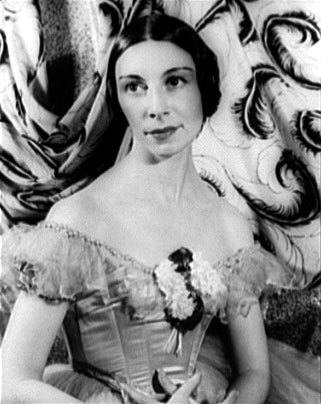
Dame Alicia Markova DBE (1 December 1910 – 2 December 2004) was a British ballerina and a choreographer, director and teacher of classical ballet. Most noted for her career with Sergei Diaghilev's Ballets Russes and touring internationally, she was widely considered to be one of the greatest classical ballet dancers of the twentieth century. She was the first British dancer to become the principal dancer of a ballet company and, with Dame Margot Fonteyn, is one of only two English dancers to be recognised as a prima ballerina assoluta. Markova was a founder dancer of the Rambert Dance Company, The Royal Ballet and American Ballet Theatre, and was co-founder and director of the English National Ballet.
Markova was born in London as Lilian Alicia Marks on 1 December 1910. Her father, Arthur, was Jewish by birth; her mother, Eileen (née Barry), converted to Judaism. She was the eldest of four daughters. The family lived in a two bedroom flat in Finsbury Park at the time of her birth, but settled at 7 Cascade Avenue in Muswell Hill in 1914.
Marks began to dance as a young child on medical advice to strengthen her weak limbs. Her father built a stage in the family's backgarden and she and her sisters performed in costumes they made. Age nine, Marks saw Anna Pavlova dance and persuaded her father to take her to meet the ballerina. She made her stage debut at age ten, performing the role of Salome in the pantomime Dick Whittington and His Cat, for which she was billed as Little Alicia, the child Pavlova.
In 1920, she began studying ballet with Serafina Astafieva (also known as "Princess" Serafina Astafieva), a Russian ballerina living in London. Astafieva was a retired dancer of the Ballets Russes, a renowned ballet company founded by the impresario Sergei Diaghilev. Astafieva established the Russian Dancing Academy at The Pheasantry, King's Road, Chelsea, and was responsible for teaching a number of notable British dancers including Margot Fonteyn and Anton Dolin. A blue plaque now marks the site of Astafieva's former studio.
At the age of 13, Marks was observed in class by Diaghilev, who was visiting London in search of new talent for his ballet company. He invited her to join the Ballets Russes in Monte Carlo, which she did in 1925, one month after her 14th birthday. Diaghilev gave her the Russified stage name of ‘Alicia Markova’ which she retained for the rest of her life. Due to her age, she performed a number of roles which were specially choreographed for her, also performing in a varied repertoire of new and established ballets. Her début was as Little Red Riding Hood in spring 1925. Alongside the many notable dancers, during this period she encountered a number of leading 20th century figures who created work for the company including Pablo Picasso, Henri Matisse, Igor Stravinsky, Sergei Prokofiev, Léonide Massine, George Balanchine, and Bronislava Nijinska.
Following the death of Diaghilev in 1929, Markova returned to England, where she became the founder Principal Ballerina of The Ballet Club, a company founded by Dame Marie Rambert. During this period, she was particularly noted for performing works by Frederick Ashton, who was unknown at the time, but would go on to become one of Britain's most celebrated choreographers. The Ballet Club was to be the first professional ballet company in the United Kingdom, later becoming known as the Ballet Rambert. Now known as the Rambert Dance Company, it remains the oldest established dance company in the UK.
In 1931, Ninette de Valois founded the Vic-Wells Ballet in premises at Sadler's Wells theatre in London. A former colleague from Diaghilev's company, she invited Markova to join the company as one of its founder dancers, which she did, forming a famous partnership with Anton Dolin. De Valois hired Frederick Ashton, who became the resident choreographer and later Artistic Director of the company. In 1933, de Valois appointed Markova as the first Prima Ballerina of the company, which is now the internationally renowned Royal Ballet.
It was after seeing the Camargo Society performance of Giselle with Olga Spessivtseva and Dolin in 1932 that Markova first realized the possibilities of the then-neglected ballet. In time it became her most treasured role and the one whose expressive possibilities she continued to develop throughout her career. Her premiere in the role was on New Year's Day 1934 at the Vic.
Hub AI
Alicia Markova AI simulator
(@Alicia Markova_simulator)
Alicia Markova
Dame Alicia Markova DBE (1 December 1910 – 2 December 2004) was a British ballerina and a choreographer, director and teacher of classical ballet. Most noted for her career with Sergei Diaghilev's Ballets Russes and touring internationally, she was widely considered to be one of the greatest classical ballet dancers of the twentieth century. She was the first British dancer to become the principal dancer of a ballet company and, with Dame Margot Fonteyn, is one of only two English dancers to be recognised as a prima ballerina assoluta. Markova was a founder dancer of the Rambert Dance Company, The Royal Ballet and American Ballet Theatre, and was co-founder and director of the English National Ballet.
Markova was born in London as Lilian Alicia Marks on 1 December 1910. Her father, Arthur, was Jewish by birth; her mother, Eileen (née Barry), converted to Judaism. She was the eldest of four daughters. The family lived in a two bedroom flat in Finsbury Park at the time of her birth, but settled at 7 Cascade Avenue in Muswell Hill in 1914.
Marks began to dance as a young child on medical advice to strengthen her weak limbs. Her father built a stage in the family's backgarden and she and her sisters performed in costumes they made. Age nine, Marks saw Anna Pavlova dance and persuaded her father to take her to meet the ballerina. She made her stage debut at age ten, performing the role of Salome in the pantomime Dick Whittington and His Cat, for which she was billed as Little Alicia, the child Pavlova.
In 1920, she began studying ballet with Serafina Astafieva (also known as "Princess" Serafina Astafieva), a Russian ballerina living in London. Astafieva was a retired dancer of the Ballets Russes, a renowned ballet company founded by the impresario Sergei Diaghilev. Astafieva established the Russian Dancing Academy at The Pheasantry, King's Road, Chelsea, and was responsible for teaching a number of notable British dancers including Margot Fonteyn and Anton Dolin. A blue plaque now marks the site of Astafieva's former studio.
At the age of 13, Marks was observed in class by Diaghilev, who was visiting London in search of new talent for his ballet company. He invited her to join the Ballets Russes in Monte Carlo, which she did in 1925, one month after her 14th birthday. Diaghilev gave her the Russified stage name of ‘Alicia Markova’ which she retained for the rest of her life. Due to her age, she performed a number of roles which were specially choreographed for her, also performing in a varied repertoire of new and established ballets. Her début was as Little Red Riding Hood in spring 1925. Alongside the many notable dancers, during this period she encountered a number of leading 20th century figures who created work for the company including Pablo Picasso, Henri Matisse, Igor Stravinsky, Sergei Prokofiev, Léonide Massine, George Balanchine, and Bronislava Nijinska.
Following the death of Diaghilev in 1929, Markova returned to England, where she became the founder Principal Ballerina of The Ballet Club, a company founded by Dame Marie Rambert. During this period, she was particularly noted for performing works by Frederick Ashton, who was unknown at the time, but would go on to become one of Britain's most celebrated choreographers. The Ballet Club was to be the first professional ballet company in the United Kingdom, later becoming known as the Ballet Rambert. Now known as the Rambert Dance Company, it remains the oldest established dance company in the UK.
In 1931, Ninette de Valois founded the Vic-Wells Ballet in premises at Sadler's Wells theatre in London. A former colleague from Diaghilev's company, she invited Markova to join the company as one of its founder dancers, which she did, forming a famous partnership with Anton Dolin. De Valois hired Frederick Ashton, who became the resident choreographer and later Artistic Director of the company. In 1933, de Valois appointed Markova as the first Prima Ballerina of the company, which is now the internationally renowned Royal Ballet.
It was after seeing the Camargo Society performance of Giselle with Olga Spessivtseva and Dolin in 1932 that Markova first realized the possibilities of the then-neglected ballet. In time it became her most treasured role and the one whose expressive possibilities she continued to develop throughout her career. Her premiere in the role was on New Year's Day 1934 at the Vic.
Recent media