



Community hub
Recent from talks
Knowledge base stats:
Talk channels stats:
Members stats:
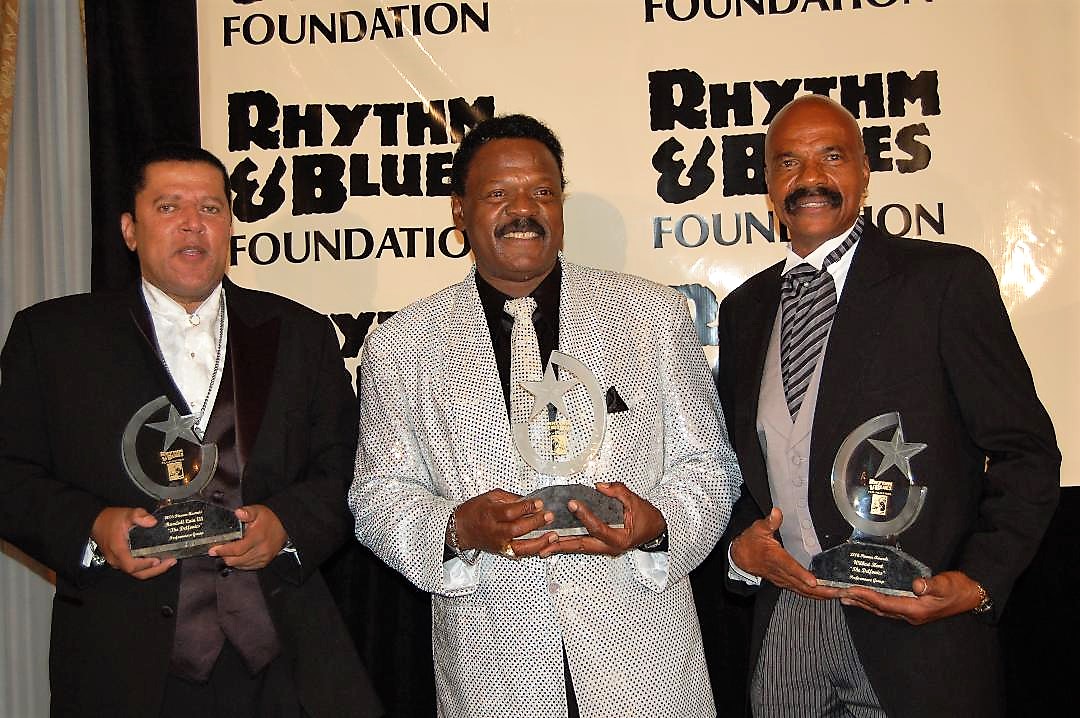
The Delfonics
The Delfonics were an American R&B/soul vocal group from Philadelphia. The Delfonics were most popular in the late 1960s and early 1970s. Their most notable hits include "La-La (Means I Love You)", "Didn't I (Blow Your Mind This Time)", "Break Your Promise", "I'm Sorry", and "Ready or Not Here I Come (Can't Hide from Love)". Their hit songs were primarily written by lead vocalist and founding member William "Poogie" Hart, and arranger and producer Thom Bell. Wilbert Hart is the last surviving founding member.
Their songs have been used in film soundtracks, including Quentin Tarantino's 1997 movie Jackie Brown, in which "La-La (Means I Love You)" and "Didn't I (Blow Your Mind This Time)" underscore the pivotal relationship between the characters played by Pam Grier and Robert Forster. Their songs "Ready or Not Here I Come (Can't Hide from Love)" and "Funny Feeling" were used in the video game Grand Theft Auto V on the fictional radio station The Lowdown 91.1.
Prior to forming the Delfonics, William "Poogie" Hart sang in a variety of groups including Little Hart and The Everglows, the Veltones, the Four Guys, and the Four Gents. Members of some of these early groups included brothers William and Wilbert Hart, Ritchie Daniels, Randy Cain, and Jimmy Wroten, Stan Lathan, and Donald Cannon, friends who met at Overbrook High School in the 1960s.
Circa 1964, William "Poogie" Hart and his brother, Wilbert Hart, formed a group called The Orphonics, consisting of themselves plus Randy Cain and Richie Daniels. After Daniels joined the armed services, they used Ricky Johnson. Randy Cain later rejoined, and the original trio of William Hart, Wilbert Hart, and Randy Cain became The Orphonics. The name came from a stereophonic machine the Harts had in their basement.
In 1965, William Hart was working in a barbershop in Philadelphia. A man named Stan Watson came into the barbershop one day, where William Hart, who had written quite a few songs by this point, would sing while playing his guitar. Watson told William Hart that he knew a young arranger/producer for Cameo-Parkway Records named Thom Bell, who was at the time working with Chubby Checker. Watson thereafter introduced the group to Bell. William Hart recalls that the first song he presented to Bell was an original composition of his entitled "He Don't Really Love You". Bell immediately produced the music arrangement to that song and it was released on Moon Shot, which later became Cameo-Parkway Records.
The Orphonics were soon renamed "The Delfonics," and their first recording, "He Don't Really Love You" b/w "Without You", which had been arranged and produced by Thom Bell, was released on the small Moon Shot Records label in around August 1966. (The artist on first pressings of the 45 RPM record was actually listed as "The Del Fonics" and Thom Bell was credited as "Tommy Bell." Following the increased popularity of the group, the Moon Shot record was reissued in April 1968, and on this later release it was distributed by Calla Records.) The second Delfonics' recording, "You've Been Untrue" b/w "I Was There," once again arranged/produced by Bell (now credited as "Thom Bell") was released in April 1967 on Cameo Records.
By the end of 1967, Cameo-Parkway Records announced that it would soon no longer exist as a record company. In December of that year, Thom Bell took the Delfonics into Cameo-Parkway's recording studio to record a William Hart composition, entitled "La-La (Means I Love You)", which featured Hart on falsetto lead. With Cameo-Parkway about to be defunct, Stan Watson started up his own label entitled Philly Groove Records and, in December 1967, "La-La (Means I Love You)" was first released to the local Philadelphia music market. After gaining national distribution/promotion with New York's Amy-Mala-Bell, the single became a hit in 1968, selling over one million copies. It reached No. 4 on the Billboard Hot 100, and was awarded a gold disc.
The group's debut album La La Means I Love You, released on Philly Groove Records in 1968, featured the hit original compositions "La-La (Means I Love You)", "Break Your Promise", "I'm Sorry", and "Can You Remember"; along with covers of the Hal David/Burt Bacharach compositions "Alfie" and "The Look of Love".
Hub AI
The Delfonics AI simulator
(@The Delfonics_simulator)
The Delfonics
The Delfonics were an American R&B/soul vocal group from Philadelphia. The Delfonics were most popular in the late 1960s and early 1970s. Their most notable hits include "La-La (Means I Love You)", "Didn't I (Blow Your Mind This Time)", "Break Your Promise", "I'm Sorry", and "Ready or Not Here I Come (Can't Hide from Love)". Their hit songs were primarily written by lead vocalist and founding member William "Poogie" Hart, and arranger and producer Thom Bell. Wilbert Hart is the last surviving founding member.
Their songs have been used in film soundtracks, including Quentin Tarantino's 1997 movie Jackie Brown, in which "La-La (Means I Love You)" and "Didn't I (Blow Your Mind This Time)" underscore the pivotal relationship between the characters played by Pam Grier and Robert Forster. Their songs "Ready or Not Here I Come (Can't Hide from Love)" and "Funny Feeling" were used in the video game Grand Theft Auto V on the fictional radio station The Lowdown 91.1.
Prior to forming the Delfonics, William "Poogie" Hart sang in a variety of groups including Little Hart and The Everglows, the Veltones, the Four Guys, and the Four Gents. Members of some of these early groups included brothers William and Wilbert Hart, Ritchie Daniels, Randy Cain, and Jimmy Wroten, Stan Lathan, and Donald Cannon, friends who met at Overbrook High School in the 1960s.
Circa 1964, William "Poogie" Hart and his brother, Wilbert Hart, formed a group called The Orphonics, consisting of themselves plus Randy Cain and Richie Daniels. After Daniels joined the armed services, they used Ricky Johnson. Randy Cain later rejoined, and the original trio of William Hart, Wilbert Hart, and Randy Cain became The Orphonics. The name came from a stereophonic machine the Harts had in their basement.
In 1965, William Hart was working in a barbershop in Philadelphia. A man named Stan Watson came into the barbershop one day, where William Hart, who had written quite a few songs by this point, would sing while playing his guitar. Watson told William Hart that he knew a young arranger/producer for Cameo-Parkway Records named Thom Bell, who was at the time working with Chubby Checker. Watson thereafter introduced the group to Bell. William Hart recalls that the first song he presented to Bell was an original composition of his entitled "He Don't Really Love You". Bell immediately produced the music arrangement to that song and it was released on Moon Shot, which later became Cameo-Parkway Records.
The Orphonics were soon renamed "The Delfonics," and their first recording, "He Don't Really Love You" b/w "Without You", which had been arranged and produced by Thom Bell, was released on the small Moon Shot Records label in around August 1966. (The artist on first pressings of the 45 RPM record was actually listed as "The Del Fonics" and Thom Bell was credited as "Tommy Bell." Following the increased popularity of the group, the Moon Shot record was reissued in April 1968, and on this later release it was distributed by Calla Records.) The second Delfonics' recording, "You've Been Untrue" b/w "I Was There," once again arranged/produced by Bell (now credited as "Thom Bell") was released in April 1967 on Cameo Records.
By the end of 1967, Cameo-Parkway Records announced that it would soon no longer exist as a record company. In December of that year, Thom Bell took the Delfonics into Cameo-Parkway's recording studio to record a William Hart composition, entitled "La-La (Means I Love You)", which featured Hart on falsetto lead. With Cameo-Parkway about to be defunct, Stan Watson started up his own label entitled Philly Groove Records and, in December 1967, "La-La (Means I Love You)" was first released to the local Philadelphia music market. After gaining national distribution/promotion with New York's Amy-Mala-Bell, the single became a hit in 1968, selling over one million copies. It reached No. 4 on the Billboard Hot 100, and was awarded a gold disc.
The group's debut album La La Means I Love You, released on Philly Groove Records in 1968, featured the hit original compositions "La-La (Means I Love You)", "Break Your Promise", "I'm Sorry", and "Can You Remember"; along with covers of the Hal David/Burt Bacharach compositions "Alfie" and "The Look of Love".