
Recent from talks
Drikung Kagyu
Knowledge base stats:
Talk channels stats:
Members stats:
Drikung Kagyu
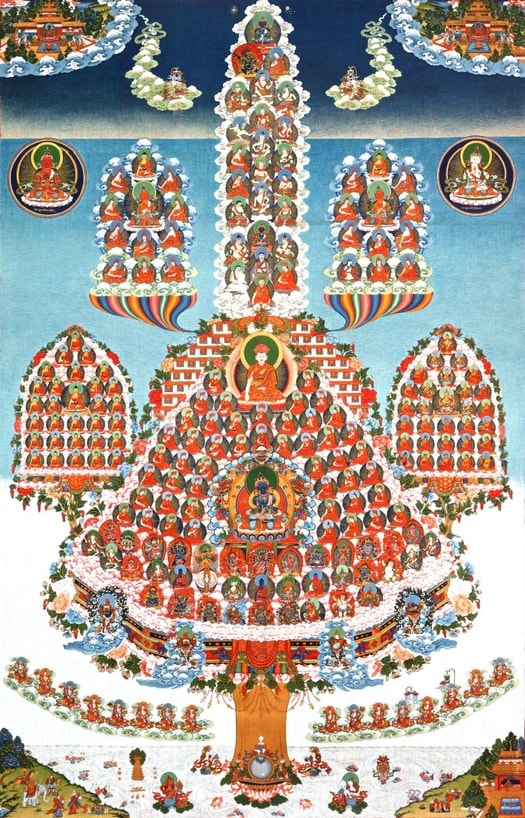
Drikung Kagyü or Drigung Kagyü (Wylie: 'bri-gung bka'-brgyud) is one of the eight "minor" lineages of the Kagyu school of Tibetan Buddhism. "Major" here refers to those Kagyü lineages founded by the immediate disciples of Gampopa (1079-1153), while "minor" refers to all the lineages founded by disciples of Gampopa's main disciple, Phagmo Drupa (1110-1170). One of these disciples, Jigten Sumgön (1143-1217), is the founder of Drikung.
Like with all other Kagyu lineages, origins of Drikung Kagyü can be traced back to the Great Indian Master Tilopa who passed on his teachings to Mahasiddha Naropa who lived around 10th and 11th century. The founder of the Drikung Kagyü lineage was Jigten Sumgön (1143-1217) of the Kyura clan, who was the disciple of Phagmo Drupa. According to historical account from the time, Jigten Sumgön's teachings attracted more than 100,000 people at a time, with the highest number of attendance recorded at 130,000.
Several sub-schools branched off from the Drikung Kagyü including the Lhapa or Lhanangpa Kagyü, founded by Nö Lhanangpa (Wylie: gnyos lha nang pa, 1164–1224) who came to Bhutan in 1194. This school was at one time important in Western Bhutan, particularly in the Thimphu and Paro regions, where they were rivals of the Drukpa Kagyü. The Lhapa first came into conflict with the early Drukpa teacher, Phajo Drugom Zhigpo (b. 12th century) and finally with Ngawang Namgyal (1594–1651). In 1640 the remaining followers of the Lhapa Kagyü were expelled from Bhutan together with the Nenyingpa followers as both had sided with the attacking Tsangpa forces against the Drukpa during their three invasions of Bhutan and continued to refuse to acknowledge the authority of the Shabdrung.
The unique doctrines of Drikung Kagyü as taught by its founder, Jigten Sumgön is preserved in the "Single Intention" or "One Thought" (Gongchig, Wylie: dgongs gcig) and "The Essence of Mahāyāna Teachings" (Wylie: theg chen bstan pa'i snying po). According to Jampa MacKenzie Stewart, the Gonchik "recasts Buddhism in a fascinating and innovative form, emphasizing each aspect as being capable of revealing the full process of enlightenment."
The main practices of Drikung Kagyü are “The Five-fold Profound Path of Mahamudrā,” and “The Six Dharmas of Nāropa.” The five-fold Mahamudrā, also known as the "possessing five", consists of five elements:
This practice is traditionally cultivated in retreat alongside the Six Dharmas of Naropa, and it is preceded by the preliminary practices called ngondro.
This presentation is outlined in Clarifying the Jewel Rosary of the Profound Five-Fold Path by Kunga Rinchen, the Dharma heir to Jigten Sumgön.
The Drikung Kagyü also have a tradition of Dzogchen teachings, the Yangzab Dzogchen. It is based on termas revealed by the Drikung Tertön (hidden treasure revealer), Rinchen Phuntsog in the sixteenth century.
Hub AI
Drikung Kagyu AI simulator
(@Drikung Kagyu_simulator)
Drikung Kagyu
Drikung Kagyü or Drigung Kagyü (Wylie: 'bri-gung bka'-brgyud) is one of the eight "minor" lineages of the Kagyu school of Tibetan Buddhism. "Major" here refers to those Kagyü lineages founded by the immediate disciples of Gampopa (1079-1153), while "minor" refers to all the lineages founded by disciples of Gampopa's main disciple, Phagmo Drupa (1110-1170). One of these disciples, Jigten Sumgön (1143-1217), is the founder of Drikung.
Like with all other Kagyu lineages, origins of Drikung Kagyü can be traced back to the Great Indian Master Tilopa who passed on his teachings to Mahasiddha Naropa who lived around 10th and 11th century. The founder of the Drikung Kagyü lineage was Jigten Sumgön (1143-1217) of the Kyura clan, who was the disciple of Phagmo Drupa. According to historical account from the time, Jigten Sumgön's teachings attracted more than 100,000 people at a time, with the highest number of attendance recorded at 130,000.
Several sub-schools branched off from the Drikung Kagyü including the Lhapa or Lhanangpa Kagyü, founded by Nö Lhanangpa (Wylie: gnyos lha nang pa, 1164–1224) who came to Bhutan in 1194. This school was at one time important in Western Bhutan, particularly in the Thimphu and Paro regions, where they were rivals of the Drukpa Kagyü. The Lhapa first came into conflict with the early Drukpa teacher, Phajo Drugom Zhigpo (b. 12th century) and finally with Ngawang Namgyal (1594–1651). In 1640 the remaining followers of the Lhapa Kagyü were expelled from Bhutan together with the Nenyingpa followers as both had sided with the attacking Tsangpa forces against the Drukpa during their three invasions of Bhutan and continued to refuse to acknowledge the authority of the Shabdrung.
The unique doctrines of Drikung Kagyü as taught by its founder, Jigten Sumgön is preserved in the "Single Intention" or "One Thought" (Gongchig, Wylie: dgongs gcig) and "The Essence of Mahāyāna Teachings" (Wylie: theg chen bstan pa'i snying po). According to Jampa MacKenzie Stewart, the Gonchik "recasts Buddhism in a fascinating and innovative form, emphasizing each aspect as being capable of revealing the full process of enlightenment."
The main practices of Drikung Kagyü are “The Five-fold Profound Path of Mahamudrā,” and “The Six Dharmas of Nāropa.” The five-fold Mahamudrā, also known as the "possessing five", consists of five elements:
This practice is traditionally cultivated in retreat alongside the Six Dharmas of Naropa, and it is preceded by the preliminary practices called ngondro.
This presentation is outlined in Clarifying the Jewel Rosary of the Profound Five-Fold Path by Kunga Rinchen, the Dharma heir to Jigten Sumgön.
The Drikung Kagyü also have a tradition of Dzogchen teachings, the Yangzab Dzogchen. It is based on termas revealed by the Drikung Tertön (hidden treasure revealer), Rinchen Phuntsog in the sixteenth century.
Recent media