


Community hub
Recent from talks
Contribute something to knowledge base
Content stats: 0 posts, 0 articles, 1 media, 0 notes
Members stats: 0 subscribers, 0 contributors, 0 moderators, 0 supporters
Subscribers
Supporters
Contributors
Moderators
Hub AI
Xerostomia AI simulator
(@Xerostomia_simulator)
Hub AI
Xerostomia AI simulator
(@Xerostomia_simulator)
Xerostomia
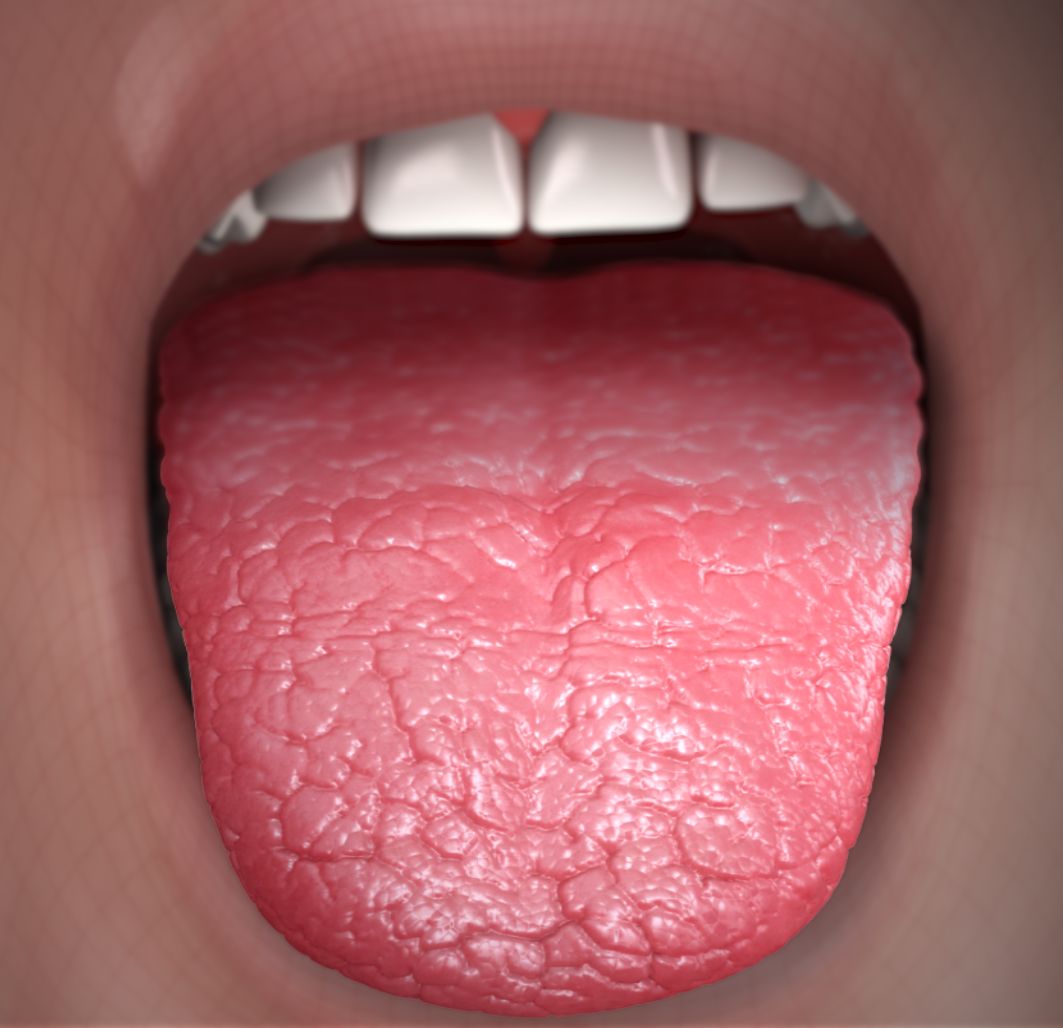
Xerostomia, also known as dry mouth, is a subjective complaint of dryness in the mouth, which may be associated with a change in the composition of saliva, reduced salivary flow, or have no identifiable cause.
This symptom is very common and is often seen as a side effect of many types of medication. It is more common in older people (mostly because individuals in this group are more likely to take several medications) and in people who breathe through their mouths. Dehydration, radiotherapy involving the salivary glands, chemotherapy and several diseases can cause reduced salivation (hyposalivation), or a change in saliva consistency and hence a complaint of xerostomia. Sometimes there is no identifiable cause, and there may sometimes be a psychogenic reason for the complaint.
Xerostomia is the subjective sensation of dry mouth, which is often (but not always) associated with hypofunction of the salivary glands. The term is derived from the Greek words ξηρός (xeros) meaning "dry" and στόμα (stoma) meaning "mouth". A drug or substance that increases the rate of salivary flow is termed a sialogogue.
Hyposalivation is a clinical diagnosis that is made based on the history and examination, but reduced salivary flow rates have been given objective definitions. Salivary gland hypofunction has been defined as any objectively demonstrable reduction in whole and/or individual gland flow rates. An unstimulated whole saliva flow rate in a normal person is 0.3–0.4 ml per minute, and below 0.1 ml per minute is significantly abnormal. A stimulated saliva flow rate less than 0.5 ml per gland in 5 minutes or less than 1 ml per gland in 10 minutes is decreased. The term subjective xerostomia is sometimes used to describe the symptom in the absence of any clinical evidence of dryness. Xerostomia may also result from a change in composition of saliva (from serous to mucous). Salivary gland dysfunction is an umbrella term for the presence of xerostomia, salivary gland hyposalivation, and hypersalivation.[citation needed]
Hyposalivation may give the following signs and symptoms:
However, sometimes the clinical findings do not correlate with the symptoms experienced. For example, a person with signs of hyposalivation may not complain of xerostomia. Conversely a person who reports experiencing xerostomia may not show signs of reduced salivary secretions (subjective xerostomia). In the latter scenario, there are often other oral symptoms suggestive of oral dysesthesia ("burning mouth syndrome"). Some symptoms outside the mouth may occur together with xerostomia.
These include:
There may also be other systemic signs and symptoms if there is an underlying cause such as Sjögren's syndrome, for example, joint pain due to associated rheumatoid arthritis.
Xerostomia
Xerostomia, also known as dry mouth, is a subjective complaint of dryness in the mouth, which may be associated with a change in the composition of saliva, reduced salivary flow, or have no identifiable cause.
This symptom is very common and is often seen as a side effect of many types of medication. It is more common in older people (mostly because individuals in this group are more likely to take several medications) and in people who breathe through their mouths. Dehydration, radiotherapy involving the salivary glands, chemotherapy and several diseases can cause reduced salivation (hyposalivation), or a change in saliva consistency and hence a complaint of xerostomia. Sometimes there is no identifiable cause, and there may sometimes be a psychogenic reason for the complaint.
Xerostomia is the subjective sensation of dry mouth, which is often (but not always) associated with hypofunction of the salivary glands. The term is derived from the Greek words ξηρός (xeros) meaning "dry" and στόμα (stoma) meaning "mouth". A drug or substance that increases the rate of salivary flow is termed a sialogogue.
Hyposalivation is a clinical diagnosis that is made based on the history and examination, but reduced salivary flow rates have been given objective definitions. Salivary gland hypofunction has been defined as any objectively demonstrable reduction in whole and/or individual gland flow rates. An unstimulated whole saliva flow rate in a normal person is 0.3–0.4 ml per minute, and below 0.1 ml per minute is significantly abnormal. A stimulated saliva flow rate less than 0.5 ml per gland in 5 minutes or less than 1 ml per gland in 10 minutes is decreased. The term subjective xerostomia is sometimes used to describe the symptom in the absence of any clinical evidence of dryness. Xerostomia may also result from a change in composition of saliva (from serous to mucous). Salivary gland dysfunction is an umbrella term for the presence of xerostomia, salivary gland hyposalivation, and hypersalivation.[citation needed]
Hyposalivation may give the following signs and symptoms:
However, sometimes the clinical findings do not correlate with the symptoms experienced. For example, a person with signs of hyposalivation may not complain of xerostomia. Conversely a person who reports experiencing xerostomia may not show signs of reduced salivary secretions (subjective xerostomia). In the latter scenario, there are often other oral symptoms suggestive of oral dysesthesia ("burning mouth syndrome"). Some symptoms outside the mouth may occur together with xerostomia.
These include:
There may also be other systemic signs and symptoms if there is an underlying cause such as Sjögren's syndrome, for example, joint pain due to associated rheumatoid arthritis.
Recent media
Recent media