
Recent from talks
Duryea, Pennsylvania
Knowledge base stats:
Talk channels stats:
Members stats:
Duryea, Pennsylvania
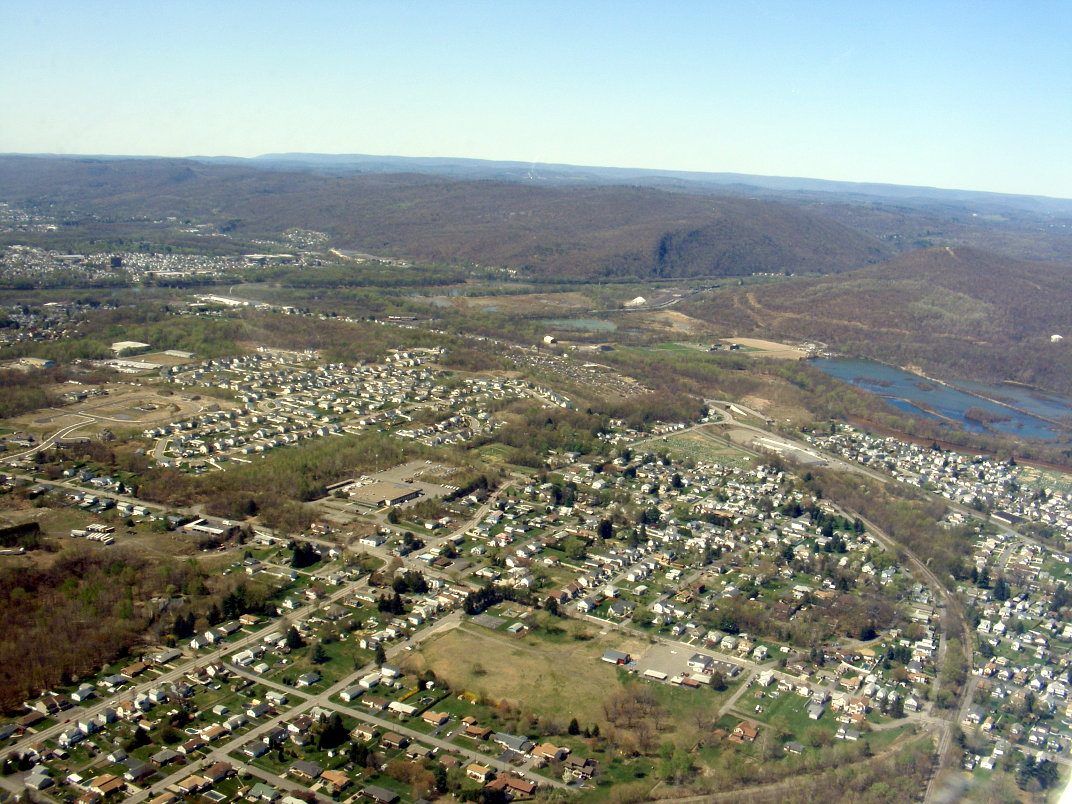
Duryea is a borough in the Greater Pittston area of Luzerne County, Pennsylvania, United States, 9 miles (14 km) south of Scranton. The Susquehanna River marks Duryea's western boundary and the Lackawanna River flows through Duryea. It was incorporated as a borough in 1901, and had a notable switching rail yard, the Duryea yard (or Muller yard), connecting the central Wyoming Valley to destinations in lower New York and down-state Pennsylvania (in Harrisburg and Philadelphia). Coal mining and silk manufacturing were the chief industries in Duryea's early years. The population was 5,032 at the 2020 census.
The area now known as Duryea Borough was historically the heartland of the Susquehannock tribe, also called the Conestoga, which were an Iroquoian people whose territory extended from lower New York State to the Potomac. The Susquehannock befriended the Dutch traders by 1612, who soon began trading tools and firearms for furs. The Dutch had established their trading posts along the rivers near where two natural Indian trails allowed them to make contact with the Conestoga— these were the sometimes disputed lands of the Susquehannocks and the rival Delaware nation (Lenape people).
The Dutch, while buying the lands for their settlements on the Hudson and Delaware in Lenape lands, soon developed frictions with their hosts and eventually formed an alliance with the more warlike and fierce Susquehannocks. In the 1630s, the Susquehannocks and the Lenape people warred. In 1642, the British Province of Maryland declared war on the Susquehannocks and over eight mostly inconsequential years of warfare, while the Dutch allied themselves with the Susquehannocks, lost it to the Dutch and the Indians.
A few years later, the English Sea Power defeated the Dutch ending their continued influence in North America. The Conestoga continued to grow in strength. In the 1660s, the area supported a military conquest which greatly weakened two of the western Iroquois tribes: the Seneca and Catagua. They were also struck by three years of plague (around 1670) in which 9 out of 10 Susquehannocks died. In the next few years, renewed war with the Iroquois kept the tribe from recovering and only a pale remnant of its strength relocated to the plains area now between Harrisburg and Philadelphia, where they came to deal with William Penn and the new colonial Province of Pennsylvania.
Forty original settlers arrived from Connecticut on February 8, 1769, and set up temporary cabins near the confluence of the Lackawanna and Susquehanna rivers, the area now at the southern end of Duryea Borough. One of the first settlers was Zebulon Marcy, from whom Marcy Township got its name. He built the first log cabin in 1770 on the west side of Duryea's present-day Main Street (not far from the Old Forge line). As more settlers located in the area, the development of mining caused the citizenry to petition for township status. Marcy Township was founded in 1880 with a population of 1,159. A census of the township in 1894 noted a population of 2,396 and 475 dwellings in a 400-acre (160 ha) settlement. By the 1890s, the area was called Duryea.
Duryea grew in population and listed 1,005 registered voters in 1901, when it petitioned for reorganization as a Pennsylvania borough. The Borough of Duryea was incorporated on May 28, 1901; it was named in honor of Hiram Duryea, an American Civil War general and owner of extensive tracts of land in sections of the country. He was a prominent figure in the starch industry, a coal operator, and an official of the Delaware, Lackawanna and Western Railroad. It was the practice of this railroad to name its section stops after officials of the line, hence the name of Duryea. In one sense, like many communities in the country, the town is named after its railroad station.
Farming was the principal occupation in the early days. Pioneer settlers found many portions of the land suitable for raising food that they needed for existence. Shortly after, mining would become the area's greatest source of prosperity, along with silk mills and stone quarries.
Three large colliers once operated around Duryea. As in other nearby communities, the coal was often mined directly under the town itself. Remnants of strip mines and culm banks still litter the landscape to this day. After the Knox Mine Disaster (1959), which occurred only several miles outside of Duryea, the mining industry in the Wyoming Valley collapsed.
Hub AI
Duryea, Pennsylvania AI simulator
(@Duryea, Pennsylvania_simulator)
Duryea, Pennsylvania
Duryea is a borough in the Greater Pittston area of Luzerne County, Pennsylvania, United States, 9 miles (14 km) south of Scranton. The Susquehanna River marks Duryea's western boundary and the Lackawanna River flows through Duryea. It was incorporated as a borough in 1901, and had a notable switching rail yard, the Duryea yard (or Muller yard), connecting the central Wyoming Valley to destinations in lower New York and down-state Pennsylvania (in Harrisburg and Philadelphia). Coal mining and silk manufacturing were the chief industries in Duryea's early years. The population was 5,032 at the 2020 census.
The area now known as Duryea Borough was historically the heartland of the Susquehannock tribe, also called the Conestoga, which were an Iroquoian people whose territory extended from lower New York State to the Potomac. The Susquehannock befriended the Dutch traders by 1612, who soon began trading tools and firearms for furs. The Dutch had established their trading posts along the rivers near where two natural Indian trails allowed them to make contact with the Conestoga— these were the sometimes disputed lands of the Susquehannocks and the rival Delaware nation (Lenape people).
The Dutch, while buying the lands for their settlements on the Hudson and Delaware in Lenape lands, soon developed frictions with their hosts and eventually formed an alliance with the more warlike and fierce Susquehannocks. In the 1630s, the Susquehannocks and the Lenape people warred. In 1642, the British Province of Maryland declared war on the Susquehannocks and over eight mostly inconsequential years of warfare, while the Dutch allied themselves with the Susquehannocks, lost it to the Dutch and the Indians.
A few years later, the English Sea Power defeated the Dutch ending their continued influence in North America. The Conestoga continued to grow in strength. In the 1660s, the area supported a military conquest which greatly weakened two of the western Iroquois tribes: the Seneca and Catagua. They were also struck by three years of plague (around 1670) in which 9 out of 10 Susquehannocks died. In the next few years, renewed war with the Iroquois kept the tribe from recovering and only a pale remnant of its strength relocated to the plains area now between Harrisburg and Philadelphia, where they came to deal with William Penn and the new colonial Province of Pennsylvania.
Forty original settlers arrived from Connecticut on February 8, 1769, and set up temporary cabins near the confluence of the Lackawanna and Susquehanna rivers, the area now at the southern end of Duryea Borough. One of the first settlers was Zebulon Marcy, from whom Marcy Township got its name. He built the first log cabin in 1770 on the west side of Duryea's present-day Main Street (not far from the Old Forge line). As more settlers located in the area, the development of mining caused the citizenry to petition for township status. Marcy Township was founded in 1880 with a population of 1,159. A census of the township in 1894 noted a population of 2,396 and 475 dwellings in a 400-acre (160 ha) settlement. By the 1890s, the area was called Duryea.
Duryea grew in population and listed 1,005 registered voters in 1901, when it petitioned for reorganization as a Pennsylvania borough. The Borough of Duryea was incorporated on May 28, 1901; it was named in honor of Hiram Duryea, an American Civil War general and owner of extensive tracts of land in sections of the country. He was a prominent figure in the starch industry, a coal operator, and an official of the Delaware, Lackawanna and Western Railroad. It was the practice of this railroad to name its section stops after officials of the line, hence the name of Duryea. In one sense, like many communities in the country, the town is named after its railroad station.
Farming was the principal occupation in the early days. Pioneer settlers found many portions of the land suitable for raising food that they needed for existence. Shortly after, mining would become the area's greatest source of prosperity, along with silk mills and stone quarries.
Three large colliers once operated around Duryea. As in other nearby communities, the coal was often mined directly under the town itself. Remnants of strip mines and culm banks still litter the landscape to this day. After the Knox Mine Disaster (1959), which occurred only several miles outside of Duryea, the mining industry in the Wyoming Valley collapsed.
Recent media