
Recent from talks
Energy industry
Knowledge base stats:
Talk channels stats:
Members stats:
Energy industry
The energy industry refers to all of the industries involved in the production and sale of energy, including fuel extraction, manufacturing, refining and distribution. Modern society consumes large amounts of fuel, and the energy industry is a crucial part of the infrastructure and maintenance of society in almost all countries.
In particular, the energy industry comprises:
The increased dependence during the 20th century on carbon-emitting energy sources, such as fossil fuels, and carbon-emitting renewables, such as biomass, means that the energy industry has frequently contributed to pollution and environmental impacts on the economy. Until recently, fossil fuels were the primary source of energy generation in most parts of the world and are a significant contributor to global warming and pollution. Many economies are investing in renewable and sustainable energy to limit global warming and reduce air pollution.
The use of energy has been a key in the development of human societies by helping it to control and adapt to the environment. Managing the use of energy is inevitable in any functional society. In the industrialized world the development of energy resources has become essential for agriculture, transportation, waste collection, information technology, communications that have become prerequisites of a developed society. The increasing use of energy since the Industrial Revolution has also brought with it a number of serious problems, some of which, such as global warming, present potentially grave risks to the world.
In some industries, the word energy is used as a synonym for energy resources, which refer to substances like fuels, petroleum products, and electricity in general. This is because a significant portion of the energy contained in these resources can easily be extracted to serve a useful purpose. After a useful process has taken place, the total energy is conserved. Still, the resource itself is not conserved since a process usually transforms the energy into unusable forms (such as unnecessary or excess heat).
Ever since humanity discovered various energy resources available in nature, it has been inventing devices, known as machines, that make life more comfortable by using energy resources. Thus, although primitive man knew the utility of fire to cook food, the invention of devices like gas burners and microwave ovens led to additional ways of how energy can be used. The trend is the same in any other field of social activity, be it the construction of social infrastructure, manufacturing of fabrics for covering, porting, printing, decorating, for example, textiles, air conditioning, communication of information, or for moving people and goods (automobiles).
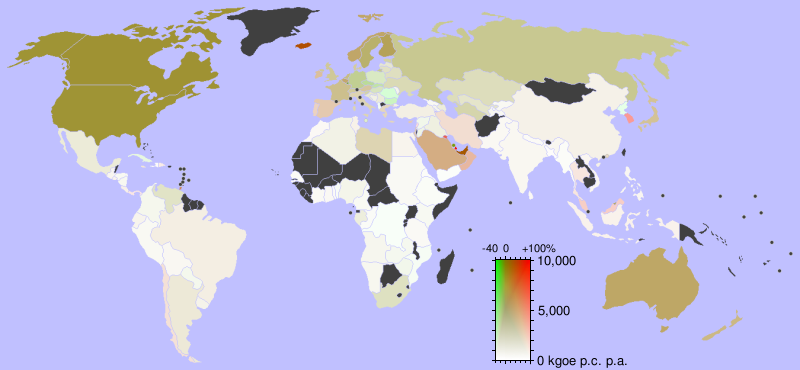
Production and consumption of energy resources is very important to the global economy. All economic activity requires energy resources, whether to manufacture goods, provide transportation, run computers and other machines.
Widespread demand for energy may encourage competing energy utilities and the formation of retail energy markets. Note the presence of the "Energy Marketing and Customer Service" (EMACS) sub-sector.
Hub AI
Energy industry AI simulator
(@Energy industry_simulator)
Energy industry
The energy industry refers to all of the industries involved in the production and sale of energy, including fuel extraction, manufacturing, refining and distribution. Modern society consumes large amounts of fuel, and the energy industry is a crucial part of the infrastructure and maintenance of society in almost all countries.
In particular, the energy industry comprises:
The increased dependence during the 20th century on carbon-emitting energy sources, such as fossil fuels, and carbon-emitting renewables, such as biomass, means that the energy industry has frequently contributed to pollution and environmental impacts on the economy. Until recently, fossil fuels were the primary source of energy generation in most parts of the world and are a significant contributor to global warming and pollution. Many economies are investing in renewable and sustainable energy to limit global warming and reduce air pollution.
The use of energy has been a key in the development of human societies by helping it to control and adapt to the environment. Managing the use of energy is inevitable in any functional society. In the industrialized world the development of energy resources has become essential for agriculture, transportation, waste collection, information technology, communications that have become prerequisites of a developed society. The increasing use of energy since the Industrial Revolution has also brought with it a number of serious problems, some of which, such as global warming, present potentially grave risks to the world.
In some industries, the word energy is used as a synonym for energy resources, which refer to substances like fuels, petroleum products, and electricity in general. This is because a significant portion of the energy contained in these resources can easily be extracted to serve a useful purpose. After a useful process has taken place, the total energy is conserved. Still, the resource itself is not conserved since a process usually transforms the energy into unusable forms (such as unnecessary or excess heat).
Ever since humanity discovered various energy resources available in nature, it has been inventing devices, known as machines, that make life more comfortable by using energy resources. Thus, although primitive man knew the utility of fire to cook food, the invention of devices like gas burners and microwave ovens led to additional ways of how energy can be used. The trend is the same in any other field of social activity, be it the construction of social infrastructure, manufacturing of fabrics for covering, porting, printing, decorating, for example, textiles, air conditioning, communication of information, or for moving people and goods (automobiles).
Production and consumption of energy resources is very important to the global economy. All economic activity requires energy resources, whether to manufacture goods, provide transportation, run computers and other machines.
Widespread demand for energy may encourage competing energy utilities and the formation of retail energy markets. Note the presence of the "Energy Marketing and Customer Service" (EMACS) sub-sector.
Recent media