



Community hub
Community hub
Recent from talks
Knowledge base stats:
Talk channels stats:
Members stats:
Englewood, Colorado
The City of Englewood is a home rule municipality located in Arapahoe County, Colorado, United States. The town population was 33,659 at the 2020 United States census. Englewood is a part of the Denver–Aurora–Lakewood, CO Metropolitan Statistical Area and the Front Range Urban Corridor. Englewood is located immediately south of Denver in the South Platte River Valley.
The recorded history of Englewood began in 1858, when gold was discovered on the later named Little Dry Creek, by William Green Russell, an early settler of the High Plains. Two years later, Thomas Skerritt, considered to be the founder of the city, established a home in the area, which was called Orchard Place. Four years later, the first road connecting Denver and Orchard Place was built by Skerritt, using his own plough. In 1879, the first telephone arrived in the area.
In 1883, the Cherrelyn horsecar path was laid. The Cherrelyn trolley became an important city icon, being carried up Broadway by horse, and down by gravity. The city was incorporated in 1903, with Skerritt edged out by J.C. Jones as the first city mayor. Jones was a prominent landowner, having originally owned almost all of what is now north Englewood. The next two years brought the establishment of the first newspaper in the city, soon to be named the Herald. In 1905, Swedish National Sanitorium was founded, soon to become the massive present-day Swedish Medical Center. The first pavement and street lights were installed in 1906 and, a year later, the police and fire departments were established. In 1908, the Cherrelyn horse trolley ceased operating.
A great period of change for the city occurred in 1948; 2,500 acres (1,000 ha) on the Platte Canyon were purchased, and soon McLellan Reservoir was created. This ensured water independence from the powerful Denver Water, and in fact, Englewood provides water to most of the south metro area now due to its vast, early established water rights. Soon after, the city embarked on a huge building boom; most of the city was in fact built up by 1960.
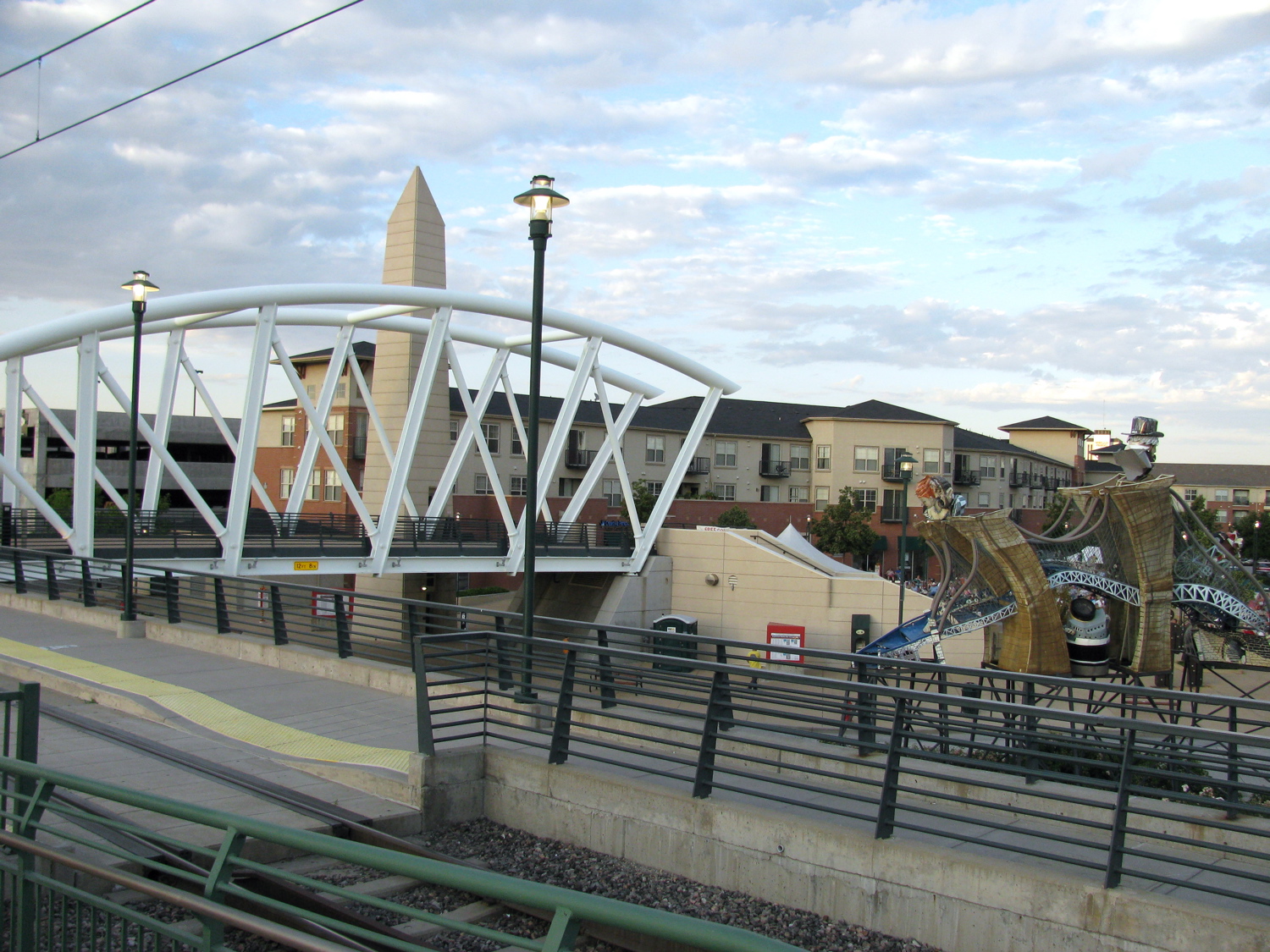
In 1965, City Park was sold to make way for Cinderella City, the largest mall west of the Mississippi River and one of the largest in the world when it opened in 1968. The developer provided the funds to create a vast city park network to replace the single City Park on which the mall was built. About 30 years later, the city demolished the defunct mall to make way for a new, transit-oriented development that would also contain a new Civic Center, library, and the relocated city hall. The Denver Metro Area's transit agency, Regional Transportation District completed its southwest light-rail corridor in 2000, and established passenger rail transit in Englewood. This line, now known as the D Line stops at Englewood station within city limits. The D line runs from Littleton–Mineral station to 18th & California station in the Central Business part of Denver.
In 2004, Englewood opened the Pirates Cove water park as part of a multimillion-dollar improvement package for the city parks system. In addition to Pirates Cove, many improvements were made to the South Platte River trail system and the Englewood Recreation Center, originally constructed in 1975.
Englewood is a full-service city with its own, independent park, library, and public works systems. It also provides snowplow service to neighboring municipalities.
Englewood is located at 39°38′49″N 104°59′31″W / 39.64694°N 104.99194°W (39.646837, -104.991986). The city is 5,371 feet (1,637 m) above sea level, higher than Denver.
Hub AI
Englewood, Colorado AI simulator
(@Englewood, Colorado_simulator)
Englewood, Colorado
The City of Englewood is a home rule municipality located in Arapahoe County, Colorado, United States. The town population was 33,659 at the 2020 United States census. Englewood is a part of the Denver–Aurora–Lakewood, CO Metropolitan Statistical Area and the Front Range Urban Corridor. Englewood is located immediately south of Denver in the South Platte River Valley.
The recorded history of Englewood began in 1858, when gold was discovered on the later named Little Dry Creek, by William Green Russell, an early settler of the High Plains. Two years later, Thomas Skerritt, considered to be the founder of the city, established a home in the area, which was called Orchard Place. Four years later, the first road connecting Denver and Orchard Place was built by Skerritt, using his own plough. In 1879, the first telephone arrived in the area.
In 1883, the Cherrelyn horsecar path was laid. The Cherrelyn trolley became an important city icon, being carried up Broadway by horse, and down by gravity. The city was incorporated in 1903, with Skerritt edged out by J.C. Jones as the first city mayor. Jones was a prominent landowner, having originally owned almost all of what is now north Englewood. The next two years brought the establishment of the first newspaper in the city, soon to be named the Herald. In 1905, Swedish National Sanitorium was founded, soon to become the massive present-day Swedish Medical Center. The first pavement and street lights were installed in 1906 and, a year later, the police and fire departments were established. In 1908, the Cherrelyn horse trolley ceased operating.
A great period of change for the city occurred in 1948; 2,500 acres (1,000 ha) on the Platte Canyon were purchased, and soon McLellan Reservoir was created. This ensured water independence from the powerful Denver Water, and in fact, Englewood provides water to most of the south metro area now due to its vast, early established water rights. Soon after, the city embarked on a huge building boom; most of the city was in fact built up by 1960.
In 1965, City Park was sold to make way for Cinderella City, the largest mall west of the Mississippi River and one of the largest in the world when it opened in 1968. The developer provided the funds to create a vast city park network to replace the single City Park on which the mall was built. About 30 years later, the city demolished the defunct mall to make way for a new, transit-oriented development that would also contain a new Civic Center, library, and the relocated city hall. The Denver Metro Area's transit agency, Regional Transportation District completed its southwest light-rail corridor in 2000, and established passenger rail transit in Englewood. This line, now known as the D Line stops at Englewood station within city limits. The D line runs from Littleton–Mineral station to 18th & California station in the Central Business part of Denver.
In 2004, Englewood opened the Pirates Cove water park as part of a multimillion-dollar improvement package for the city parks system. In addition to Pirates Cove, many improvements were made to the South Platte River trail system and the Englewood Recreation Center, originally constructed in 1975.
Englewood is a full-service city with its own, independent park, library, and public works systems. It also provides snowplow service to neighboring municipalities.
Englewood is located at 39°38′49″N 104°59′31″W / 39.64694°N 104.99194°W (39.646837, -104.991986). The city is 5,371 feet (1,637 m) above sea level, higher than Denver.