
Recent from talks
Entebbe raid
Knowledge base stats:
Talk channels stats:
Members stats:
Entebbe raid
The Entebbe raid, also known as Operation Entebbe and officially codenamed Operation Thunderbolt (subsequently Operation Yonatan), was a 3 July 1976 Israeli counter-terrorist mission in Uganda. It was launched in response to the hijacking of an Air France flight from Tel Aviv to Paris by members of the PFLP-EO and the German Revolutionary Cells, who diverted the aircraft to Entebbe International Airport with the backing of Ugandan dictator Idi Amin.
Following the 27 June hijacking, the captors took the 248 passengers hostage with the objective of compelling the release of imprisoned Palestinian militants and international prisoners. Backed by over 100 Ugandan soldiers and welcomed by President Amin at Entebbe, the hijackers moved the hostages to a disused terminal. After releasing most non-Israeli hostages over the following days, the terrorists held the remaining 106 captives, predominantly Israelis and the flight crew, in a separate room.
After initial debate over whether to negotiate, the Israeli government decided on a military rescue based on intelligence provided by Mossad, preparing for potential armed confrontation with the Ugandan army.
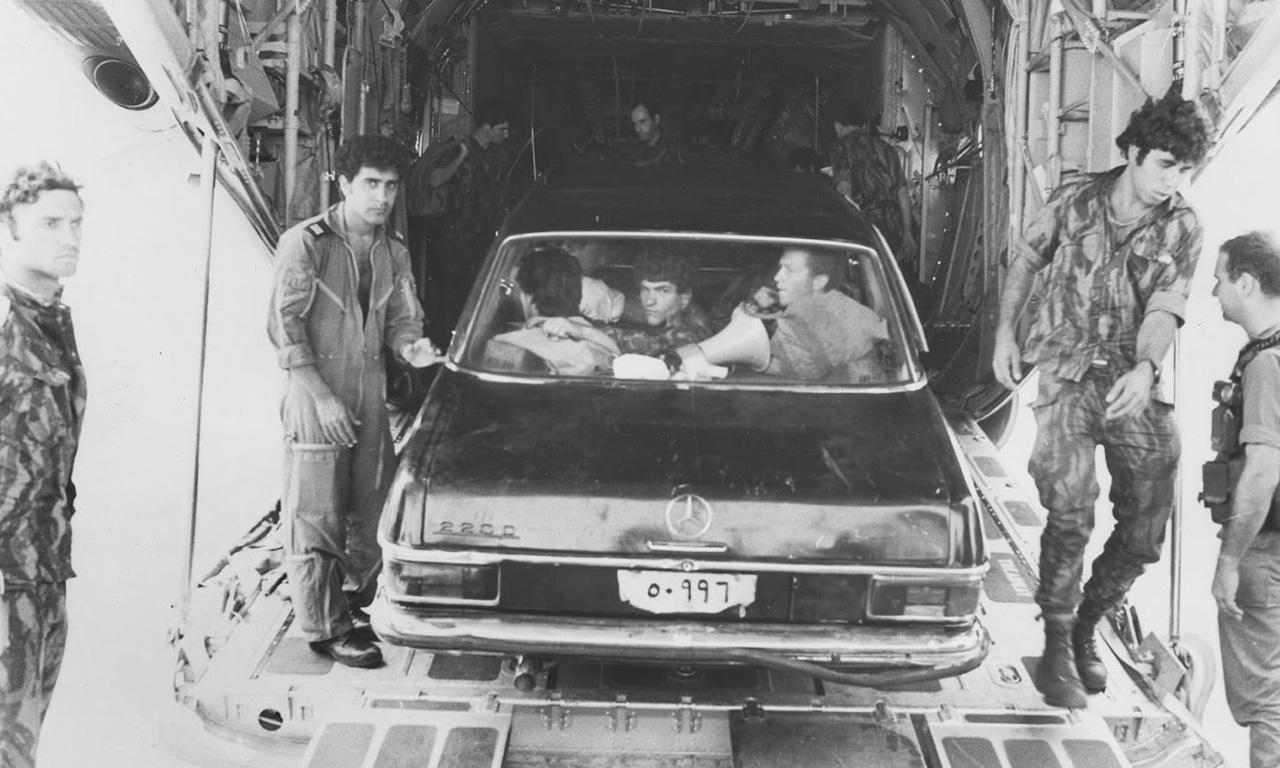
Initiating the operation at nightfall on 3 July 1976, Israeli transport planes flew 100 commandos over 4,000 kilometres (2,500 mi) to Uganda. During the assault, the commandos rescued 102 hostages and killed all the hijackers alongside 45 Ugandan soldiers, while destroying 11 Ugandan fighter jets. Three hostages died during the raid, and a fourth—Dora Bloch, who had been taken to a Kampala hospital prior to the rescue—was subsequently murdered by Ugandan authorities. Sayeret Matkal unit commander Yonatan Netanyahu was the sole Israeli military fatality, alongside five wounded commandos.
Israel received logistical support from neighboring Kenya during the operation. In retaliation, President Amin ordered the Ugandan army to target Kenyans, leading to the killings of hundreds of Kenyan-Ugandans and the exodus of thousands more from the country.
The raid became a landmark event of the era, generating widespread international media coverage, literature, and cinematic adaptations. It significantly influenced global counter-terrorism strategy and heightened Western resolve against state-backed hostage crises.
On 27 June 1976, Air France Flight 139, an Airbus A300B4-203 registered as F-BVGG with serial number 019, departed from Tel Aviv, Israel, carrying 246 mainly Jewish and Israeli passengers and a crew of 12. The plane flew to Athens, Greece, where it picked up an additional 58 passengers, including four hijackers. It departed for Paris at 12:30 pm. Just after takeoff, the flight was hijacked by two Palestinians from the Popular Front for the Liberation of Palestine – External Operations (PFLP-EO), Jayel al-Arja and Fayez Abdul-Rahim al Jaber, and two Germans, Wilfried Böse and Brigitte Kuhlmann, from the German Revolutionary Cells. The hijackers diverted the flight to Benghazi, Libya. There it was held on the ground for seven hours for refuelling. During that time the hijackers released British-born Israeli citizen Patricia Martell, who pretended to have a miscarriage. The plane left Benghazi and at 3:15 pm on the 28 June, more than 24 hours after the flight's original departure, it arrived at Entebbe International Airport in Uganda.
At Entebbe, the four hijackers were joined by at least four others, supported by the forces of Uganda's president, Idi Amin. The hijackers transferred the passengers to the transit hall of the disused former airport terminal where they kept them under guard for the following days. Amin came to visit the hostages almost on a daily basis, updating them on developments and promising to use his efforts to have them freed through negotiations.
Hub AI
Entebbe raid AI simulator
(@Entebbe raid_simulator)
Entebbe raid
The Entebbe raid, also known as Operation Entebbe and officially codenamed Operation Thunderbolt (subsequently Operation Yonatan), was a 3 July 1976 Israeli counter-terrorist mission in Uganda. It was launched in response to the hijacking of an Air France flight from Tel Aviv to Paris by members of the PFLP-EO and the German Revolutionary Cells, who diverted the aircraft to Entebbe International Airport with the backing of Ugandan dictator Idi Amin.
Following the 27 June hijacking, the captors took the 248 passengers hostage with the objective of compelling the release of imprisoned Palestinian militants and international prisoners. Backed by over 100 Ugandan soldiers and welcomed by President Amin at Entebbe, the hijackers moved the hostages to a disused terminal. After releasing most non-Israeli hostages over the following days, the terrorists held the remaining 106 captives, predominantly Israelis and the flight crew, in a separate room.
After initial debate over whether to negotiate, the Israeli government decided on a military rescue based on intelligence provided by Mossad, preparing for potential armed confrontation with the Ugandan army.
Initiating the operation at nightfall on 3 July 1976, Israeli transport planes flew 100 commandos over 4,000 kilometres (2,500 mi) to Uganda. During the assault, the commandos rescued 102 hostages and killed all the hijackers alongside 45 Ugandan soldiers, while destroying 11 Ugandan fighter jets. Three hostages died during the raid, and a fourth—Dora Bloch, who had been taken to a Kampala hospital prior to the rescue—was subsequently murdered by Ugandan authorities. Sayeret Matkal unit commander Yonatan Netanyahu was the sole Israeli military fatality, alongside five wounded commandos.
Israel received logistical support from neighboring Kenya during the operation. In retaliation, President Amin ordered the Ugandan army to target Kenyans, leading to the killings of hundreds of Kenyan-Ugandans and the exodus of thousands more from the country.
The raid became a landmark event of the era, generating widespread international media coverage, literature, and cinematic adaptations. It significantly influenced global counter-terrorism strategy and heightened Western resolve against state-backed hostage crises.
On 27 June 1976, Air France Flight 139, an Airbus A300B4-203 registered as F-BVGG with serial number 019, departed from Tel Aviv, Israel, carrying 246 mainly Jewish and Israeli passengers and a crew of 12. The plane flew to Athens, Greece, where it picked up an additional 58 passengers, including four hijackers. It departed for Paris at 12:30 pm. Just after takeoff, the flight was hijacked by two Palestinians from the Popular Front for the Liberation of Palestine – External Operations (PFLP-EO), Jayel al-Arja and Fayez Abdul-Rahim al Jaber, and two Germans, Wilfried Böse and Brigitte Kuhlmann, from the German Revolutionary Cells. The hijackers diverted the flight to Benghazi, Libya. There it was held on the ground for seven hours for refuelling. During that time the hijackers released British-born Israeli citizen Patricia Martell, who pretended to have a miscarriage. The plane left Benghazi and at 3:15 pm on the 28 June, more than 24 hours after the flight's original departure, it arrived at Entebbe International Airport in Uganda.
At Entebbe, the four hijackers were joined by at least four others, supported by the forces of Uganda's president, Idi Amin. The hijackers transferred the passengers to the transit hall of the disused former airport terminal where they kept them under guard for the following days. Amin came to visit the hostages almost on a daily basis, updating them on developments and promising to use his efforts to have them freed through negotiations.
Recent media