
Recent from talks
Erwin Griswold
Knowledge base stats:
Talk channels stats:
Members stats:
Erwin Griswold
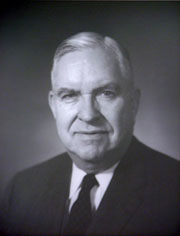
Erwin Nathaniel Griswold (/ˈɡrɪzwɔːld, -wəld/; July 14, 1904 – November 19, 1994) was an American appellate attorney and legal scholar who argued many cases before the U.S. Supreme Court. Griswold served as Solicitor General of the United States (1967–1973) under Presidents Lyndon B. Johnson and Richard M. Nixon. He also served as the dean of Harvard Law School for 21 years. Several times he was considered for appointment to the U.S. Supreme Court. During a career that spanned more than six decades, he served as member of the U.S. Commission on Civil Rights and as president of the American Bar Foundation.
Griswold was born in East Cleveland, Ohio, to Hope (Erwin) and James Harlen Griswold. Griswold graduated from Oberlin College in 1925 with an A.B. in mathematics and an M.A. in political science. He attended Harvard Law School from 1925 to 1929, earning an LL.B. summa cum laude in 1928 and an S.J.D. in 1929. Griswold compiled The Bluebook, a uniform system of legal citation used by law professionals, in 1926 while a student at Harvard Law School.
In 1929, Griswold was admitted to the Ohio bar and spent six weeks working as a partner in his father's Cleveland law firm of Griswold, Green, Palmer & Hadden. He subsequently joined the U.S. Office of the Solicitor General as a staff attorney and served as a special assistant to the attorney general from 1929 to 1934. There he worked under Solicitor General Charles Evans Hughes Jr., son of the future Chief Justice of the United States, Charles Evans Hughes Sr. He became an expert at arguing tax cases before the Supreme Court, and is considered one of the great scholars in tax law.
During his academic career, Griswold was elected to the American Academy of Arts and Sciences in 1941 and the American Philosophical Society in 1955.
Griswold joined the Harvard faculty in 1934, first as an associate legal professor, and then as a full professor from 1935 to 1946. Known for a very keen intellect, Griswold was made dean of Harvard Law School from 1946 and served in that capacity until 1967. One of the dominant figures in American legal education, he doubled the size of the faculty, bringing in legal scholars Derek Bok (who succeeded him as dean, and later became president of Harvard University), Kingman Brewster (later president of Yale University), and Alan Dershowitz. In 1946, just after Griswold was made dean, Soia Mentschikoff was appointed visiting professor, the first woman faculty member in the history of Harvard Law School.
On December 11, 1934, the Harvard Law Review published an article by Griswold titled "Government in Ignorance of the Law – A Plea for Better Publication of Executive Legislation". The arguments Griswold made for orderly publication of the official actions of the Executive Branch were underlined when the Supreme Court issued its opinion in Panama Refining Co. v. Ryan and forced the hand of the committee studying the issue for President Roosevelt. Congress passed legislation to create the Federal Register, and the president signed it into law (Pub. L. 74-220, July 26, 1935).
As dean, Griswold enlarged the school's curriculum to include such specialized topics as labor relations, family law, and copyright law. In addition, he expanded the school's physical plant, library holdings, and financial resources. Finally, he began the process of convincing the Harvard Corporation to allow the enrollment of female students in 1948, and oversaw it beginning in Autumn of 1950. The Law School was the third graduate school at Harvard to admit women after the Graduate School of Education and the Medical School. It did so twenty-seven years before Harvard College fully admitted women as undergraduates in 1977.
In a 1992 interview, he recalled that at the time, over one-third of the faculty were against the admission of women.
Hub AI
Erwin Griswold AI simulator
(@Erwin Griswold_simulator)
Erwin Griswold
Erwin Nathaniel Griswold (/ˈɡrɪzwɔːld, -wəld/; July 14, 1904 – November 19, 1994) was an American appellate attorney and legal scholar who argued many cases before the U.S. Supreme Court. Griswold served as Solicitor General of the United States (1967–1973) under Presidents Lyndon B. Johnson and Richard M. Nixon. He also served as the dean of Harvard Law School for 21 years. Several times he was considered for appointment to the U.S. Supreme Court. During a career that spanned more than six decades, he served as member of the U.S. Commission on Civil Rights and as president of the American Bar Foundation.
Griswold was born in East Cleveland, Ohio, to Hope (Erwin) and James Harlen Griswold. Griswold graduated from Oberlin College in 1925 with an A.B. in mathematics and an M.A. in political science. He attended Harvard Law School from 1925 to 1929, earning an LL.B. summa cum laude in 1928 and an S.J.D. in 1929. Griswold compiled The Bluebook, a uniform system of legal citation used by law professionals, in 1926 while a student at Harvard Law School.
In 1929, Griswold was admitted to the Ohio bar and spent six weeks working as a partner in his father's Cleveland law firm of Griswold, Green, Palmer & Hadden. He subsequently joined the U.S. Office of the Solicitor General as a staff attorney and served as a special assistant to the attorney general from 1929 to 1934. There he worked under Solicitor General Charles Evans Hughes Jr., son of the future Chief Justice of the United States, Charles Evans Hughes Sr. He became an expert at arguing tax cases before the Supreme Court, and is considered one of the great scholars in tax law.
During his academic career, Griswold was elected to the American Academy of Arts and Sciences in 1941 and the American Philosophical Society in 1955.
Griswold joined the Harvard faculty in 1934, first as an associate legal professor, and then as a full professor from 1935 to 1946. Known for a very keen intellect, Griswold was made dean of Harvard Law School from 1946 and served in that capacity until 1967. One of the dominant figures in American legal education, he doubled the size of the faculty, bringing in legal scholars Derek Bok (who succeeded him as dean, and later became president of Harvard University), Kingman Brewster (later president of Yale University), and Alan Dershowitz. In 1946, just after Griswold was made dean, Soia Mentschikoff was appointed visiting professor, the first woman faculty member in the history of Harvard Law School.
On December 11, 1934, the Harvard Law Review published an article by Griswold titled "Government in Ignorance of the Law – A Plea for Better Publication of Executive Legislation". The arguments Griswold made for orderly publication of the official actions of the Executive Branch were underlined when the Supreme Court issued its opinion in Panama Refining Co. v. Ryan and forced the hand of the committee studying the issue for President Roosevelt. Congress passed legislation to create the Federal Register, and the president signed it into law (Pub. L. 74-220, July 26, 1935).
As dean, Griswold enlarged the school's curriculum to include such specialized topics as labor relations, family law, and copyright law. In addition, he expanded the school's physical plant, library holdings, and financial resources. Finally, he began the process of convincing the Harvard Corporation to allow the enrollment of female students in 1948, and oversaw it beginning in Autumn of 1950. The Law School was the third graduate school at Harvard to admit women after the Graduate School of Education and the Medical School. It did so twenty-seven years before Harvard College fully admitted women as undergraduates in 1977.
In a 1992 interview, he recalled that at the time, over one-third of the faculty were against the admission of women.
Recent media