Hubbry Logo
Federal Correctional Institution, CumberlandFederal Correctional Institution, CumberlandMain
Open search
Federal Correctional Institution, Cumberland
Community hub
Federal Correctional Institution, Cumberland
logo
8 pages, 0 posts
0 subscribers
Be the first to start a discussion here.
Federal Correctional Institution, Cumberland
from Wikipedia

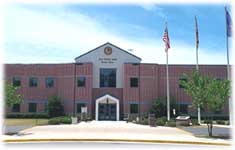
The Federal Correctional Institution, Cumberland (FCI Cumberland) is a medium-security United States federal prison for male inmates in Maryland. It is operated by the Federal Bureau of Prisons, a division of the United States Department of Justice. The facility also has a satellite prison camp for minimum-security male offenders.[1]

Key Information

FCI Cumberland is located in unincorporated Allegany County,[2] western Maryland, 130 miles (210 km) northwest of Washington, D.C.

FCI Cumberland also has a license plate manufacturing center, where inmates produce license plates used on federal government vehicles.

Notable incidents

[edit]

On July 21, 2010, inmate and former NYPD Commissioner Bernard Kerik used the social website Twitter to post his opposition to the opening of the Park51 Islamic Community Center near Ground Zero. The post read, "If we let them defile ground zero with a beachhead for sharia we will validate their sense of victory on 9/11 and encourage future attacks on America. No mosque at Ground Zero" and included a link to a Web video showing the Twin Towers falling. A Federal Bureau of Prisons official told Salon, "Inmates don't have Internet access. He probably has a family member doing it for him." The official also said Kerik may have access to something called TRULINCS, a prison e-mail system that allows inmates to exchange e-mails with people (typically family members or friends) on an approved list.[3]

Notable inmates

[edit]

Current

[edit]
Inmate Name Register Number Photo Status Details
Jeffrey MacDonald 00131-177 Archived 2013-10-29 at the Wayback Machine Serving a life sentence.[4] Former US Army doctor; convicted in 1979 of the 1970 murders of his wife and two children in their home at Fort Bragg Army Base in North Carolina; the case was the subject of author Joe McGinniss's book and NBC's miniseries Fatal Vision.[5]
Ed Brown 03923-049 Archived 2013-11-10 at the Wayback Machine Serving a 37-year sentence; scheduled for release in 2034.[6] Currently at FCI Gilmer. Sovereign citizen movement member; convicted in 2009 of conspiracy for stockpiling bombs and firearms during an 8-month standoff with authorities attempting to apprehend him and his wife, Elaine Brown, for a 2007 tax evasion conviction.[7][8][9]
Javaid Perwaiz 26867–083 Serving a 59-year sentence; scheduled for release in 2069. Former OBGYN in Virginia who performed unnecessary surgeries, including hysterectomies and sterilizations, on women.[10]
Clayton Waagner 17258–039 Scheduled for release in 2042. Convicted bank robber and anti-abortion terrorist who was on one of the FBI Ten Most Wanted Fugitives and United States Marshals Service Top 15 Fugitives list.[11]
Bobby Paul Edwards 32836–171 Serving a 10-year sentence; scheduled for release on November 6, 2026. Currently at FCI Jesup. Restaurant owner who forced mentally disabled employee to work at his restaurant. The case was high-profile over allegations that the crime was racially motivated (Edwards is white and the victim was black).[12]
Gordon Ernst 64601–037 Serving a 30-month sentence; scheduled for release in 2024. Former Georgetown University men and women's tennis coach, pled guilty to conspiracy to commit federal programs bribery, three counts of federal programs bribery and filing false tax returns for failing to report many of the bribery payments as part of the Varsity Blues scandal.[13]
Stewart Rhodes 81981–509 Released after sentence was commuted by President Donald J. Trump on January 20, 2025.[14][15] Convicted of Seditious Conspiracy, Obstructing an Official Proceeding, and other crimes surrounding the Protest at the United States Capitol on January 6, 2021 and sentenced to 18 years.[16]
Ryan Salame 76655–510 Serving an 7.5-year sentence.[17] Convicted of conspiring to make unlawful political contributions, defrauding the Federal Election Commission and conspiring to operate an unlicensed money transmitting business, and was sentenced on May 28, 2024.[18]
Marc Laruelle 73028-509 Serving a 4-year sentence [19] Yonkers, NY psychiatrist and former Yale and Columbia University Professor and renowned schizophrenia researcher, who pled guilty to distributing 100,000 doses of a highly potent and addictive opioid without a legitimate medical purpose while acting outside the usual course of professional practice. Laruelle charged patients as much as $800 per prescription, with the understanding that the drugs would be resold on the black market.[20]

Former

[edit]
Inmate Name Register Number Photo Status Details
Joseph Watts 42320–053 Released from custody on January 14, 2022; served 11 years. High ranking associate of the Gambino crime family. Was found guilty in 2011 for his part in a 1989 murder conspiracy on orders of John Gotti.
Bernard Kerik 84888-054[permanent dead link] Released from custody in 2013; served 3 years.[21] Former NYPD Commissioner and Homeland Security Secretary nominee under President George W. Bush; pleaded guilty in 2009 to tax evasion for accepting services from a company in return for his assistance in obtaining a city construction permit.[22]
Jack Abramoff 27593-112[permanent dead link] Released from custody in 2010; served 42 months.[23] Former Washington, D.C.-based lobbyist at the center of the largest lobbying scandal in American political history; pleaded guilty in 2006 to fraud, tax evasion, and conspiracy to bribe public officials.[24]
Cameron Douglas 70707-054 Released on August 1, 2016; served 7 years.[25] On July 28, 2009, Douglas was arrested by the Drug Enforcement Administration for possession of 0.5 pounds (0.23 kg) of methamphetamine. Due to the large amount of the drug seized, Douglas was charged with intent to distribute. The charge carries a minimum prison sentence of 10 years and a maximum of life.
Solomon Dwek 27925-050[permanent dead link] Released from custody in 2015; served 29 months.[26] Former real estate investor and key informant for Operation Bid Rig, one of the largest corruption stings in US history resulting in the convictions of dozens of public officials in New Jersey; arrested in 2006 for masterminding a $50 million bank fraud.[27][28]
Webster Hubbell 20219-009[permanent dead link] Released from custody in 1997; served two years.[29] A key figure in the Whitewater controversy; convicted of wire fraud and tax fraud for overbilling legal clients. See also: United States v. Hubbell, a 2000 Supreme Court case.[30]
Masoud Khan 46810-083[permanent dead link] Released in 2018 Leader of the Virginia jihad network; convicted in 2004 of seditious conspiracy and other charges for attending a terrorist training camp run by the terrorist group Lashkar-e-Taiba and purchasing weapons in preparation to undertake violent jihad; several co-conspirators were also sentenced to prison.[31][32] Released in 2018 after judge Leonie Brinkema determined that the sentences of the men involved in the plot were "draconian" and vacated their sentences. As of 2020, all members of the network have been released from prison.

See also

[edit]

References

[edit]
[edit]
Revisions and contributorsEdit on WikipediaRead on Wikipedia
from Grokipedia
The Federal Correctional Institution, Cumberland (FCI Cumberland) is a medium-security federal prison for male inmates located in , operated by the (BOP) with an adjacent minimum-security satellite camp. Opened in 1994, the facility maintains a rated capacity of 1,024 beds but has frequently exceeded this, reaching 1,120 inmates in early 2022 amid broader BOP challenges. As of October 2025, its population stands at 887 for the main institution and 256 for the camp, reflecting operational strains including staffing shortages of correctional officers. FCI Cumberland has housed inmates convicted in high-profile federal cases, such as involving militant group leaders, underscoring its role in the BOP's medium-security network for managing risks like escape potential and internal violence through structured programming and perimeter security.

History

Establishment and Opening

The Federal Correctional Institution, Cumberland (FCI Cumberland), a medium-security facility for male inmates operated by the , was established in response to the expanding federal prison population during the early 1990s. Situated on a 180-acre site in rural , approximately two miles south of , the institution was designed to include an adjacent minimum-security satellite camp to house lower-risk offenders. FCI Cumberland became operational in 1994, marking its activation within the Bureau of Prisons' Mid-Atlantic Region. The satellite camp admitted its initial inmates in May 1994, initiating full programming for both components. This timeline aligned with the Bureau's broader infrastructure buildup, which saw dozens of new facilities commissioned amid a federal inmate surge from about 58,000 in 1990 to over by 1995, driven by mandatory minimum sentences and enhanced drug enforcement.

Expansions and Operational Changes

The Federal Correctional Institution (FCI) , operational since April 1994, includes an adjacent minimum-security satellite prison camp that houses male inmates requiring lower security levels, expanding the facility's capacity to accommodate a range of custody classifications. This camp structure allows for segregated management of minimum-security offenders, with a current population of approximately 256 inmates as of 2025. The facility's rated capacity stands at 1,024 inmates for the main medium-security unit, though it has periodically operated above this level, reaching 1,120 inmates in 2022, reflecting broader Bureau of Prisons (BOP) pressures amid static . Maintenance efforts, such as roof replacements across approximately 88,084 square feet at the main institution and 23,315 square feet at the camp in 2025, address aging without altering core capacity. In May 2024, the BOP awarded a contract for constructing a (CMU) at FCI Cumberland, introducing specialized housing for necessitating monitored communications to mitigate risks from external contacts. This addition aligns with BOP's strategy for targeted operational enhancements rather than broad physical growth. Temporary operational adjustments have included modified operations initiated on August 16, 2024, at the main facility and August 18 at the camp, involving suspended visitation and altered programming due to constraints, with full restoration by August 29, 2024. Such changes underscore ongoing challenges in maintaining consistent administration amid system-wide resource strains.

Physical Description and Location

Site and Infrastructure

The Federal Correctional Institution, Cumberland (FCI Cumberland) is located at 14601 Burbridge Road SE, 21502, in unincorporated Allegany County, approximately six miles south of the city of . The facility occupies a site in a rural, mountainous region of , providing natural barriers that contribute to its security perimeter. FCI Cumberland features a campus-like layout with multiple buildings connected by outdoor walkways, surrounded by wooded areas and offering views of the . This design includes the main medium-security institution and an adjacent minimum-security satellite camp, both housing male inmates exclusively. Infrastructure supports standard federal correctional operations, including housing units, administrative offices, and utility systems, with ongoing maintenance such as programmable logic controller (PLC) upgrades for enhanced control and safety. The site's topography and vegetation aid in perimeter security, while internal pathways facilitate movement between facilities like the and recreational areas. No public details specify the exact acreage or number of structures, reflecting security protocols limiting disclosure of precise layouts.

Capacity and Inmate Demographics

The Federal Correctional Institution (FCI) Cumberland operates as a medium-security facility for male inmates, with an adjacent minimum-security satellite camp also housing males exclusively. The designated capacity of the institution is 1,280 beds, encompassing both the main FCI and the camp. As of October 22, 2025, the total inmate population stood at 1,143, distributed as 887 in the FCI proper and 256 in the camp. Inmate demographics reflect the federal prison system's emphasis on medium-security offenders convicted of non-violent and violent federal crimes. A 2022 inspection reported that, at a population of 1,120, approximately 45.4% of inmates were serving sentences for drug-related offenses, while 27% had life sentences, indicating a significant proportion of long-term or permanent incarcerations. Additionally, 12.2% of the population consisted of District of Columbia residents, a subset often housed in federal facilities due to jurisdictional agreements. Population levels have remained near or slightly below capacity in recent years, consistent with broader Bureau of Prisons trends of managing overcrowding through transfers and sentence adjustments.

Operations and Security

Security Classification and Protocols

Federal Correctional Institution (FCI) Cumberland is classified as a medium-security facility by the (BOP), designed to house male inmates requiring moderate supervision and control measures. This classification applies to the main institution, which confines offenders convicted of non-violent and some violent federal crimes, such as drug trafficking or white-collar offenses, whose security needs align with strengthened perimeters and internal controls rather than maximum custody. Adjacent to the main facility is a minimum-security satellite camp for inmates deemed low-risk, allowing for less restrictive housing like dormitories with basic fencing and fewer patrols. Inmate security designation at FCI Cumberland follows BOP Program Statement 5100.08, which assesses factors including offense severity, criminal history, escape risk, potential, and institutional behavior to assign custody levels from I (lowest) to Public Safety Factor codes for high-risk traits like sex offenses or involvement. Medium-security protocols emphasize centralized monitoring, with electronic systems, detection devices such as motion sensors, and reinforced fencing or walls forming the perimeter to deter escapes. Armed correctional officers conduct external patrols and man control centers, while internal protocols include cell or dormitory housing with regular counts, restricted movement during counts and meals, and use of restraints for high-risk transports. Disciplinary and administrative segregation units enforce protocols for violating rules, involving isolation for up to 30 days for minor infractions or longer for serious ones, with reviews every 7-30 days to ensure proportionality. Searches, both pat-down and full-body, occur routinely, supplemented by random drug testing and K-9 sweeps, to maintain control in line with BOP's security manual emphasizing graduated responses to threats. These measures align with medium-security standards, balancing rehabilitation opportunities with public safety, though inspections have noted occasional lapses in , such as delayed responses to incidents.

Daily Administration and Staff Oversight

Daily administration at FCI Cumberland encompasses a structured routine for its approximately 1,042 inmates, including multiple daily counts conducted by correctional officers to verify locations and account for all individuals, alongside cell searches—typically five or more per shift—and screening to prevent introduction. Inmates follow regimented schedules involving meals served in controlled settings (e.g., options like patties with rice, beans, and cake), work assignments, medical check-ups, and recreational activities such as or participation in programs like established since 2005. These operations occur within a medium-security framework, with separate for the adjacent minimum-security camp and the Special Housing Unit for disciplinary or protective segregation, adhering to Bureau of Prisons (BOP) Program Statement 5270.11 on conditions and reviews. Staff oversight is managed through a hierarchy including correctional officers (around 100 as of 2023, reduced from 119 in 2015), lieutenants, and executive personnel, with duties emphasizing constant monitoring via radio awareness, tool and equipment inventories (e.g., pool balls), and augmentation from non-security staff like teachers during shortages. Mandatory annual training covers diversity management, communication skills, and core values, documented by human resources, while the Mid-Atlantic Regional Office provides broader administrative support and compliance checks aligned with American Correctional Association standards. However, persistent vacancies—such as two lieutenants, four correctional officers, two psychologists, and others as of early 2022—result in a staff-to-inmate ratio of 1:4, contributing to overtime shifts up to 16 hours and heightened operational stress, with 21 staff retirements in 2022 alone exacerbating risks to safety and management efficacy. External inspections, including those by the DC Corrections Information Council and Justice Department Inspector General, highlight these staffing gaps as top management challenges, prompting BOP responses focused on recruitment and policy adherence rather than structural reforms.

Programs and Rehabilitation Efforts

Educational and Vocational Training

The Federal Correctional Institution (FCI) Cumberland offers basic programs, including instruction for inmates without a verified or equivalency, English as a (ESL) classes at pre-GED, GED, advanced GED, and special learning needs levels, and (GED) preparation to meet Bureau of Prisons (BOP) requirements that such inmates progress toward credential attainment. Postsecondary education is available through paid correspondence courses, allowing inmates to pursue s or college-level credits remotely. Additional educational components include adult , the Correctional Learning Network for skill-building, and programs like the Hope House Book Reading initiative focused on and . Vocational training at FCI Cumberland is limited, with no standard vocational courses offered beyond advanced occupational education and structured programs aligned with BOP guidelines for marketable skills acquisition. Advanced occupational education includes and installation at the main FCI facility, while the adjacent minimum-security camp provides training in , pet grooming, and veterinary assistance. These programs emphasize hands-on skills for potential post-release , though participation depends on inmate eligibility, security classification, and institutional resources. Apprenticeship opportunities, registered under Department of Labor standards, prepare inmates for trades through supervised on-the-job training typically spanning 2,000 hours or more. At the FCI, apprenticeships cover baking, carpentry, general maintenance, peripheral equipment operation, cooking, and electrical maintenance; the camp adds automobile mechanics, computer peripheral equipment operation, and powerhouse mechanics. Joint offerings for both facilities include cooking, electrical maintenance, heating, ventilation, and air conditioning (HVAC), landscaping or gardening, painting, and welding or fitting. Complementary supports such as parenting classes, pre-release employment preparation, and the Father's Camp program integrate vocational elements with reentry planning to enhance rehabilitation outcomes. A 2017 pilot initiative, Young Men Incorporated, further linked educational and vocational efforts to broader reentry rehabilitation for select inmates.

Health Care and Psychological Support

The Federal Correctional Institution, Cumberland (FCI Cumberland) maintains on-site medical facilities staffed by physicians, nurses, and other health professionals to deliver , dental services, and emergency treatment to its inmate population, in line with Bureau of Prisons (BOP) protocols that emphasize community-standard care where feasible. support is provided through the institution's Psychology Services department, which conducts initial screenings, psychological assessments, and individualized treatment plans, including counseling and , for inmates identified with needs upon intake or during incarceration. treatment is also available, integrating components such as group therapy sessions aimed at addressing addiction-related psychological factors. FCI Cumberland's health services extend to specialized care like and , serving its approximately 2,500 , though complex cases requiring inpatient or advanced outpatient procedures are often referred to external providers via contracts for services. BOP-wide programs at the facility include education and informal counseling by psychologists and psychiatrists, with formal interventions for serious conditions, but staffing shortages—exacerbated by 21 retirements in 2022 alone—have strained and response times. Inmate surveys and external reviews have highlighted deficiencies in these services; a March 2022 inspection report documented recurring complaints about inadequate medical communication and delays in treatment, with 56% of respondents reporting dissatisfaction or very high dissatisfaction with mental health care quality. Multiple federal lawsuits filed by inmates since 2015 allege failures in addressing specific conditions, such as untreated infections, chest pain unresponsive to initial interventions, and heightened COVID-19 risks due to purported lapses in isolation and testing protocols between 2018 and 2022, though courts have dismissed some claims for lack of evidence of deliberate indifference. These disputes reflect broader BOP challenges in medium-security facilities, where high inmate-to-staff ratios can impede timely psychological evaluations and follow-up care, despite official commitments to evidence-based interventions.

Incidents and Challenges

Health and Safety Events

In December 2020, a outbreak at FCI Cumberland affected 200 inmates and 11 staff members, prompting heightened monitoring and isolation protocols by the . The Bureau reported no inmate deaths directly attributed to the outbreak at the facility, though broader federal prison system challenges, including understaffing and delayed medical responses, exacerbated transmission risks during the . On August 9, 2023, the Bureau of Prisons confirmed a single case of among inmates at FCI , leading to an ongoing investigation into potential water system contamination as the source. Facility officials implemented testing and remediation measures, with no additional cases reported as of the latest updates; family members expressed concerns over transparency and inmate health access amid the isolated incident. Chronic understaffing has contributed to extended lockdowns and delayed emergency responses at FCI Cumberland, as noted in a 2023 on-site assessment, potentially heightening risks for medical emergencies and violence prevention. Bureau audits, including a Prison Rape Elimination Act review, found the facility compliant with safety standards but highlighted ongoing operational strains without specifying acute health events beyond infectious disease cases. No verified reports of suicides or homicides directly linked to facility conditions were identified in Bureau documentation or independent inspections through 2024. Inmates at FCI Cumberland have pursued multiple civil rights lawsuits alleging staff misconduct, retaliation for filing grievances, and failures to ensure safety. In Gorbey v. Muberik (D. Md. 2019), plaintiff Michael Gorbey claimed that staff, including defendant Steven Eirich, labeled him a "snitch" in front of other inmates, ignored his administrative remedies about threats from inmate "Big Country," and thereby endangered him to assault, violating the Eighth Amendment. The U.S. District Court granted summary judgment to defendants on October 30, 2019, finding no evidence of deliberate indifference or imminent harm. Similar allegations of intimidation arose in Bailey v. Federal Bureau of Prisons (D.D.C. 2024), where external advocate Pamela Bailey sued over restrictions on her communications with inmates via the TRULINCS system, claiming First and Fifth Amendment violations. Specific to FCI Cumberland, the complaint detailed Officer Daniel Linder threatening inmate Leonard Schenk in March 2022 with false disciplinary reports and to halt contact with Bailey; Lieutenant Divelbliss interrogating inmate Jeremy Fontanez in April-May 2023 about sharing employee names publicly; and Captain Ricky Rakowski expressing wishes for violence against Fontanez. The court denied dismissal of the claim but dismissed the count, noting BOP discretion under 18 U.S.C. § 4042(a). Operational disputes have centered on staff discipline and response protocols during disturbances. In a 1997 arbitration upheld by the Federal Labor Relations Authority, a correctional officer received a 3-day suspension for not responding to multiple duress alarms triggered by inmates in the Special Housing Unit amid a and influx of new arrivals. Arbitrator Charles Feigenbaum rescinded the penalty on August 22, 1997, ruling the actions were honest errors in an unusual situation without inattention to duty, and recommending training over discipline under the agreement's just-cause provision. The FLRA denied the agency's exceptions, affirming consistency with 5 U.S.C. § 7503(a). The Merit Systems Protection Board has upheld terminations for integrity violations; in one case, a staff member was discharged after admitting to falsifying his application by omitting prior arrests and convictions, with the board finding the action promoted efficiency of the service. Additional inmate petitions, such as Potarazu v. Warden (D. Md. 2022) and Rowsey v. Warden (D. Md. 2024), address administrative remedy failures and confinement conditions but remain ongoing without final resolutions.

Notable Inmates and Public Perception

Prominent Former Inmates

, former Commissioner of the , reported to the minimum-security prison camp adjacent to FCI Cumberland on May 17, 2010, to serve a four-year sentence for and providing false statements to federal officials in connection with his nomination as U.S. Secretary of . He was released from federal custody on October 15, 2013, after serving approximately three years with credit for good behavior. Jack Abramoff, a former lobbyist convicted in a major influence-peddling scandal involving fraud, conspiracy, and tax evasion, began his 70-month sentence at FCI Cumberland on November 15, 2006. His imprisonment stemmed from schemes defrauding Native American tribes and corrupting public officials through bribes disguised as campaign contributions and trips. Abramoff was transferred to a in June 2010, completing his term early due to good conduct. Cameron Douglas, son of actor , was incarcerated at FCI Cumberland from around 2012 to 2014 in following convictions for distribution and possession of with intent to distribute, which extended his original five-year sentence to nearly seven years. He had been caught smuggling drugs into prison, leading to the isolation period without visitors. Douglas was released from in August 2016. Stewart Rhodes, founder of the Oath Keepers militia group, was transferred to FCI Cumberland in July 2023 to serve an 18-year sentence for and aiding an unlawful obstruction of related to the , 2021, U.S. Capitol events. His conviction involved plotting to use force against the government to overturn the 2020 results. ' sentence was commuted by President on January 20, 2025, resulting in his release from the facility shortly thereafter.

Current Notable Inmates and "Club Fed" Label

As of October 2025, notable inmates at FCI Cumberland include Jeffrey MacDonald, a former U.S. Army convicted in 1979 of murdering his pregnant wife and two young daughters in 1970. MacDonald, sentenced to three consecutive life terms, has maintained his innocence through multiple appeals, including a 2021 request citing health issues such as and , which was denied. He remains incarcerated at the facility, which provides medical care level 2 services suitable for his conditions. Other high-profile figures previously housed there, such as lobbyist , who served 43 months for fraud and conspiracy until his 2010 release, have contributed to the prison's association with white-collar offenders. However, FCI Cumberland's medium-security designation and adjacent minimum-security camp distinguish it from low-security "Club Fed" sites, with inmates facing structured routines including work assignments and limited privileges. The "Club Fed" label, a colloquial term for federal prisons perceived as lenient due to dormitory-style housing, recreational amenities, and assignment to non-violent offenders, has been applied to FCI Cumberland owing to its history of incarcerating prominent white-collar criminals like Abramoff and former Congressman Randy "Duke" Cunningham. Critics argue this perception understates the facility's security measures, such as perimeter fencing, armed patrols, and disciplinary protocols, which align with Bureau of Prisons standards for medium-security institutions housing up to 1,000 inmates. Despite the moniker, originating from comparisons to country clubs for affluent inmates, operational data shows FCI Cumberland enforces accountability through programs like and vocational , rather than indulgence.

References

Add your contribution
Related Hubs
User Avatar
No comments yet.