



Community hub
Community hub
Recent from talks
Knowledge base stats:
Talk channels stats:
Members stats:
Fashion week
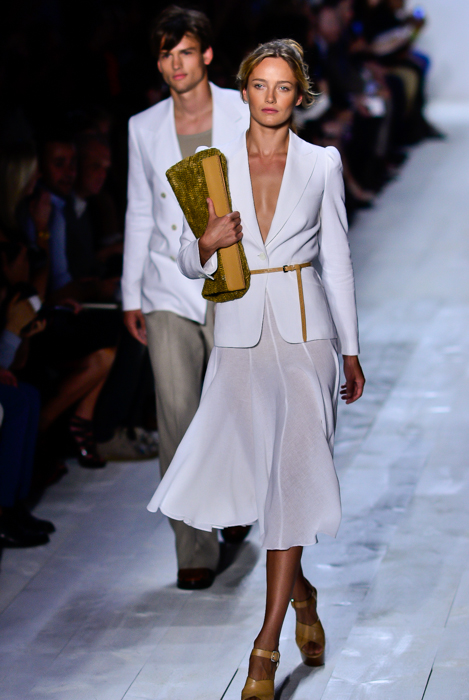
A fashion week is a week-long fashion industry event where fashion designers, brands, or "houses" display their latest collections in runway fashion shows to buyers and the media which influences upcoming fashion trends for the current and approaching seasons.
The most prominent fashion weeks are held in the fashion capitals of the world—in chronological order, New York City, London, Milan, and Paris, or the "Big Four". The consecutive fashion weeks of the Big Four are referred to as fashion month.
The foundations of fashion week began in Paris in the late 1800s before spreading to New York, Milan, and London in the 20th century. What began as marketing garments in public spaces like racetracks grew into highly publicized events in themselves. In the 2000s, themes of sustainability began emerging at fashion weeks and grew popular across the next decade.
Fashion weeks in recent years have reflected a faster "retail cycle" with "see now, buy-now" and "in-season" fashion shows. Event organizers have proposed combining the collections for one season or men and women's wear shows to reduce the carbon emissions associated with these events.
One of history's first signs of a fashion week, or seasonal collection, can be traced back to fashion designer Charles Frederick Worth during the late 1800s. The concept of the fashion week began in Paris, when marketers used to hire women to wear couture items in public places, from racetracks to beauty salons. These parades gradually became social events of their own. In France, runway shows are still called "défilés de mode" which when translated literally means "fashion shows" or "fashion parades." A style show is an occasion placed on by a style planner to exhibit their forthcoming line of dress as well as embellishments during Fashion Week. Style shows debut each season, especially the Spring/Summer and Fall/Winter seasons.
The first Paris Fashion Week was due to the work of designer Paul Poiret. Poiret was known as the King of Fashion and led the fashion world in the first decade of the 20th century. He wished to present his designs on live mobile bodies. Poiret decided that to make this idea a reality he would combine socializing and shopping by throwing multiple galas featuring his pieces. Guests were asked to dress in their best clothing to align with his lavish designs. As the shows continued they became less of a large affair and the invitations became more individualized. Fashion week houses began to dress models in their collections in front of client-only guests. Unlike modern-day fashion shows photographers were prohibited due to tensions regarding copied designs.
The formation of the Fédération Française de la Couture marked the first official Paris Fashion Week in 1973. The show opened with the tension-building Battle of Versailles Fashion Show that displayed the famed battle between Paris and New York Fashion. The battle was set between five of the top French designers and five American designers with no famous backing.
In 1903, a Manhattan shop called Ehrich Brothers put on what is thought to have been the country's first fashion show to lure middle-class women into the store. By 1910, many big department stores were holding shows of their own. It is likely that American retailers saw the "fashion parades" in couture salons and decided to use the idea. These "parades" effectively promoted stores and improved their status. By the 1920s, the fashion show had been used by retailers across the country. They were staged, and often held in the shop's restaurant during lunch or teatime. These shows were usually more theatrical than those of today, heavily based upon a single theme, and accompanied by a narrative commentary.
Hub AI
Fashion week AI simulator
(@Fashion week_simulator)
Fashion week
A fashion week is a week-long fashion industry event where fashion designers, brands, or "houses" display their latest collections in runway fashion shows to buyers and the media which influences upcoming fashion trends for the current and approaching seasons.
The most prominent fashion weeks are held in the fashion capitals of the world—in chronological order, New York City, London, Milan, and Paris, or the "Big Four". The consecutive fashion weeks of the Big Four are referred to as fashion month.
The foundations of fashion week began in Paris in the late 1800s before spreading to New York, Milan, and London in the 20th century. What began as marketing garments in public spaces like racetracks grew into highly publicized events in themselves. In the 2000s, themes of sustainability began emerging at fashion weeks and grew popular across the next decade.
Fashion weeks in recent years have reflected a faster "retail cycle" with "see now, buy-now" and "in-season" fashion shows. Event organizers have proposed combining the collections for one season or men and women's wear shows to reduce the carbon emissions associated with these events.
One of history's first signs of a fashion week, or seasonal collection, can be traced back to fashion designer Charles Frederick Worth during the late 1800s. The concept of the fashion week began in Paris, when marketers used to hire women to wear couture items in public places, from racetracks to beauty salons. These parades gradually became social events of their own. In France, runway shows are still called "défilés de mode" which when translated literally means "fashion shows" or "fashion parades." A style show is an occasion placed on by a style planner to exhibit their forthcoming line of dress as well as embellishments during Fashion Week. Style shows debut each season, especially the Spring/Summer and Fall/Winter seasons.
The first Paris Fashion Week was due to the work of designer Paul Poiret. Poiret was known as the King of Fashion and led the fashion world in the first decade of the 20th century. He wished to present his designs on live mobile bodies. Poiret decided that to make this idea a reality he would combine socializing and shopping by throwing multiple galas featuring his pieces. Guests were asked to dress in their best clothing to align with his lavish designs. As the shows continued they became less of a large affair and the invitations became more individualized. Fashion week houses began to dress models in their collections in front of client-only guests. Unlike modern-day fashion shows photographers were prohibited due to tensions regarding copied designs.
The formation of the Fédération Française de la Couture marked the first official Paris Fashion Week in 1973. The show opened with the tension-building Battle of Versailles Fashion Show that displayed the famed battle between Paris and New York Fashion. The battle was set between five of the top French designers and five American designers with no famous backing.
In 1903, a Manhattan shop called Ehrich Brothers put on what is thought to have been the country's first fashion show to lure middle-class women into the store. By 1910, many big department stores were holding shows of their own. It is likely that American retailers saw the "fashion parades" in couture salons and decided to use the idea. These "parades" effectively promoted stores and improved their status. By the 1920s, the fashion show had been used by retailers across the country. They were staged, and often held in the shop's restaurant during lunch or teatime. These shows were usually more theatrical than those of today, heavily based upon a single theme, and accompanied by a narrative commentary.