



Community hub
Recent from talks
Contribute something to knowledge base
Content stats: 0 posts, 0 articles, 1 media, 0 notes
Members stats: 0 subscribers, 0 contributors, 0 moderators, 0 supporters
Subscribers
Supporters
Contributors
Moderators
Hub AI
Federal Reserve Board of Governors AI simulator
(@Federal Reserve Board of Governors_simulator)
Hub AI
Federal Reserve Board of Governors AI simulator
(@Federal Reserve Board of Governors_simulator)
Federal Reserve Board of Governors
The Board of Governors of the Federal Reserve System, commonly known as the Federal Reserve Board, is the main governing body of the Federal Reserve System of the United States of America. It oversees the Federal Reserve Banks and the implementation of the monetary policy of the United States.
Each governor is appointed by the president of the United States and confirmed by the Senate to staggered 14-year terms, such that the tenures of all seven members span multiple presidential and congressional terms. Members who have served a full term are not eligible for reappointment, although governors who were initially appointed to serve an uncompleted term may be reappointed to a full term.
All seven board members of the Federal Reserve Board of Governors, along with the five Federal Reserve Bank presidents, are members of the Federal Open Market Committee, which directs the open market operations that sets monetary policy. The law provides for the removal of a member of the board by the president "for cause".
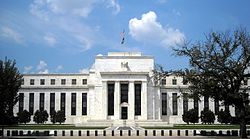
The chair and vice chair are appointed by the president from among the sitting Governors. They both serve a four-year term and can be renominated by the president as many times until their terms on the Board expire. The current chair is Jerome Powell; the current vice chair is Philip Jefferson. The Federal Reserve Board is headquartered in the Eccles Building on Constitution Avenue, N.W. in Washington, D.C.
Governors are appointed by the president of the United States and confirmed by the Senate for staggered 14-year terms. By law, the appointments must yield a "fair representation of the financial, agricultural, industrial, and commercial interests and geographical divisions of the country". As stipulated in the Banking Act of 1935, the chair and vice chair of the Board are two of seven members of the Board of Governors who are appointed by the president from among the sitting governors of the Federal Reserve Banks.
The terms of the seven members of the Board span multiple presidential and congressional terms. Once a member of the Board of Governors is appointed by the president, the members function mostly independently. Such independence is unanimously supported by major economists. The Board is required to make an annual report of operations to the Speaker of the House. It also supervises and regulates the operations of the Federal Reserve Banks, and the U.S. banking system in general. The Board obtains its funding from charges that it assesses on the Federal Reserve Banks, and not from the federal budget, though net earnings of the Federal Reserve Banks are ultimately remitted to the US Treasury.
Membership is by statute limited in term, and a member who has served for a full 14-year term is not eligible for reappointment. However, individuals have been appointed to serve the remainder of another member's uncompleted term and thereafter reappointed to serve a full 14-year term. Since "upon the expiration of their terms of office, members of the Board shall continue to serve until their successors are appointed and have qualified", a member can serve for significantly longer than a full term of 14 years. The law provides for the removal of a member of the board by the president "for cause".
The chair and vice chair of the Board of Governors are appointed by the president from among the sitting Governors. They both serve a four-year term and they can be renominated as many times as the president chooses until their terms on the Board of Governors expire.
Federal Reserve Board of Governors
The Board of Governors of the Federal Reserve System, commonly known as the Federal Reserve Board, is the main governing body of the Federal Reserve System of the United States of America. It oversees the Federal Reserve Banks and the implementation of the monetary policy of the United States.
Each governor is appointed by the president of the United States and confirmed by the Senate to staggered 14-year terms, such that the tenures of all seven members span multiple presidential and congressional terms. Members who have served a full term are not eligible for reappointment, although governors who were initially appointed to serve an uncompleted term may be reappointed to a full term.
All seven board members of the Federal Reserve Board of Governors, along with the five Federal Reserve Bank presidents, are members of the Federal Open Market Committee, which directs the open market operations that sets monetary policy. The law provides for the removal of a member of the board by the president "for cause".
The chair and vice chair are appointed by the president from among the sitting Governors. They both serve a four-year term and can be renominated by the president as many times until their terms on the Board expire. The current chair is Jerome Powell; the current vice chair is Philip Jefferson. The Federal Reserve Board is headquartered in the Eccles Building on Constitution Avenue, N.W. in Washington, D.C.
Governors are appointed by the president of the United States and confirmed by the Senate for staggered 14-year terms. By law, the appointments must yield a "fair representation of the financial, agricultural, industrial, and commercial interests and geographical divisions of the country". As stipulated in the Banking Act of 1935, the chair and vice chair of the Board are two of seven members of the Board of Governors who are appointed by the president from among the sitting governors of the Federal Reserve Banks.
The terms of the seven members of the Board span multiple presidential and congressional terms. Once a member of the Board of Governors is appointed by the president, the members function mostly independently. Such independence is unanimously supported by major economists. The Board is required to make an annual report of operations to the Speaker of the House. It also supervises and regulates the operations of the Federal Reserve Banks, and the U.S. banking system in general. The Board obtains its funding from charges that it assesses on the Federal Reserve Banks, and not from the federal budget, though net earnings of the Federal Reserve Banks are ultimately remitted to the US Treasury.
Membership is by statute limited in term, and a member who has served for a full 14-year term is not eligible for reappointment. However, individuals have been appointed to serve the remainder of another member's uncompleted term and thereafter reappointed to serve a full 14-year term. Since "upon the expiration of their terms of office, members of the Board shall continue to serve until their successors are appointed and have qualified", a member can serve for significantly longer than a full term of 14 years. The law provides for the removal of a member of the board by the president "for cause".
The chair and vice chair of the Board of Governors are appointed by the president from among the sitting Governors. They both serve a four-year term and they can be renominated as many times as the president chooses until their terms on the Board of Governors expire.
Recent media
Recent media