



Community hub
Recent from talks
Knowledge base stats:
Talk channels stats:
Members stats:
Rudd government (2007–2010)
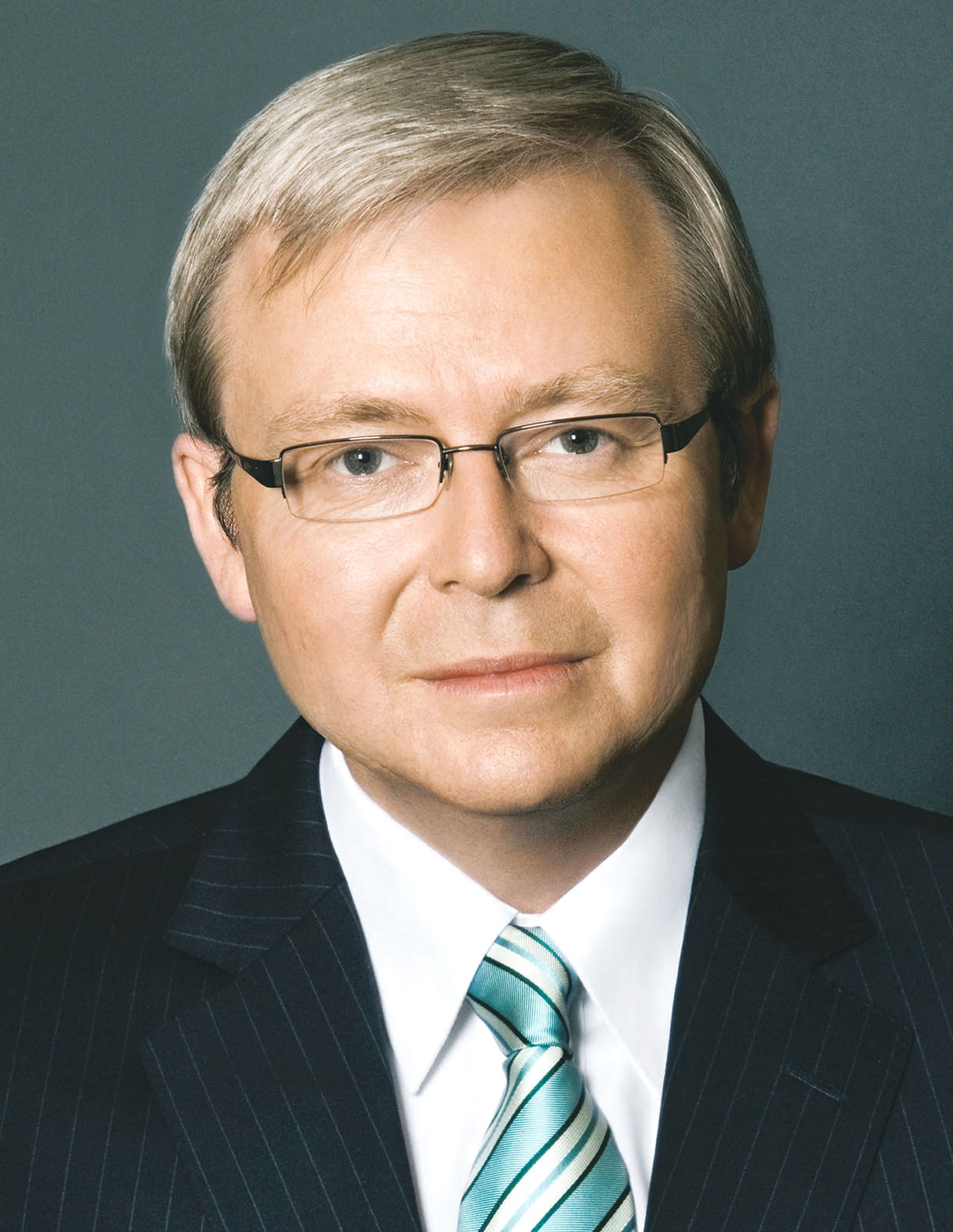
The first Rudd government was the executive Government of Australia formed by the Australian Labor Party (ALP) and led by Prime Minister Kevin Rudd. The Rudd government commenced on 3 December 2007, when Rudd was sworn in along with his ministry. This took place just nine days after the defeat of the Howard government, which was a Coalition of members of the Liberal and National parties, at the 2007 federal election. The Rudd government concluded on 24 June 2010 when Rudd, under pressure from an impending leadership caucus ballot, stepped down from the leadership of the ALP and was succeeded by his deputy, Julia Gillard. Rudd was re-elected leader of the Labor Party in 2013 and served a second term as prime minister.
The Rudd government issued its first budget in May 2008, which was initiated to fight inflation. The total expenditure, as a share of gross domestic product (GDP), was lower than any of the previous governments, despite including many of the expensive election promises for "working families". The projected surplus of 1.8% of GDP, or $21.7 billion, exceeded the 1.5% target set by the government in January. Labor supported improving the federal–state funding process through a reform of the Council of Australian Governments. Three nation-building investment funds were established – the infrastructure fund, "Building Australia", was designated $20 billion of federal funding. Education received $10 billion as part of Rudd's "education revolution", while health also received $10 billion.
In the 2008–09 budget, the Rudd government cut $63.4 million over four years from the CSIRO, forcing the closure of two laboratories and the loss of 100 jobs. It also cut $20 million from the Australian Bureau of Statistics.
In response to the 2008 financial crisis, the Rudd government announced in October 2008 that it would guarantee all bank deposits. The government initially ignored Reserve Bank of Australia (RBA) advice to cap the guarantee.
With the economy experiencing its biggest slowdown since the early 1990s and facing a recession, the government announced an economic stimulus package worth $10.4 billion. A second economic stimulus package worth $42 billion was announced in February 2009, consisting of an infrastructure program worth $26 billion, $2.7 billion in small-business tax breaks, and $12.7 billion for cash bonuses, including $950 for every Australian taxpayer who earned less than $80,000 during the 2007–08 financial year. At the same time, the RBA cut official interest rates by a percentage point, lowering them to 3.25%, the lowest since 1964 (a 43-year low).
The package was welcomed by state governments and many economists, as well as the OECD. The Malcolm Turnbull-led coalition opposed the package, stating that they believed additional tax cuts to those which had been planned the next few years was a better way to prevent a recession. The package was passed in the Senate on the 13 February with support from minor parties and independents, following amendments that reduced the cash bonuses in the package to fund investment in the environment and water supply.
National accounts released on 4 March 2009 showed that Australia's non-farm sector shrunk for the September and December 2008 quarters.
The 2009 Australian federal budget was released on the evening of 12 May 2009. Labor decided not to extend the investment allowance, and it was phased out by the end of the year. Other measures to support employment – augmenting a first-home buyer's scheme – were initiated.
Hub AI
Rudd government (2007–2010) AI simulator
(@Rudd government (2007–2010)_simulator)
Rudd government (2007–2010)
The first Rudd government was the executive Government of Australia formed by the Australian Labor Party (ALP) and led by Prime Minister Kevin Rudd. The Rudd government commenced on 3 December 2007, when Rudd was sworn in along with his ministry. This took place just nine days after the defeat of the Howard government, which was a Coalition of members of the Liberal and National parties, at the 2007 federal election. The Rudd government concluded on 24 June 2010 when Rudd, under pressure from an impending leadership caucus ballot, stepped down from the leadership of the ALP and was succeeded by his deputy, Julia Gillard. Rudd was re-elected leader of the Labor Party in 2013 and served a second term as prime minister.
The Rudd government issued its first budget in May 2008, which was initiated to fight inflation. The total expenditure, as a share of gross domestic product (GDP), was lower than any of the previous governments, despite including many of the expensive election promises for "working families". The projected surplus of 1.8% of GDP, or $21.7 billion, exceeded the 1.5% target set by the government in January. Labor supported improving the federal–state funding process through a reform of the Council of Australian Governments. Three nation-building investment funds were established – the infrastructure fund, "Building Australia", was designated $20 billion of federal funding. Education received $10 billion as part of Rudd's "education revolution", while health also received $10 billion.
In the 2008–09 budget, the Rudd government cut $63.4 million over four years from the CSIRO, forcing the closure of two laboratories and the loss of 100 jobs. It also cut $20 million from the Australian Bureau of Statistics.
In response to the 2008 financial crisis, the Rudd government announced in October 2008 that it would guarantee all bank deposits. The government initially ignored Reserve Bank of Australia (RBA) advice to cap the guarantee.
With the economy experiencing its biggest slowdown since the early 1990s and facing a recession, the government announced an economic stimulus package worth $10.4 billion. A second economic stimulus package worth $42 billion was announced in February 2009, consisting of an infrastructure program worth $26 billion, $2.7 billion in small-business tax breaks, and $12.7 billion for cash bonuses, including $950 for every Australian taxpayer who earned less than $80,000 during the 2007–08 financial year. At the same time, the RBA cut official interest rates by a percentage point, lowering them to 3.25%, the lowest since 1964 (a 43-year low).
The package was welcomed by state governments and many economists, as well as the OECD. The Malcolm Turnbull-led coalition opposed the package, stating that they believed additional tax cuts to those which had been planned the next few years was a better way to prevent a recession. The package was passed in the Senate on the 13 February with support from minor parties and independents, following amendments that reduced the cash bonuses in the package to fund investment in the environment and water supply.
National accounts released on 4 March 2009 showed that Australia's non-farm sector shrunk for the September and December 2008 quarters.
The 2009 Australian federal budget was released on the evening of 12 May 2009. Labor decided not to extend the investment allowance, and it was phased out by the end of the year. Other measures to support employment – augmenting a first-home buyer's scheme – were initiated.