
Recent from talks
1986 FIFA World Cup
Knowledge base stats:
Talk channels stats:
Members stats:
1986 FIFA World Cup
The 1986 FIFA World Cup was the 13th FIFA World Cup, a quadrennial football tournament for men's senior national teams. It was played in Mexico from 31 May to 29 June 1986. The tournament was the second to feature a 24-team format. Colombia had been originally chosen to host the competition by FIFA but, largely due to economic reasons, was not able to do so, and resigned in November 1982. Mexico was selected as the new host in May 1983, and became the first country to host the World Cup more than once, after previously hosting the 1970 edition.
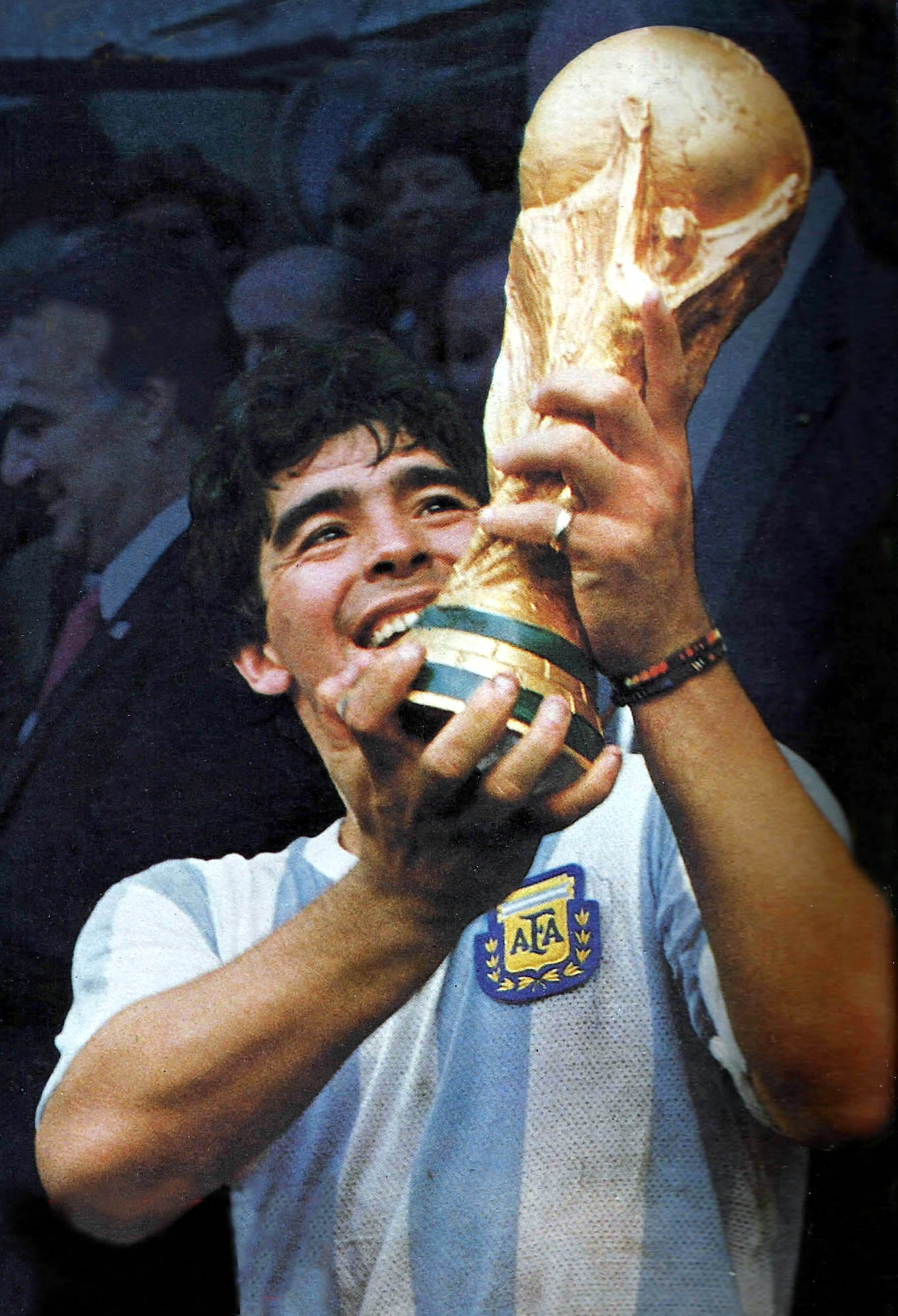
The World Cup was won by Argentina (their second title, after winning in 1978). Argentina was captained by the 25-year-old Diego Maradona, who played a large part in his team's success by scoring his "Hand of God" goal, as well as another voted the "Goal of the Century", in the same quarter-final against England. These were two of the five goals that Maradona scored during the tournament, and he also created another five for his teammates. Argentina beat West Germany 3–2 in the final at Mexico City's Estadio Azteca. Argentina would not win the World Cup again until 2022, 36 years later. Total attendance was 2,394,031, an average per match of 46,039. Canada, Denmark and Iraq made their first appearances at the final stage.
The format of the competition changed from 1982. The final pair of matches in each group started at the same time and the second round was played on a knockout basis rather than groups. The 24 teams qualified were divided into six groups of four (A to F). The top two teams and the four best third-place finishers from the six groups advanced to the knockout round of 16 teams. Italy were the defending champions, but were eliminated by France in the Round of 16.
The tournament saw the appearance of the Mexican wave, a spectator phenomenon which was popularised worldwide after featuring during the tournament.
Colombia was originally chosen as hosts by FIFA in June 1974, with Bogotá, Medellín, Cali, Pereira and Bucaramanga intended as the host cities, plus potentially Barranquilla. Colombia agreed to host a 16-team competition. However, days before the 1978 FIFA World Cup's opening match, FIFA later allowed an expansion to 24 teams for the 1982 World Cup in Spain, which was more challenging for Colombia to host, although FIFA President João Havelange initially gave assurances that they could revert to a 16-team tournament. Colombian president Julio César Turbay Ayala was initially against holding the tournament in his country, but reluctantly granted permission in October 1980. However, the next Colombian president, Belisario Betancur, declared on 5 November 1982 that they could not afford to host the World Cup under the terms that FIFA demanded.
Although Mexico, United States and Canada submitted bids on 11 March 1983 to be the replacement host, (Brazil was the only other eligible bidder but did not bid) the five-person special FIFA committee responsible for recommending the bids to the Executive Committee (Exco) announced on 31 March that it would only consider Mexico's bid, saying the United States and Canada had "deviated" from FIFA's criteria and Exco members refused to visit Canadian and American stadium sites. On 20 May, the committee announced Mexico as the replacement hosts despite Havelange stating that the United States and Canada had made better presentations. Mexico became the first nation to host two World Cups, as it had hosted the 1970 FIFA World Cup.
The Canadian representatives criticised the committee's decision not to consider Canada, saying they had submitted a more complete bid than Mexico, and that they had been misled by the number of stadiums required for bidding. The United States' bid contained more than the required number of stadiums with the required capacity to host World Cup matches (at least 40,000 capacity, 60,000 for second-round matches and 80,000 for the tournament final). Mexico submitted a bid with 14 stadiums, only six of which seated over 40,000 at the time of the bid, and three over 60,000. Havelange in turn criticised the United States' handling of stadium selection for the football tournament at the 1984 Summer Olympics in Los Angeles. The Americans also pointed out that Mexico had the influence of two seats on the 22-person executive committee, a FIFA vice president and an executive at Televisa, a Mexican television network with ties to Havelange. Also working in Mexico's favour was Havelange secretly promising the broadcast rights to Televisa ahead of the vote. Following the bidding process, Henry Kissinger, the former United States Secretary of State who led the United States bid committee, remarked, "The politics of soccer make me nostalgic for the politics of the Middle East," while the leader of the Canadian committee called Mexico's 10-page bid document "a joke."
A severe earthquake in September 1985, eight months before the tournament, cast doubt over Mexico's ability to organise the event, but the stadiums were not affected and it was decided to go ahead with the preparations. As 1986 had been declared the International Year of Peace by the United Nations, the advertising boards of all the stadia displayed the FIFA and United Nations logos along with the legend "Football for Peace – Peace Year".
Hub AI
1986 FIFA World Cup AI simulator
(@1986 FIFA World Cup_simulator)
1986 FIFA World Cup
The 1986 FIFA World Cup was the 13th FIFA World Cup, a quadrennial football tournament for men's senior national teams. It was played in Mexico from 31 May to 29 June 1986. The tournament was the second to feature a 24-team format. Colombia had been originally chosen to host the competition by FIFA but, largely due to economic reasons, was not able to do so, and resigned in November 1982. Mexico was selected as the new host in May 1983, and became the first country to host the World Cup more than once, after previously hosting the 1970 edition.
The World Cup was won by Argentina (their second title, after winning in 1978). Argentina was captained by the 25-year-old Diego Maradona, who played a large part in his team's success by scoring his "Hand of God" goal, as well as another voted the "Goal of the Century", in the same quarter-final against England. These were two of the five goals that Maradona scored during the tournament, and he also created another five for his teammates. Argentina beat West Germany 3–2 in the final at Mexico City's Estadio Azteca. Argentina would not win the World Cup again until 2022, 36 years later. Total attendance was 2,394,031, an average per match of 46,039. Canada, Denmark and Iraq made their first appearances at the final stage.
The format of the competition changed from 1982. The final pair of matches in each group started at the same time and the second round was played on a knockout basis rather than groups. The 24 teams qualified were divided into six groups of four (A to F). The top two teams and the four best third-place finishers from the six groups advanced to the knockout round of 16 teams. Italy were the defending champions, but were eliminated by France in the Round of 16.
The tournament saw the appearance of the Mexican wave, a spectator phenomenon which was popularised worldwide after featuring during the tournament.
Colombia was originally chosen as hosts by FIFA in June 1974, with Bogotá, Medellín, Cali, Pereira and Bucaramanga intended as the host cities, plus potentially Barranquilla. Colombia agreed to host a 16-team competition. However, days before the 1978 FIFA World Cup's opening match, FIFA later allowed an expansion to 24 teams for the 1982 World Cup in Spain, which was more challenging for Colombia to host, although FIFA President João Havelange initially gave assurances that they could revert to a 16-team tournament. Colombian president Julio César Turbay Ayala was initially against holding the tournament in his country, but reluctantly granted permission in October 1980. However, the next Colombian president, Belisario Betancur, declared on 5 November 1982 that they could not afford to host the World Cup under the terms that FIFA demanded.
Although Mexico, United States and Canada submitted bids on 11 March 1983 to be the replacement host, (Brazil was the only other eligible bidder but did not bid) the five-person special FIFA committee responsible for recommending the bids to the Executive Committee (Exco) announced on 31 March that it would only consider Mexico's bid, saying the United States and Canada had "deviated" from FIFA's criteria and Exco members refused to visit Canadian and American stadium sites. On 20 May, the committee announced Mexico as the replacement hosts despite Havelange stating that the United States and Canada had made better presentations. Mexico became the first nation to host two World Cups, as it had hosted the 1970 FIFA World Cup.
The Canadian representatives criticised the committee's decision not to consider Canada, saying they had submitted a more complete bid than Mexico, and that they had been misled by the number of stadiums required for bidding. The United States' bid contained more than the required number of stadiums with the required capacity to host World Cup matches (at least 40,000 capacity, 60,000 for second-round matches and 80,000 for the tournament final). Mexico submitted a bid with 14 stadiums, only six of which seated over 40,000 at the time of the bid, and three over 60,000. Havelange in turn criticised the United States' handling of stadium selection for the football tournament at the 1984 Summer Olympics in Los Angeles. The Americans also pointed out that Mexico had the influence of two seats on the 22-person executive committee, a FIFA vice president and an executive at Televisa, a Mexican television network with ties to Havelange. Also working in Mexico's favour was Havelange secretly promising the broadcast rights to Televisa ahead of the vote. Following the bidding process, Henry Kissinger, the former United States Secretary of State who led the United States bid committee, remarked, "The politics of soccer make me nostalgic for the politics of the Middle East," while the leader of the Canadian committee called Mexico's 10-page bid document "a joke."
A severe earthquake in September 1985, eight months before the tournament, cast doubt over Mexico's ability to organise the event, but the stadiums were not affected and it was decided to go ahead with the preparations. As 1986 had been declared the International Year of Peace by the United Nations, the advertising boards of all the stadia displayed the FIFA and United Nations logos along with the legend "Football for Peace – Peace Year".
Recent media