



Community hub
Recent from talks
Knowledge base stats:
Talk channels stats:
Members stats:
Fort Vermilion
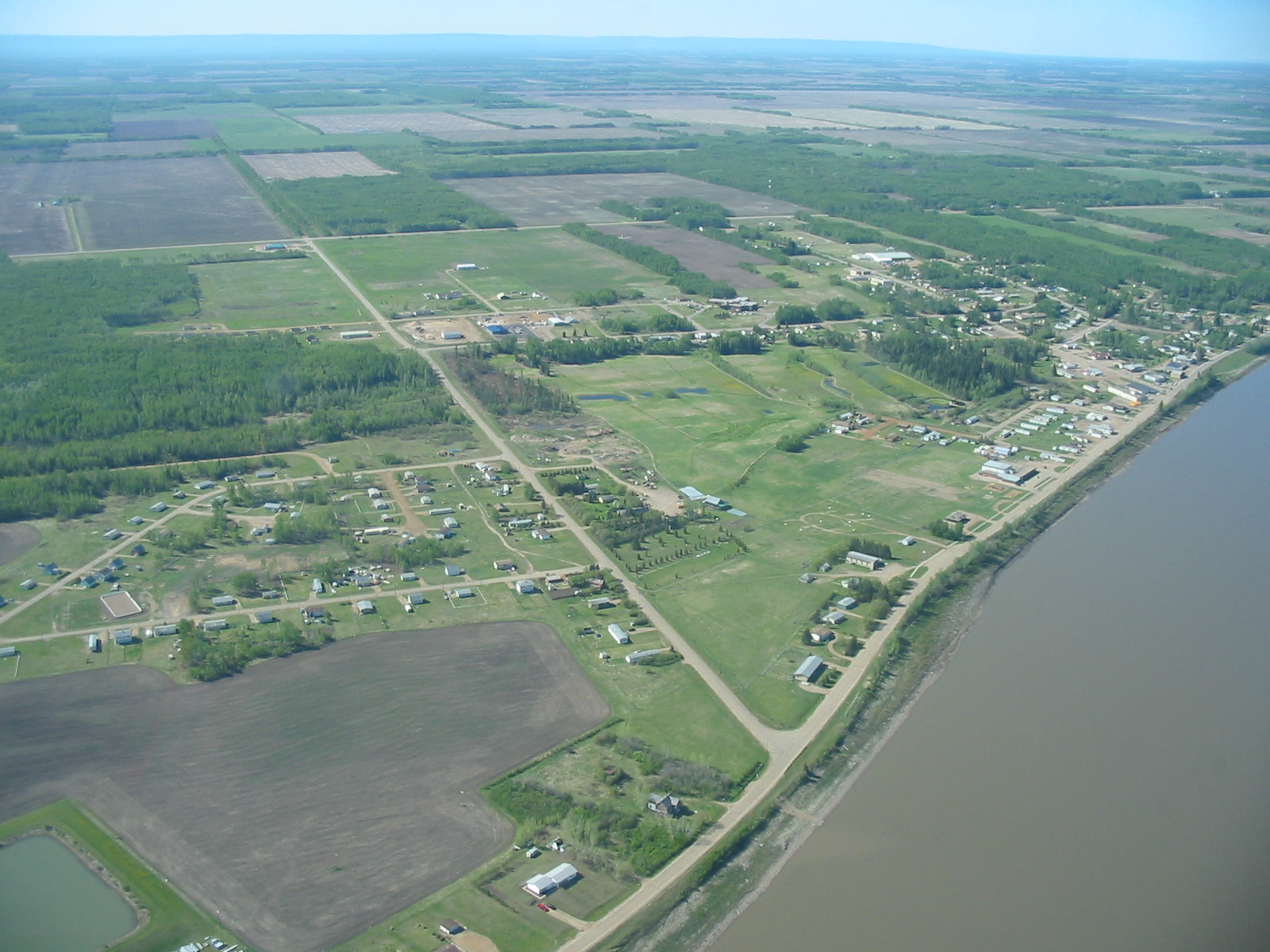
Fort Vermilion is a hamlet on the Peace River in northern Alberta, Canada, within Mackenzie County.
Established in 1788, Fort Vermilion shares the title of oldest European settlement in Alberta with Fort Chipewyan. Fort Vermilion contains many modern amenities to serve its inhabitants as well as the surrounding rural community. The municipal office of Mackenzie County, Alberta's largest municipality by land area, is located in Fort Vermilion.
The hamlet is located in Census Division No. 17.
The area was inhabited by Dane-zaa (Beaver), Dene and later Cree First Nations long before the arrival of European traders and settlers.
Named for the vermilion coloured clays lining the river banks, Fort Vermilion started as a trading community for the North West Company, upstream of the impassible Vermilion Chutes. The fort was established in 1788, following the expeditions of Alexander MacKenzie. Winter residents would trade furs with the native trappers, then send the furs by river during the summer to exchange points to the east and then to Montreal. The fort was later transferred to the Hudson's Bay Company after the 1821 merger. By 1830, it was a prosperous fur trading post. The first Anglican church was built in 1877.
The main access to the settlements was by means of the river, using river boats and then ferries to haul materials in the summer months, when the water was not frozen. In 1903 the first steam-powered vessel to serve Fort Vermilion was the St. Charles built to navigate the 526 mi (847 km) to the upper reaches of the Peace River, from Hudson's Hope to Fort Vermilion. In 1974, a bridge was built over the Peace River immediately west of Fort Vermilion, effectively ending the winter isolation of the community.
The original Old Bay House, home of the chief factor, still exists and is now part of the Fort Vermilion National Historic Site. It was listed as such in 1968, for its importance as site of North West Company and Hudson's Bay Company posts.
The visitor centre is hosted in a 1923 dovetailed log house. Built on the banks of the Peace River, it was moved to its current location in 1983. Another heritage building is the 1907 Clark House, built for the Hudson's Bay clerk quarters, and moved in 1994 to the present location near the visitor centre. The Trappers Shack, built in 1912, is another dovetailed log house. It was listed as a provincial historic site.
Hub AI
Fort Vermilion AI simulator
(@Fort Vermilion_simulator)
Fort Vermilion
Fort Vermilion is a hamlet on the Peace River in northern Alberta, Canada, within Mackenzie County.
Established in 1788, Fort Vermilion shares the title of oldest European settlement in Alberta with Fort Chipewyan. Fort Vermilion contains many modern amenities to serve its inhabitants as well as the surrounding rural community. The municipal office of Mackenzie County, Alberta's largest municipality by land area, is located in Fort Vermilion.
The hamlet is located in Census Division No. 17.
The area was inhabited by Dane-zaa (Beaver), Dene and later Cree First Nations long before the arrival of European traders and settlers.
Named for the vermilion coloured clays lining the river banks, Fort Vermilion started as a trading community for the North West Company, upstream of the impassible Vermilion Chutes. The fort was established in 1788, following the expeditions of Alexander MacKenzie. Winter residents would trade furs with the native trappers, then send the furs by river during the summer to exchange points to the east and then to Montreal. The fort was later transferred to the Hudson's Bay Company after the 1821 merger. By 1830, it was a prosperous fur trading post. The first Anglican church was built in 1877.
The main access to the settlements was by means of the river, using river boats and then ferries to haul materials in the summer months, when the water was not frozen. In 1903 the first steam-powered vessel to serve Fort Vermilion was the St. Charles built to navigate the 526 mi (847 km) to the upper reaches of the Peace River, from Hudson's Hope to Fort Vermilion. In 1974, a bridge was built over the Peace River immediately west of Fort Vermilion, effectively ending the winter isolation of the community.
The original Old Bay House, home of the chief factor, still exists and is now part of the Fort Vermilion National Historic Site. It was listed as such in 1968, for its importance as site of North West Company and Hudson's Bay Company posts.
The visitor centre is hosted in a 1923 dovetailed log house. Built on the banks of the Peace River, it was moved to its current location in 1983. Another heritage building is the 1907 Clark House, built for the Hudson's Bay clerk quarters, and moved in 1994 to the present location near the visitor centre. The Trappers Shack, built in 1912, is another dovetailed log house. It was listed as a provincial historic site.