
Recent from talks
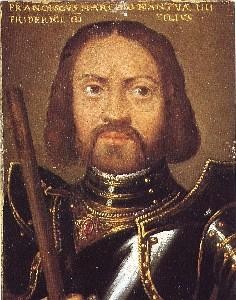
Francesco II Gonzaga, Marquis of Mantua
Knowledge base stats:
Talk channels stats:
Members stats:
Francesco II Gonzaga, Marquis of Mantua
Francesco II Gonzaga (10 August 1466 – 29 March 1519) was Marquis of Mantua from 1484 until his death. A prominent condottiero and statesman during the Italian Wars, he is best known for commanding the Italian league forces at the Battle of Fornovo in 1495. Through his marriage to Isabella d'Este, one of the leading women of the Italian Renaissance, Francesco helped establish Mantua as a significant cultural and artistic center.
Francesco was born in Mantua, the son of Marquis Federico I Gonzaga.
Francesco had a career as a condottiero acting as Venice's commander from 1489 to 1498. He was the commander-in-chief of the army of the Italian league in the battle of Fornovo, under the tutorage of his more experienced uncle Ridolfo Gonzaga: even though Francesco was unable to stop Charles VIII and his army from returning to France, he claimed Fornovo as a victory. Francesco was described as "short, pop-eyed, snub-nosed and exceptionally brave, and was regarded as the finest knight in Italy".
Francesco briefly commanded the Venetian army, but in 1502 he left to pay his respects to Louis XII who was then at Milan. By 29 April, he was with Louis XII when Genoa fell to the French army. Francesco, taking the initiative after the French victory at Agnadello, was occupying lands that he had lost to Venice. He was marching to Legnago with a company of French lances, when he was captured by the Venetians. Francesco only gained his freedom by giving his son Federico II as hostage. Once free, he was placed in command of papal troops, although he was ineffective since he stayed in Mantua. By 17 February 1510, Francesco, no longer involved in the war, allowed a French army under Gaston of Foix to march through his territory to reach Brescia.
During Francesco's absences, Mantua was governed by his wife Isabella d'Este, whom he had married on 12 February 1490. Under their reign, Mantua knew a great age of cultural splendour, with the presence in the city of artists such as Andrea Mantegna and Jacopo Bonacolsi. Francesco had the Palace of St. Sebastian built, where Mantegna's Triumph of Caesar was eventually placed. The Palace was where Francesco lived when in Mantua. His wife, Isabella d'Este remained at the Castello di San Giorgio where she had her own suite of rooms. On completing the decoration of his rooms at the palace, Francesco asked his wife for her views. Isabella commented favourably, though she did say that the decorations were almost as good as those within her studiolo.
Beginning in 1503, he started a long relationship with Lucrezia Borgia.
On 29 March 1519, Francesco, who had suffered from syphilis, died. He was succeeded by his son Federico, with Isabella acting as regent. Another son, Ferrante Gonzaga originated the branch of the Counts of Guastalla.
Francesco was known for his passion for women, so much so that, on the occasion of the siege of Novara in 1495, his sister-in-law Beatrice d'Este, wanting to ingratiate herself with him, offered to personally procure him a "femmina di partito" with whom to celebrate the victory, under the pretext of protecting both him and his wife and sister Isabella from malfrancese.
Hub AI
Francesco II Gonzaga, Marquis of Mantua AI simulator
(@Francesco II Gonzaga, Marquis of Mantua_simulator)
Francesco II Gonzaga, Marquis of Mantua
Francesco II Gonzaga (10 August 1466 – 29 March 1519) was Marquis of Mantua from 1484 until his death. A prominent condottiero and statesman during the Italian Wars, he is best known for commanding the Italian league forces at the Battle of Fornovo in 1495. Through his marriage to Isabella d'Este, one of the leading women of the Italian Renaissance, Francesco helped establish Mantua as a significant cultural and artistic center.
Francesco was born in Mantua, the son of Marquis Federico I Gonzaga.
Francesco had a career as a condottiero acting as Venice's commander from 1489 to 1498. He was the commander-in-chief of the army of the Italian league in the battle of Fornovo, under the tutorage of his more experienced uncle Ridolfo Gonzaga: even though Francesco was unable to stop Charles VIII and his army from returning to France, he claimed Fornovo as a victory. Francesco was described as "short, pop-eyed, snub-nosed and exceptionally brave, and was regarded as the finest knight in Italy".
Francesco briefly commanded the Venetian army, but in 1502 he left to pay his respects to Louis XII who was then at Milan. By 29 April, he was with Louis XII when Genoa fell to the French army. Francesco, taking the initiative after the French victory at Agnadello, was occupying lands that he had lost to Venice. He was marching to Legnago with a company of French lances, when he was captured by the Venetians. Francesco only gained his freedom by giving his son Federico II as hostage. Once free, he was placed in command of papal troops, although he was ineffective since he stayed in Mantua. By 17 February 1510, Francesco, no longer involved in the war, allowed a French army under Gaston of Foix to march through his territory to reach Brescia.
During Francesco's absences, Mantua was governed by his wife Isabella d'Este, whom he had married on 12 February 1490. Under their reign, Mantua knew a great age of cultural splendour, with the presence in the city of artists such as Andrea Mantegna and Jacopo Bonacolsi. Francesco had the Palace of St. Sebastian built, where Mantegna's Triumph of Caesar was eventually placed. The Palace was where Francesco lived when in Mantua. His wife, Isabella d'Este remained at the Castello di San Giorgio where she had her own suite of rooms. On completing the decoration of his rooms at the palace, Francesco asked his wife for her views. Isabella commented favourably, though she did say that the decorations were almost as good as those within her studiolo.
Beginning in 1503, he started a long relationship with Lucrezia Borgia.
On 29 March 1519, Francesco, who had suffered from syphilis, died. He was succeeded by his son Federico, with Isabella acting as regent. Another son, Ferrante Gonzaga originated the branch of the Counts of Guastalla.
Francesco was known for his passion for women, so much so that, on the occasion of the siege of Novara in 1495, his sister-in-law Beatrice d'Este, wanting to ingratiate herself with him, offered to personally procure him a "femmina di partito" with whom to celebrate the victory, under the pretext of protecting both him and his wife and sister Isabella from malfrancese.
Recent media